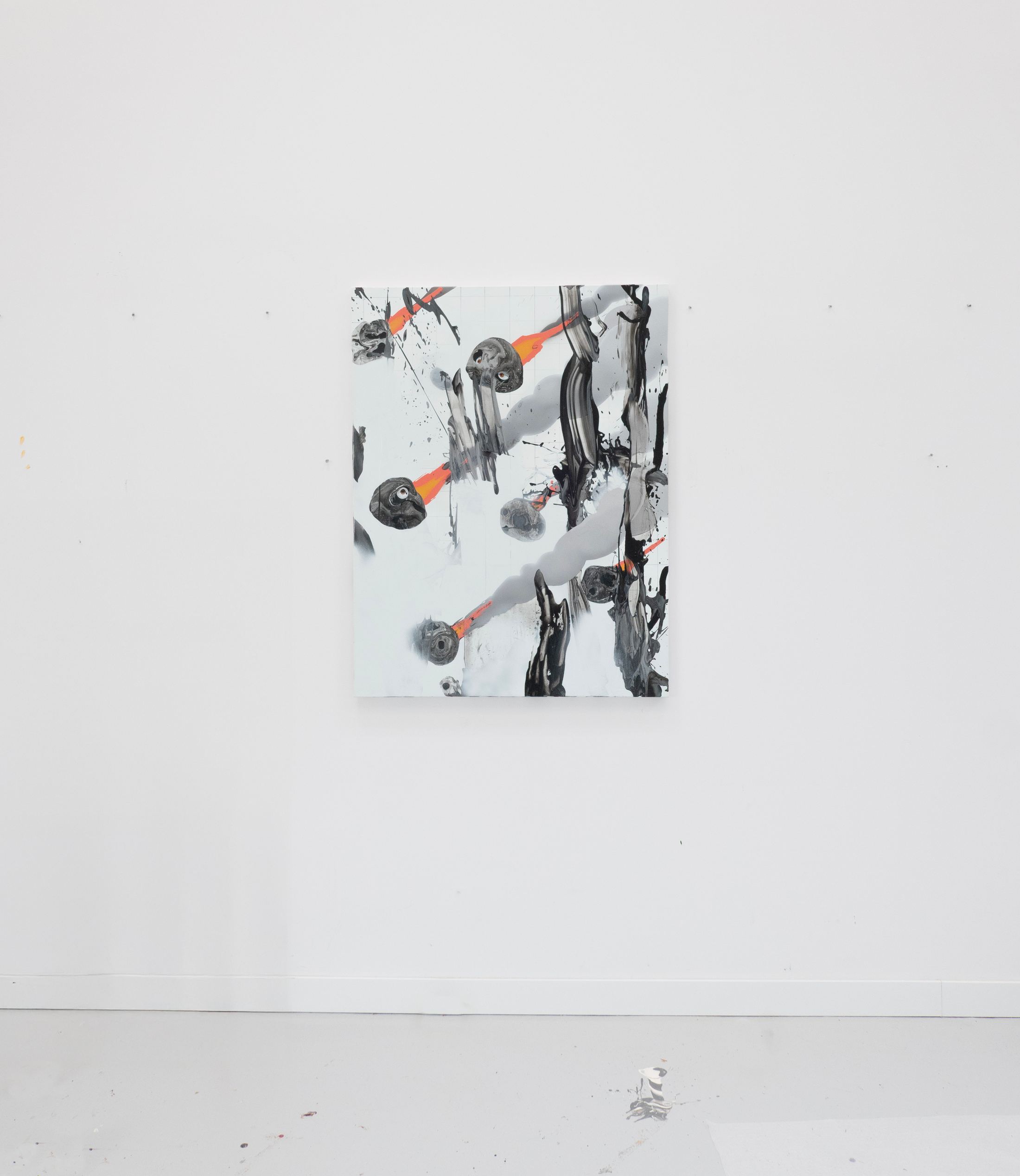
Jose Castiella (Pamplona, 1987) is a Spanish painter whose work has been presented at ARCO, The Armory Show, Art Brussels and Artissima. He lives and works between Madrid and Pamplona.
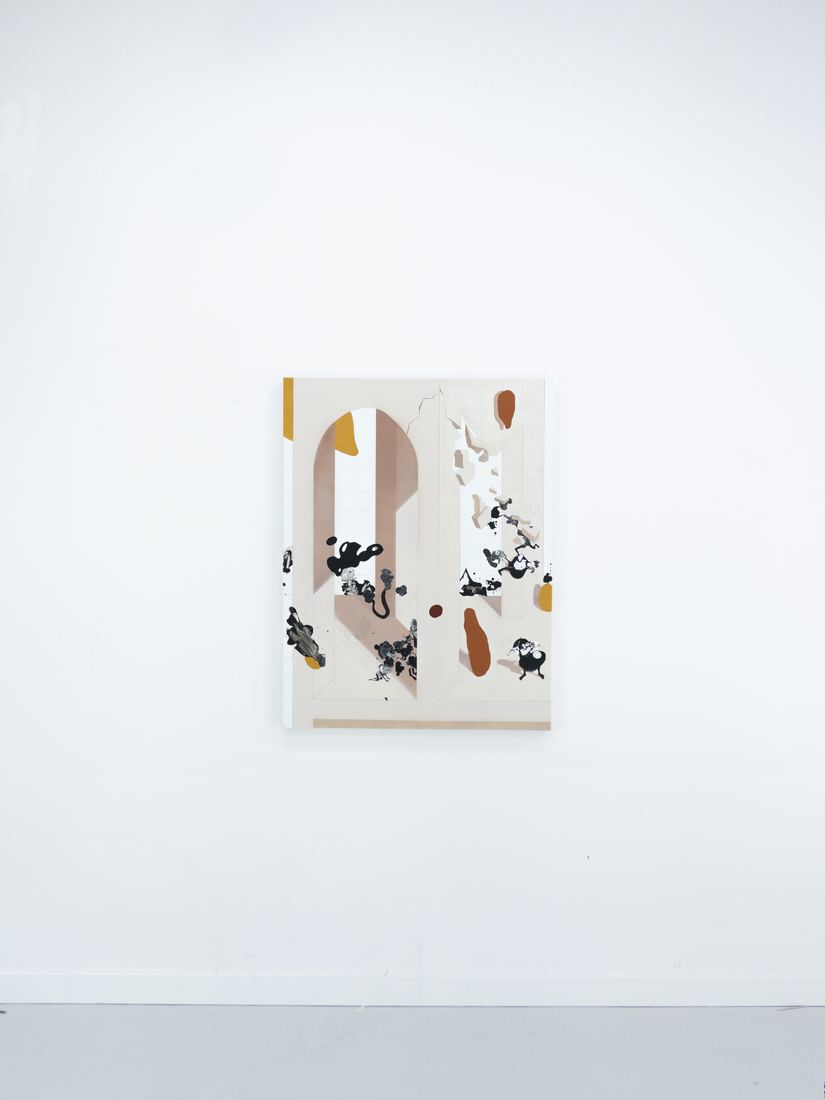
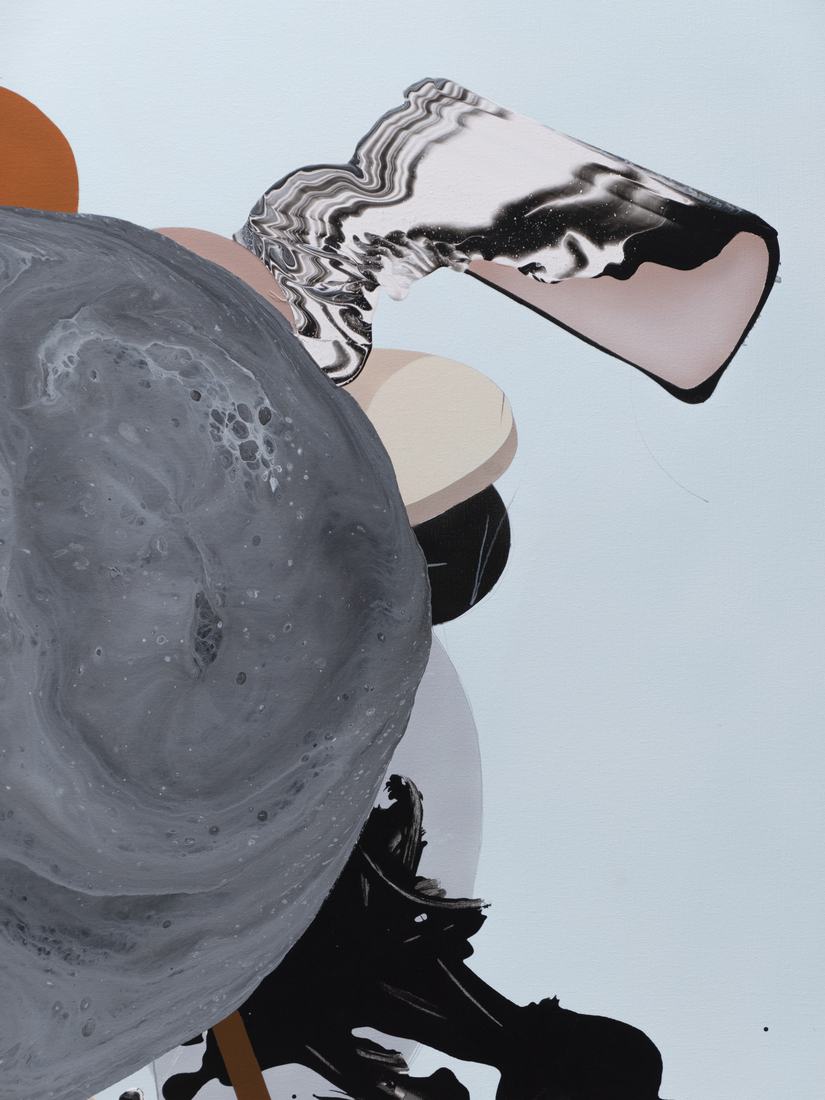
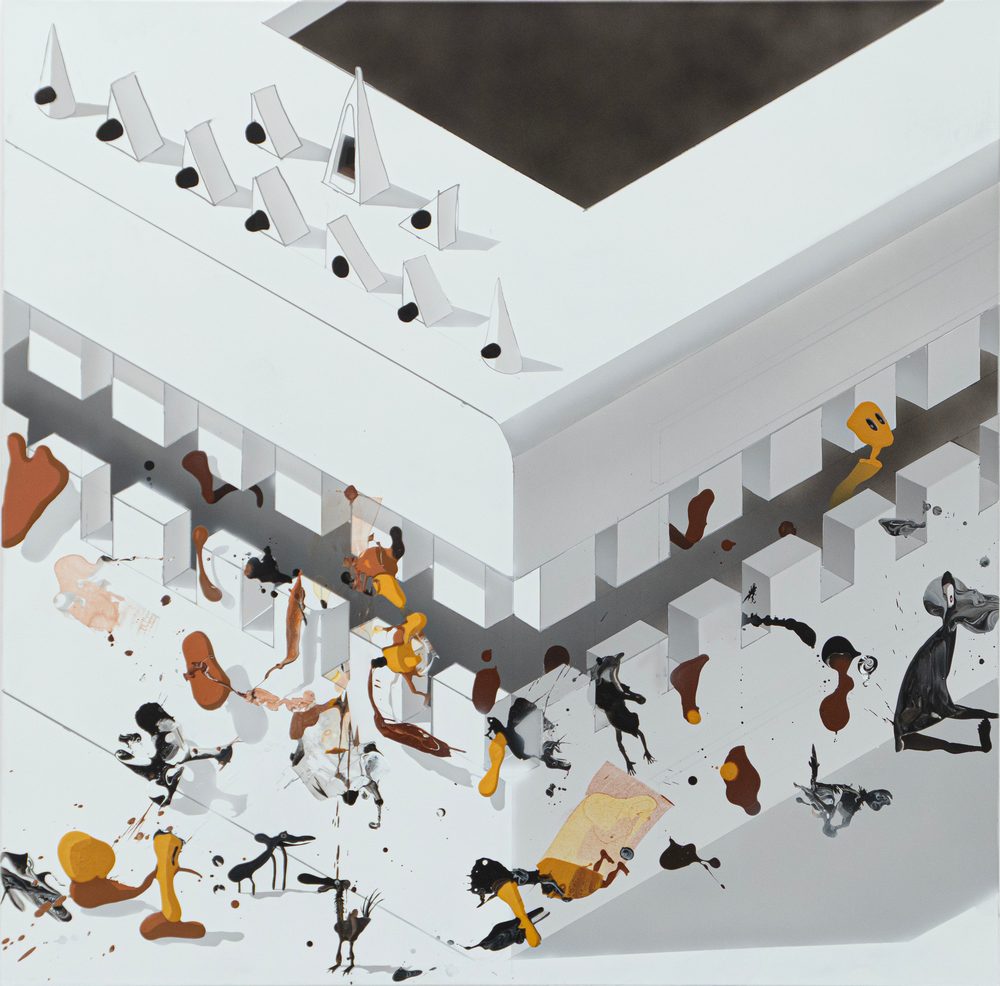
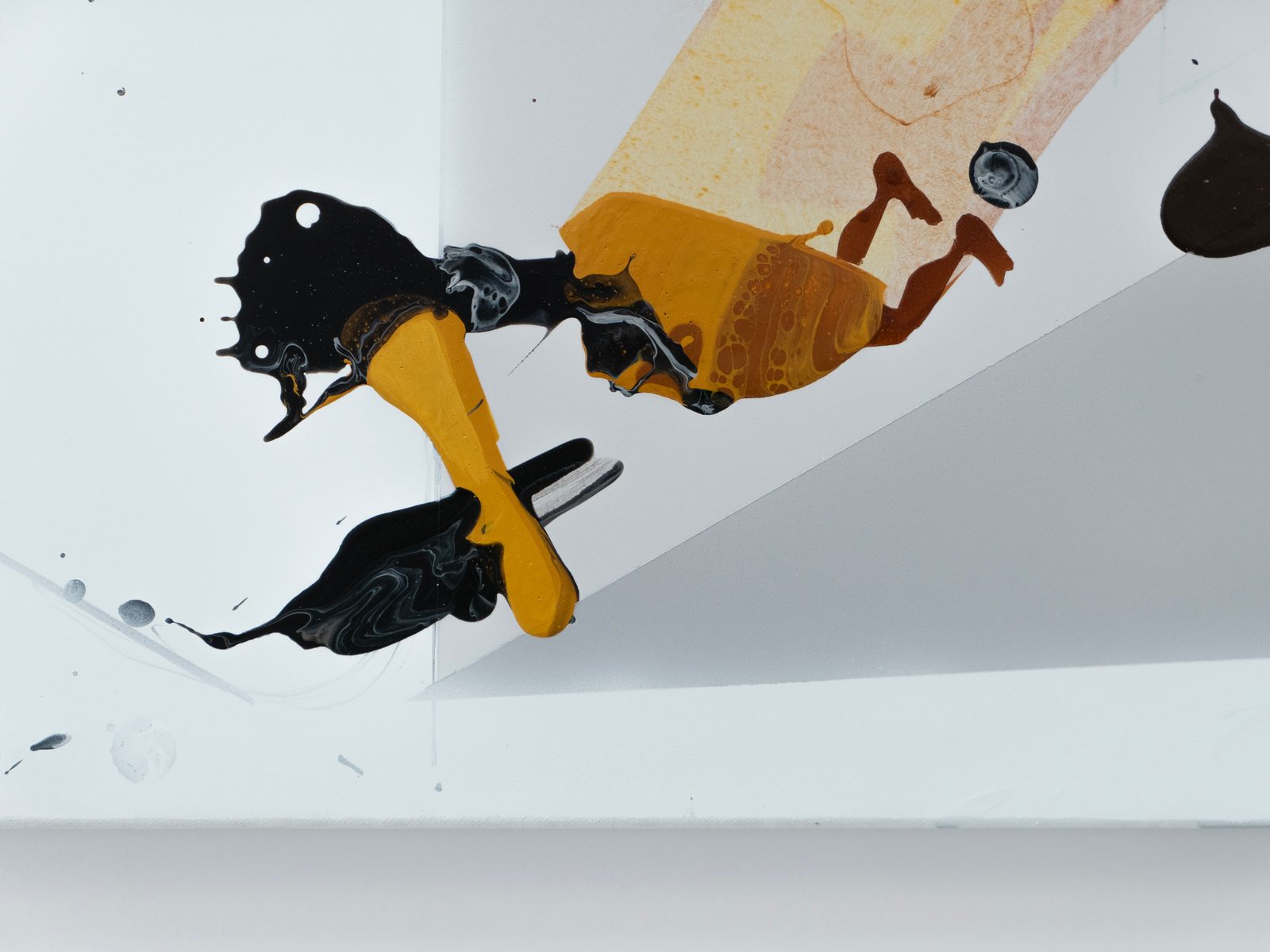
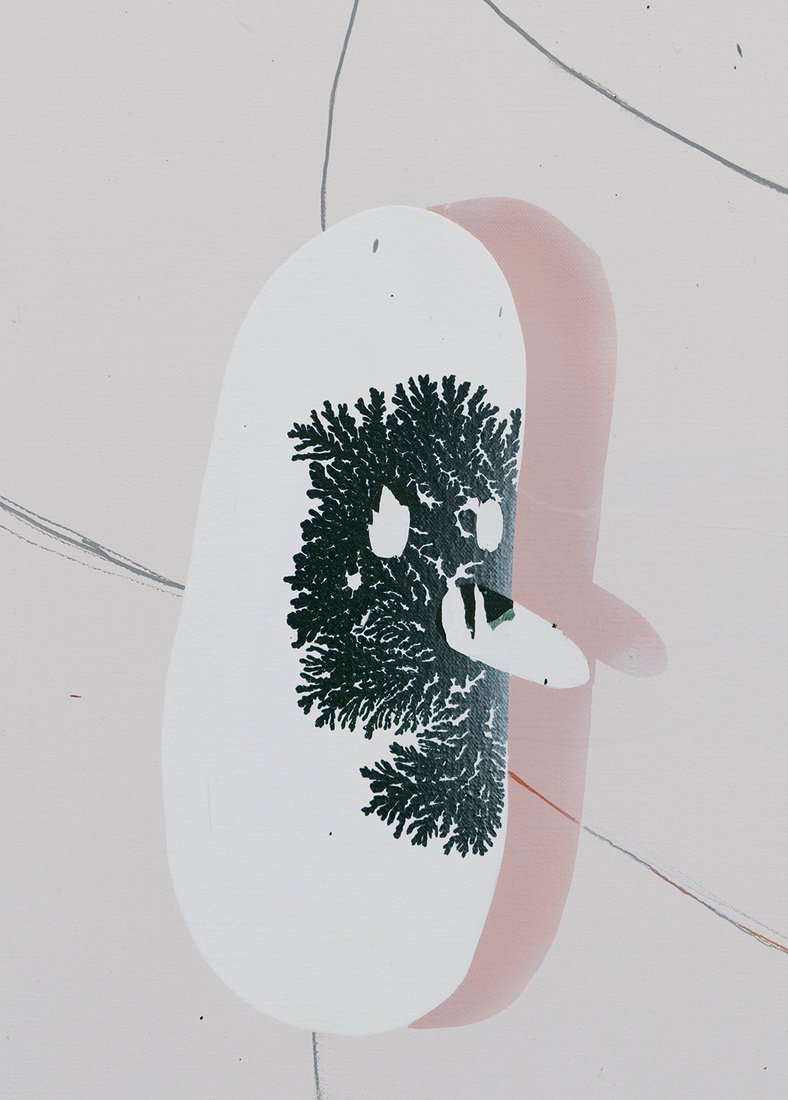
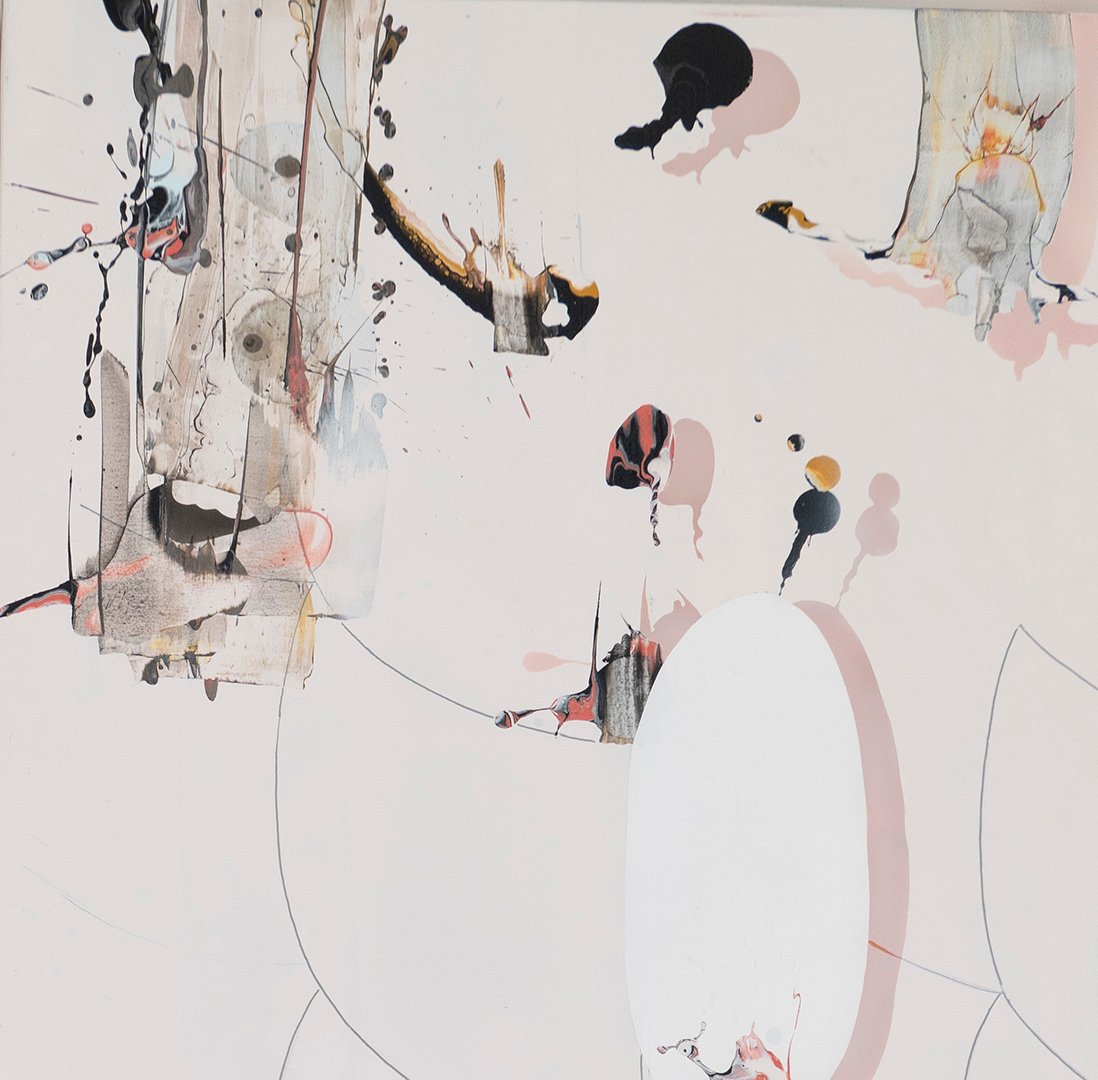
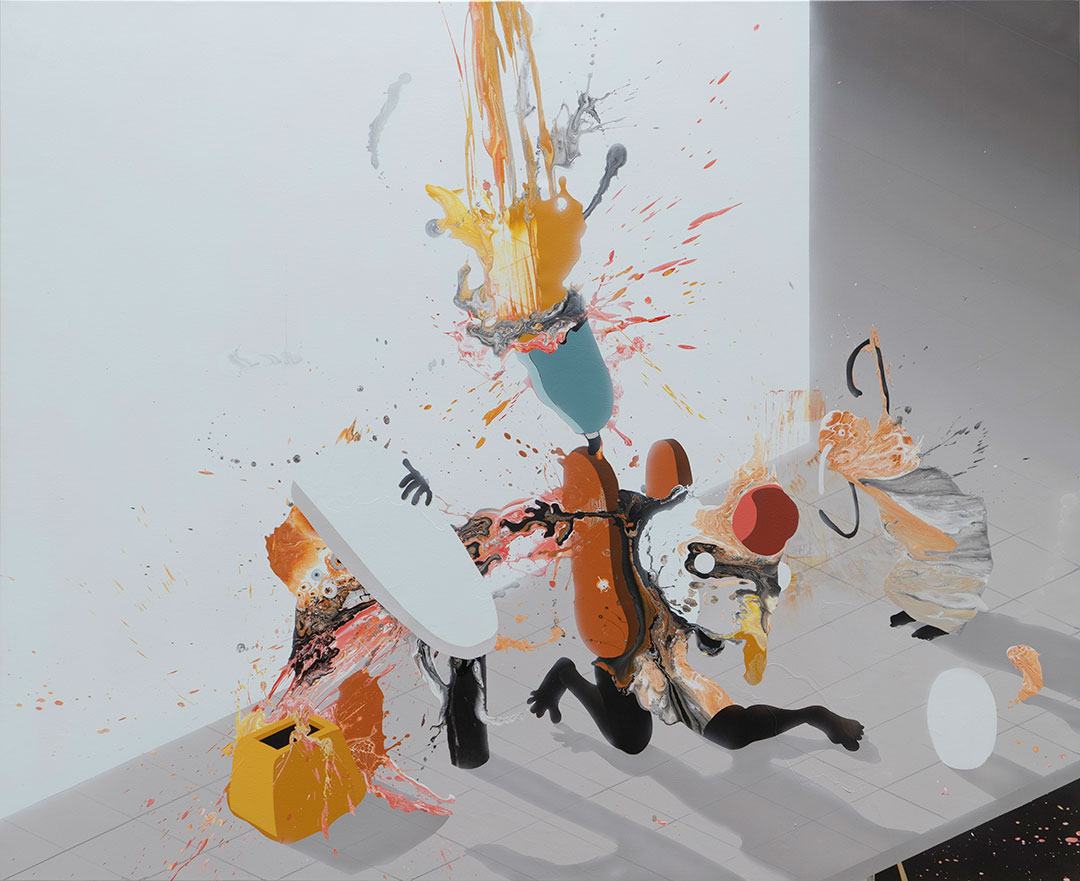
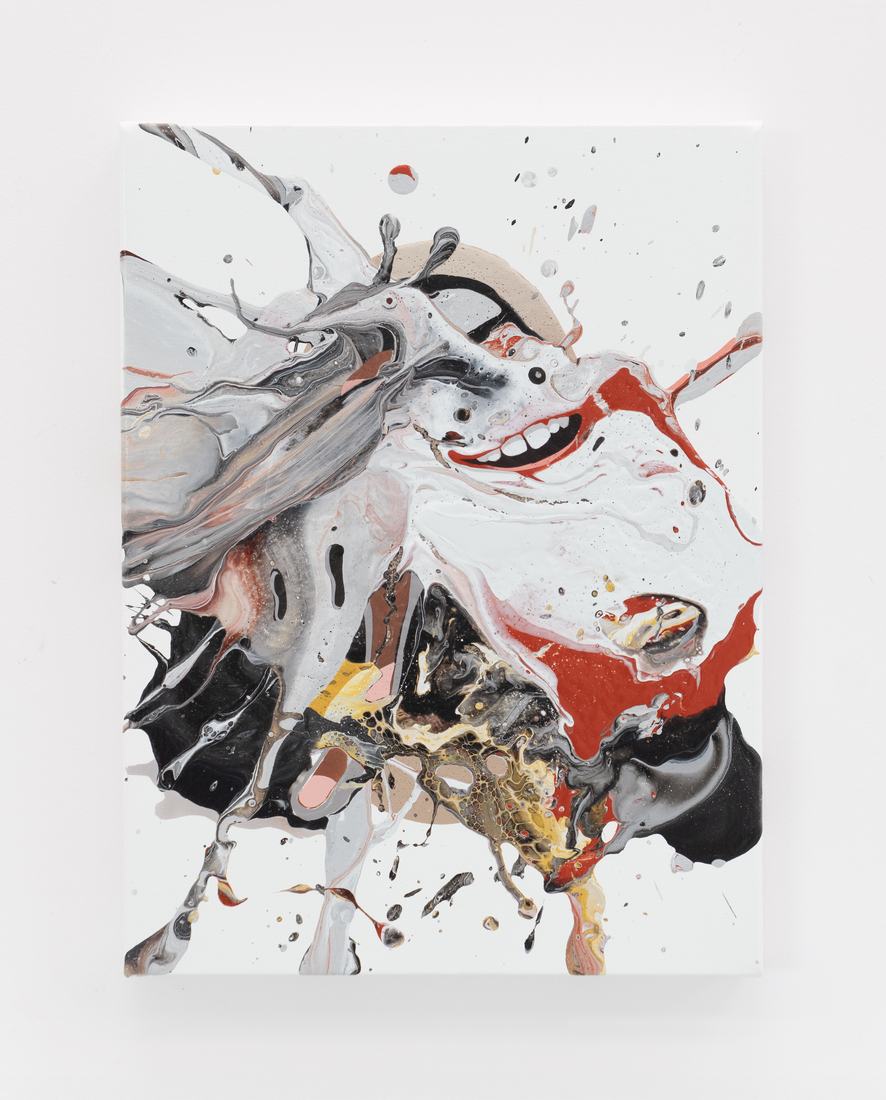
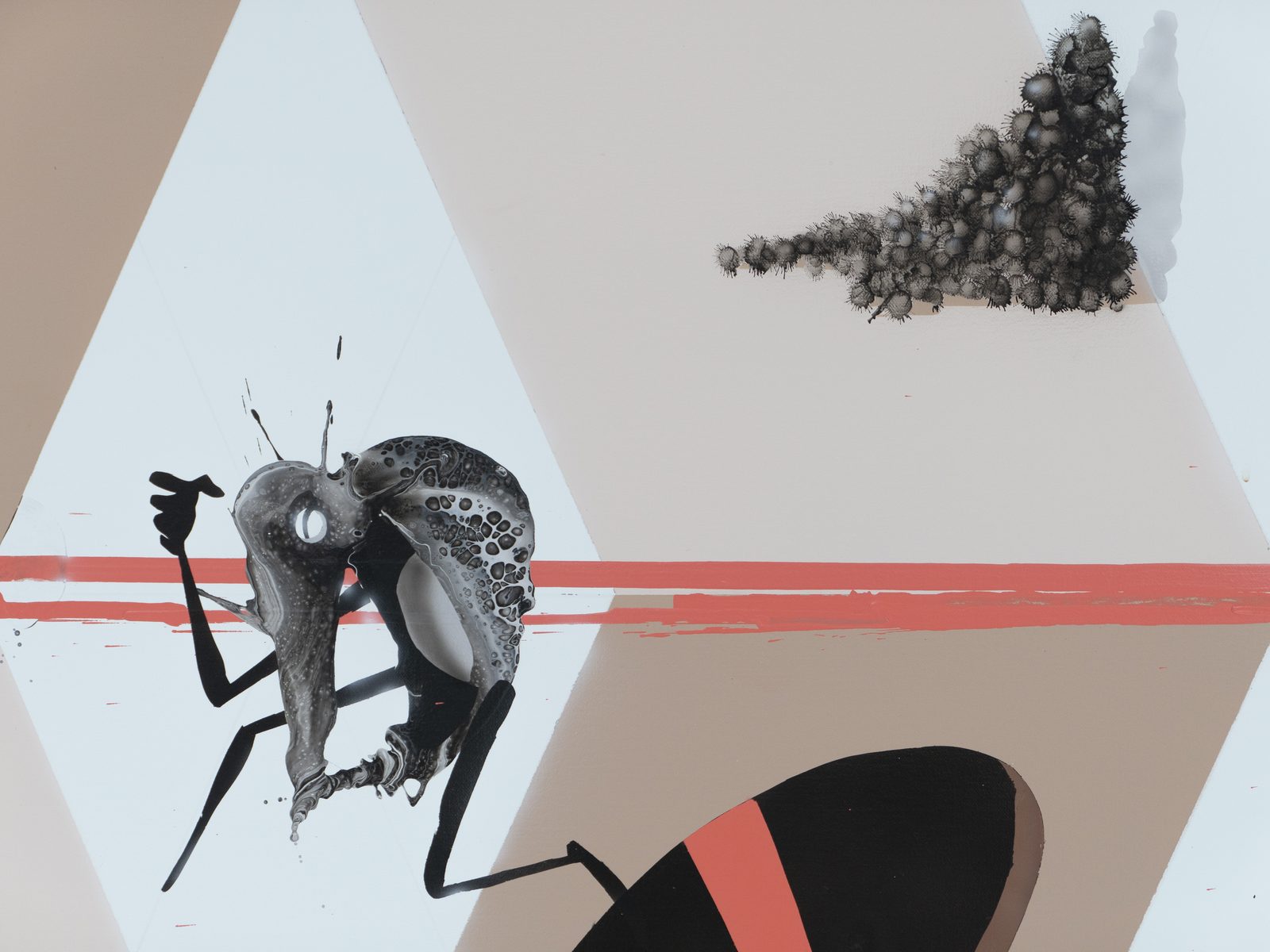
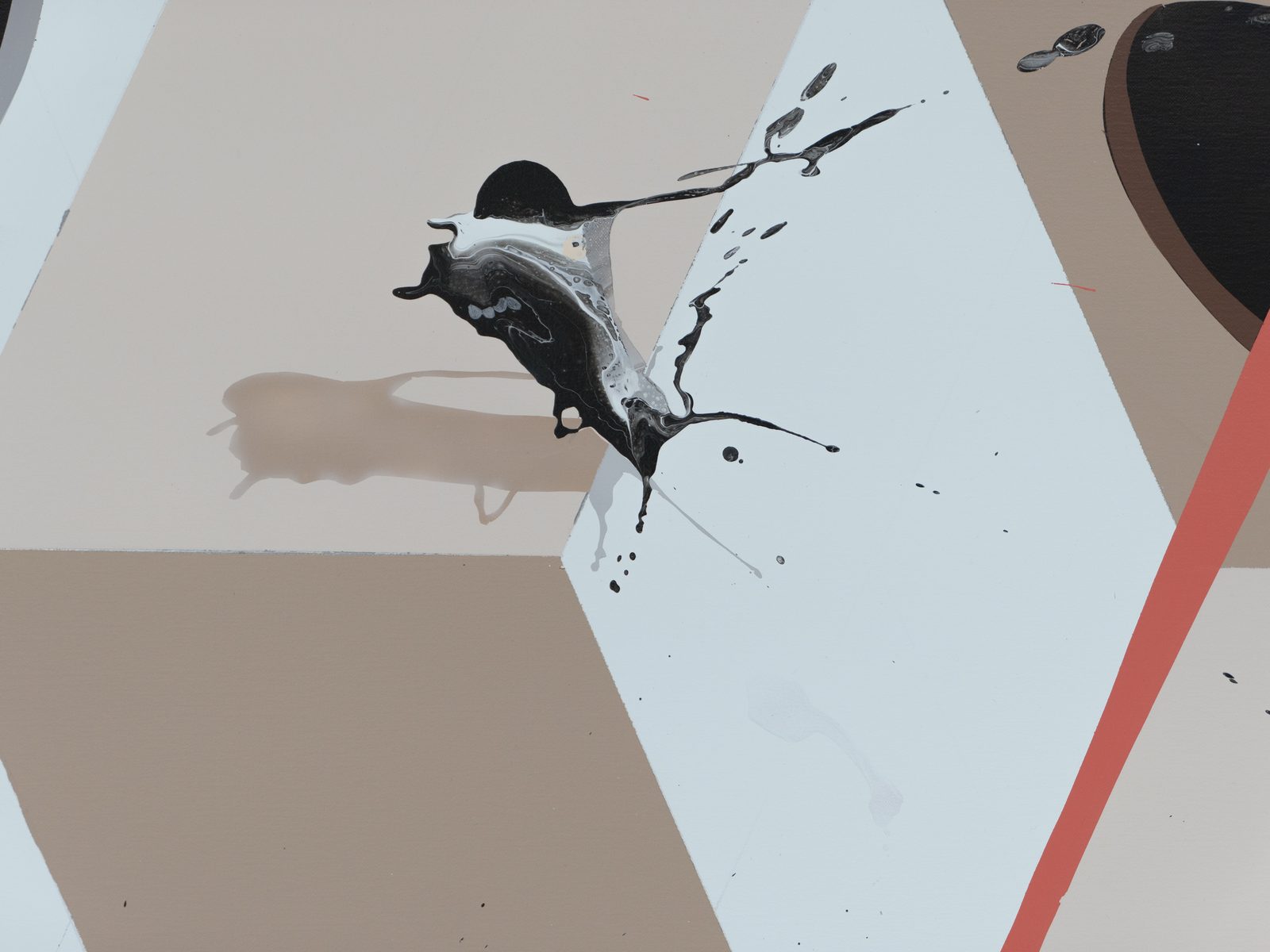
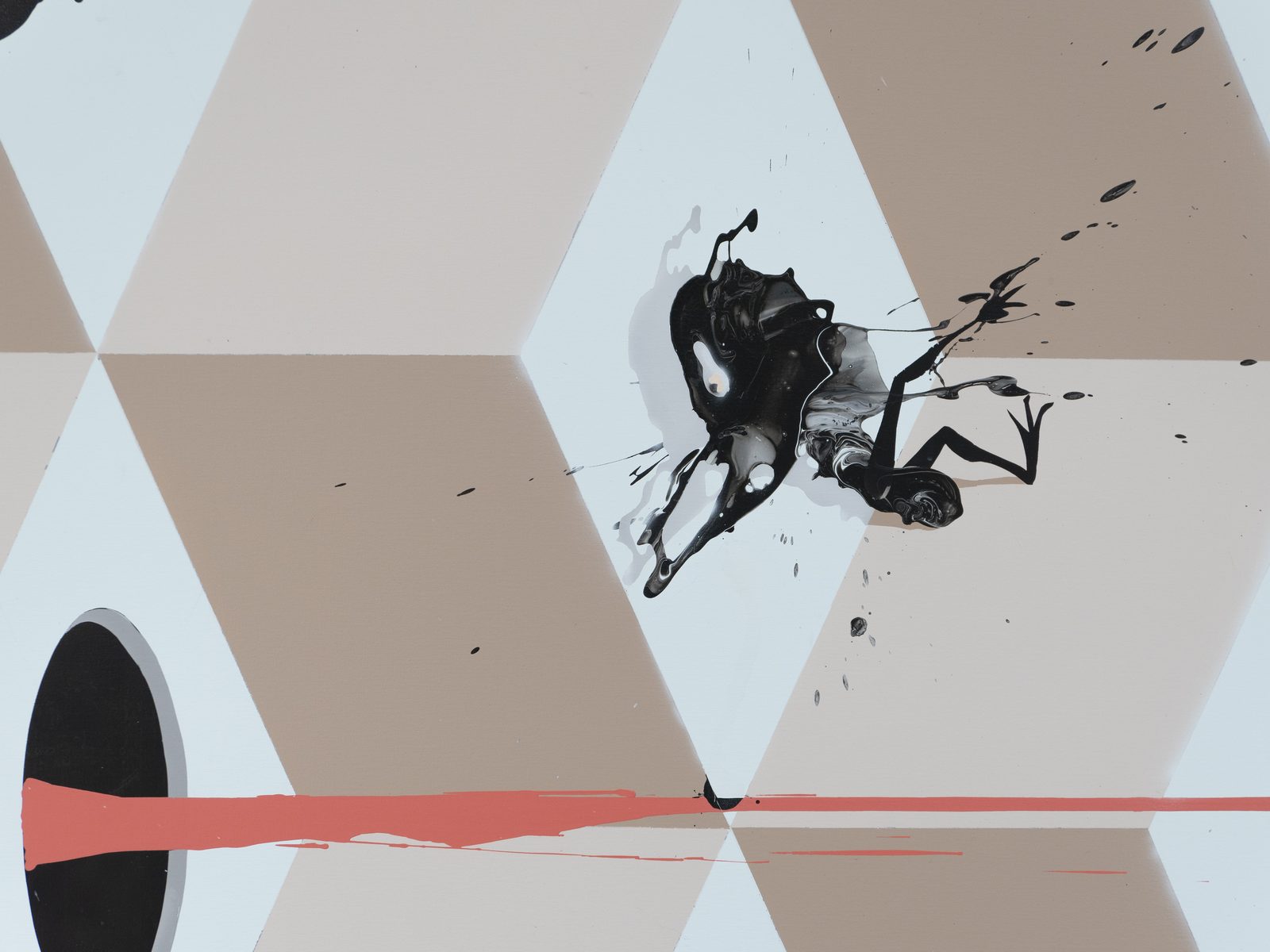
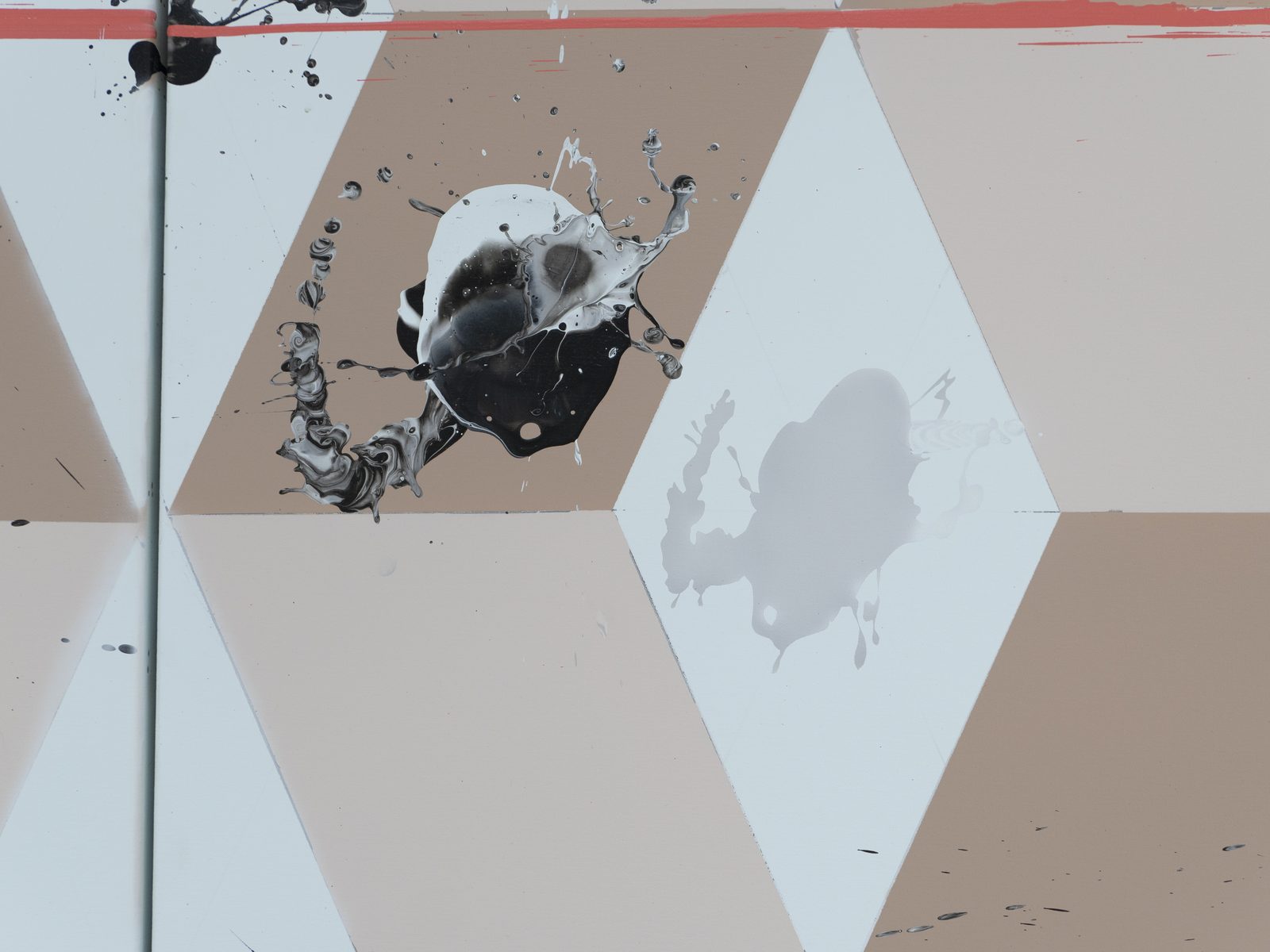
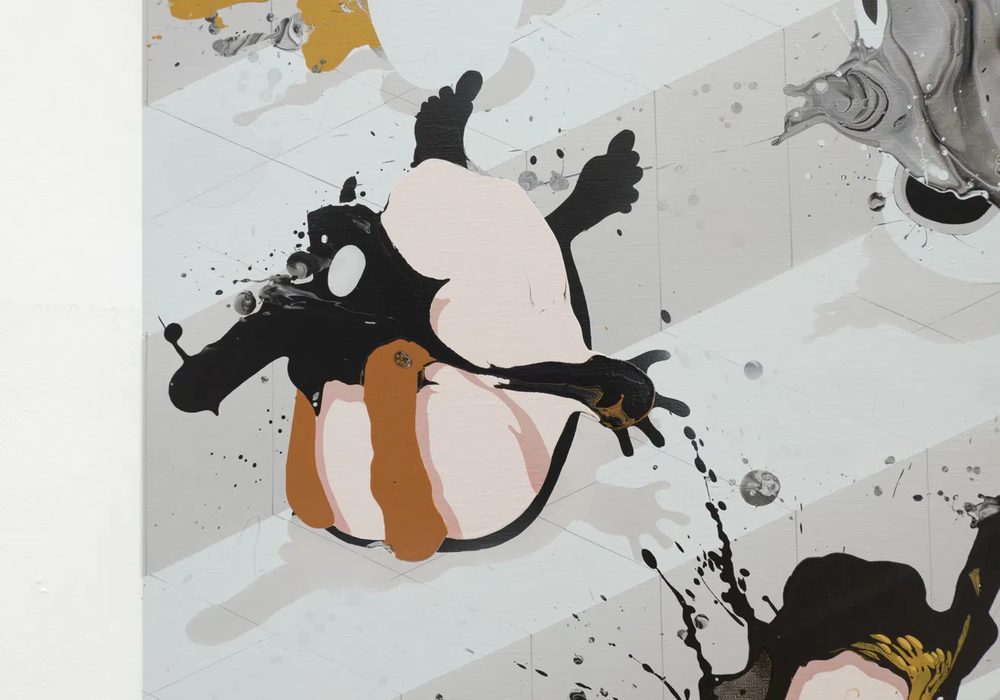
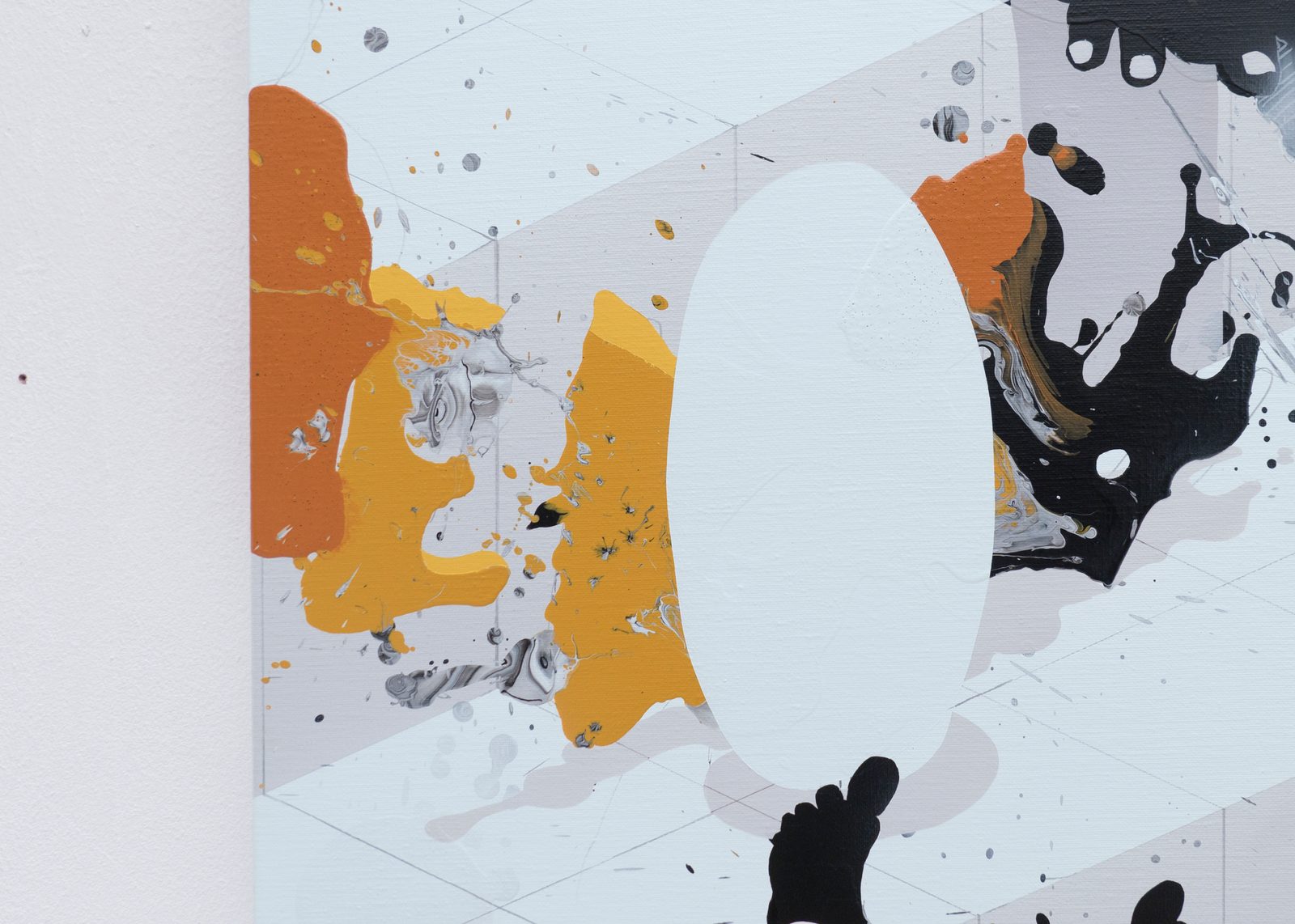
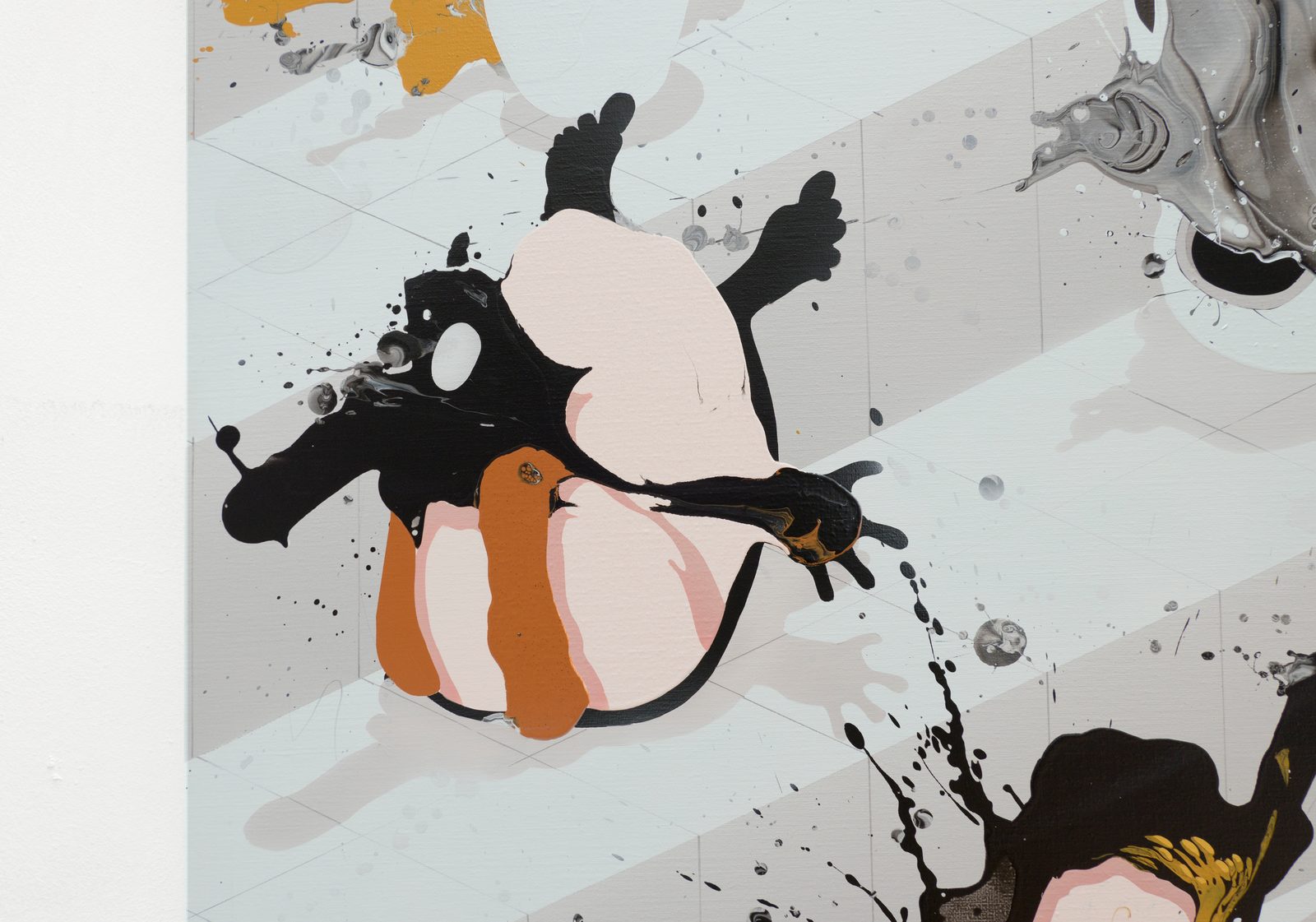
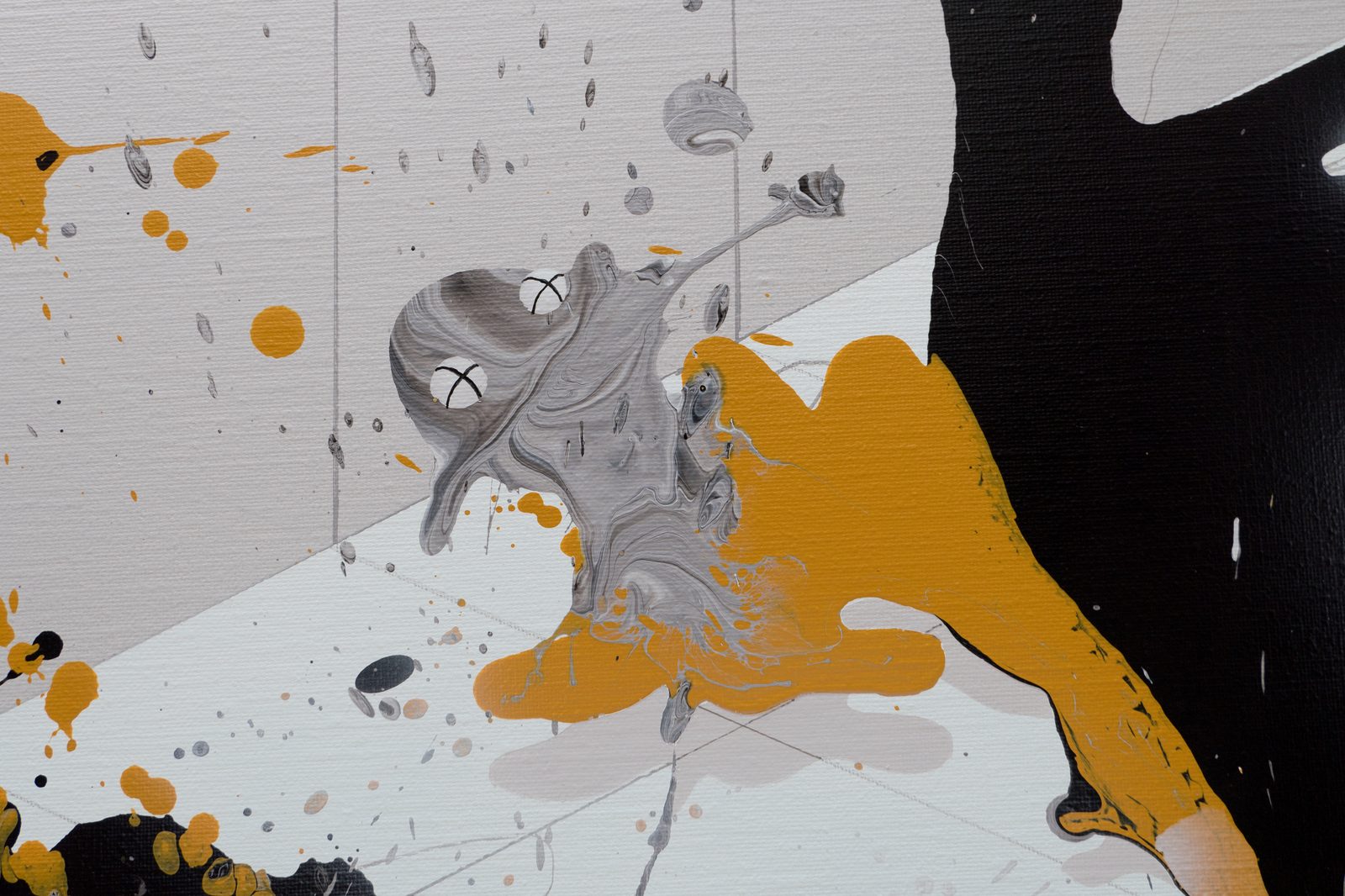
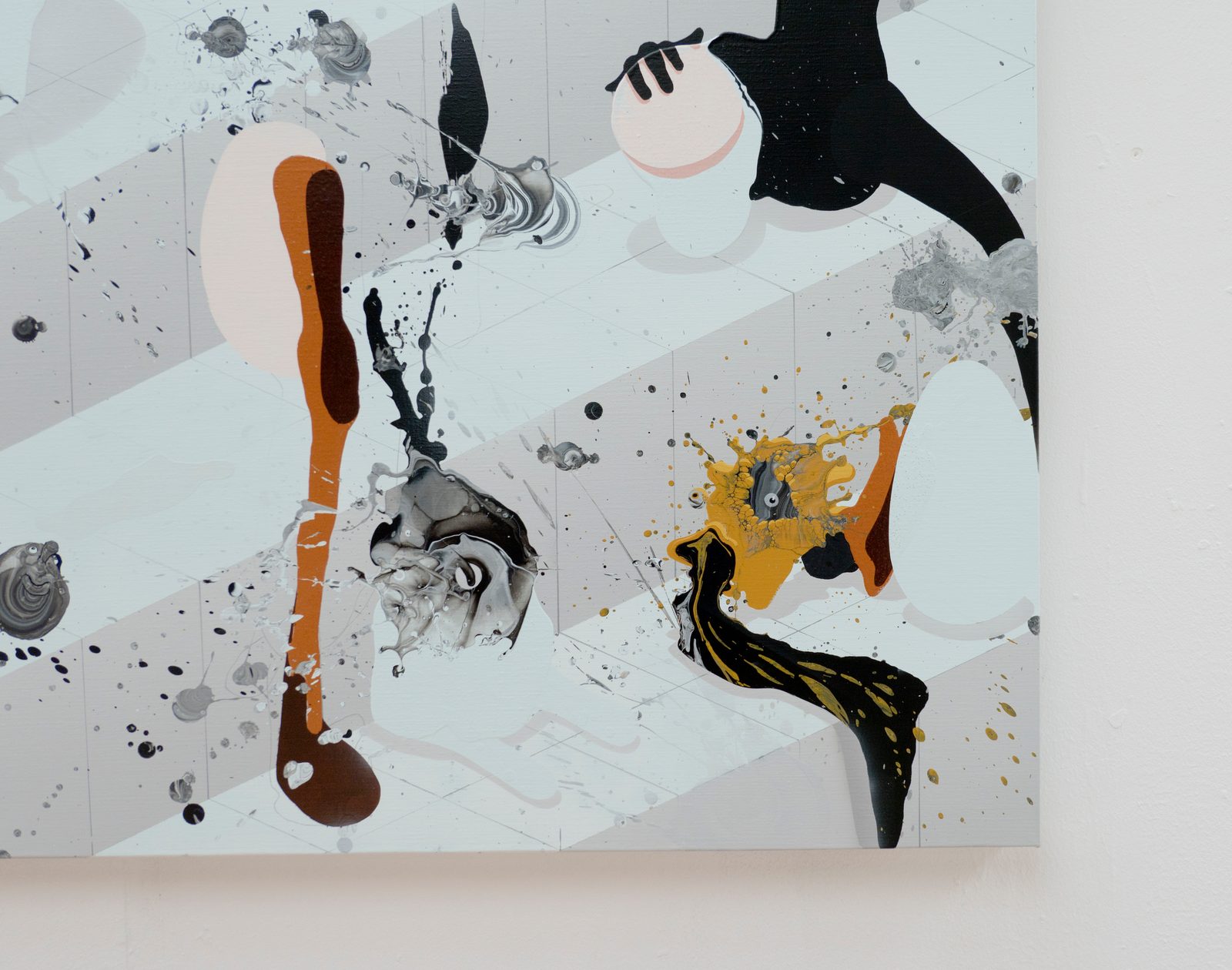
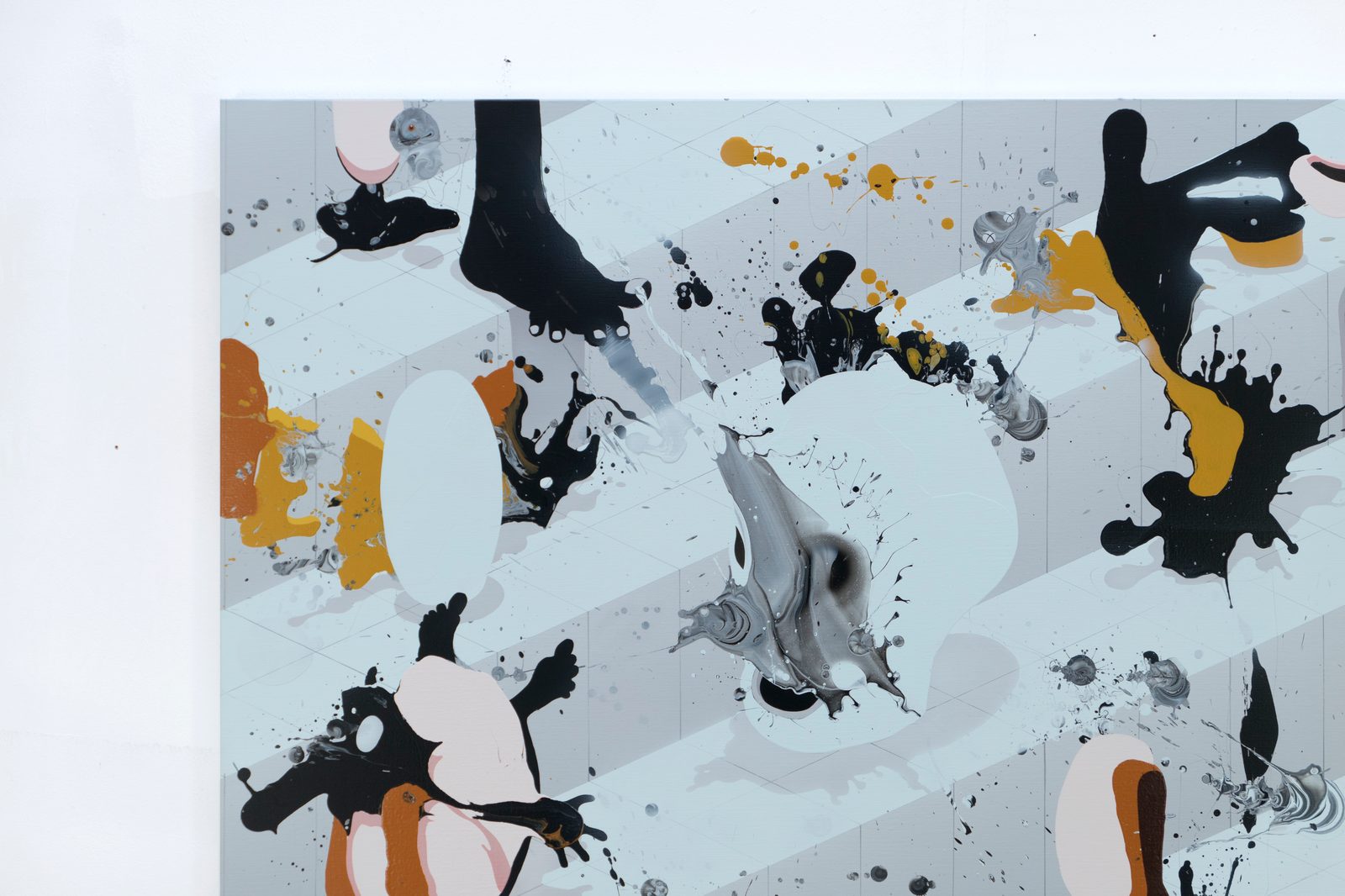
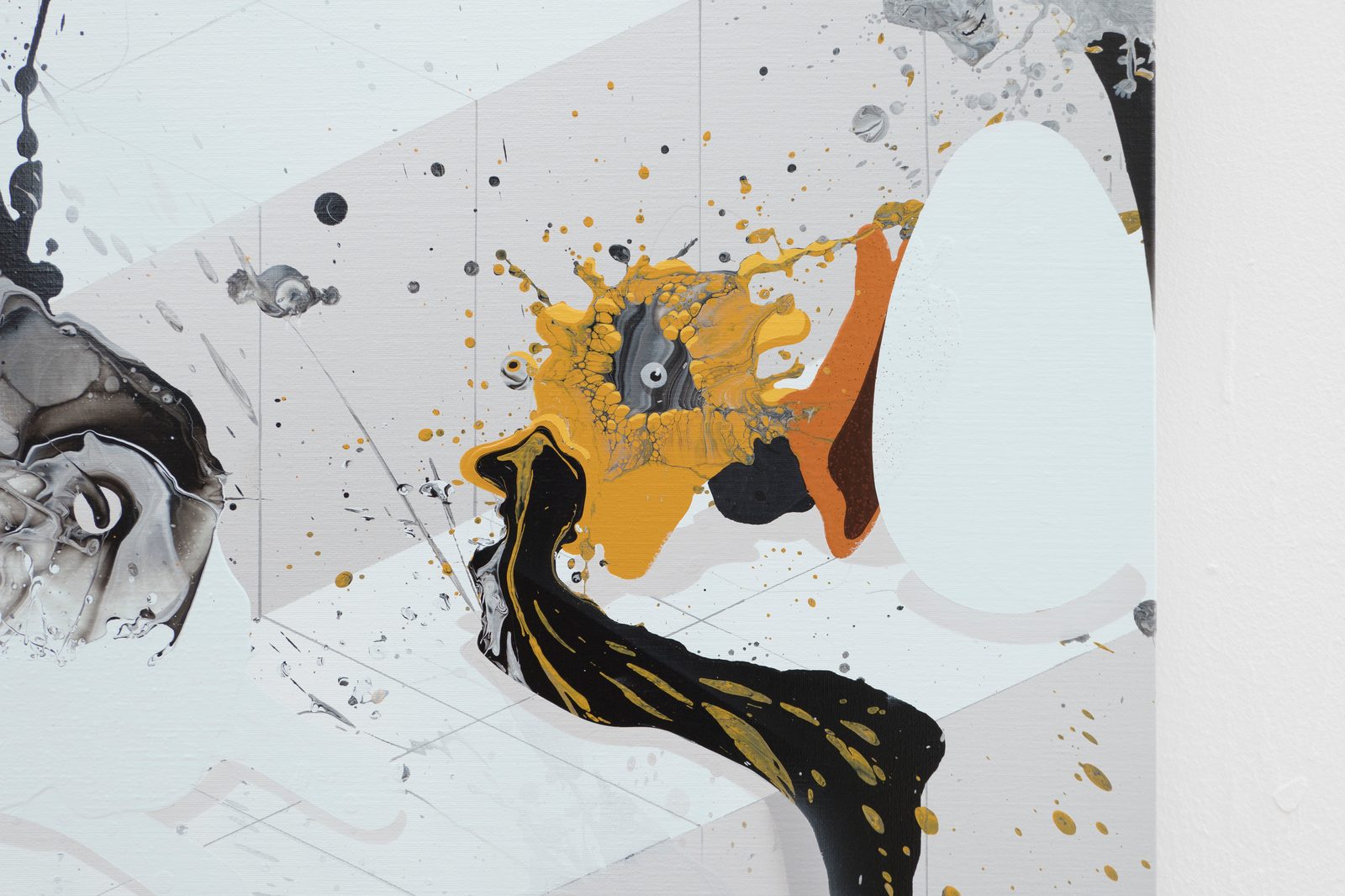
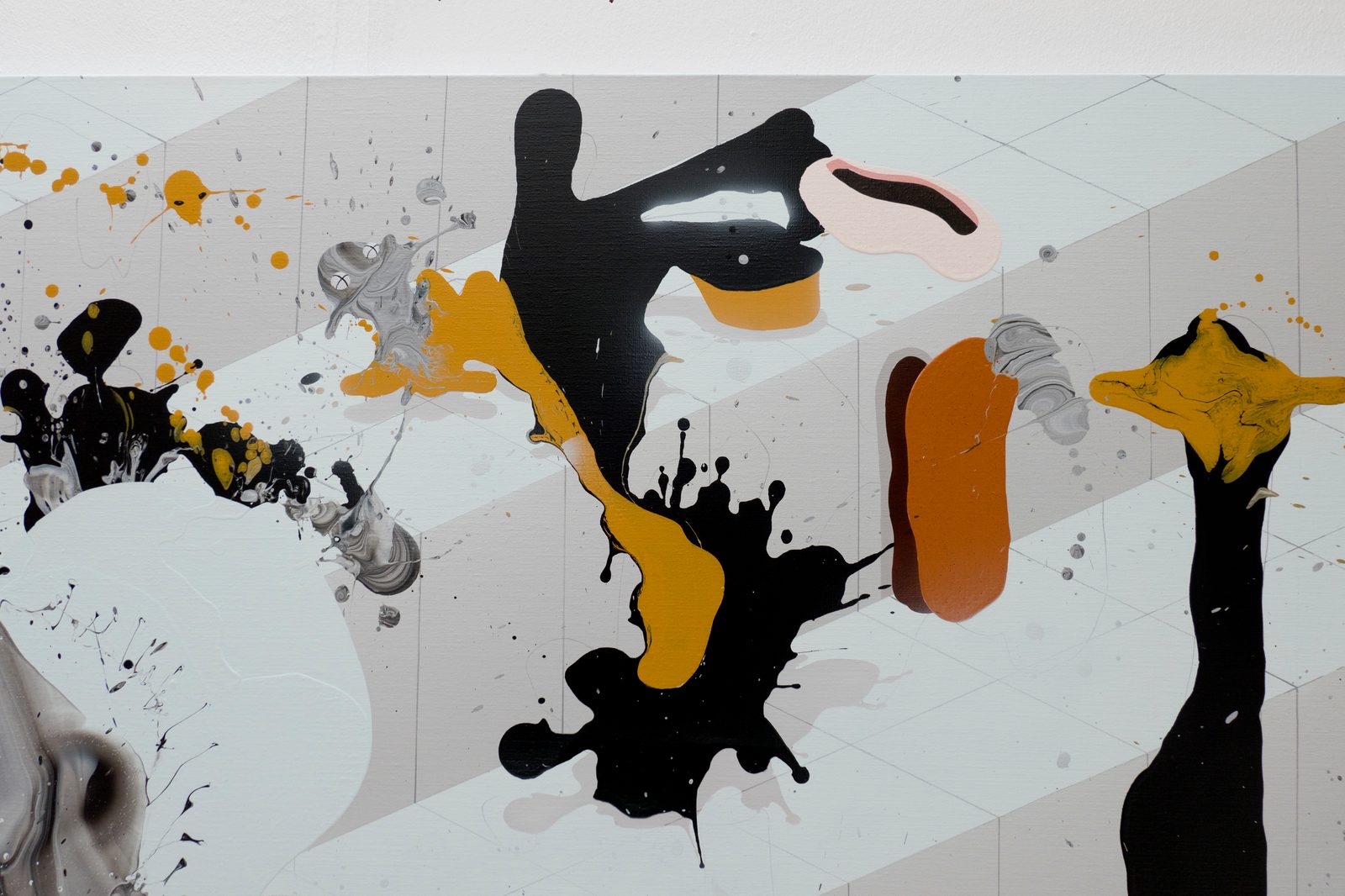
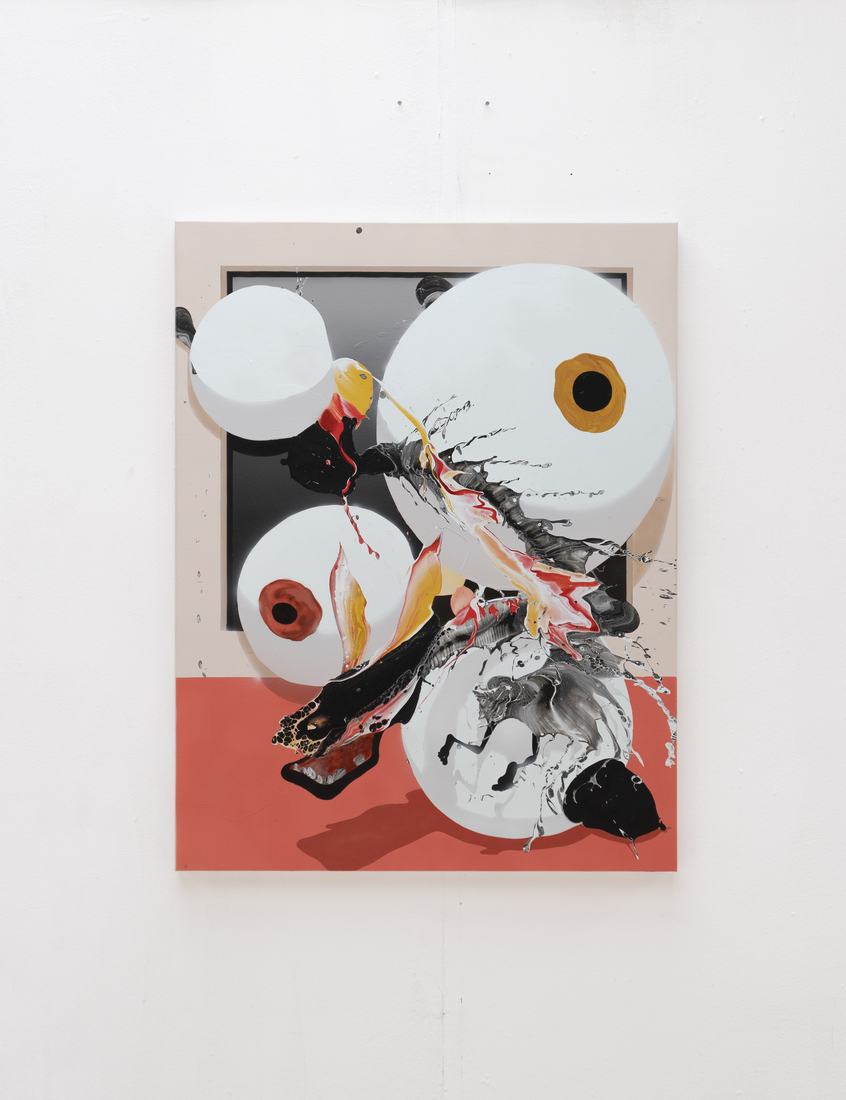
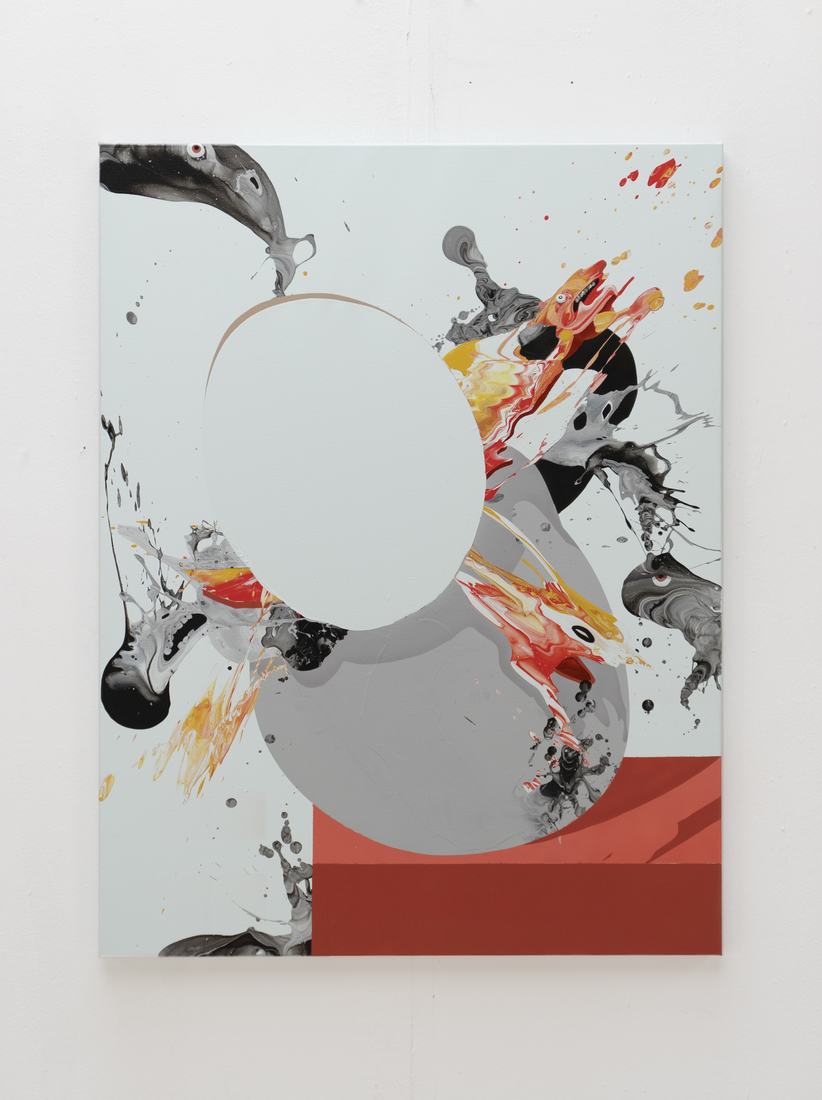
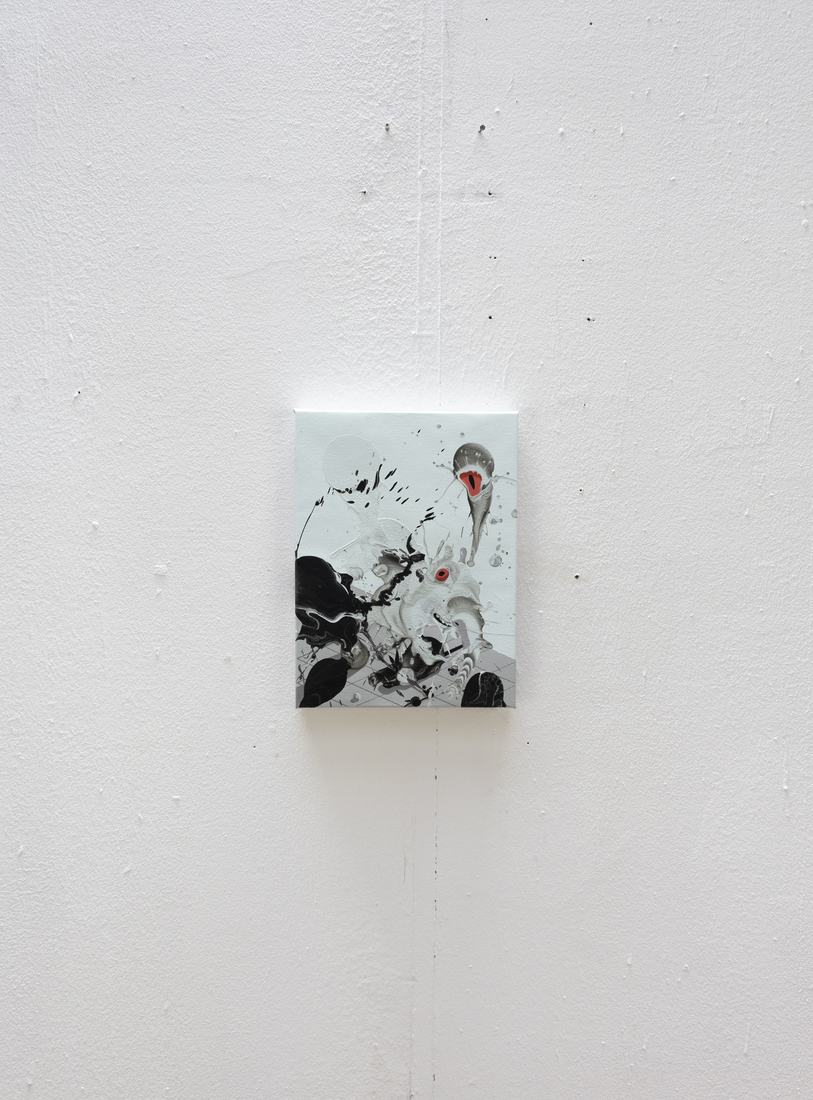
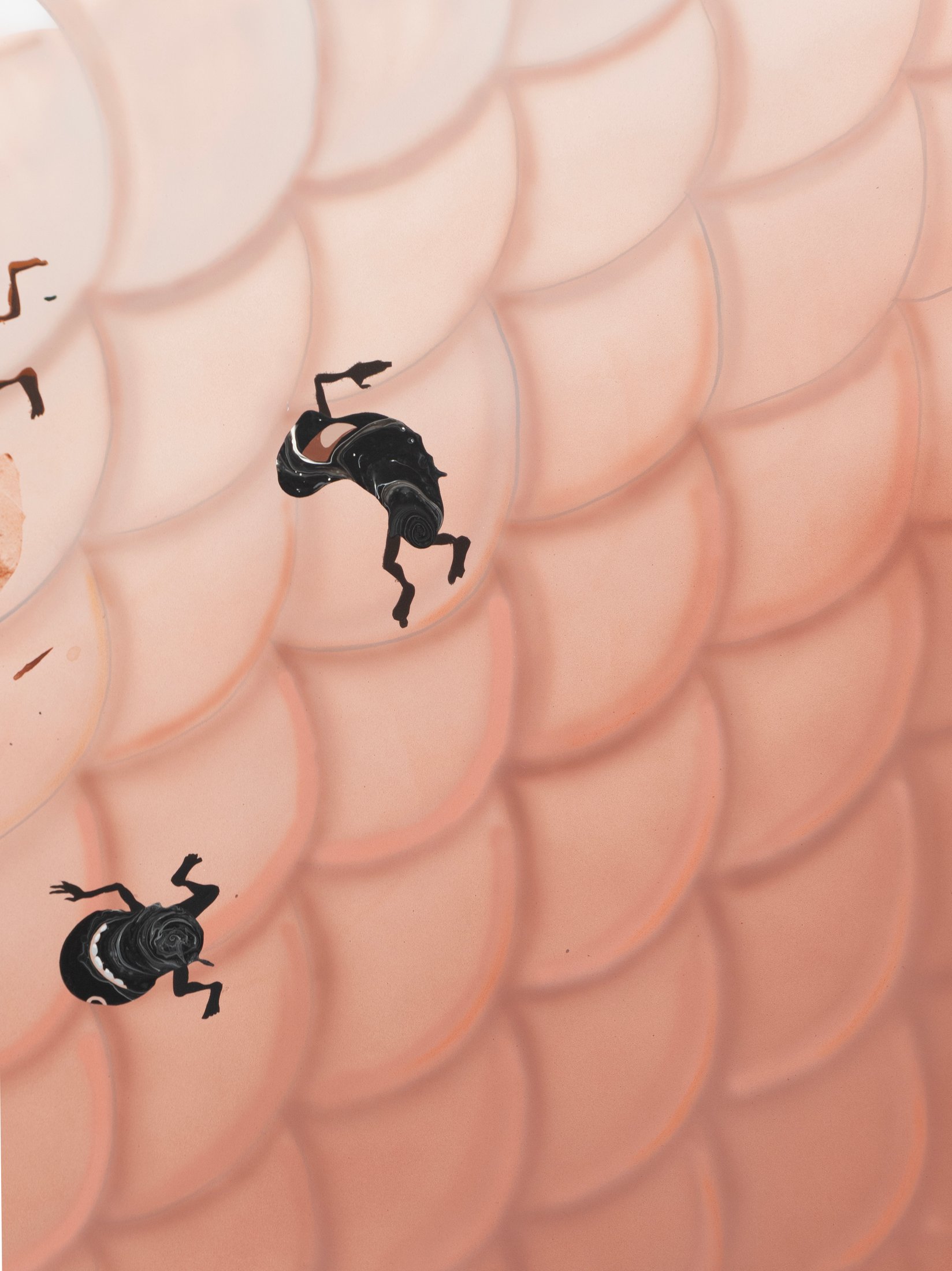
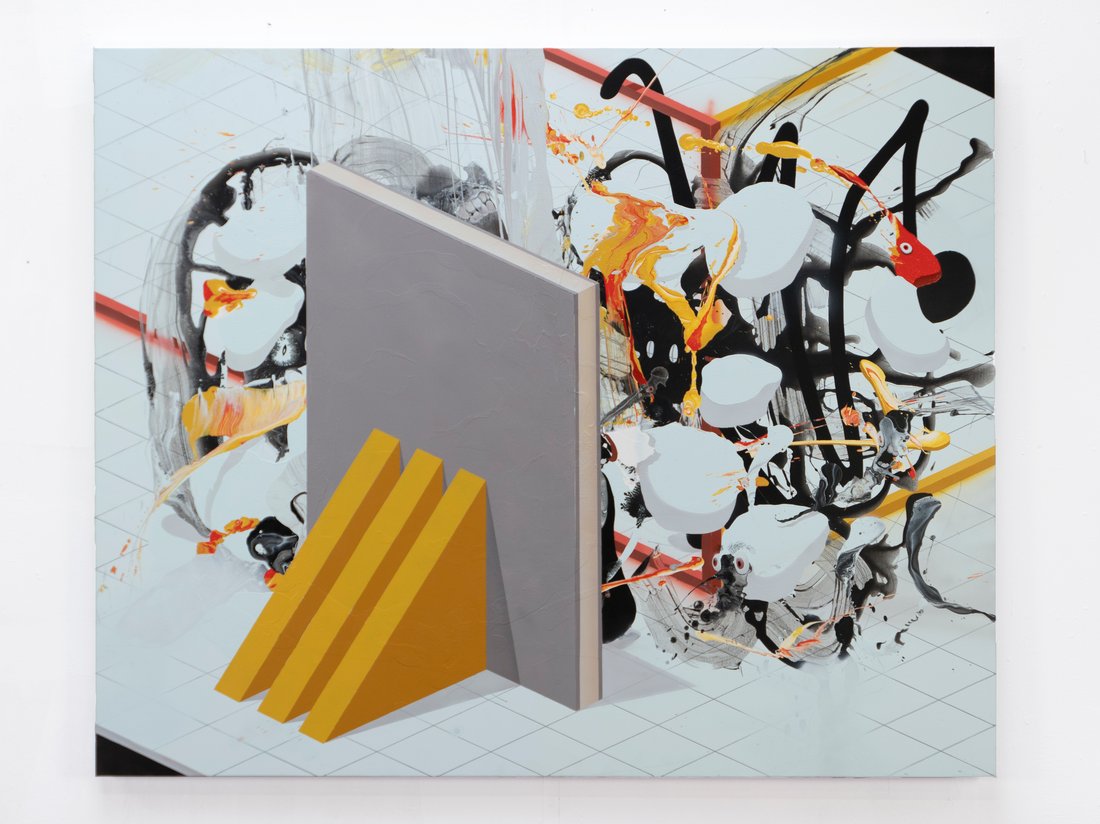
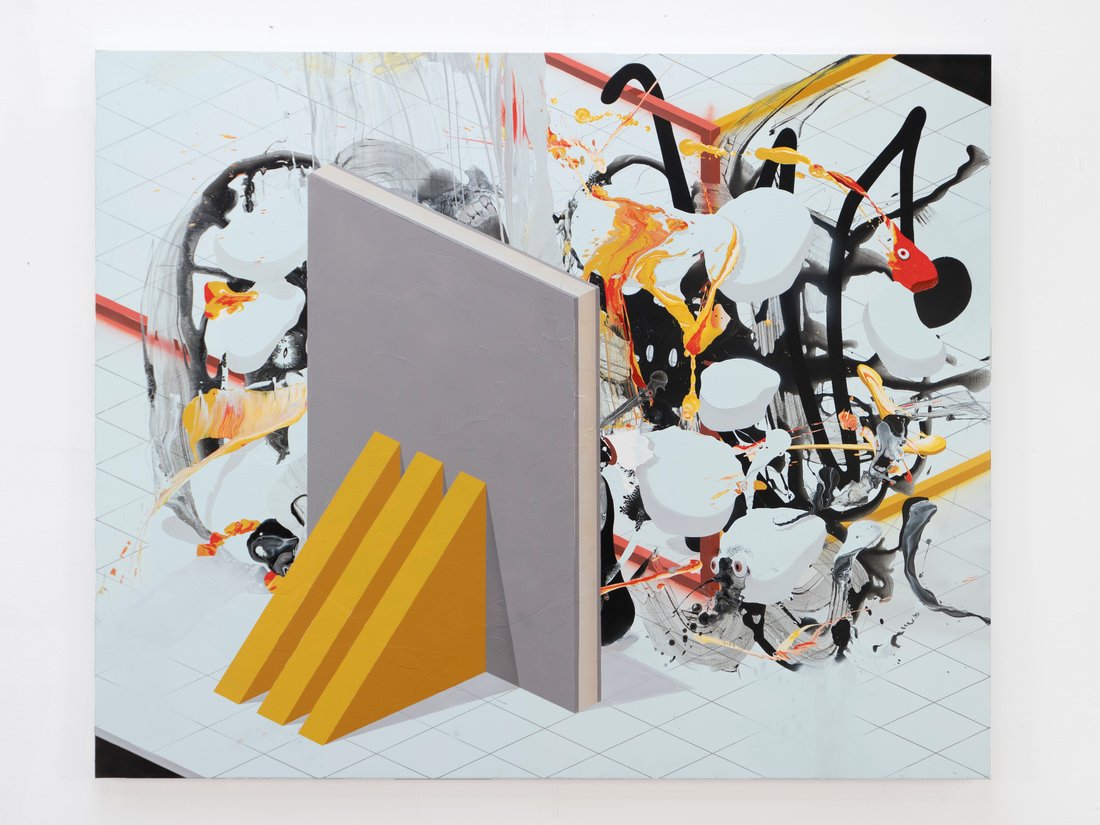
A selection of solo exhibitions and the projects built around them.
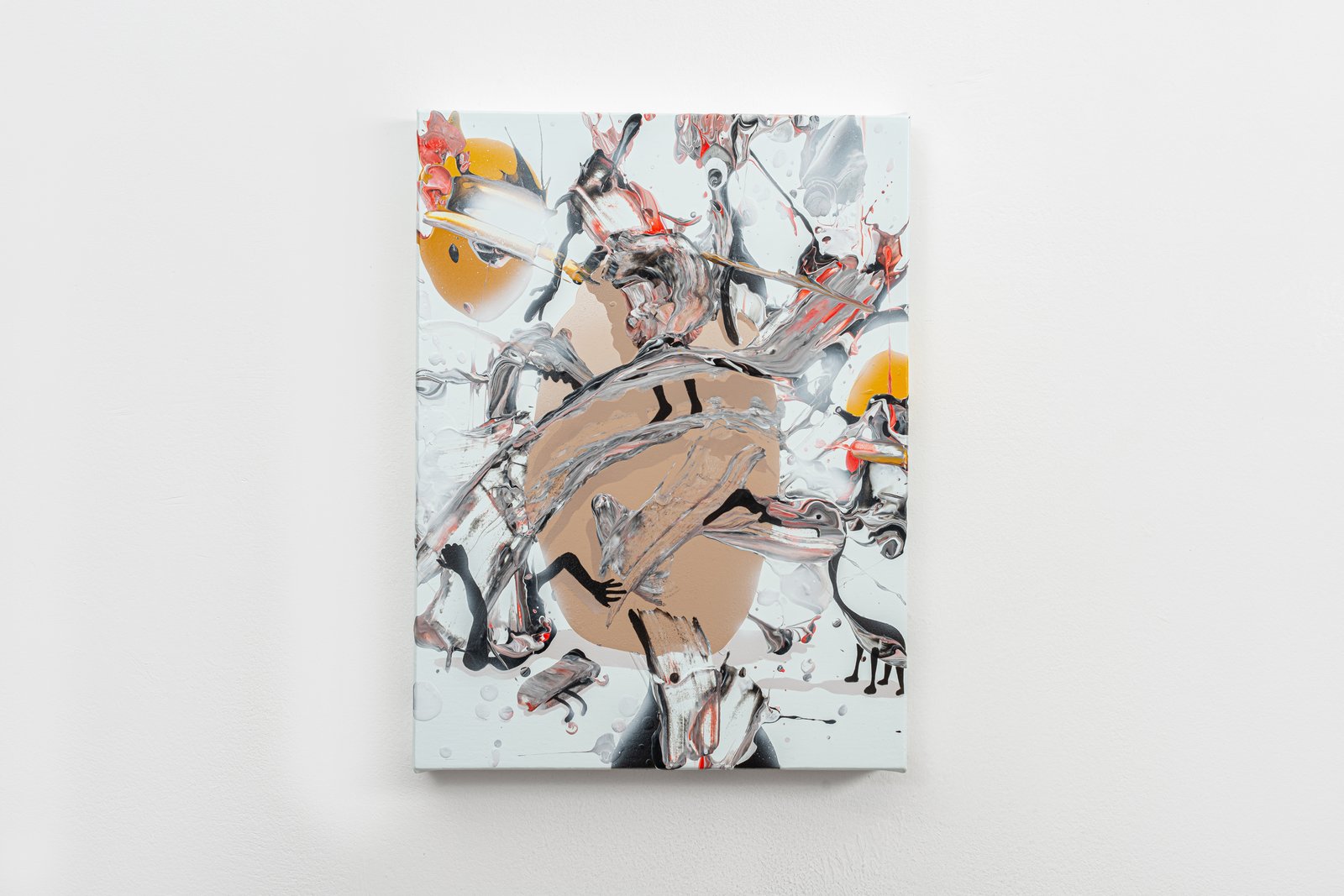
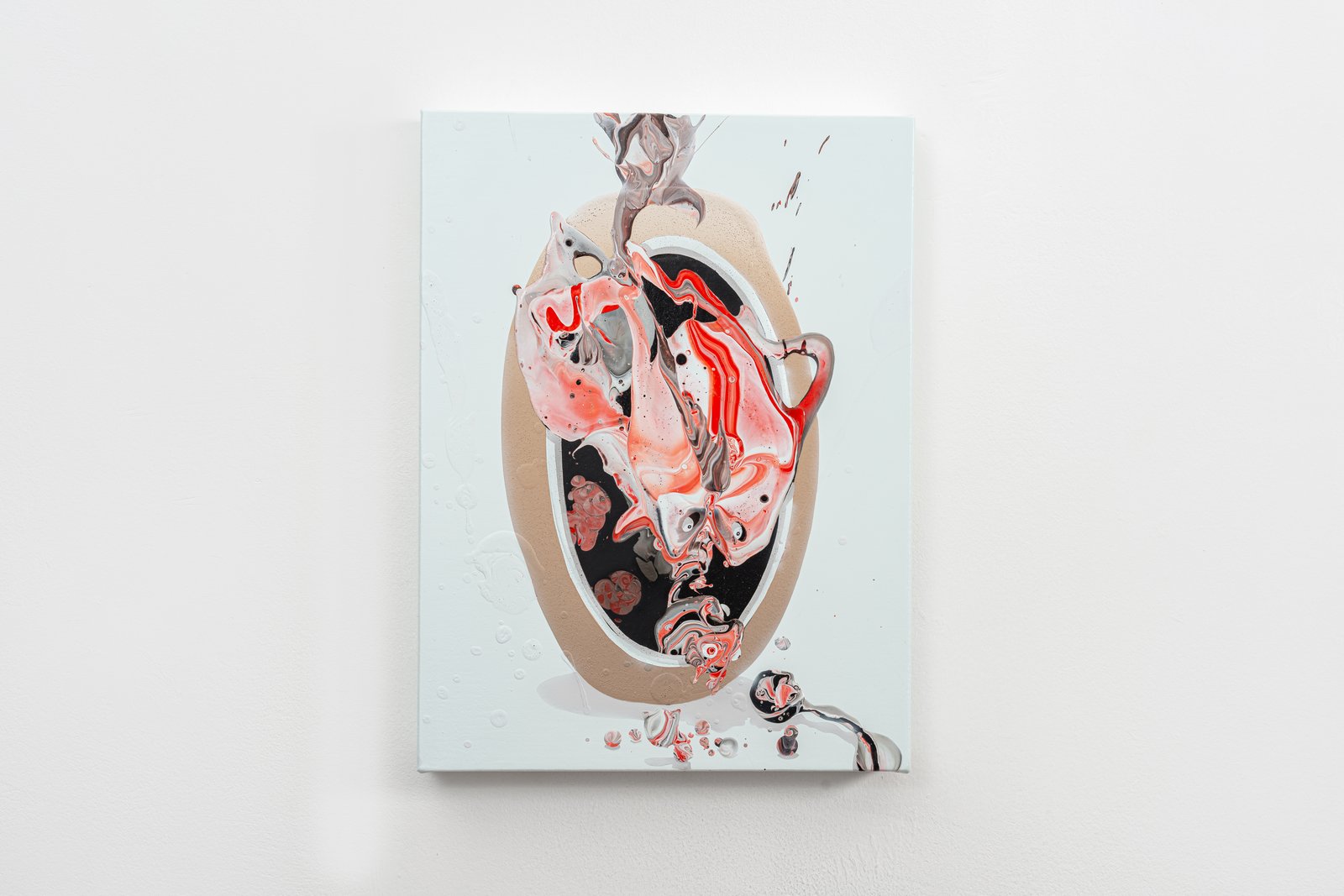
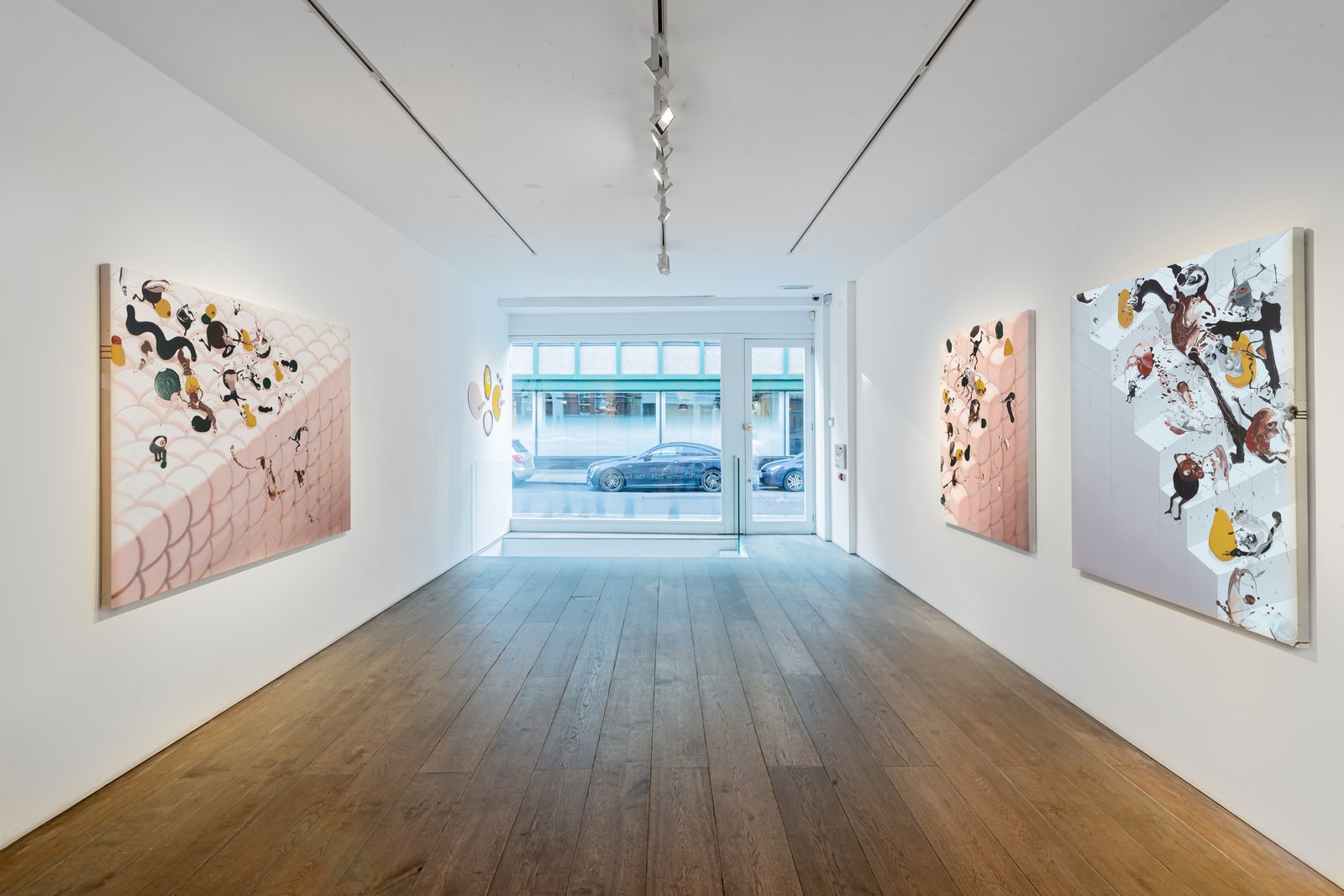
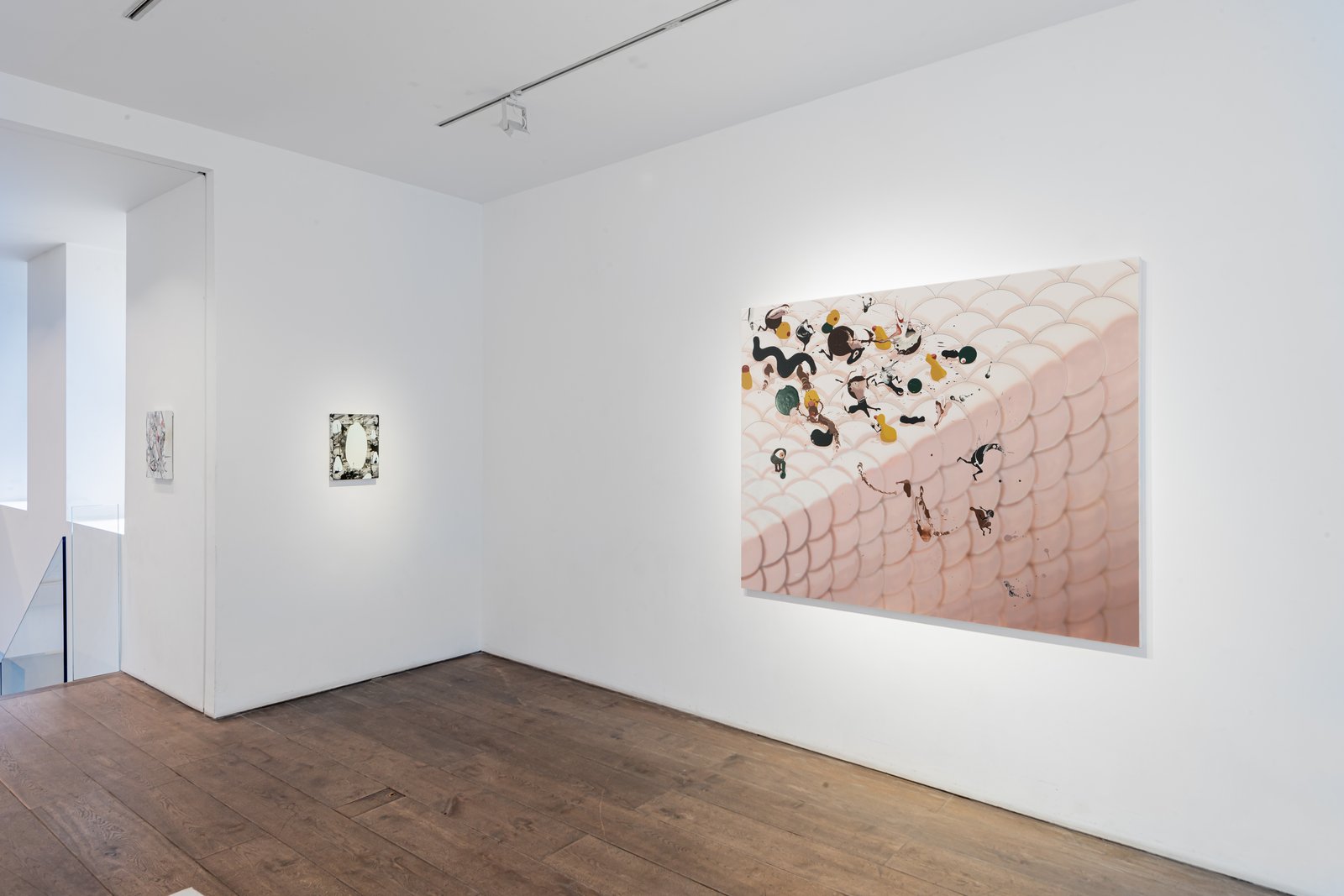
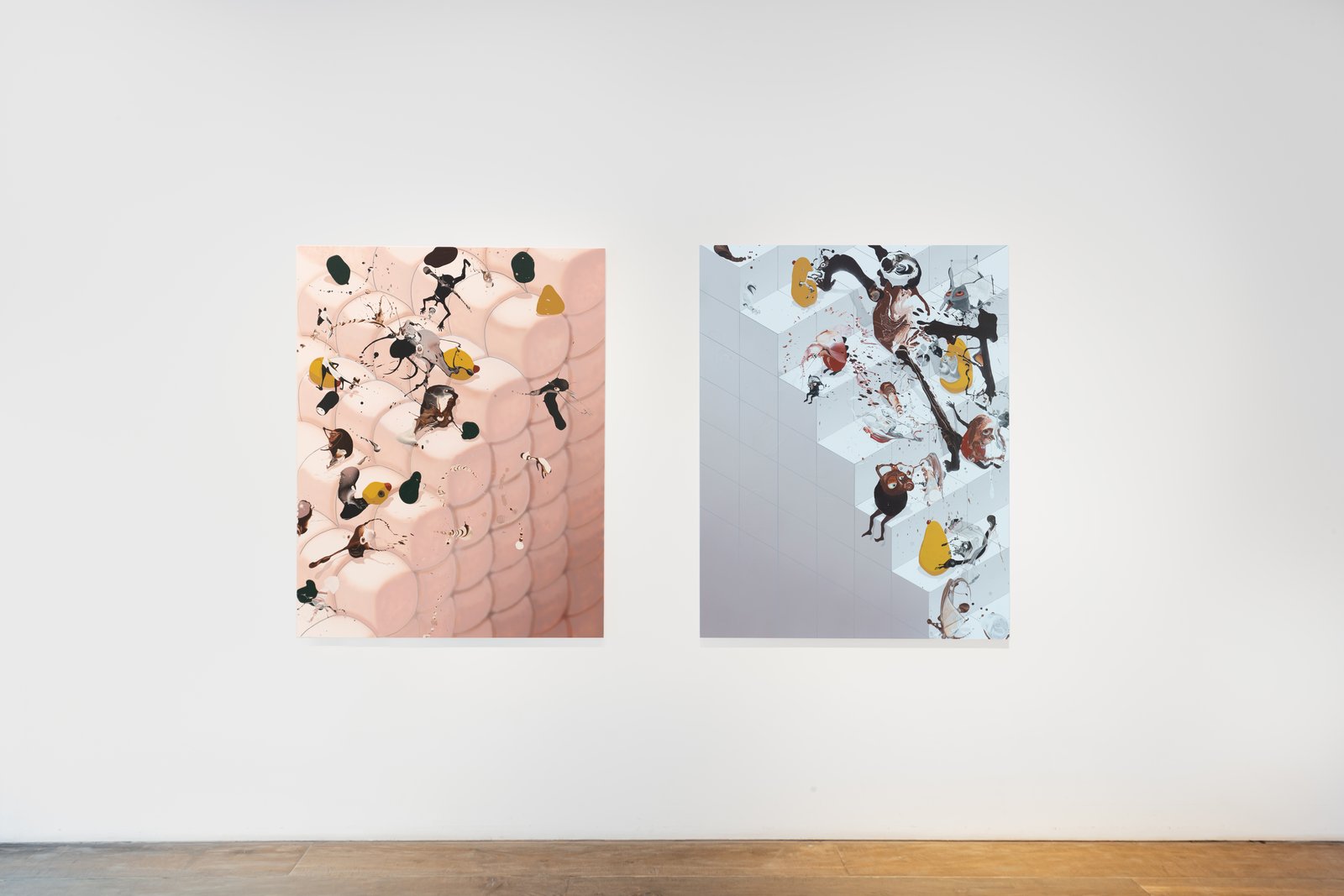
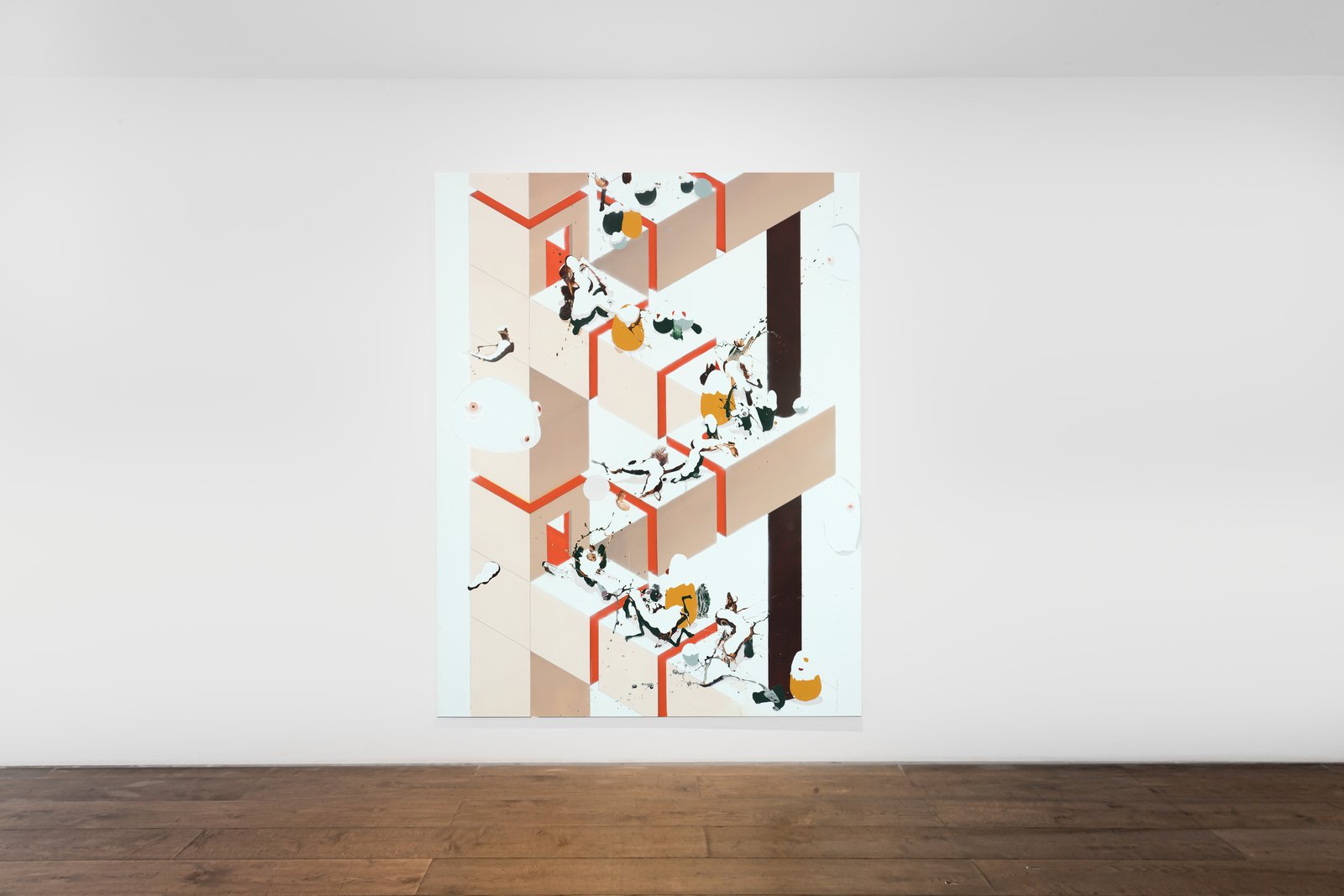
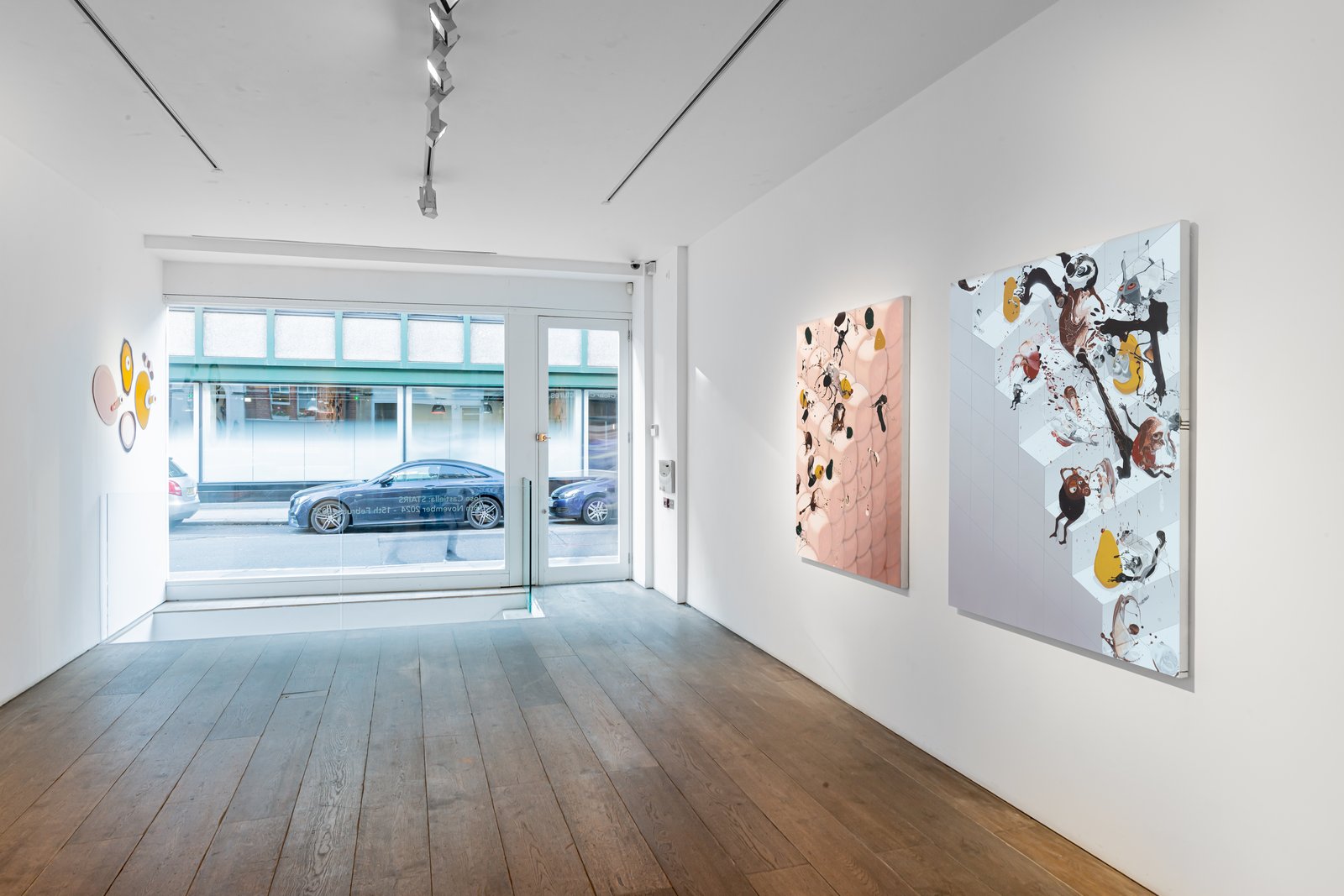
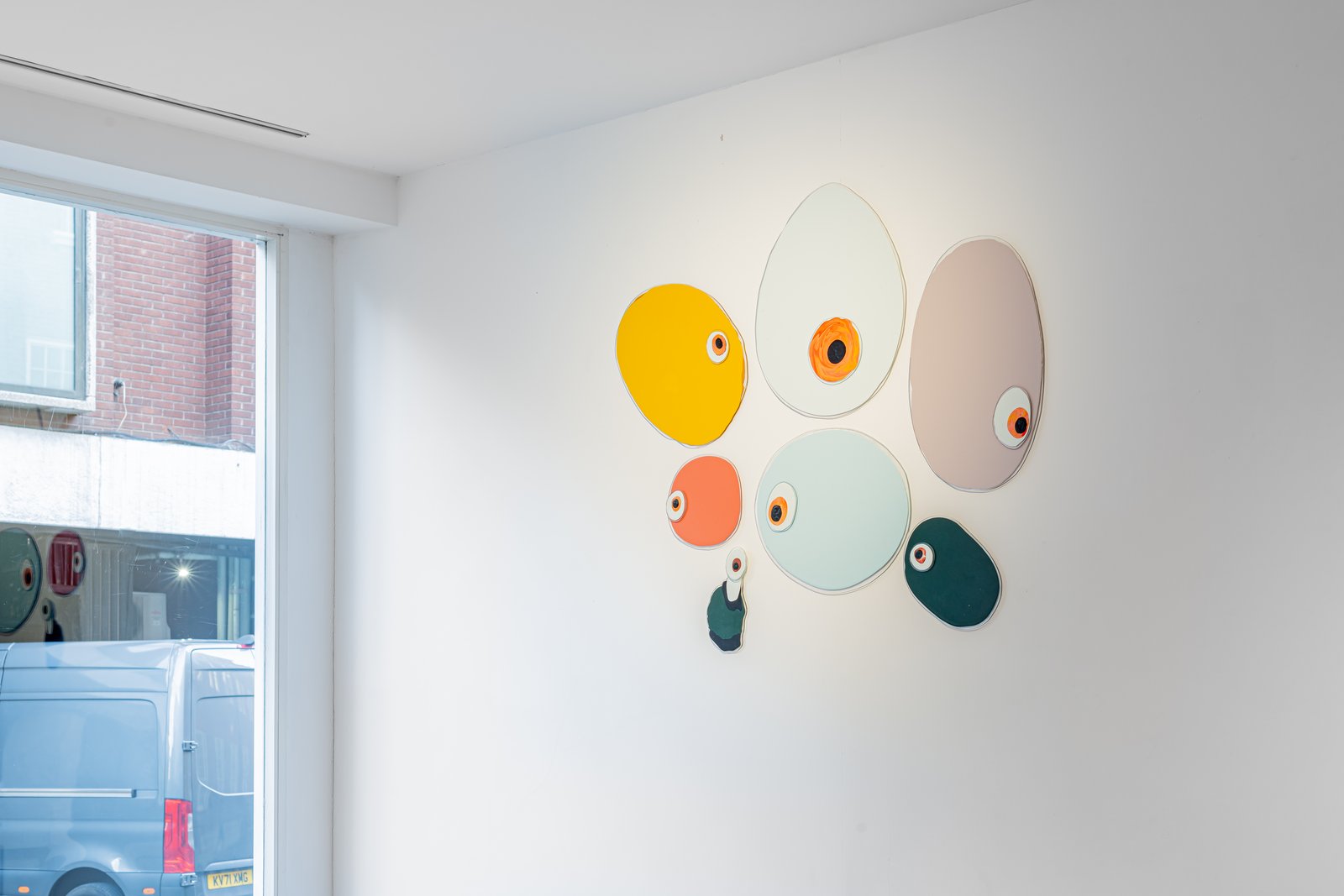
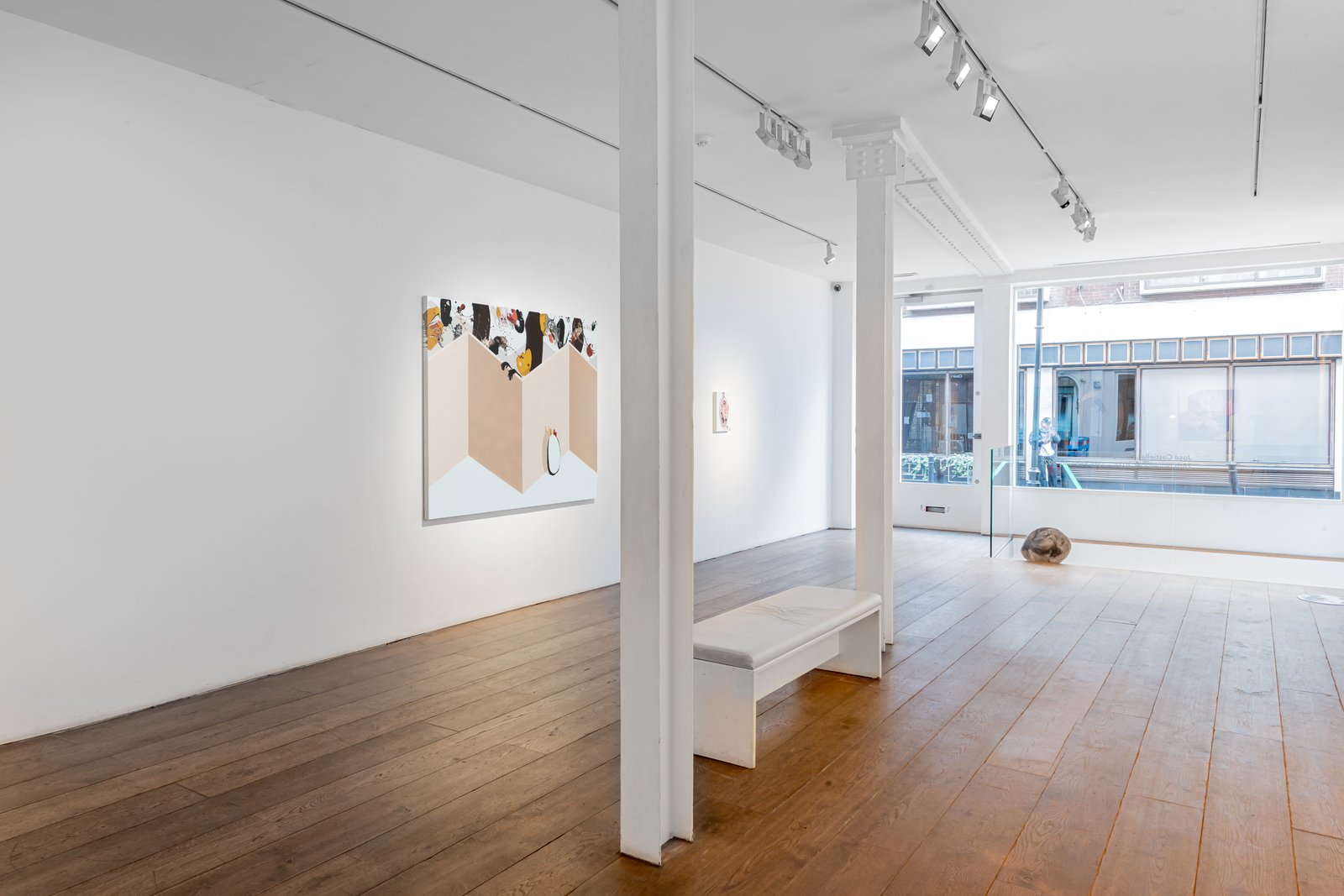
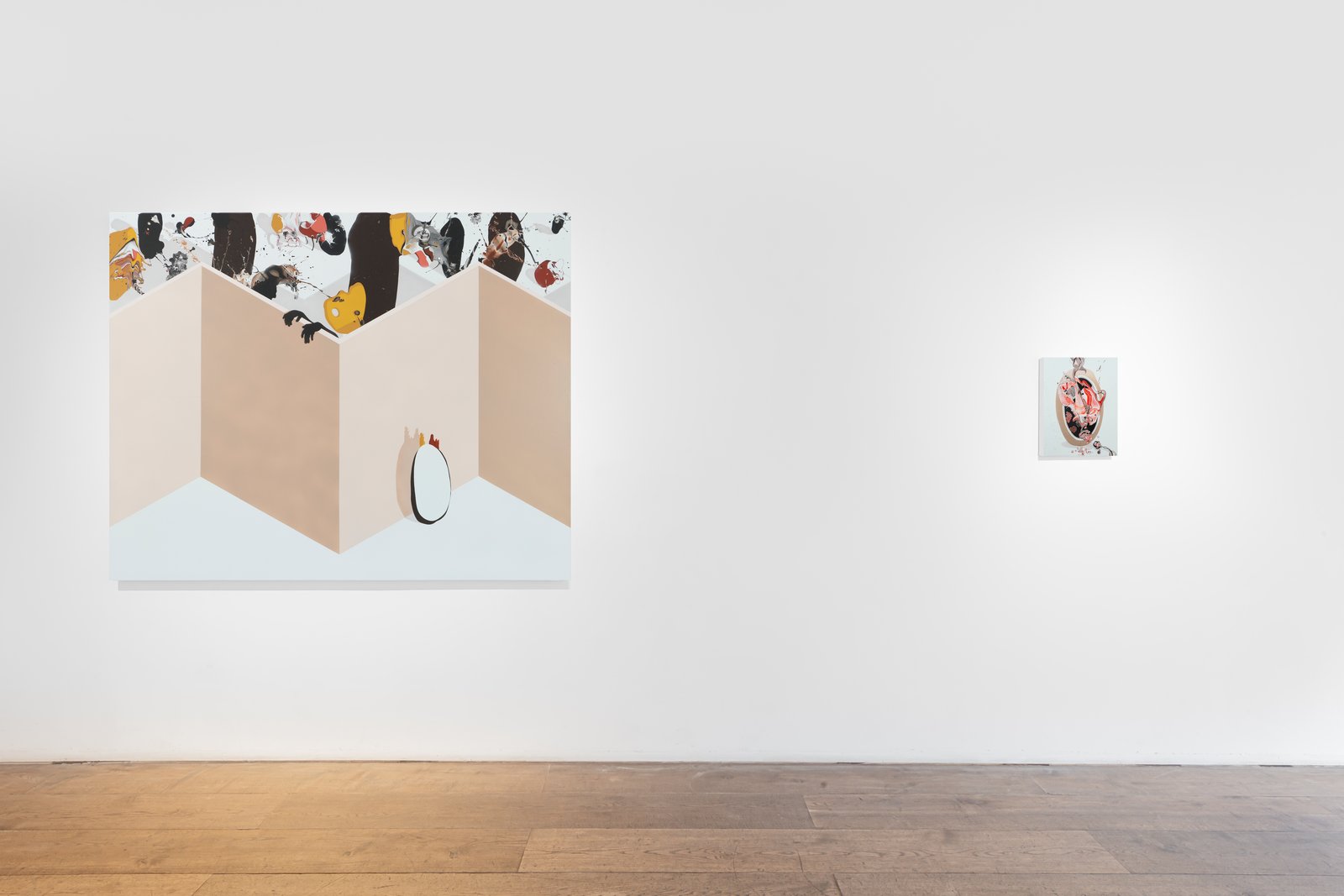
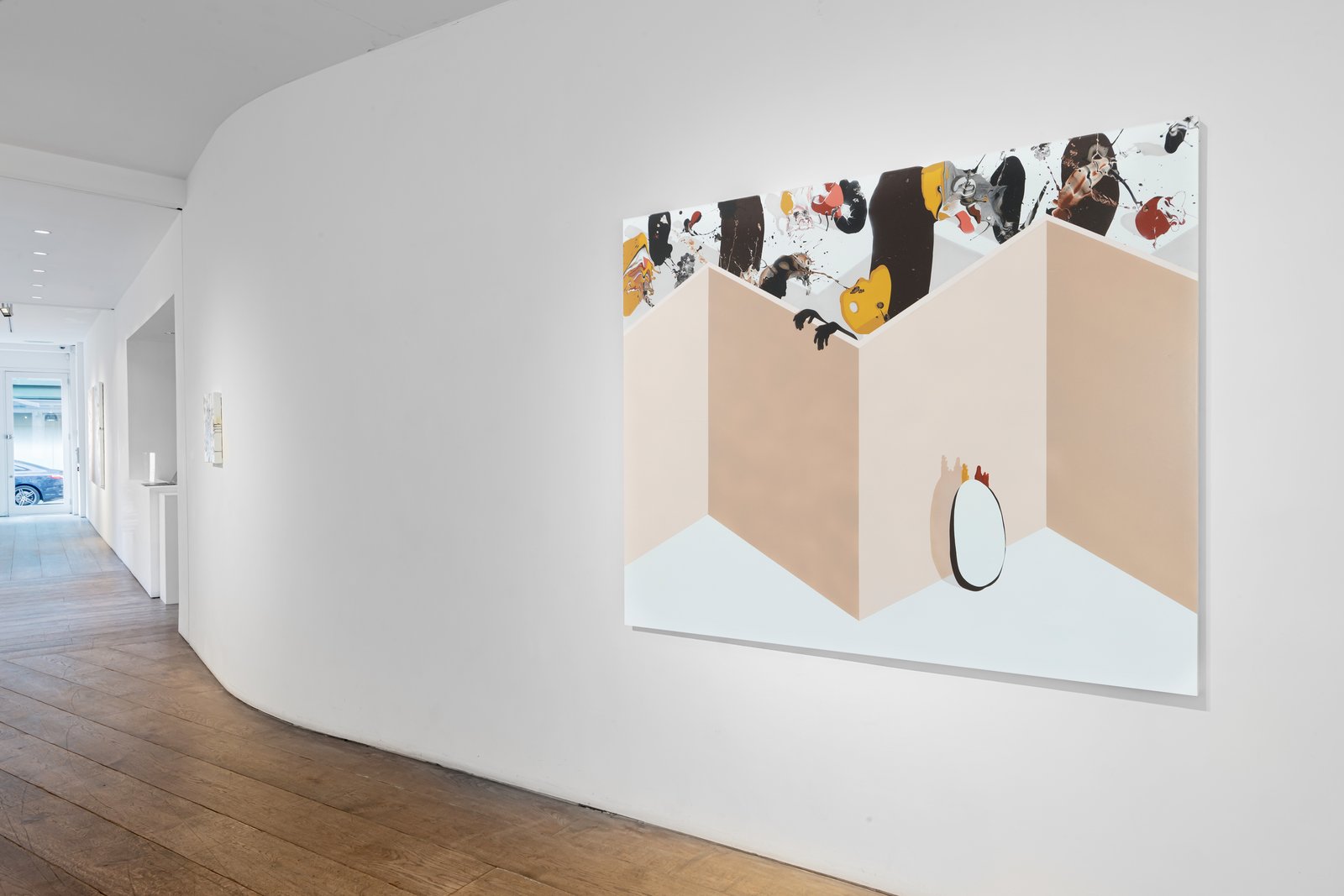
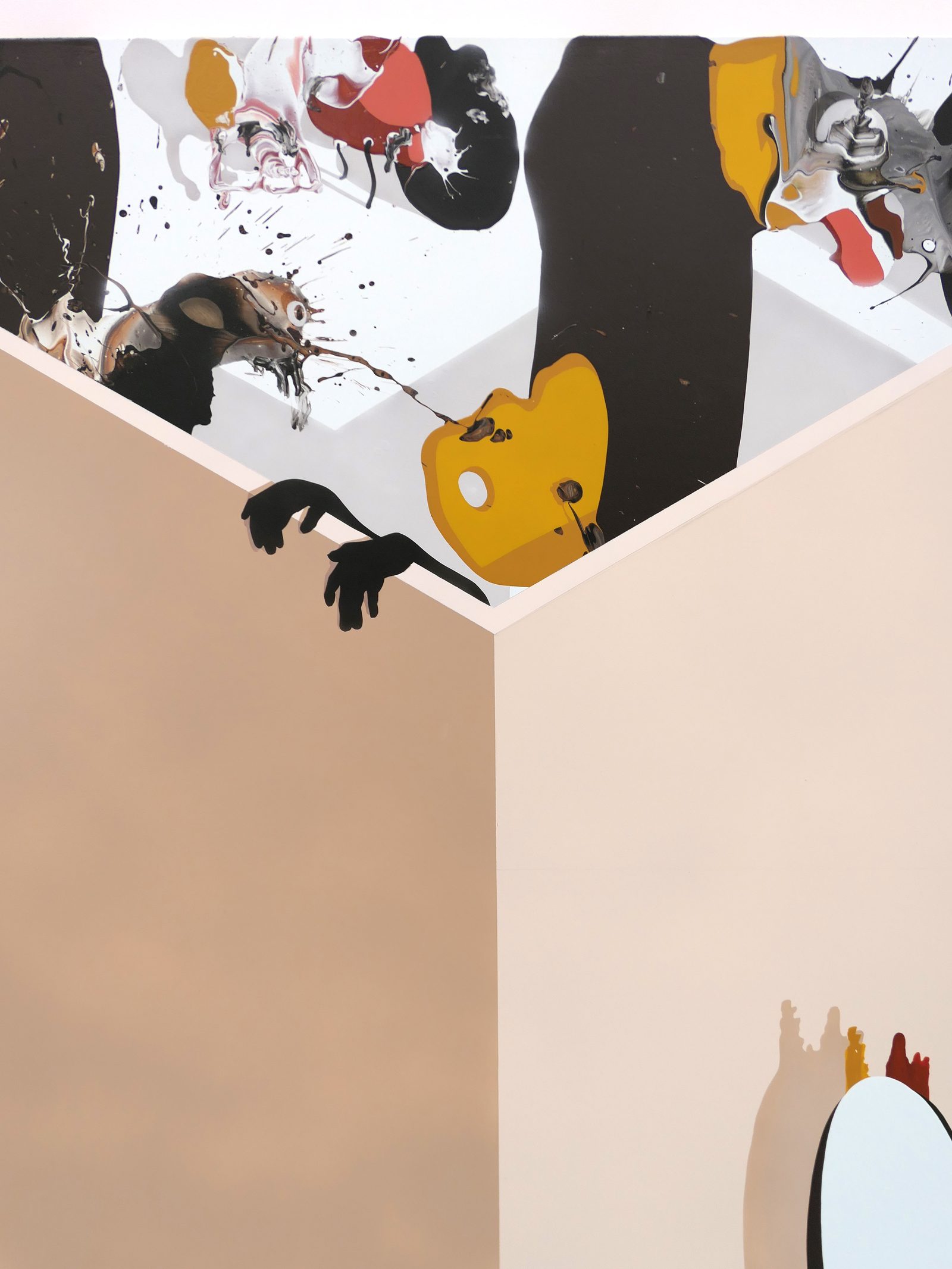
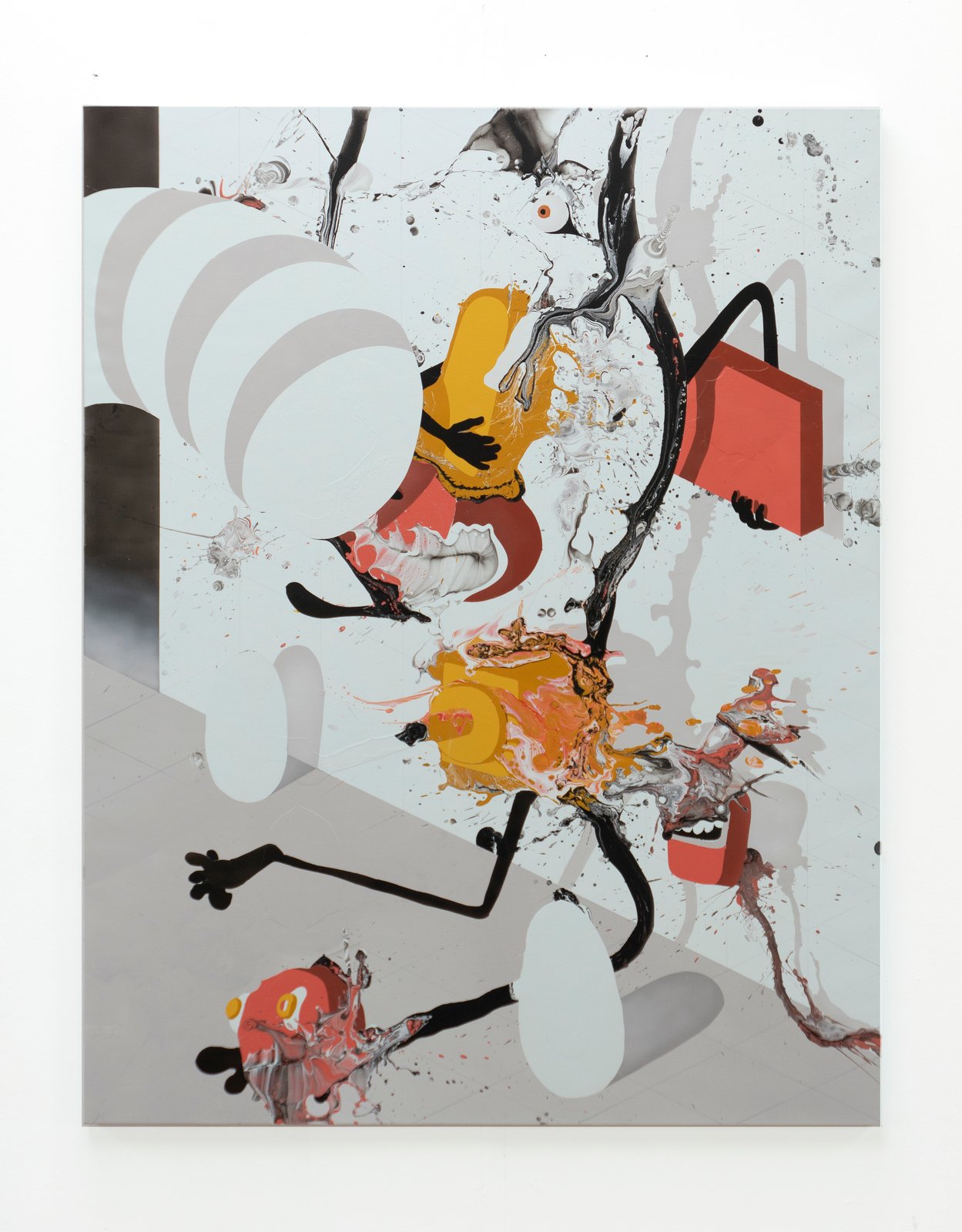
“The isometric spaces and symbolic colour choices evoke a world that exists beyond ordinary perception — a dimension where the true nature of souls, hidden from our physical eyes, is revealed through plastic expression.”
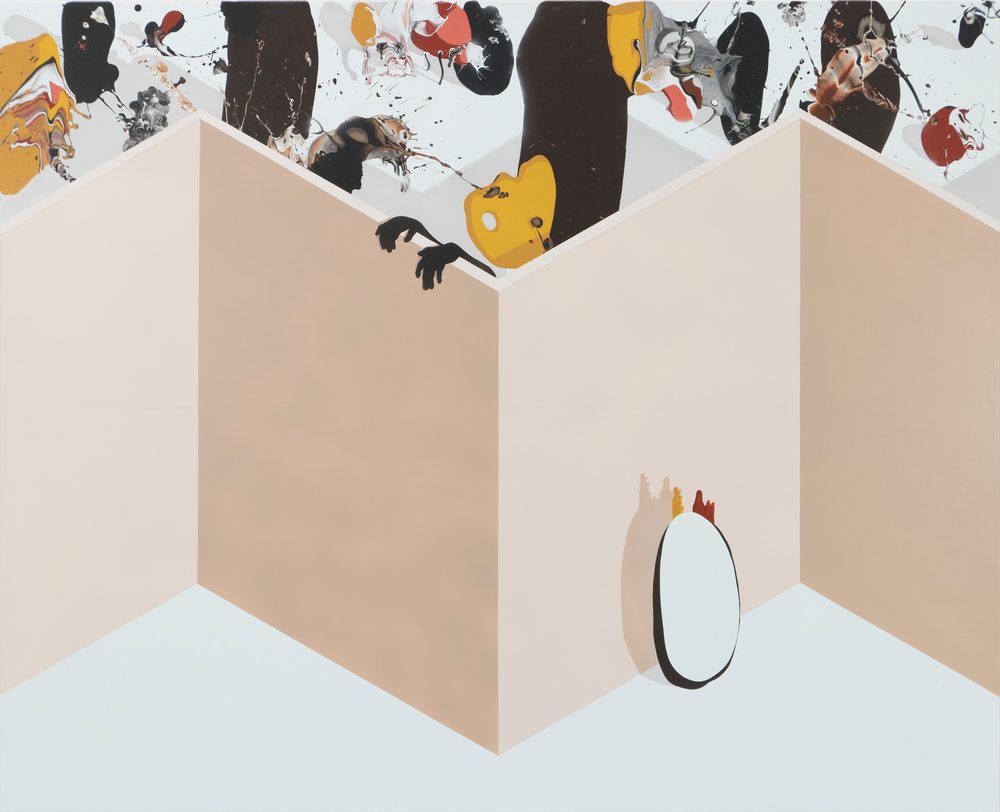
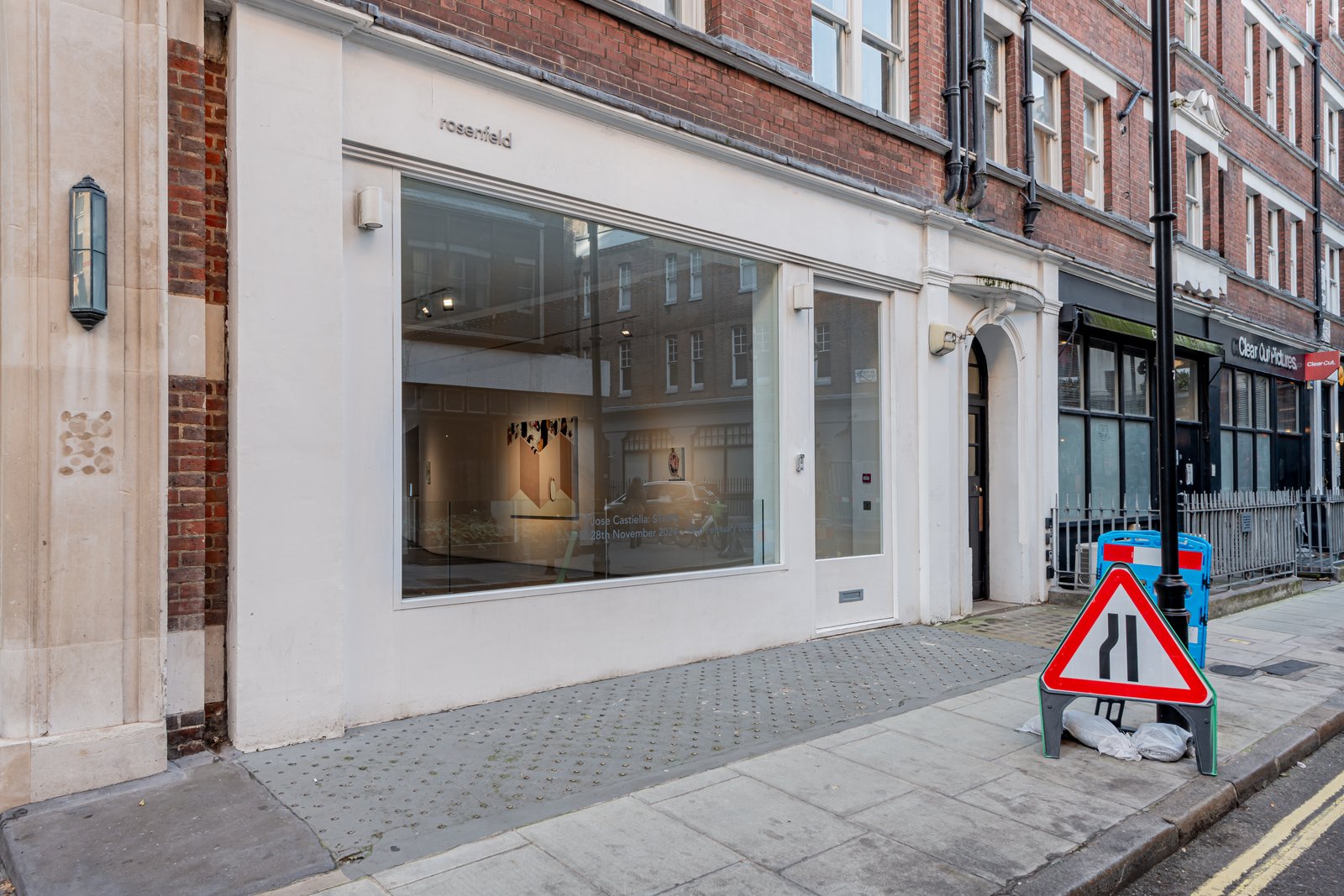
Gallery Rosenfeld is delighted to host the Spanish artist Jose Castiella’s second solo exhibition at the gallery. On this occasion, the artist finds himself focusing on what he terms, ‘the spiritual realm’. As he himself explains, ‘in the past few years, I’ve had experiences that make me believe in the reality of the spiritual beyond any need for faith’.
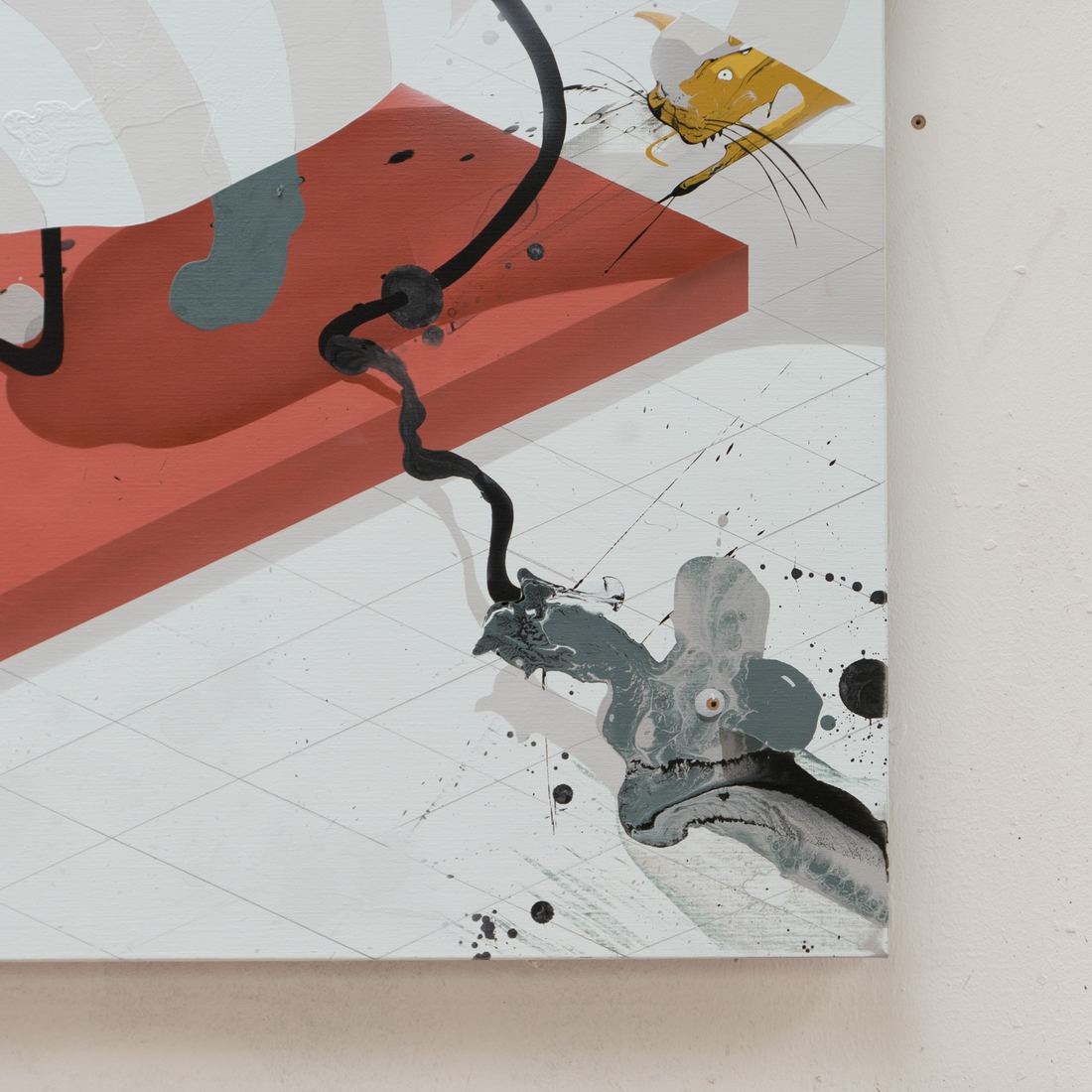
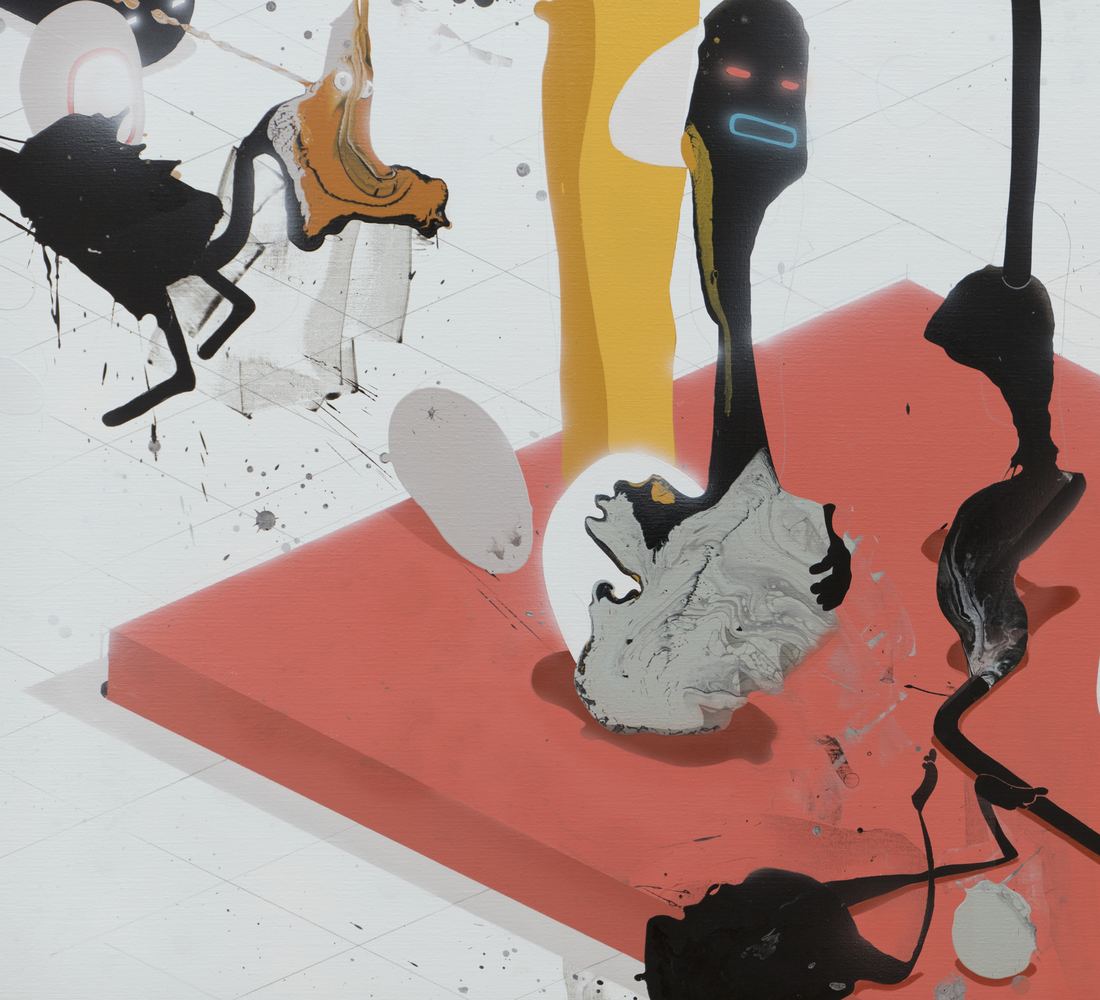
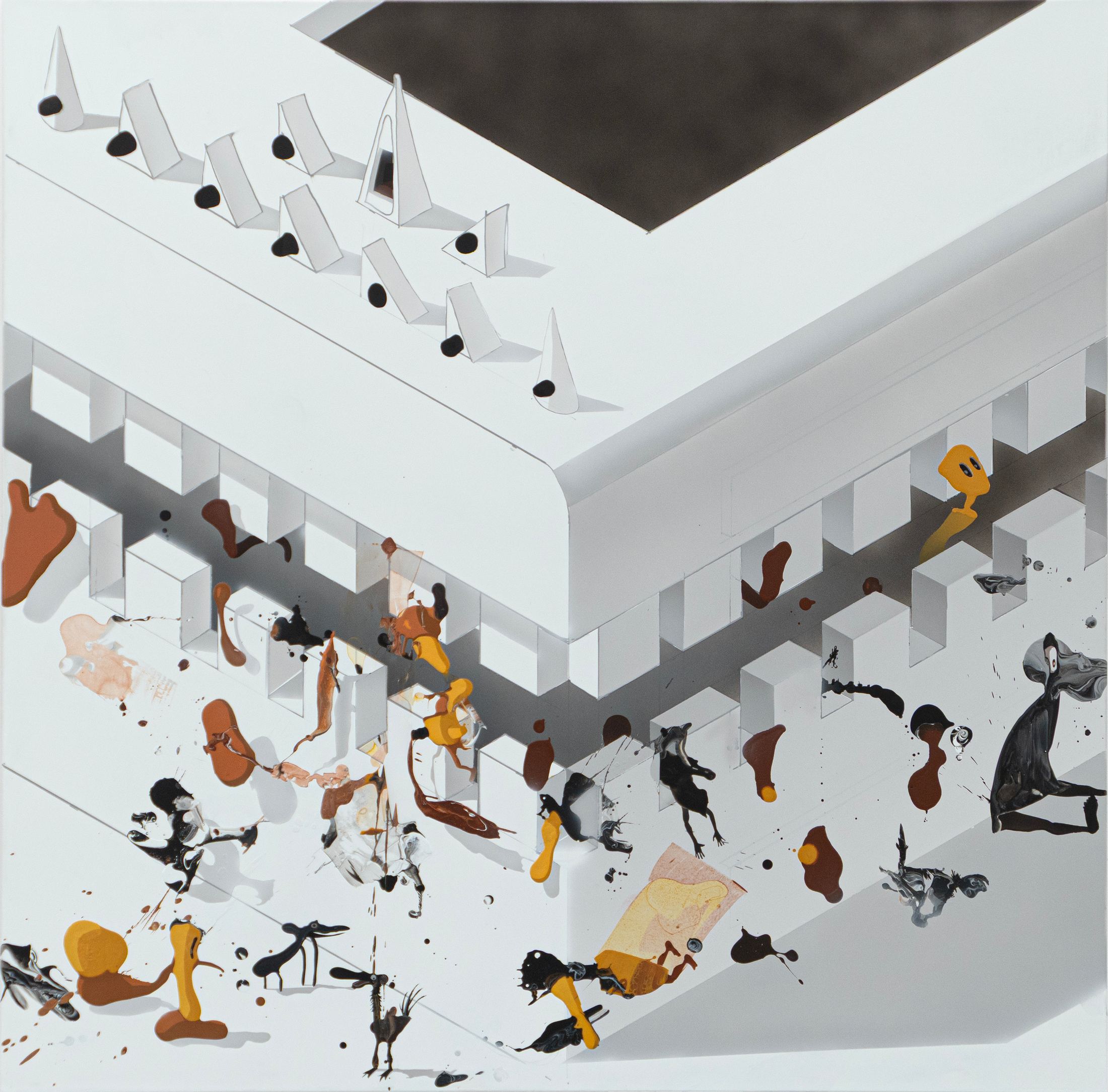
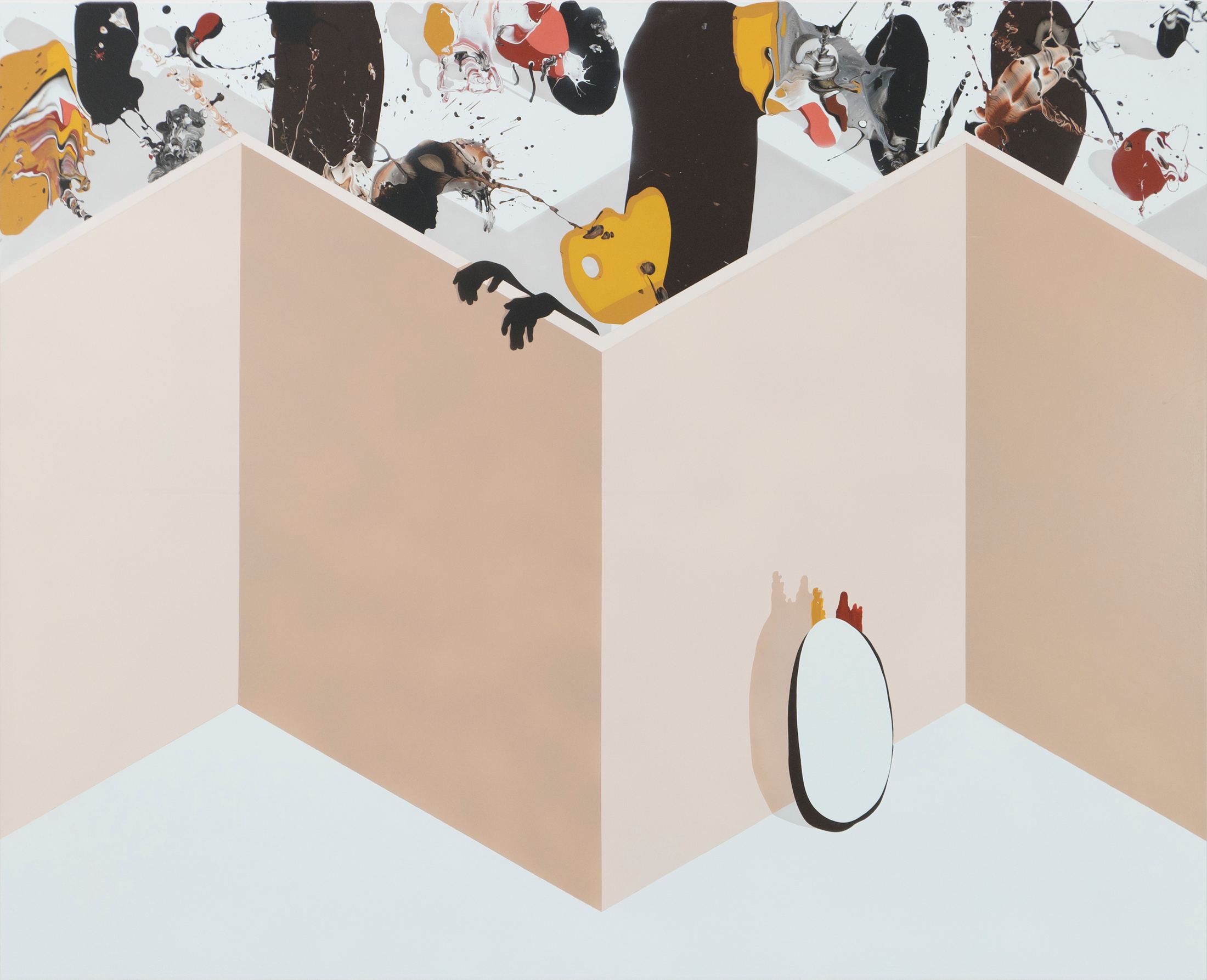
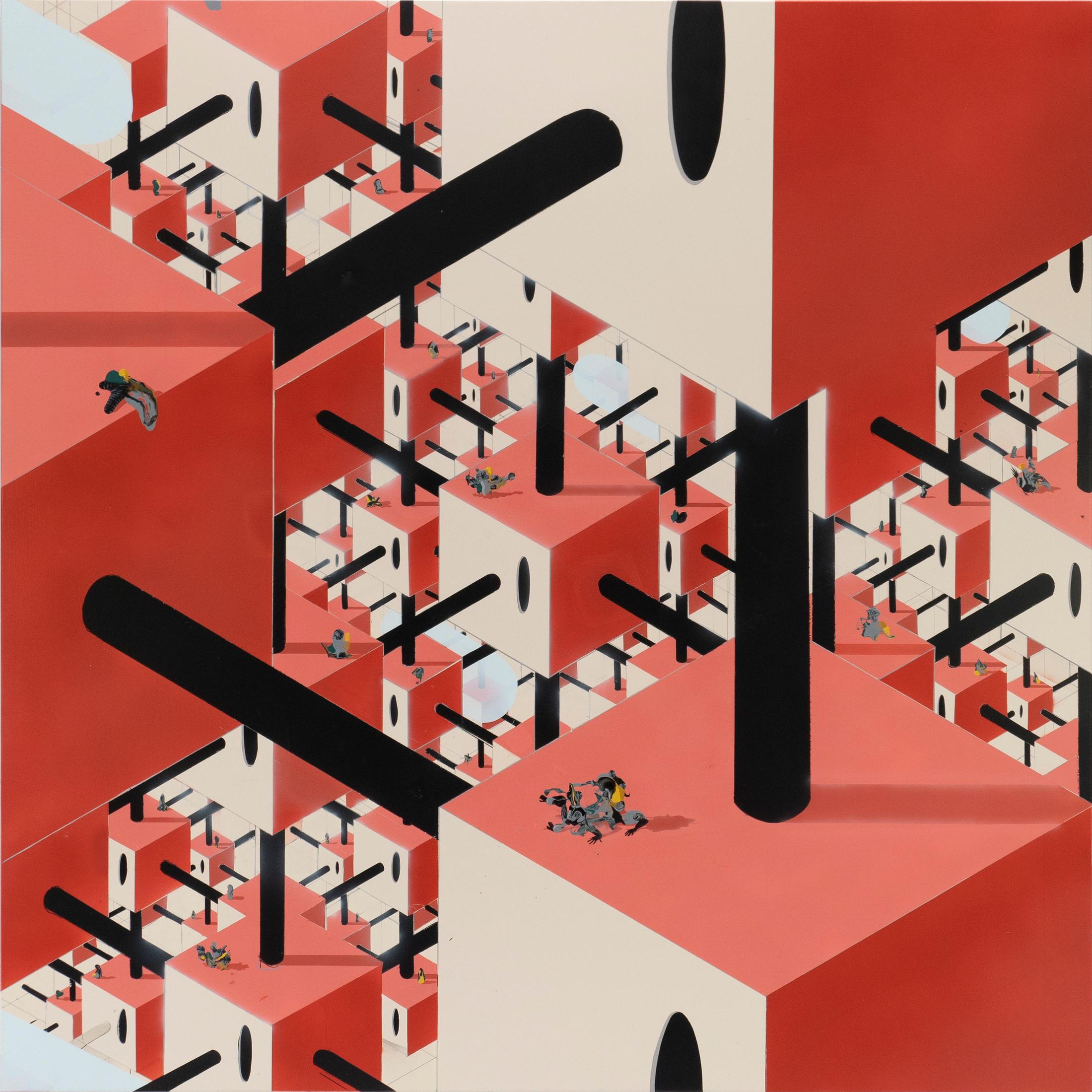
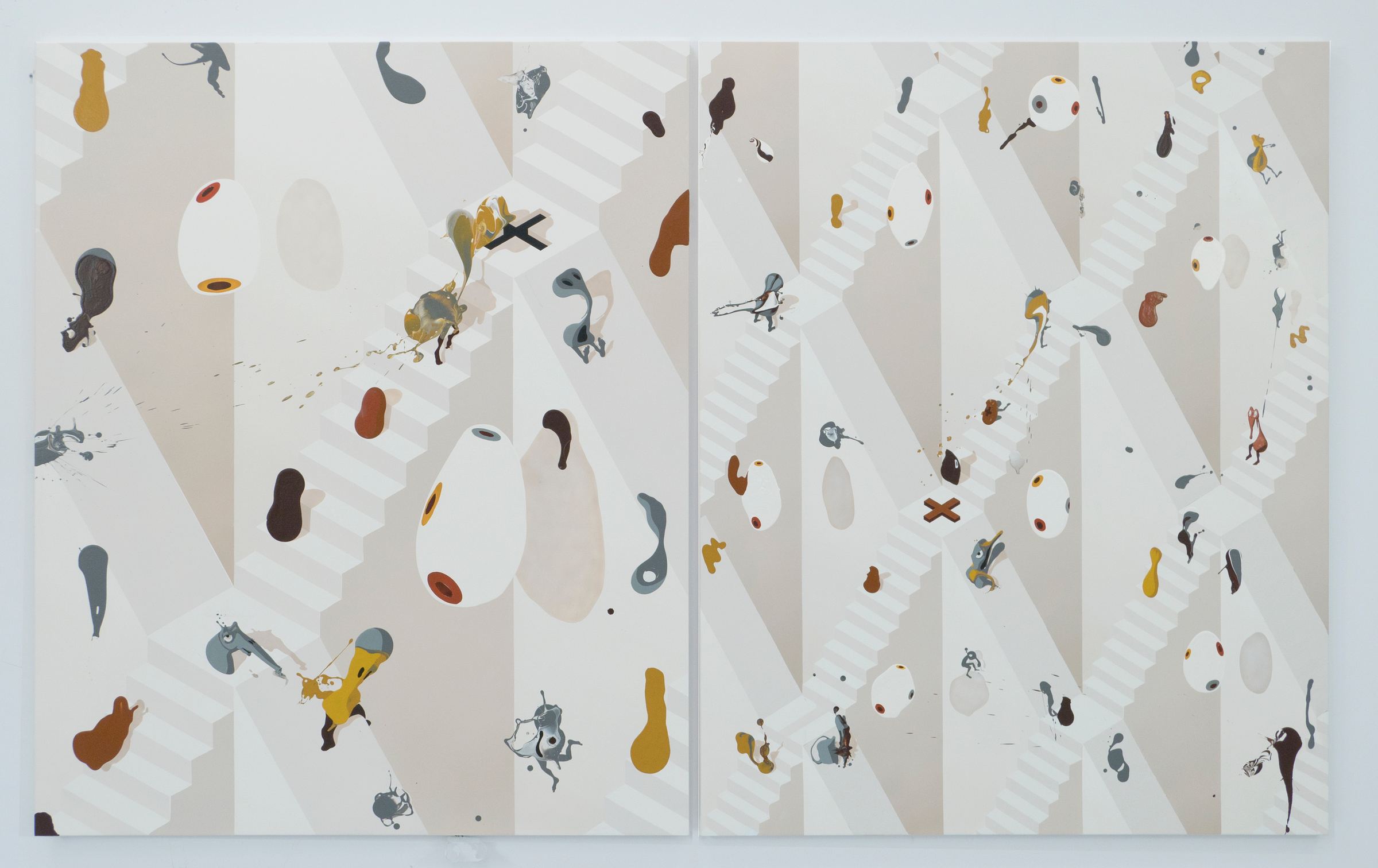
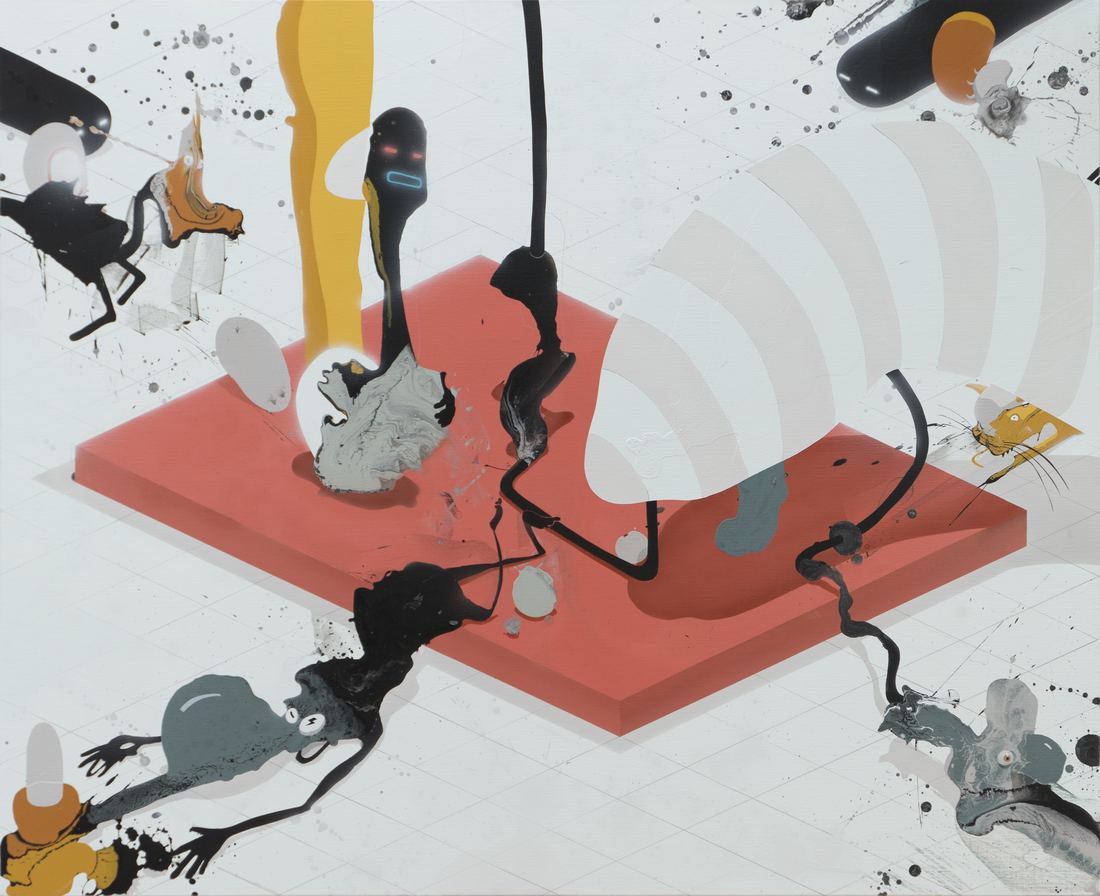
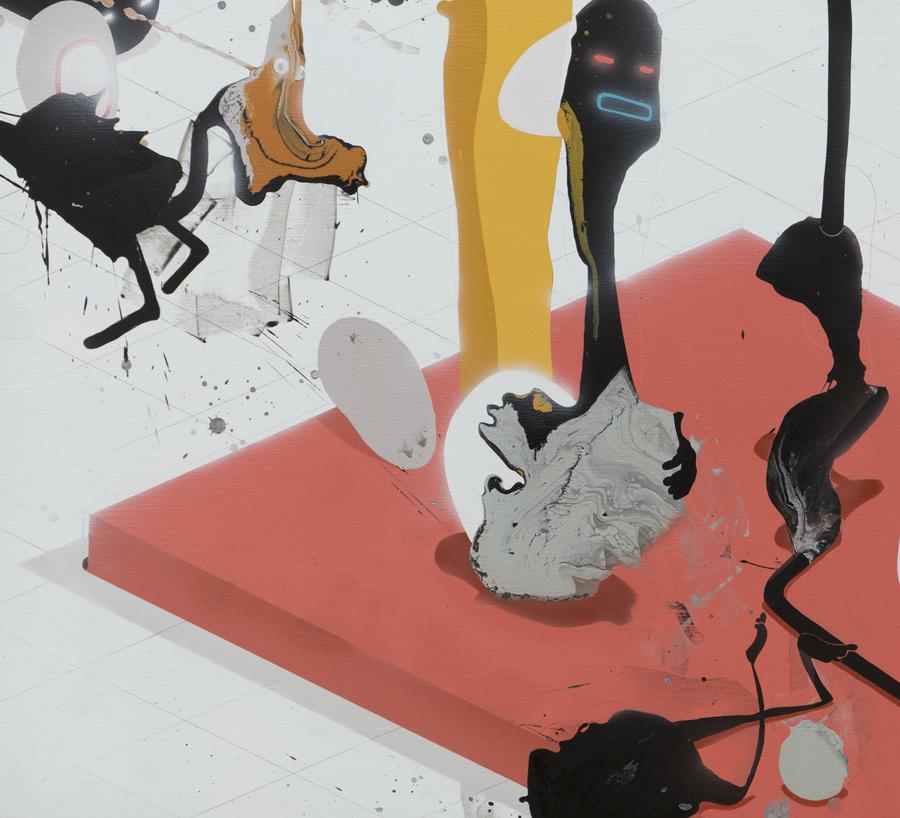
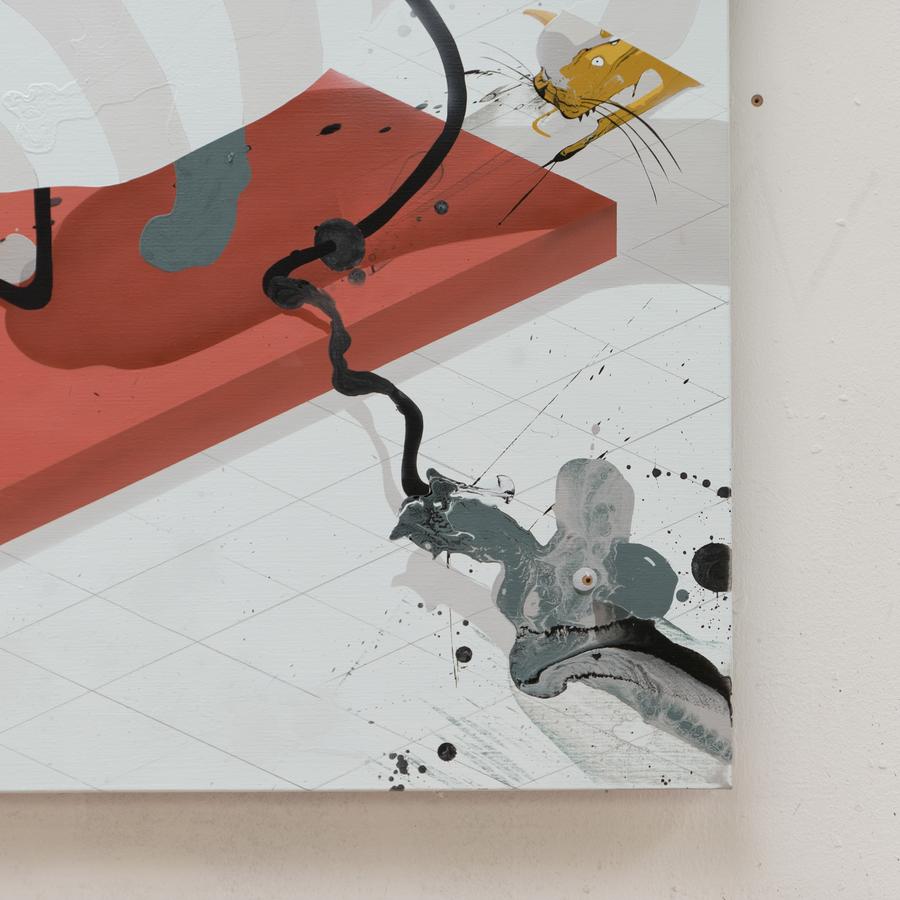
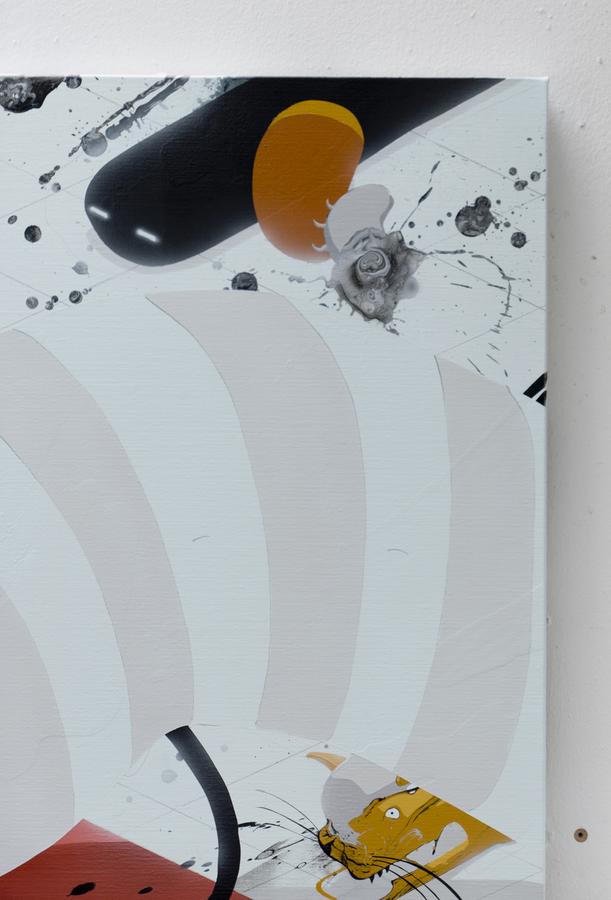
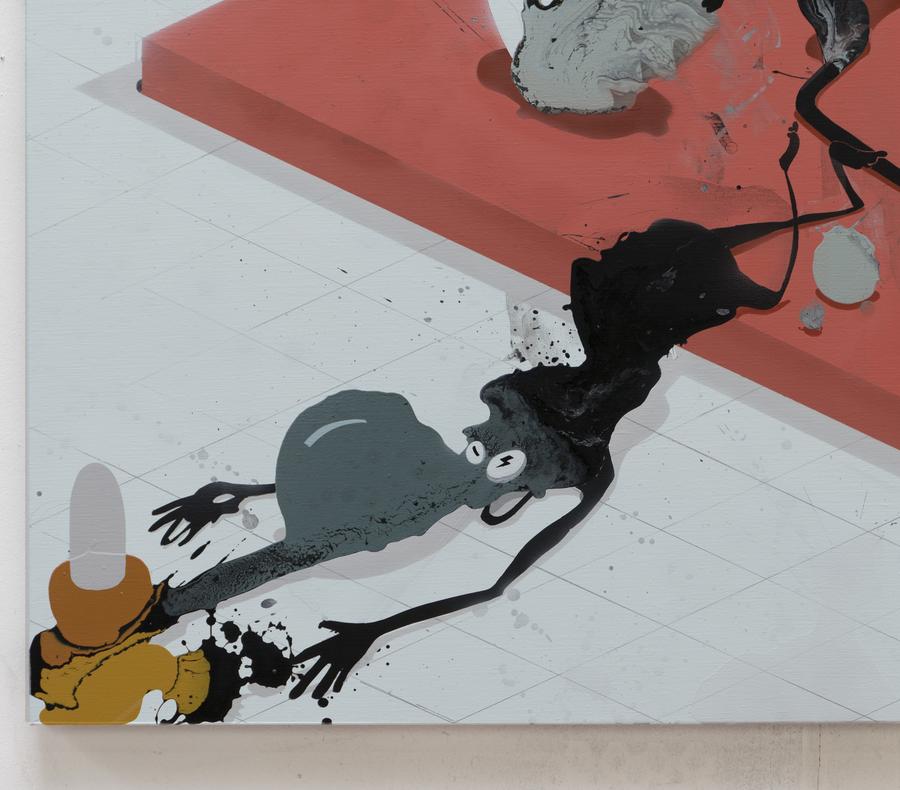
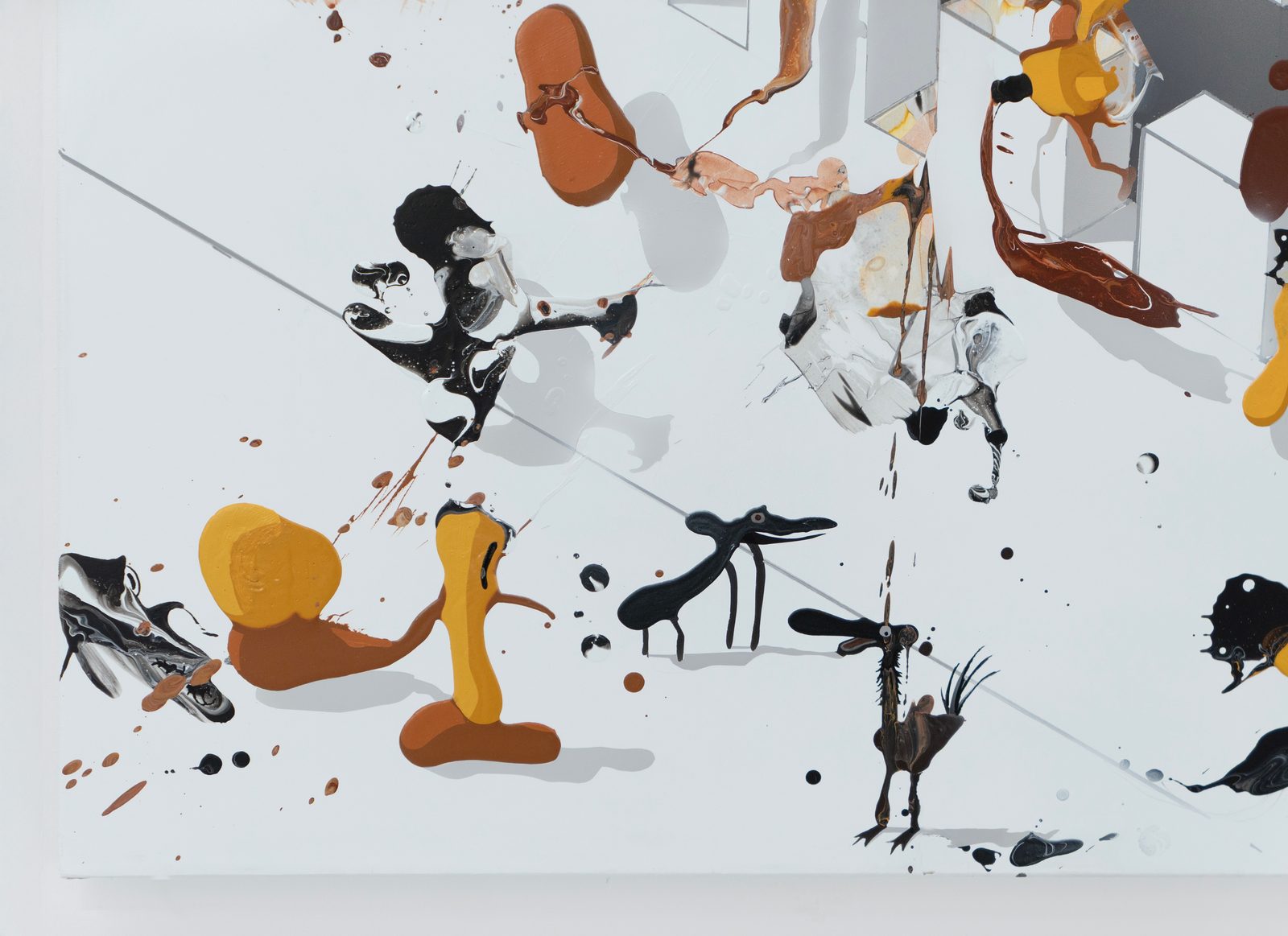
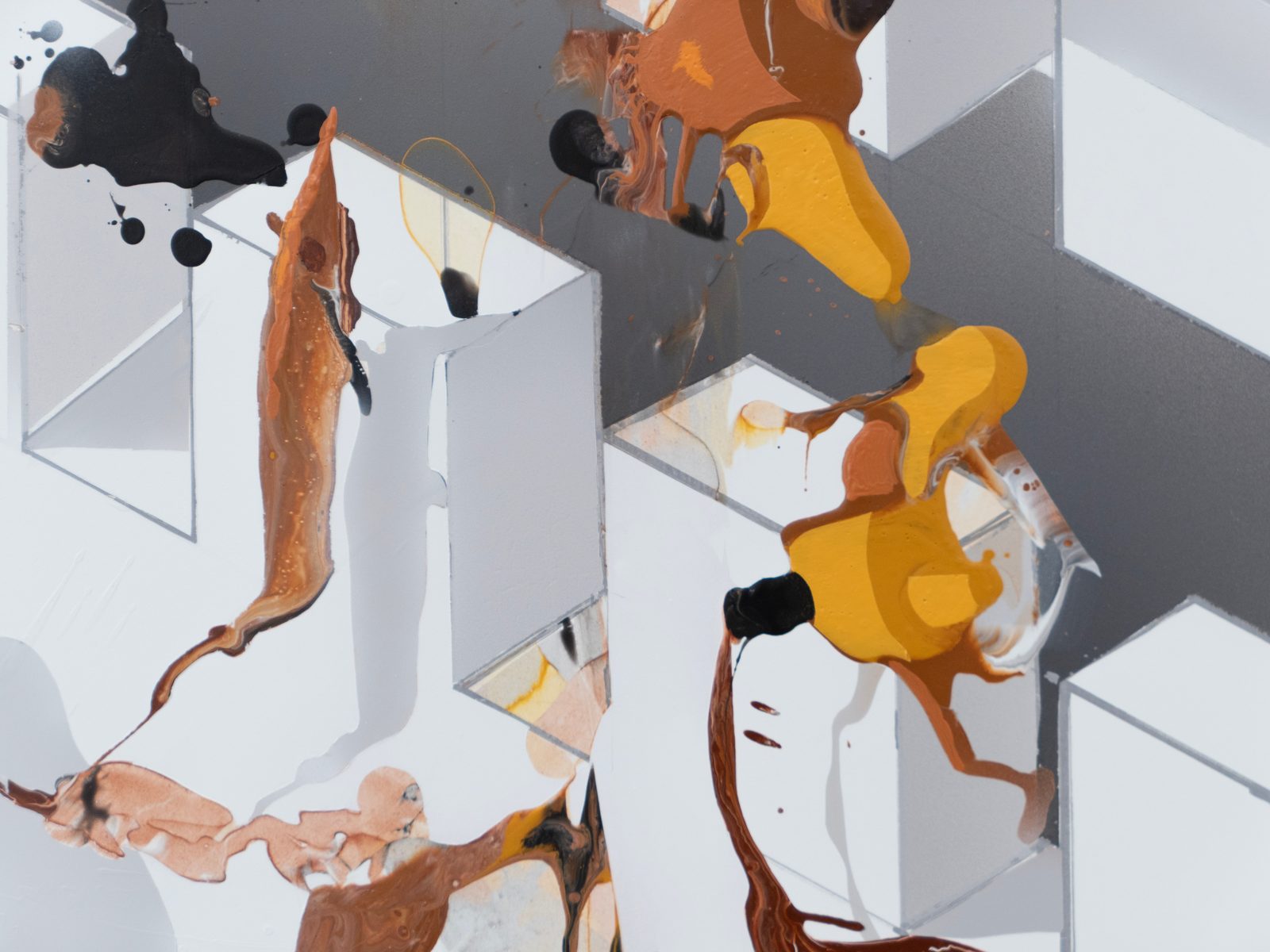
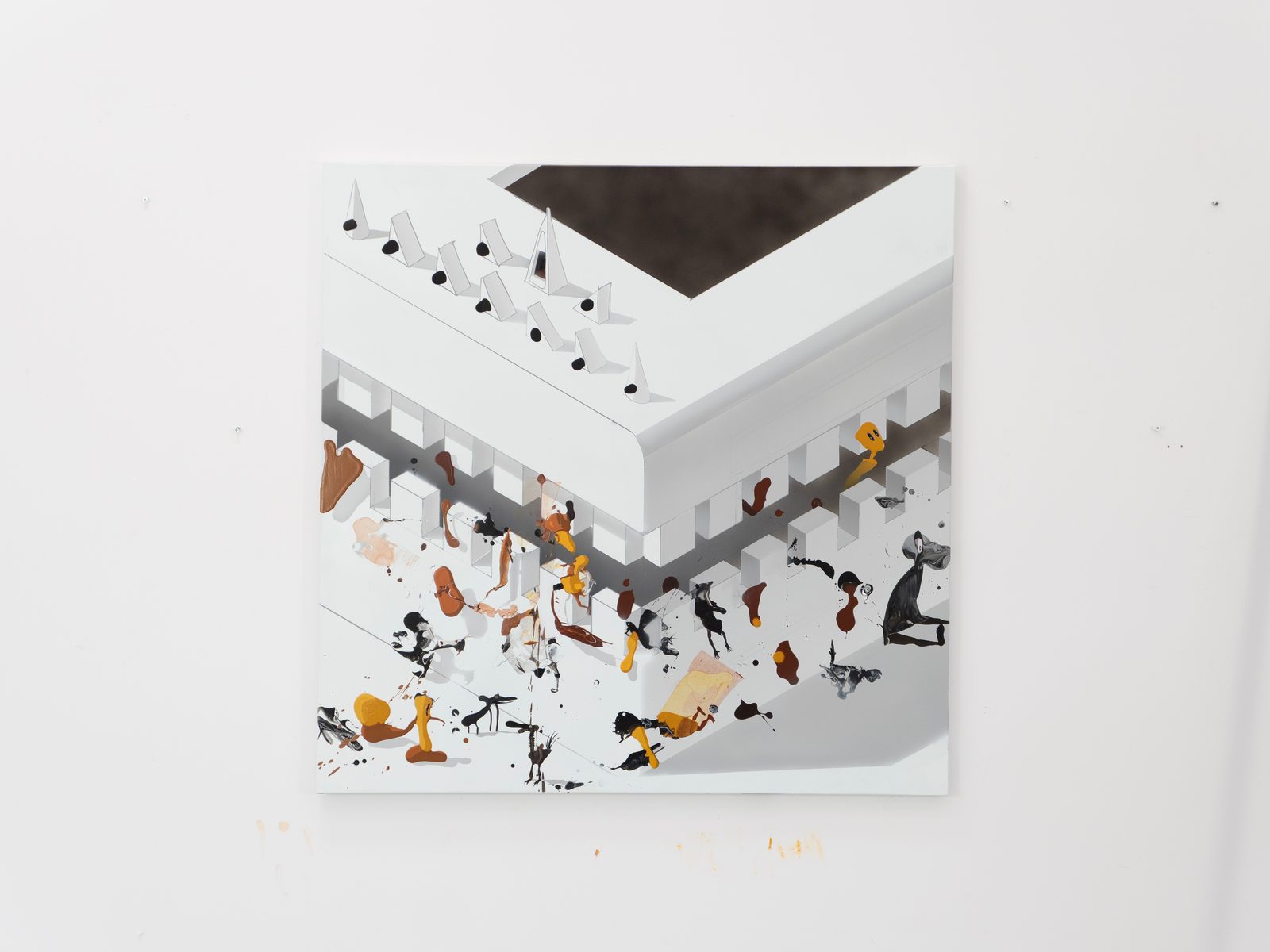
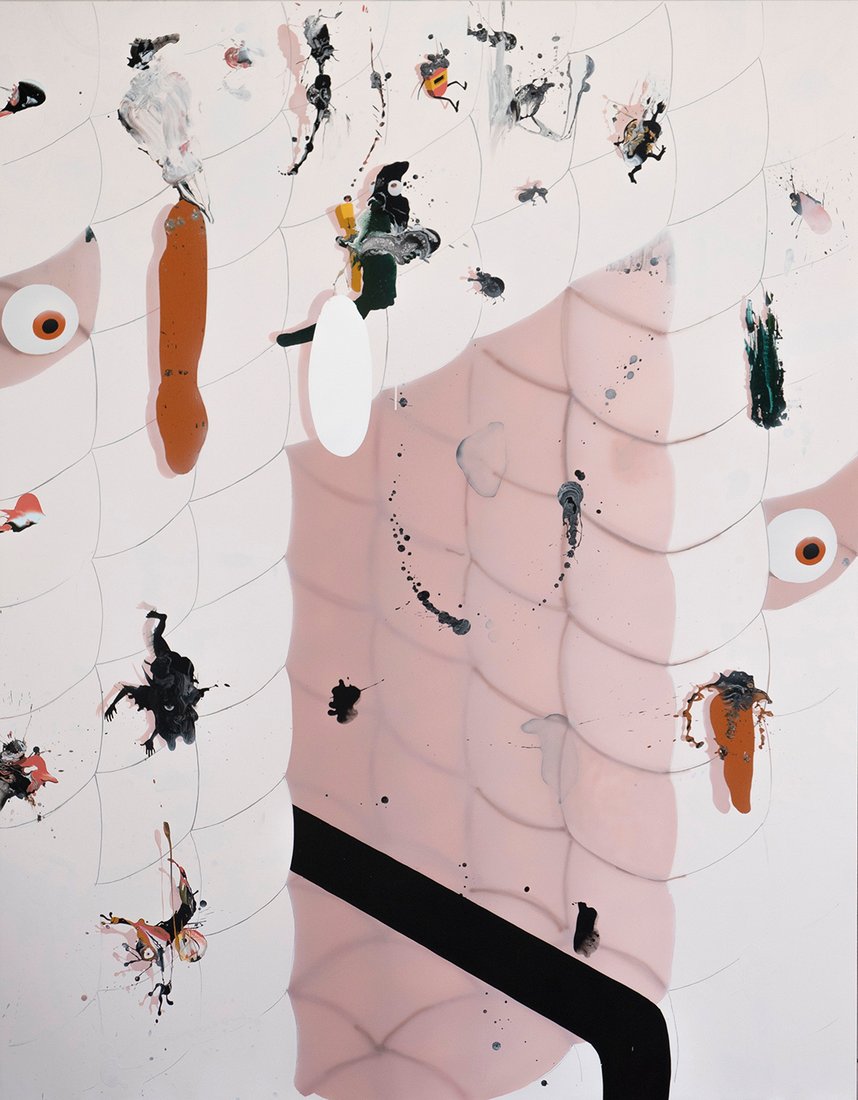
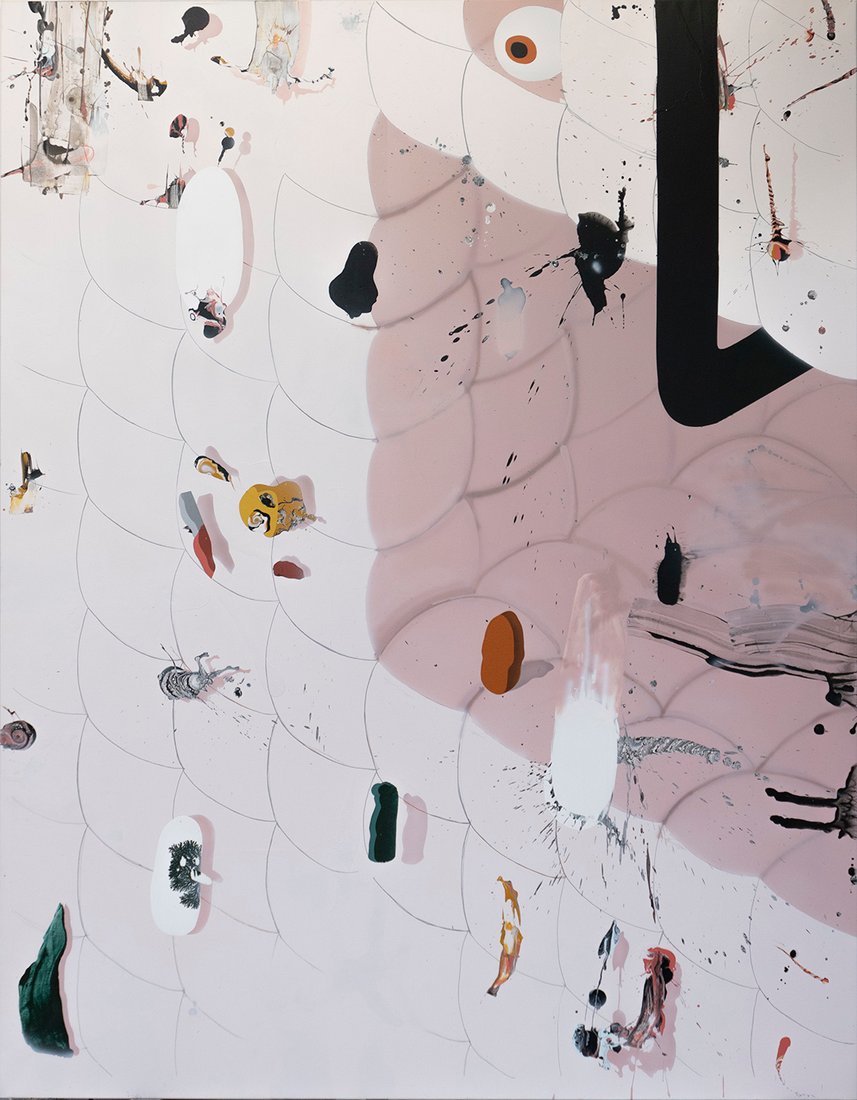
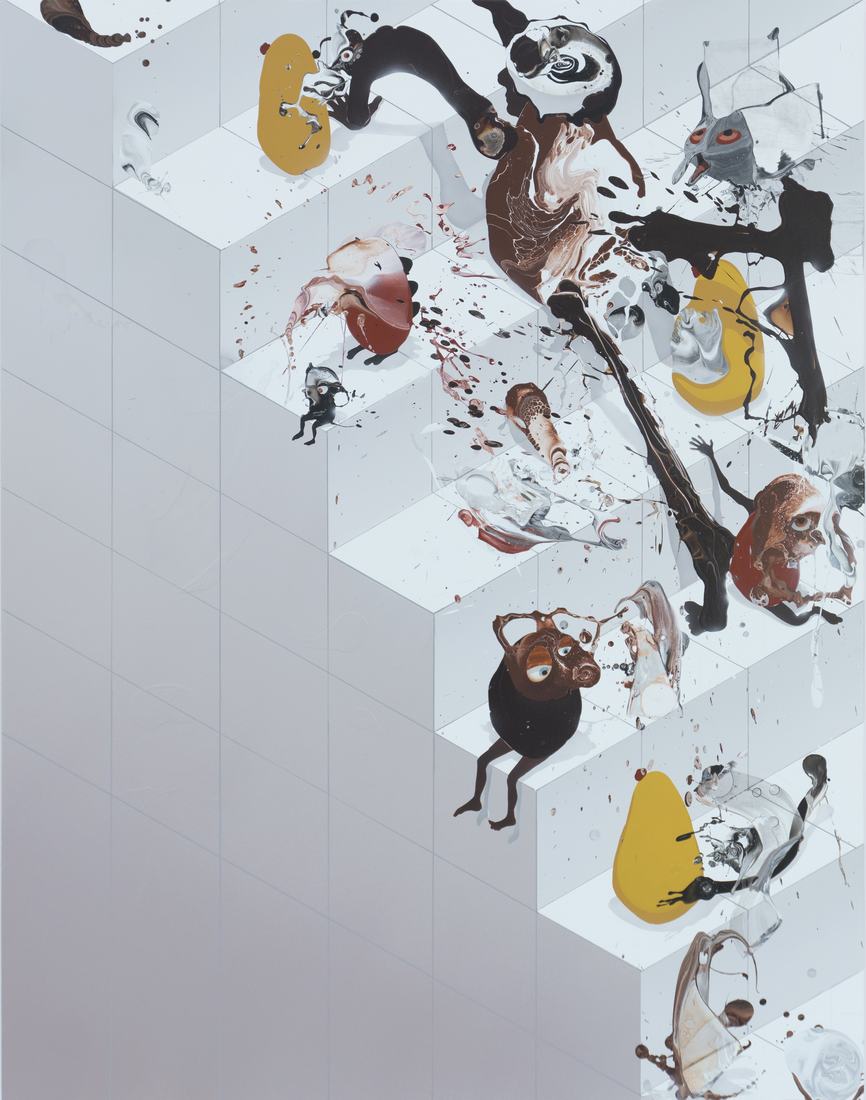
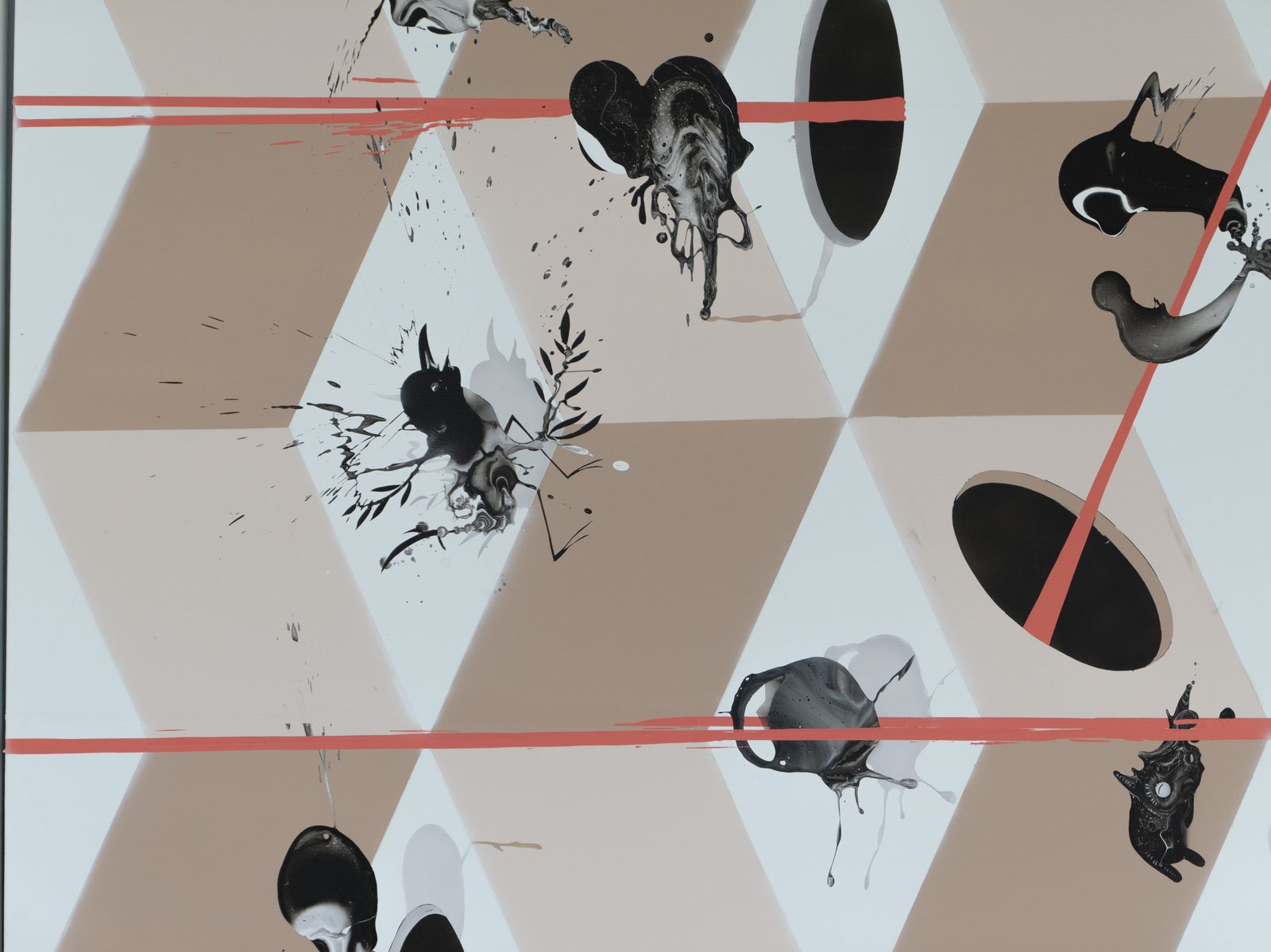
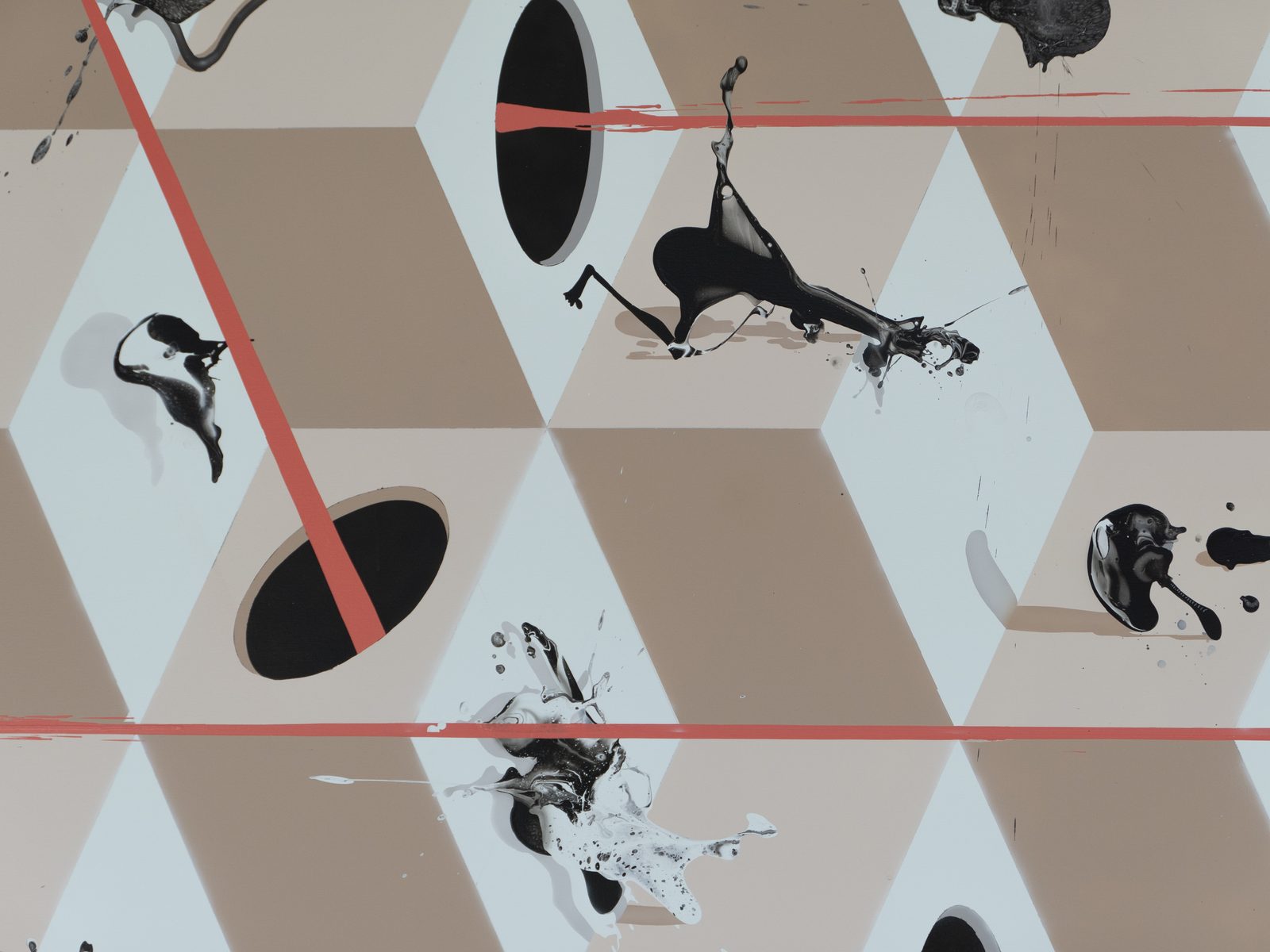
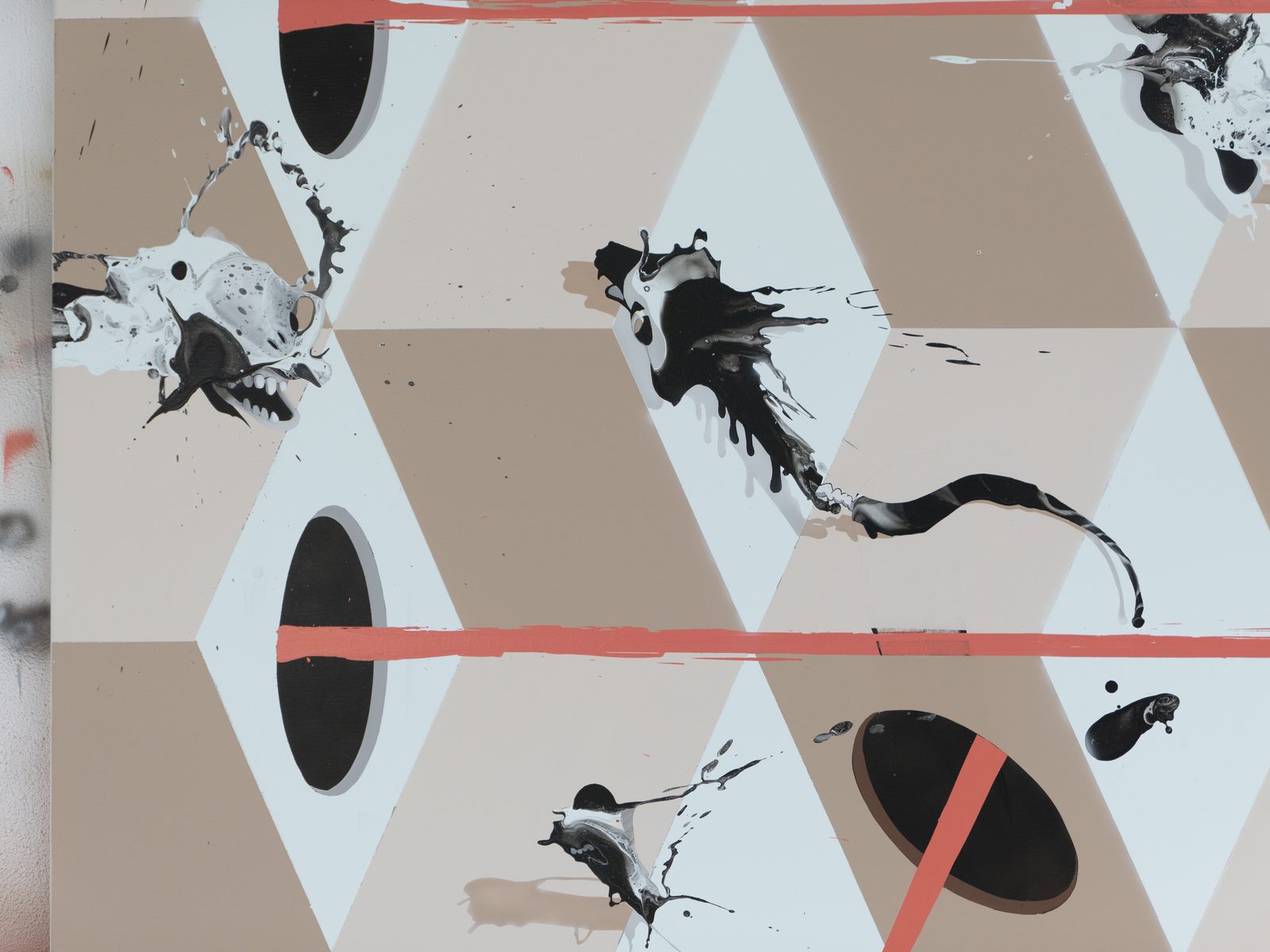
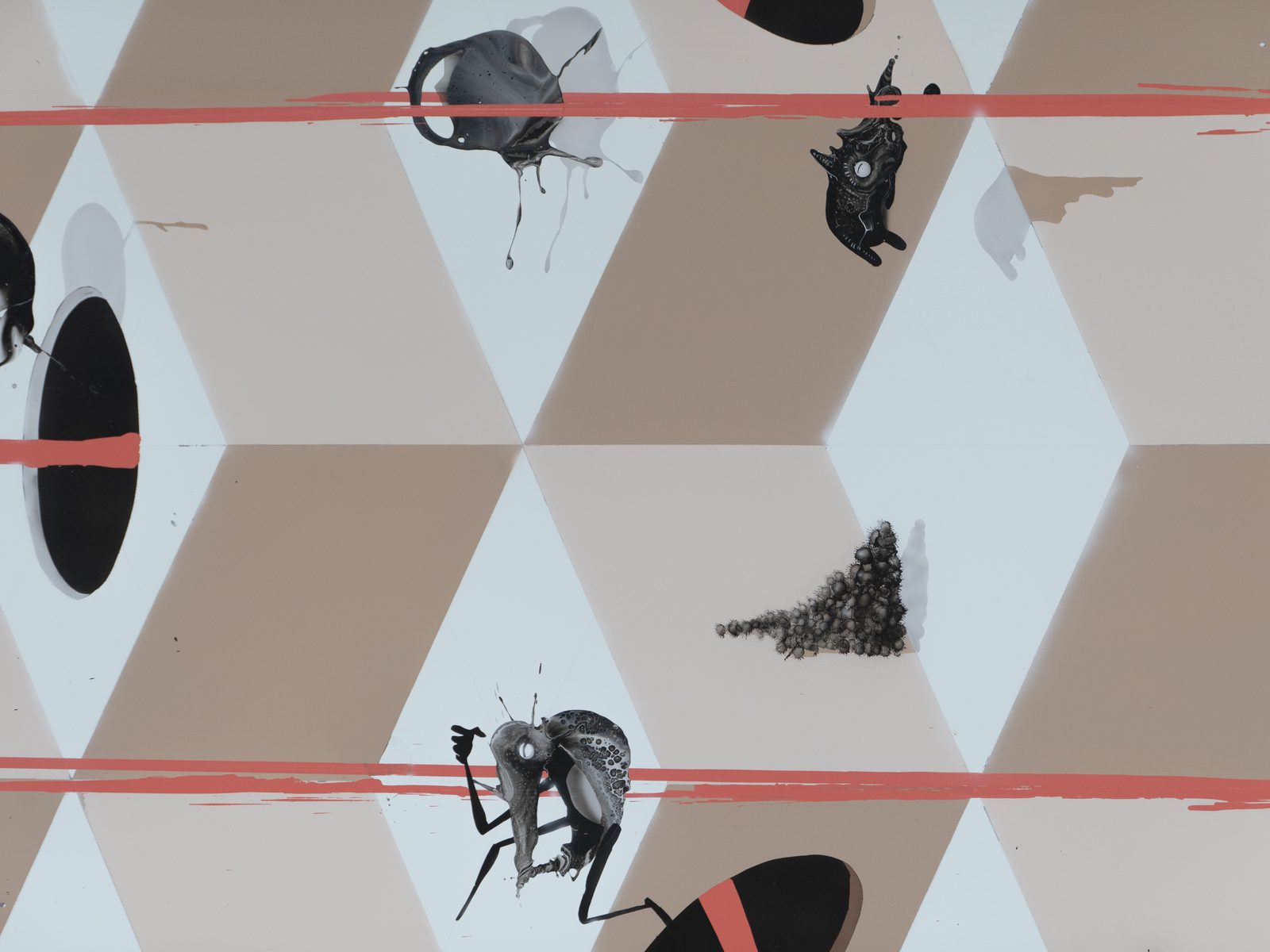
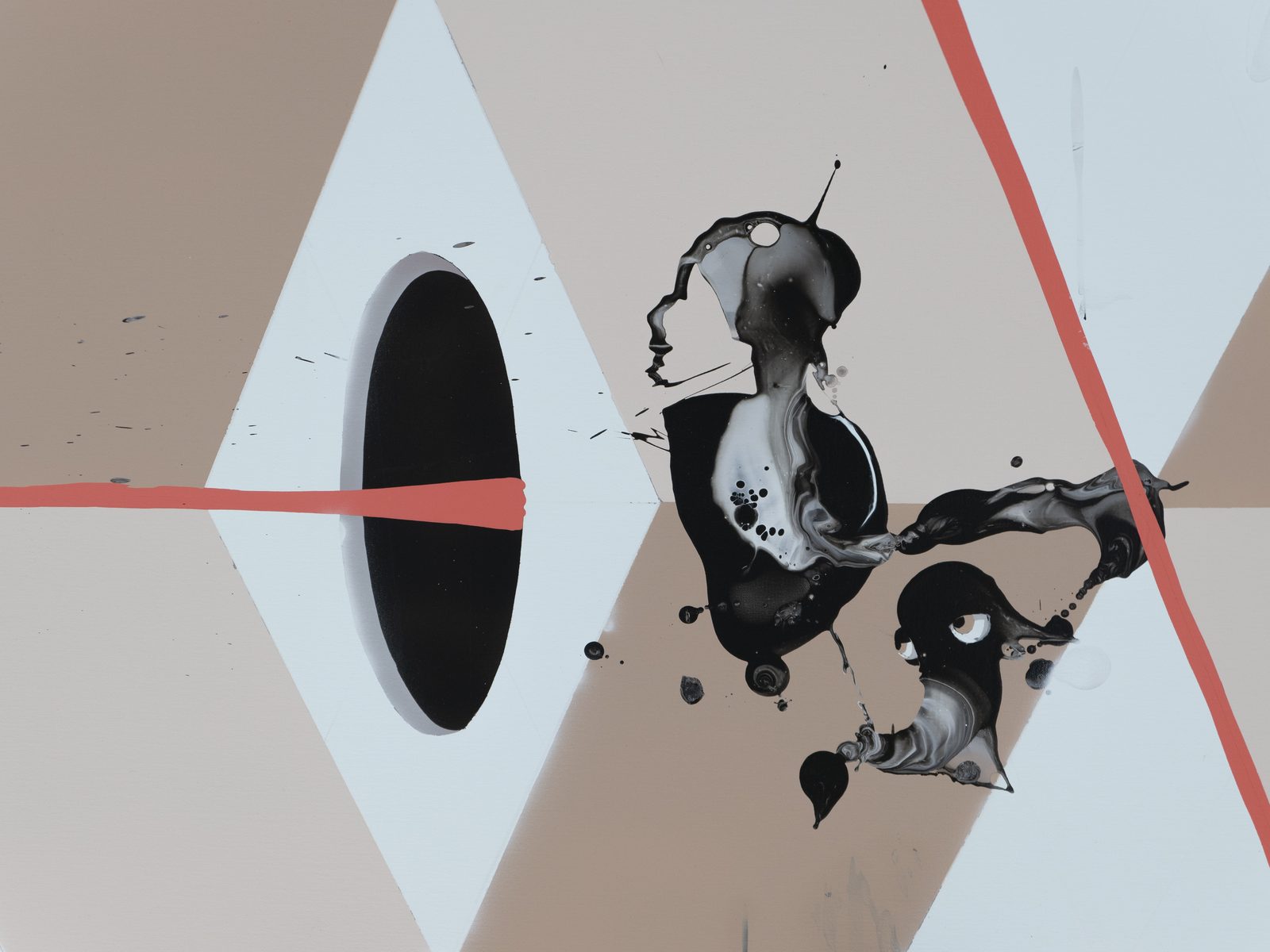
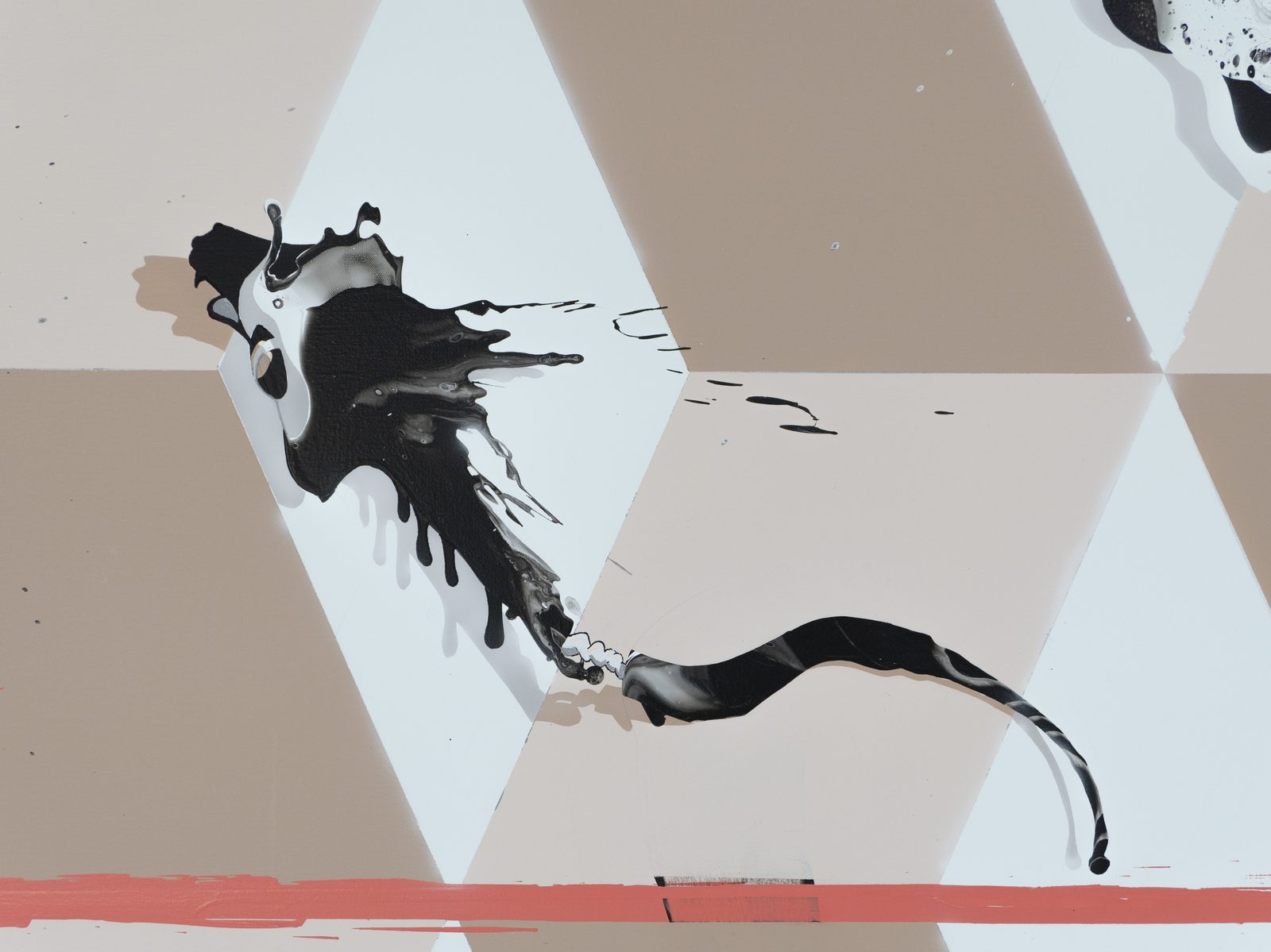
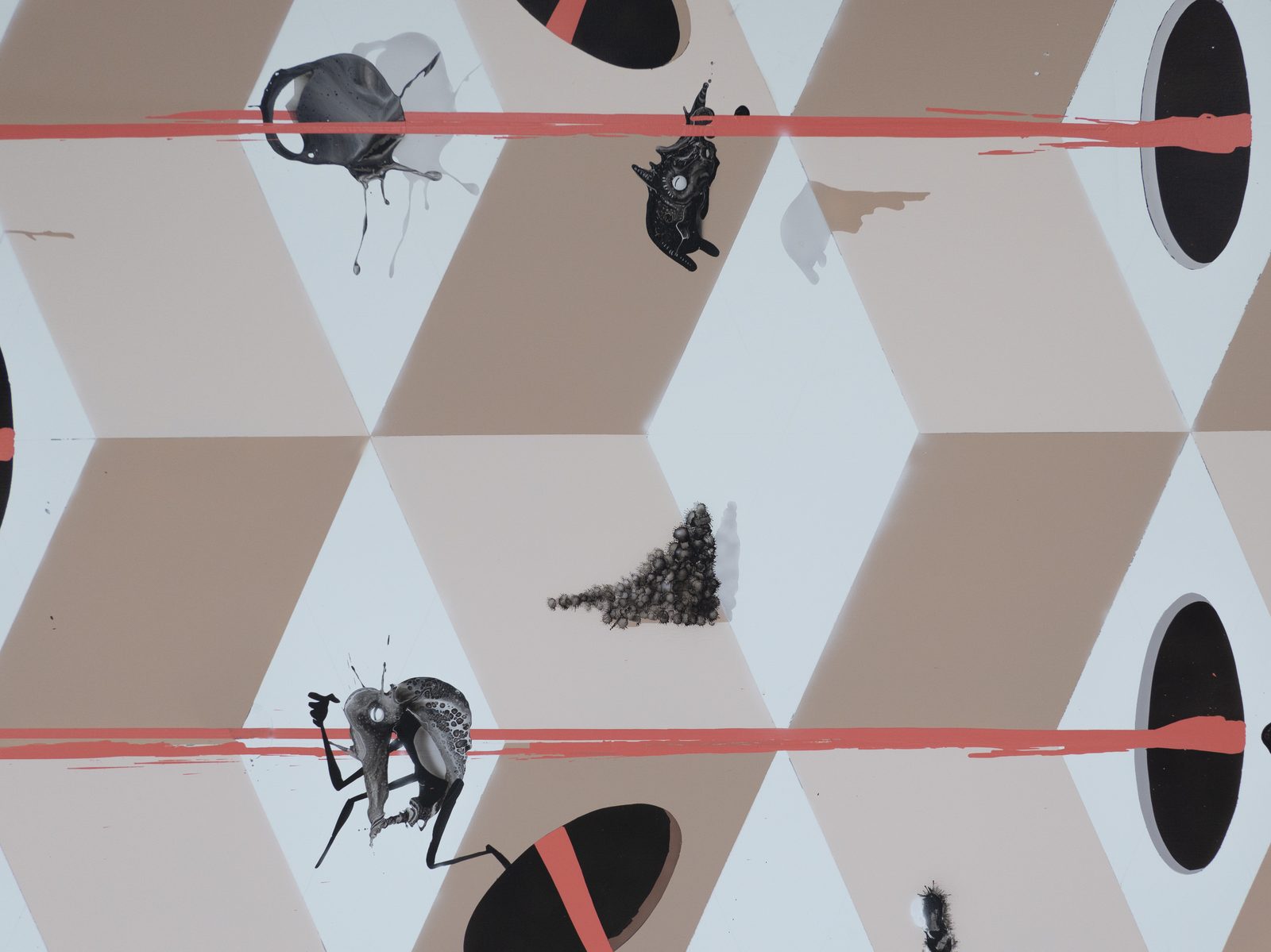
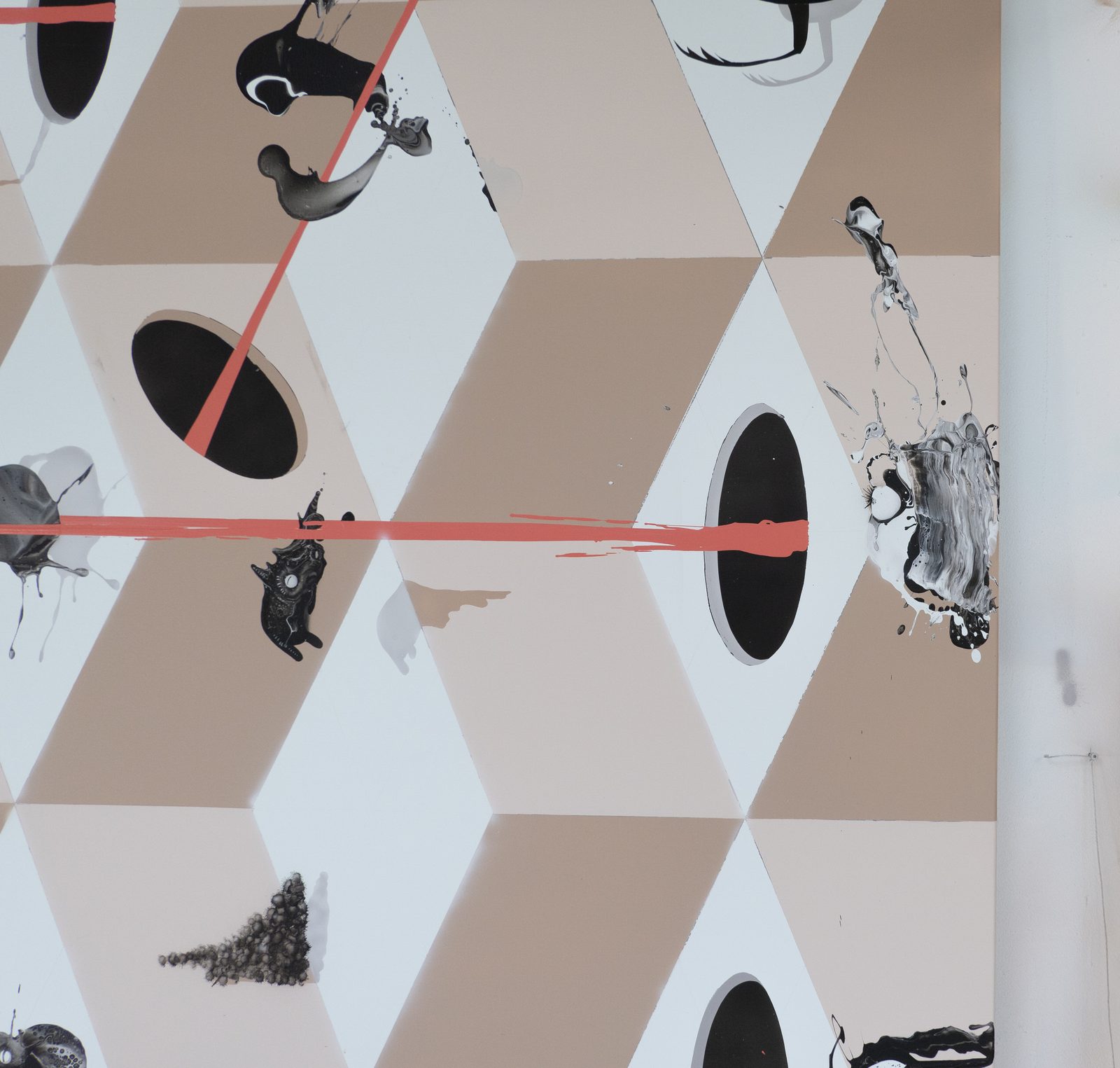
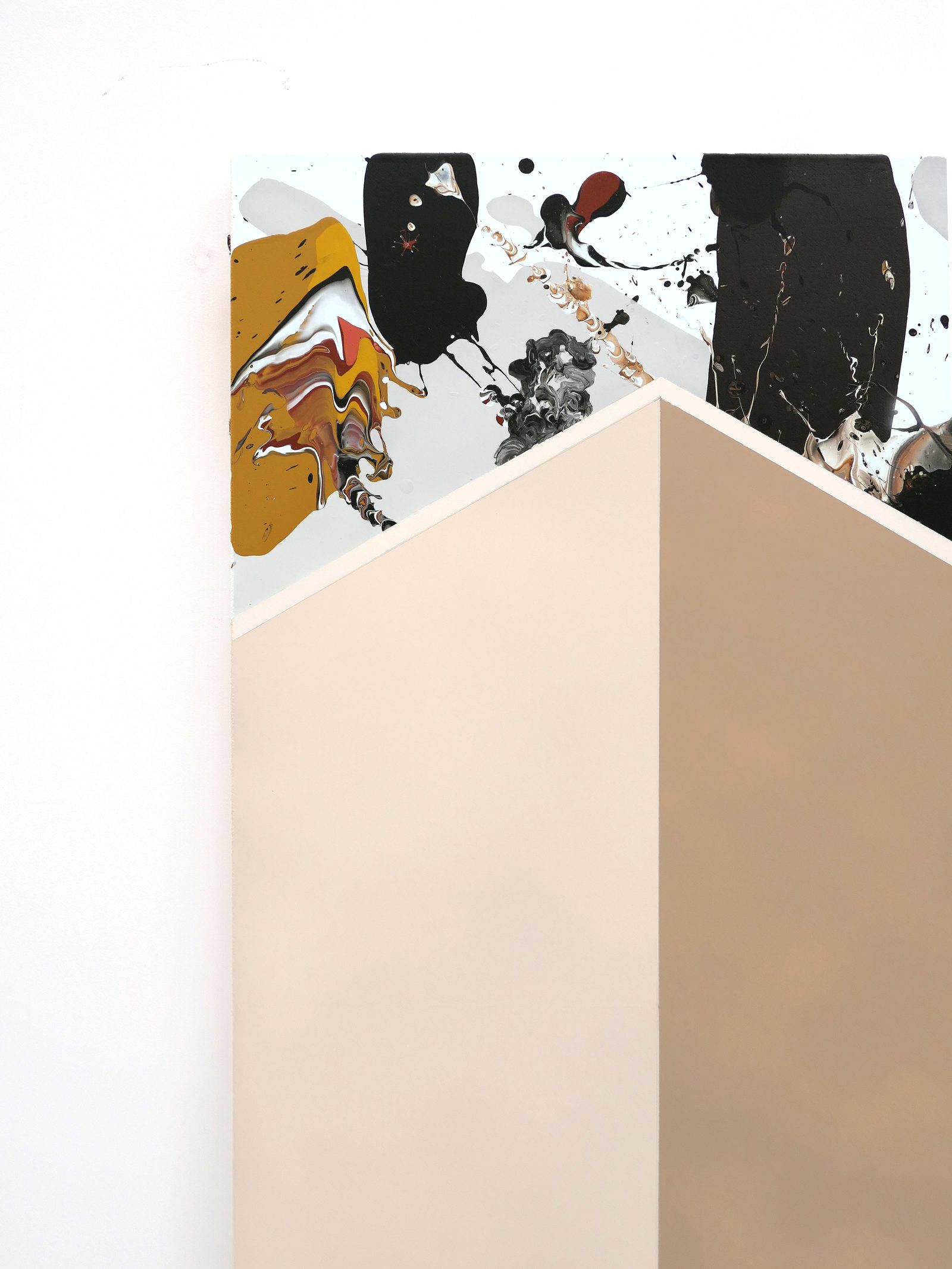
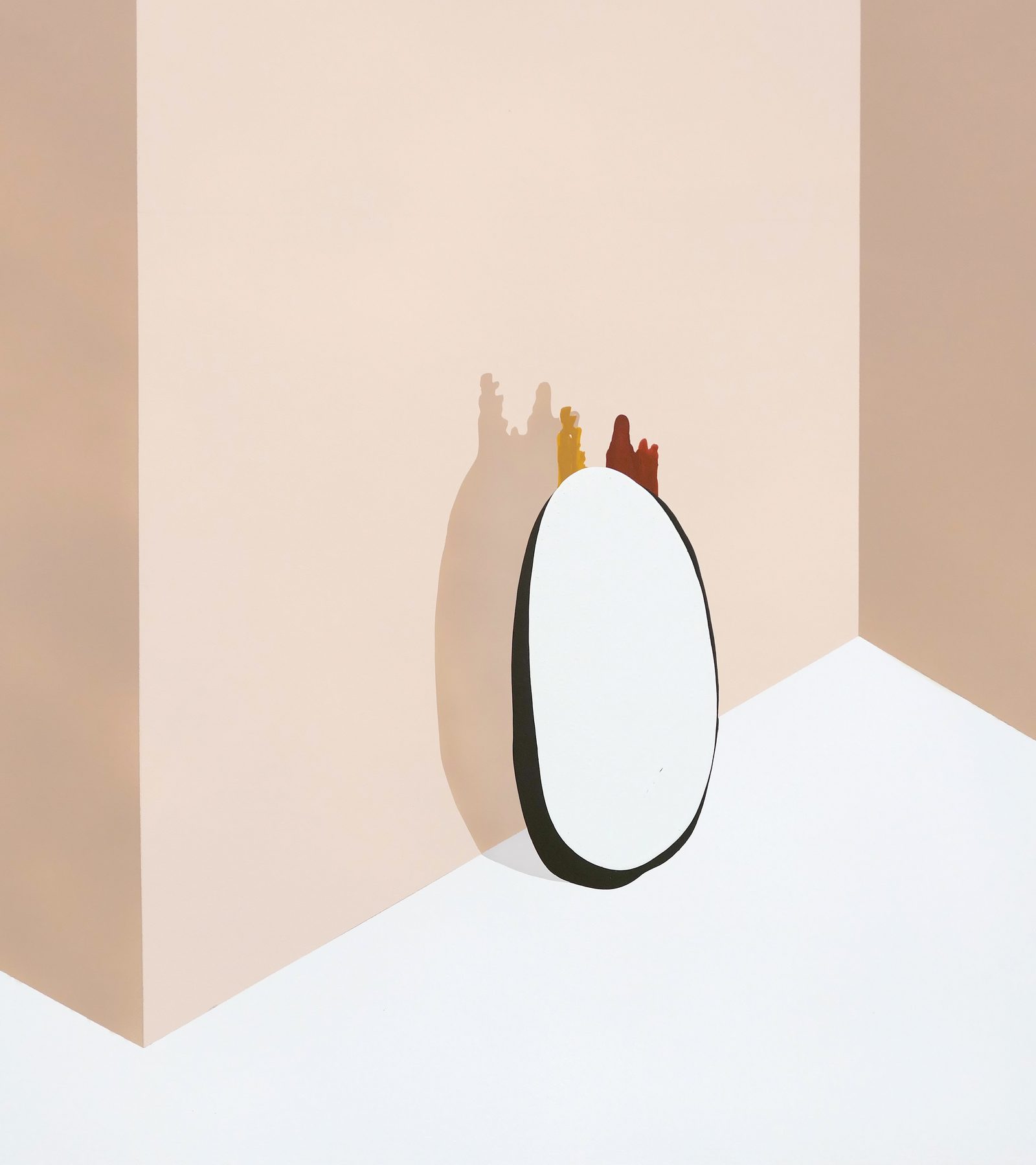
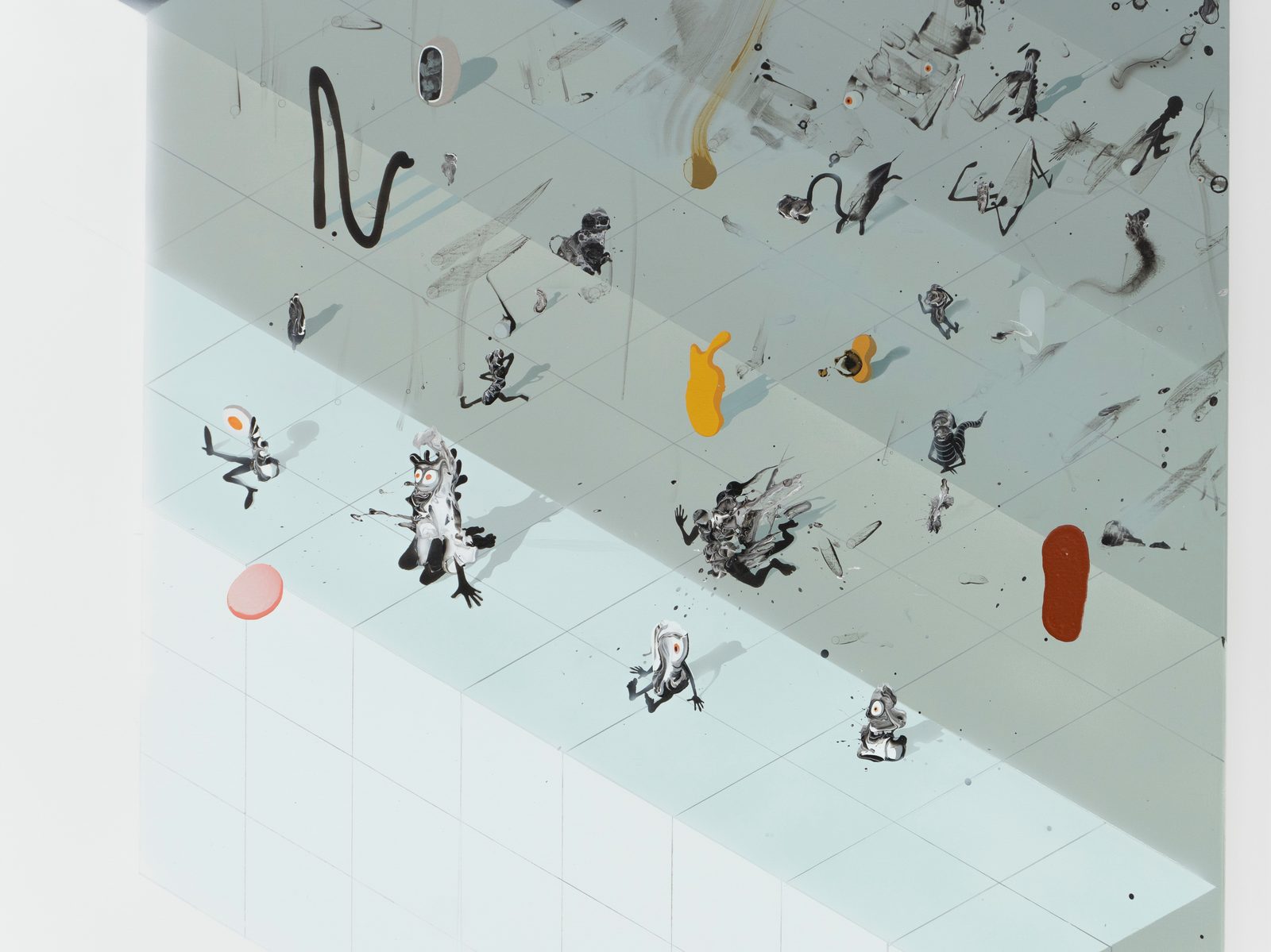
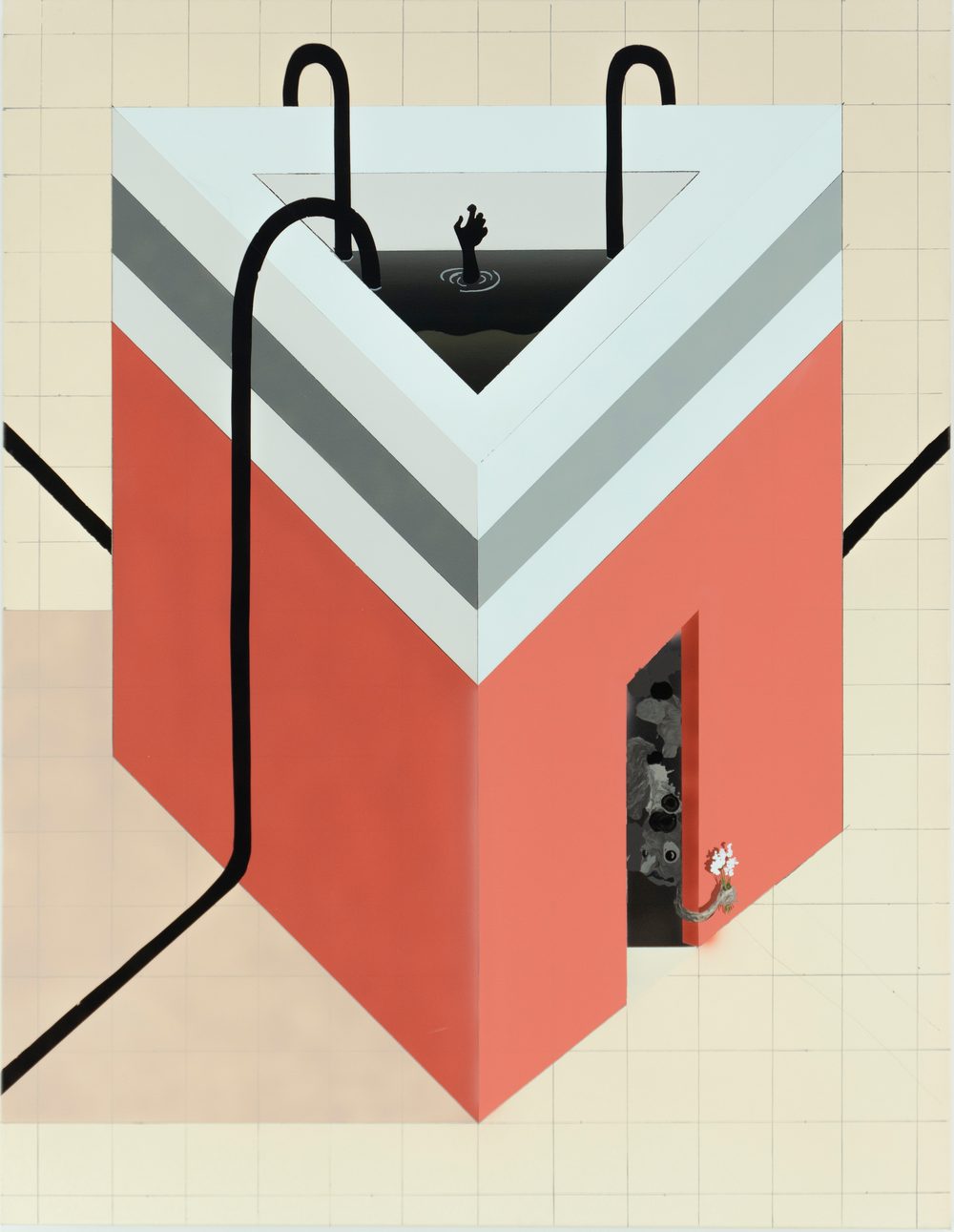
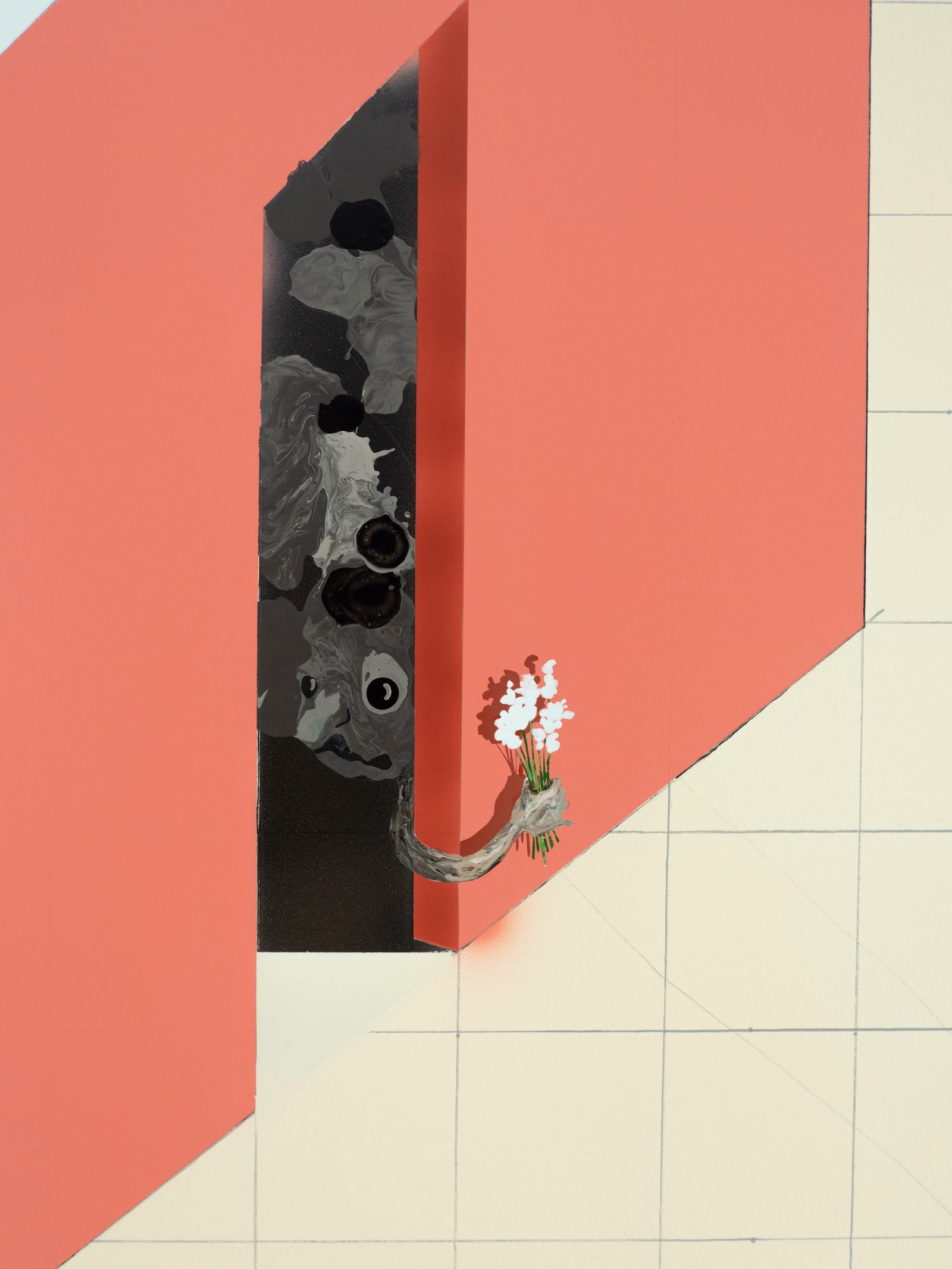
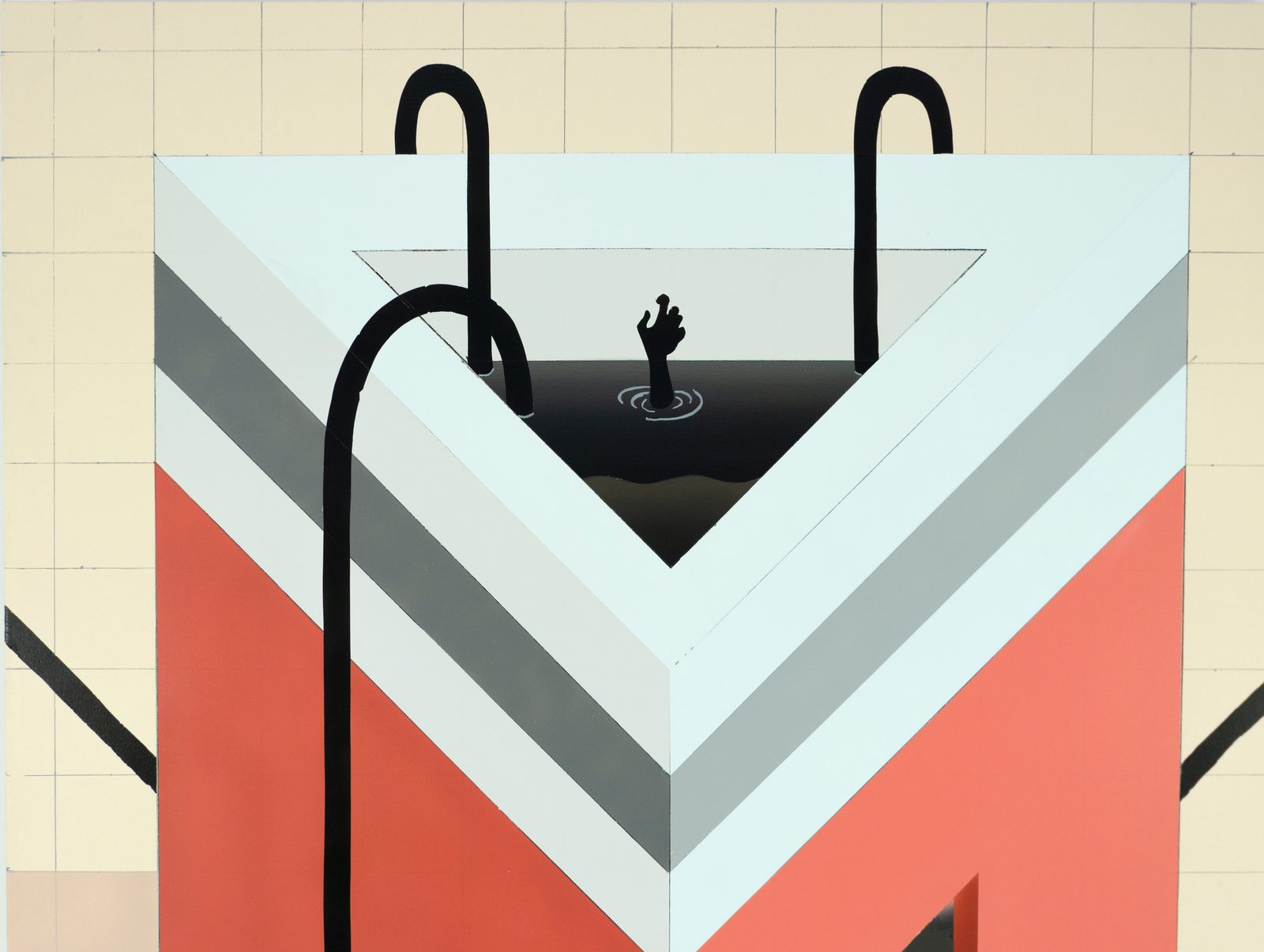
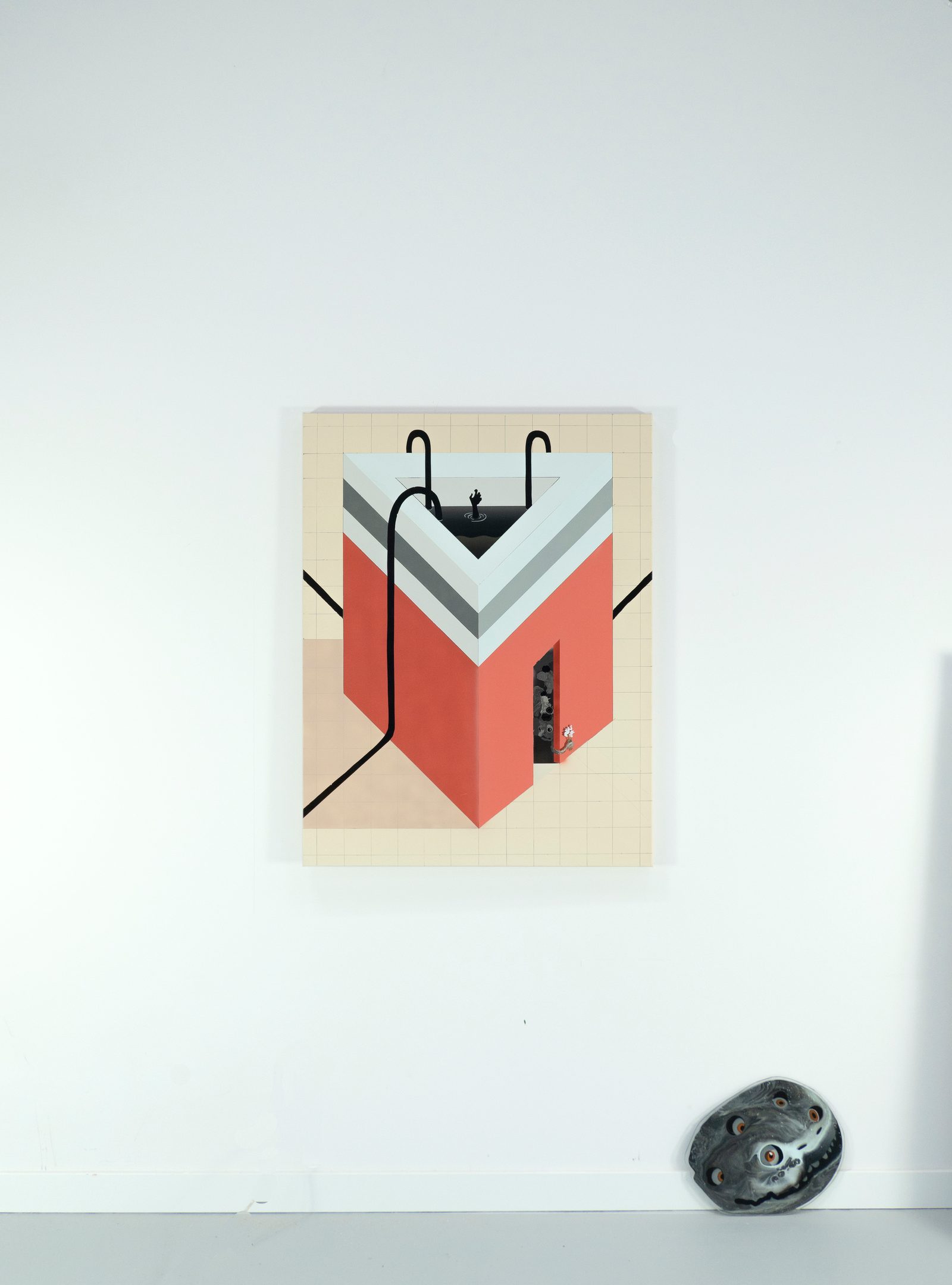
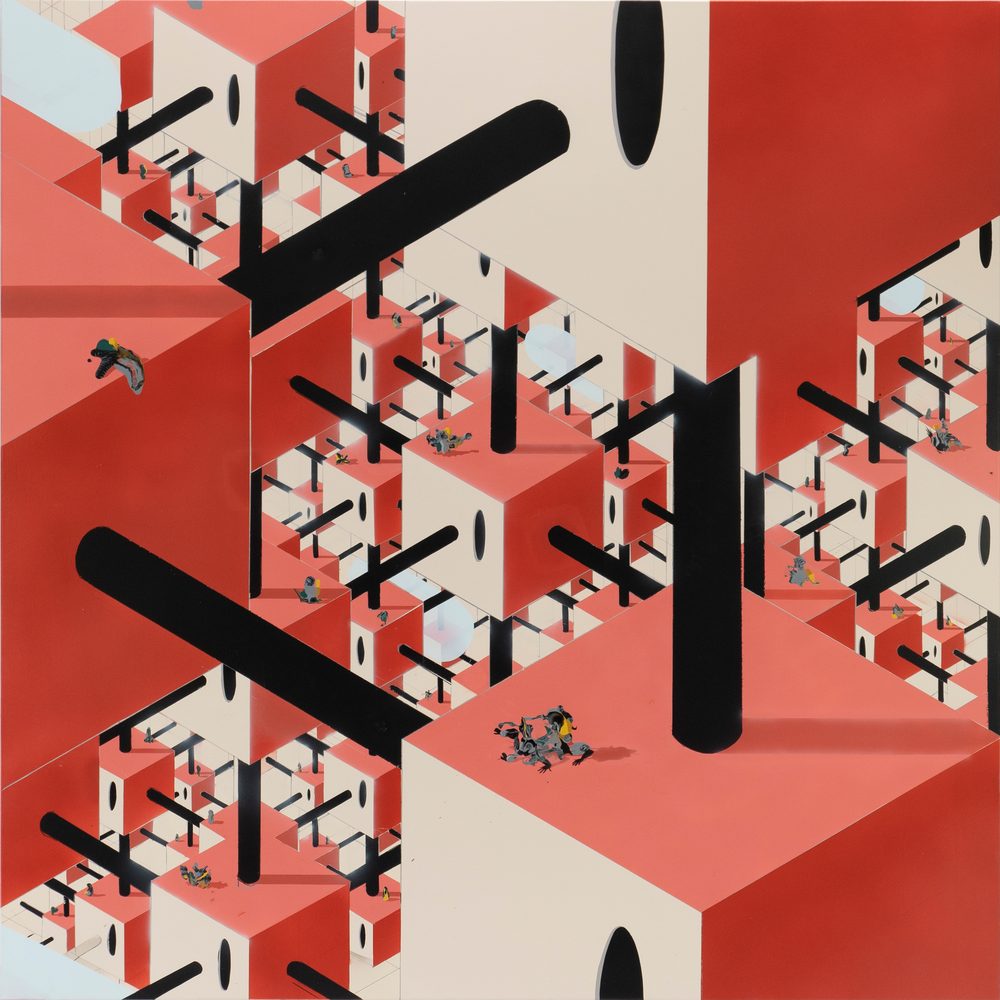
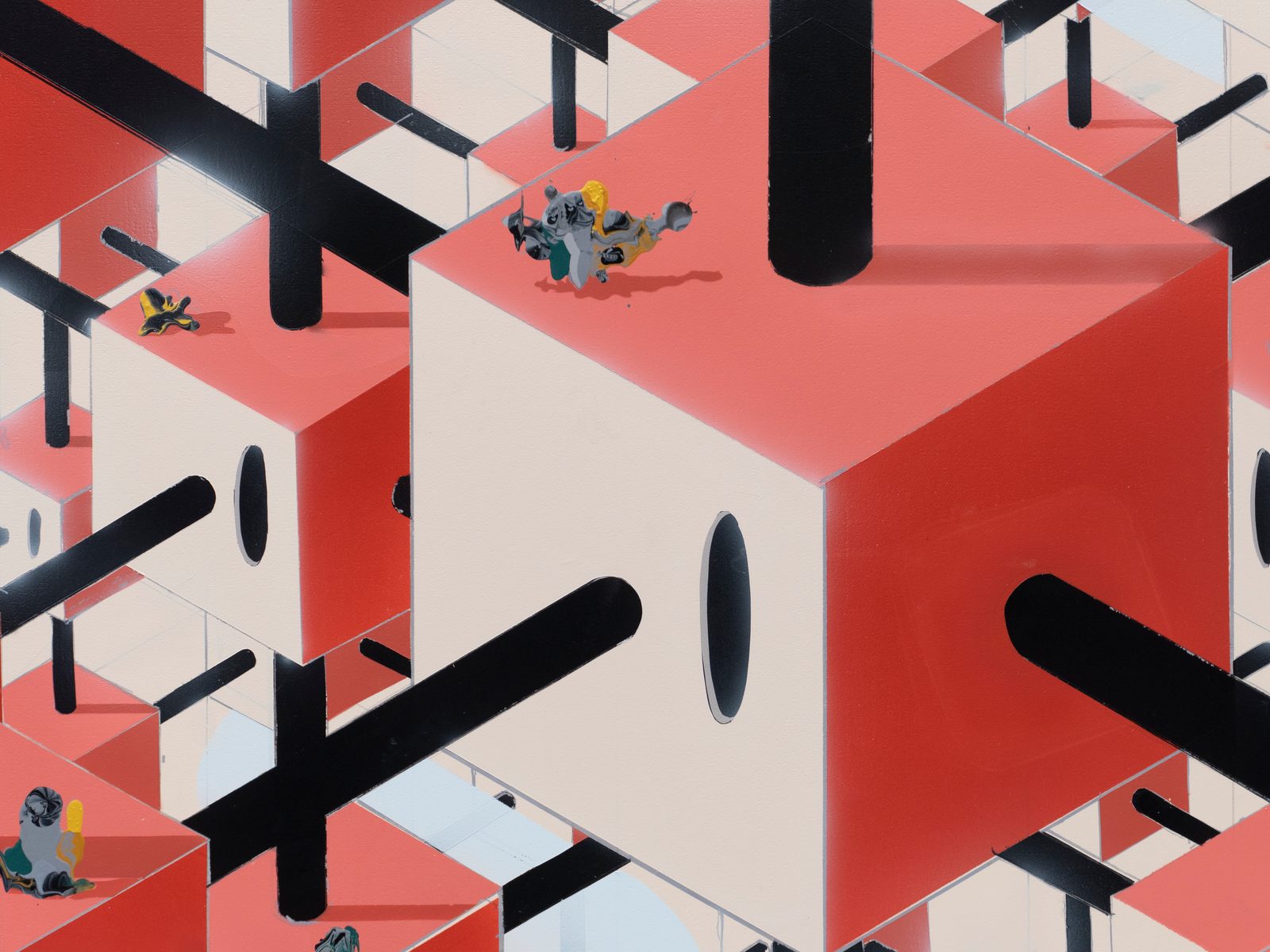
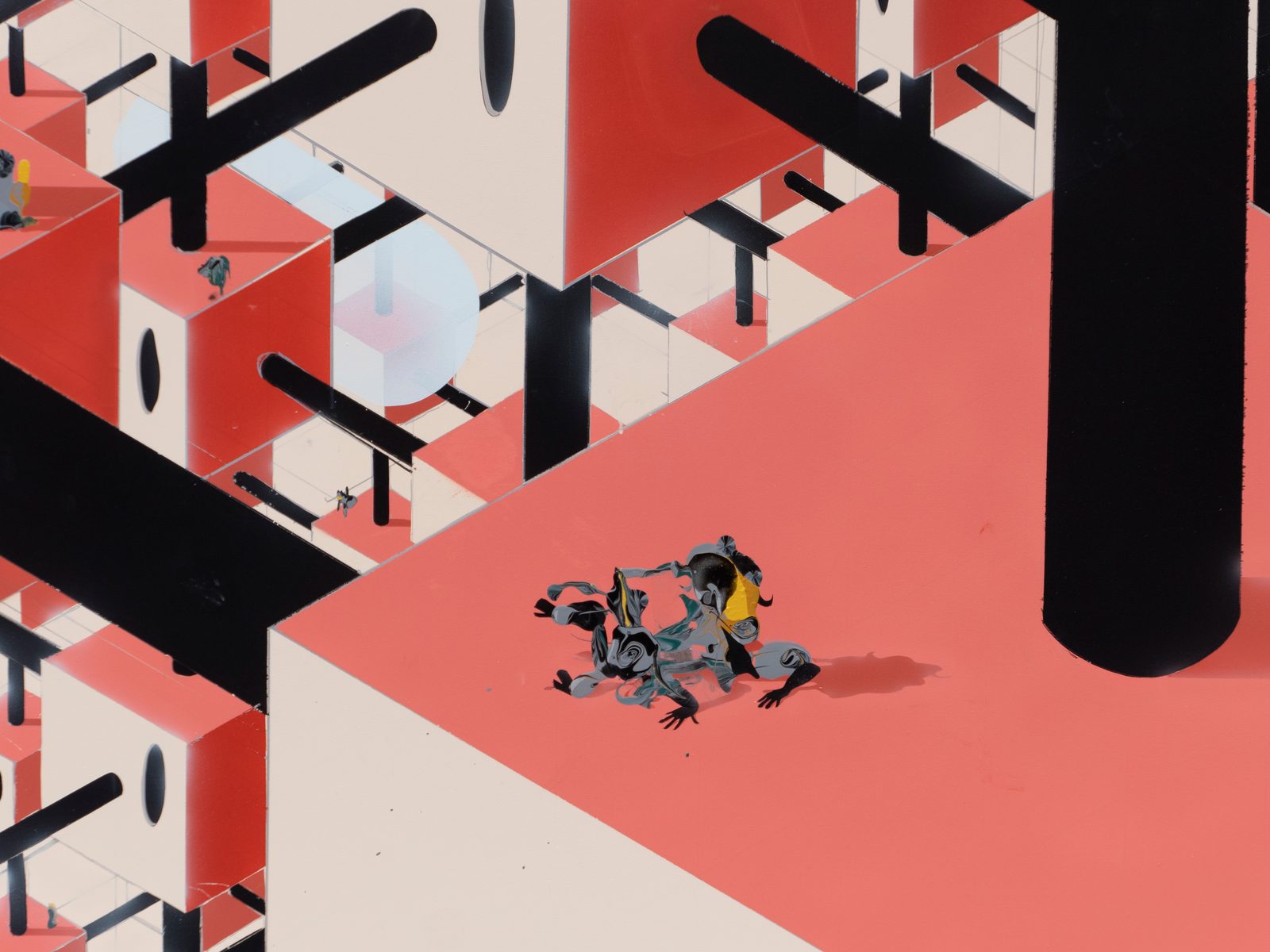
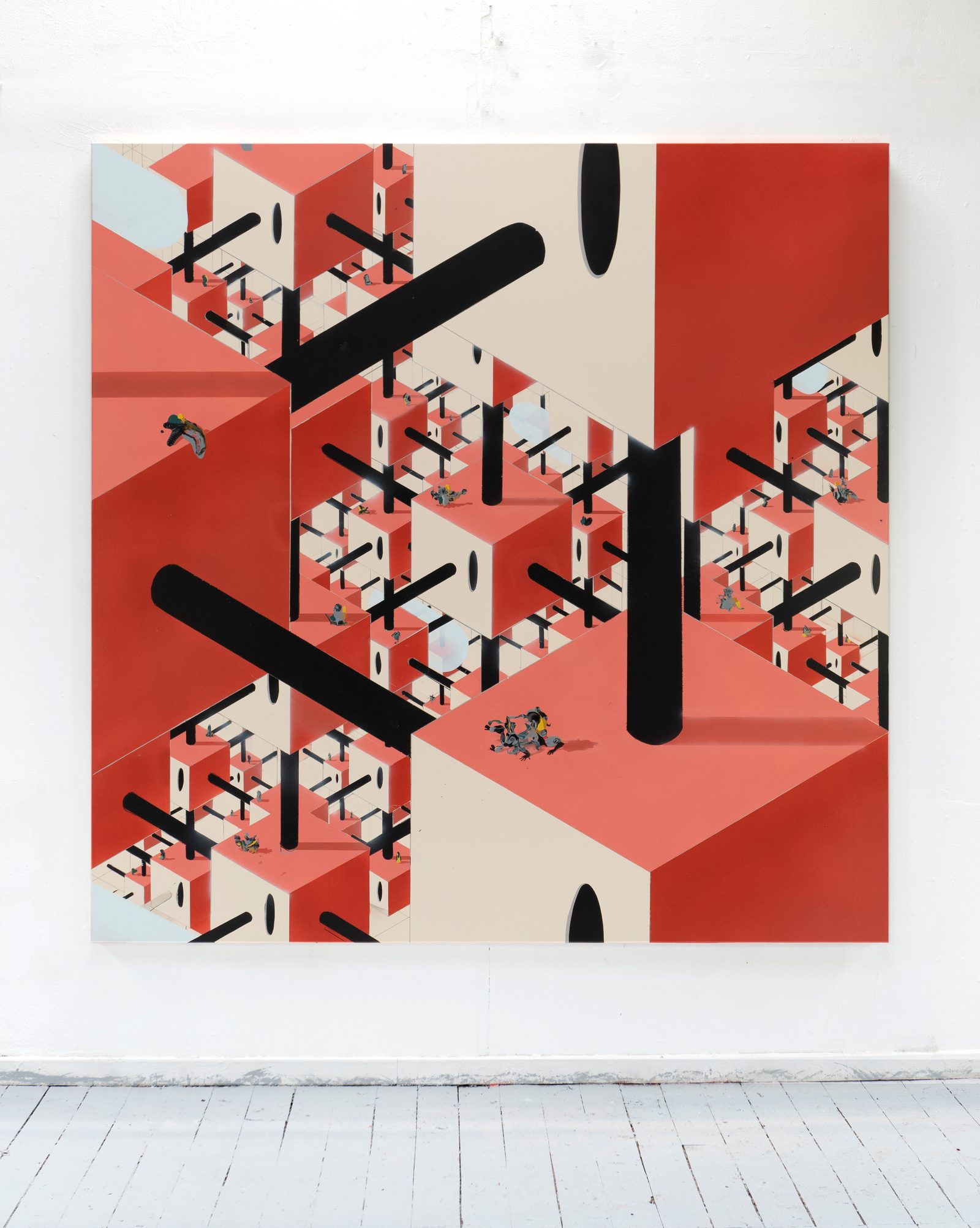
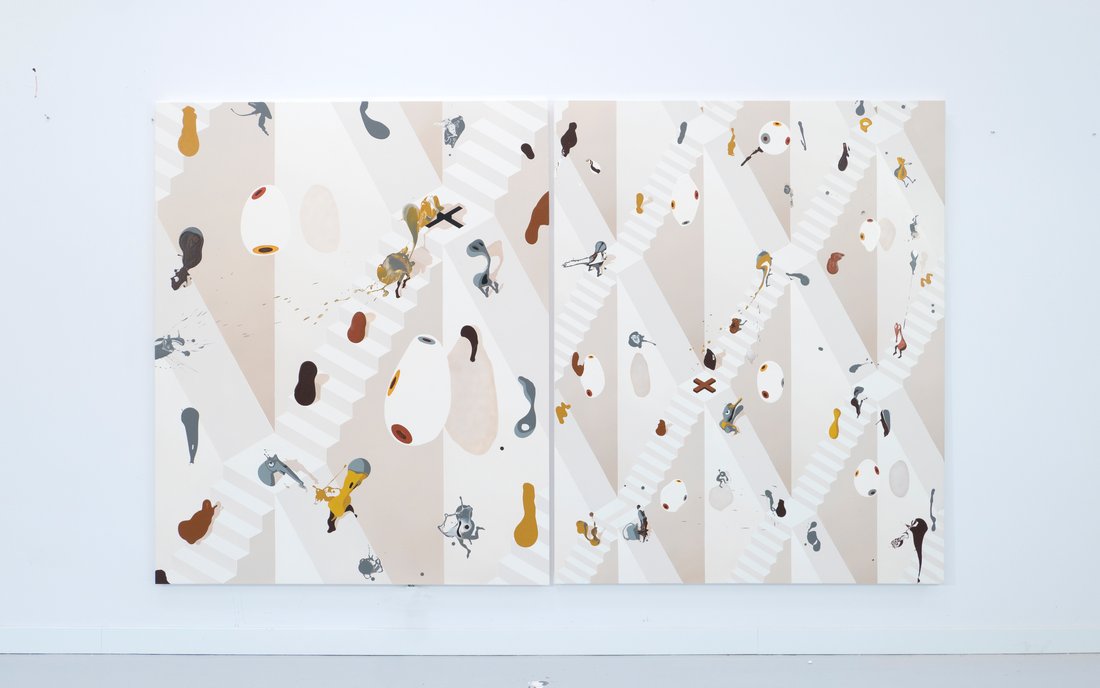
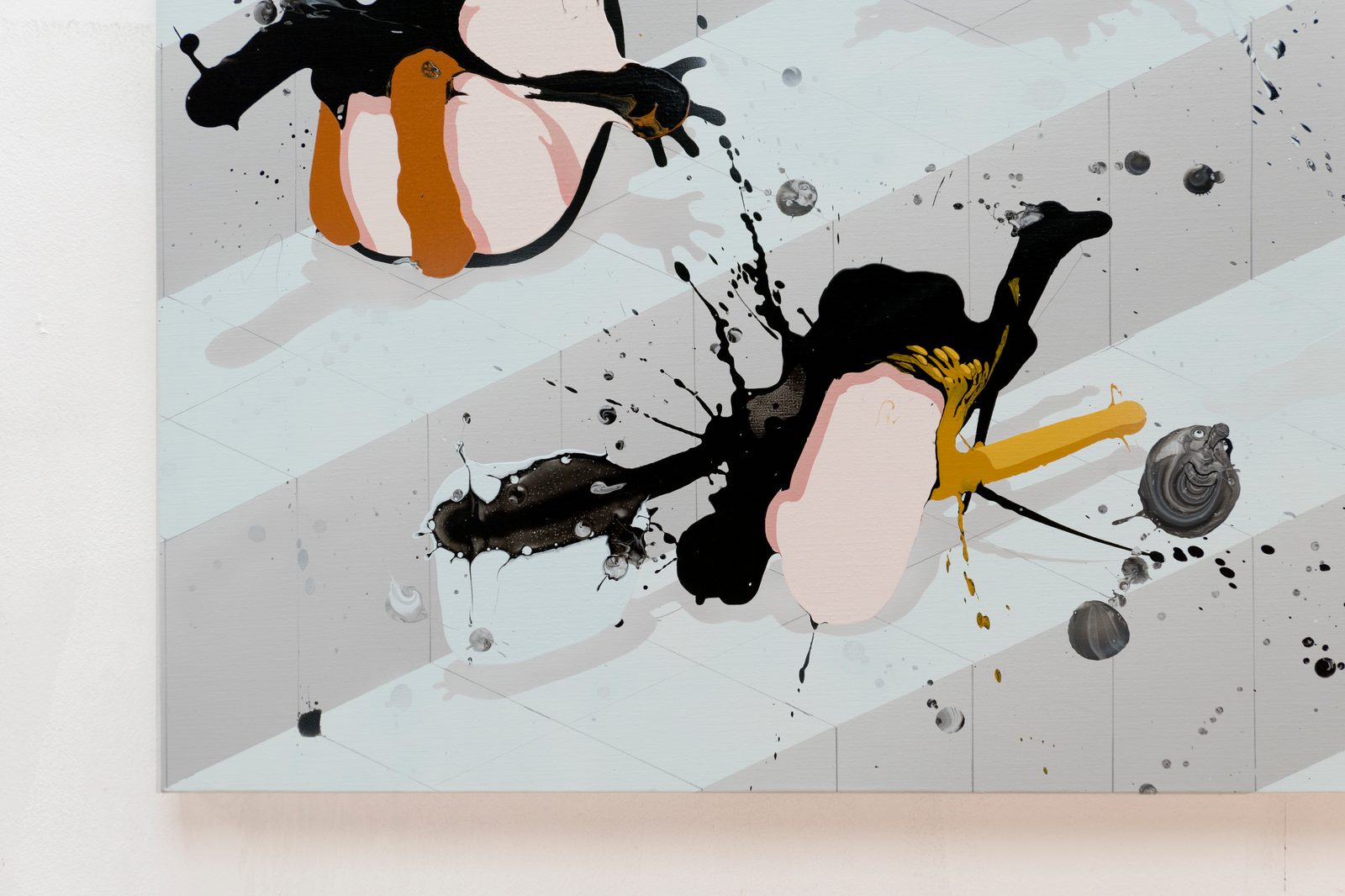
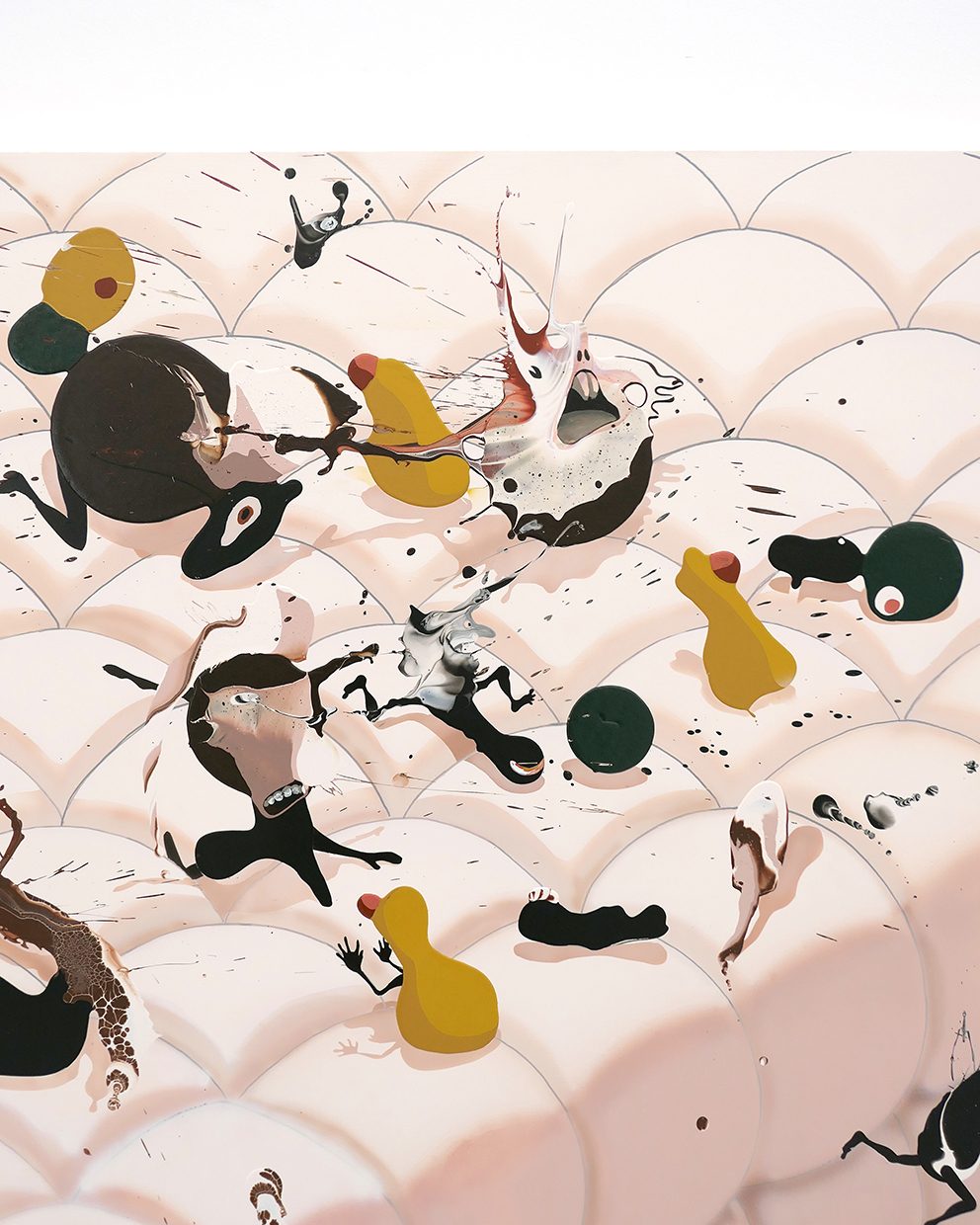
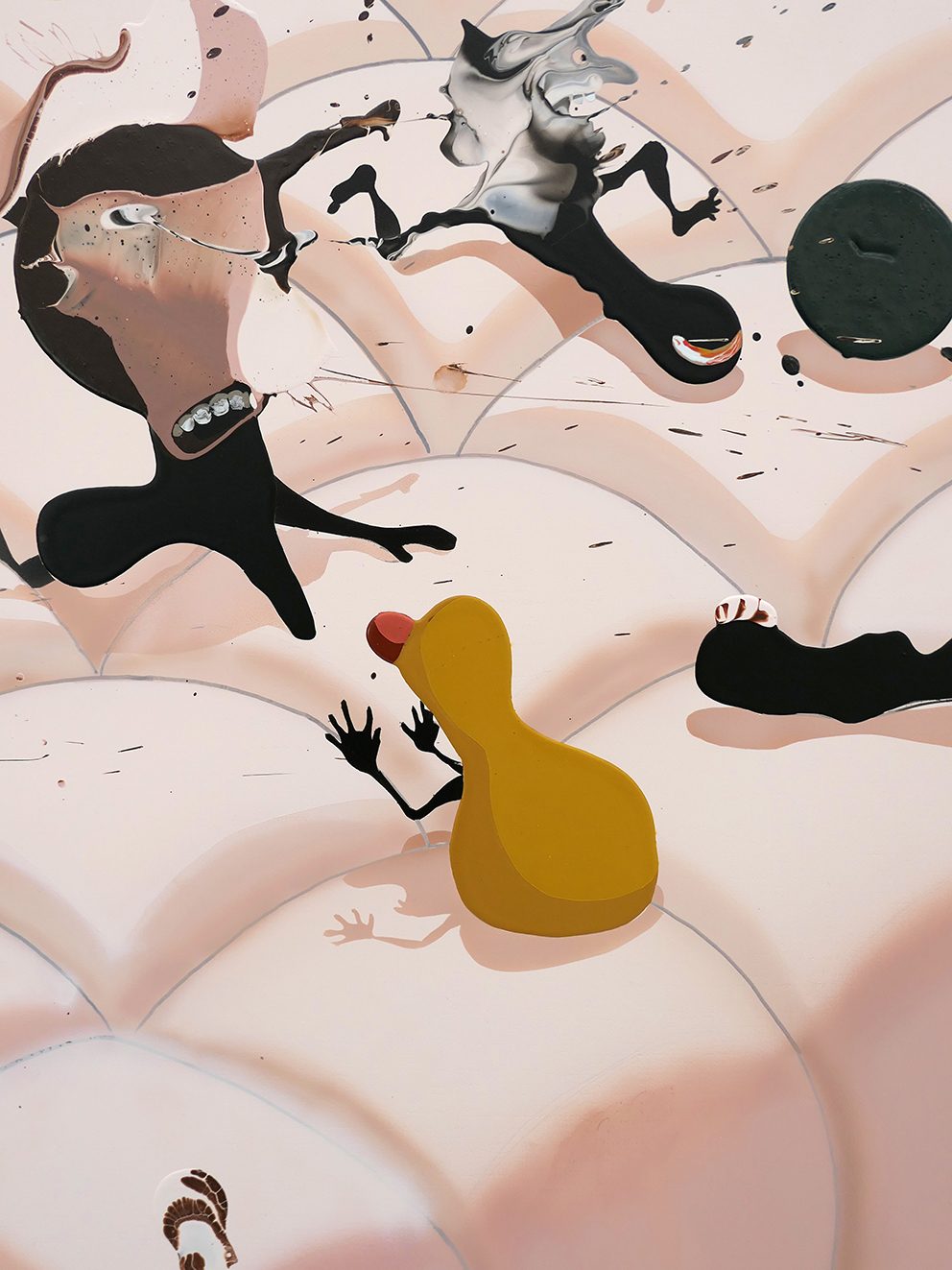
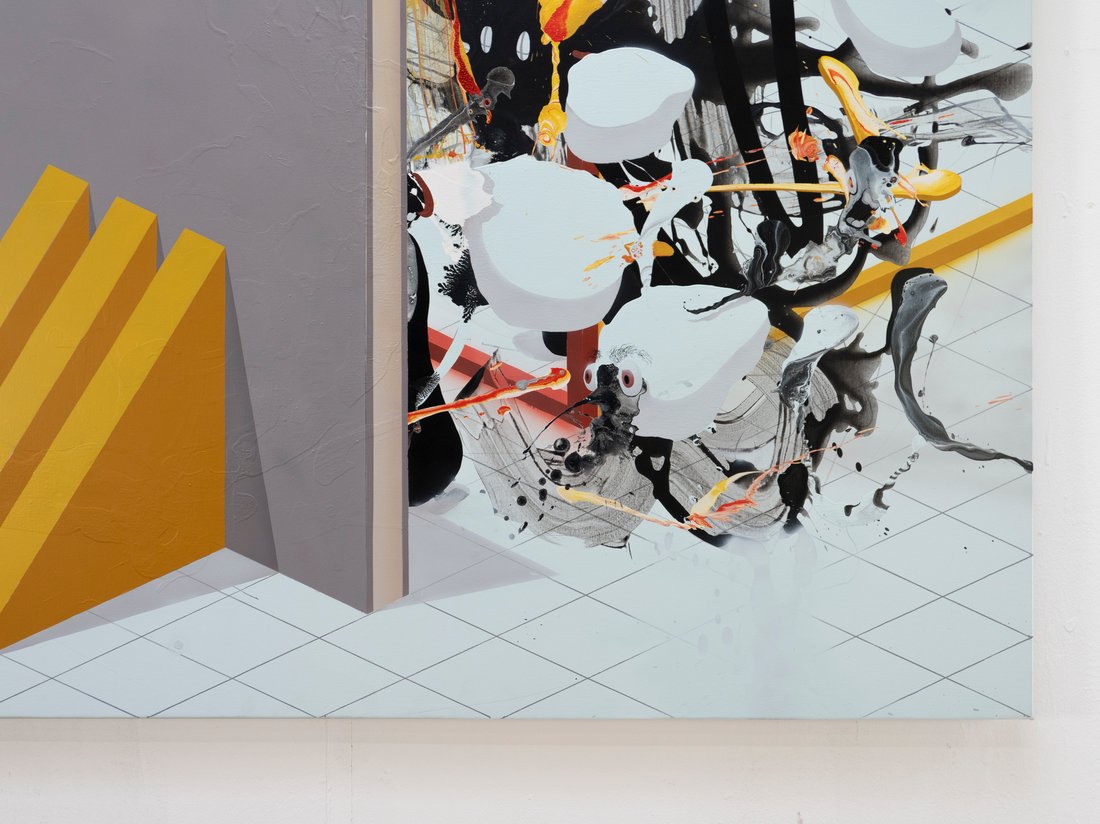
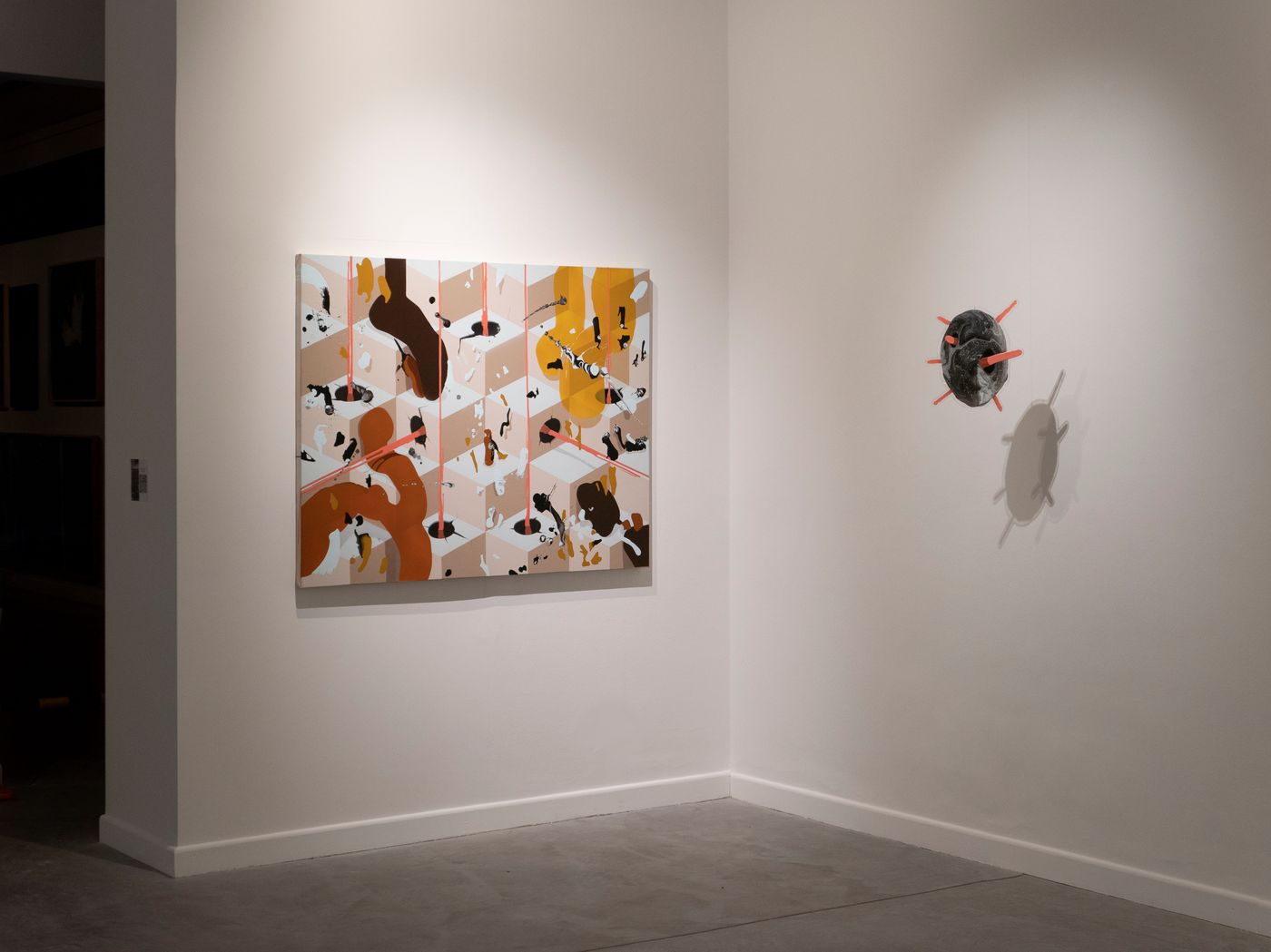
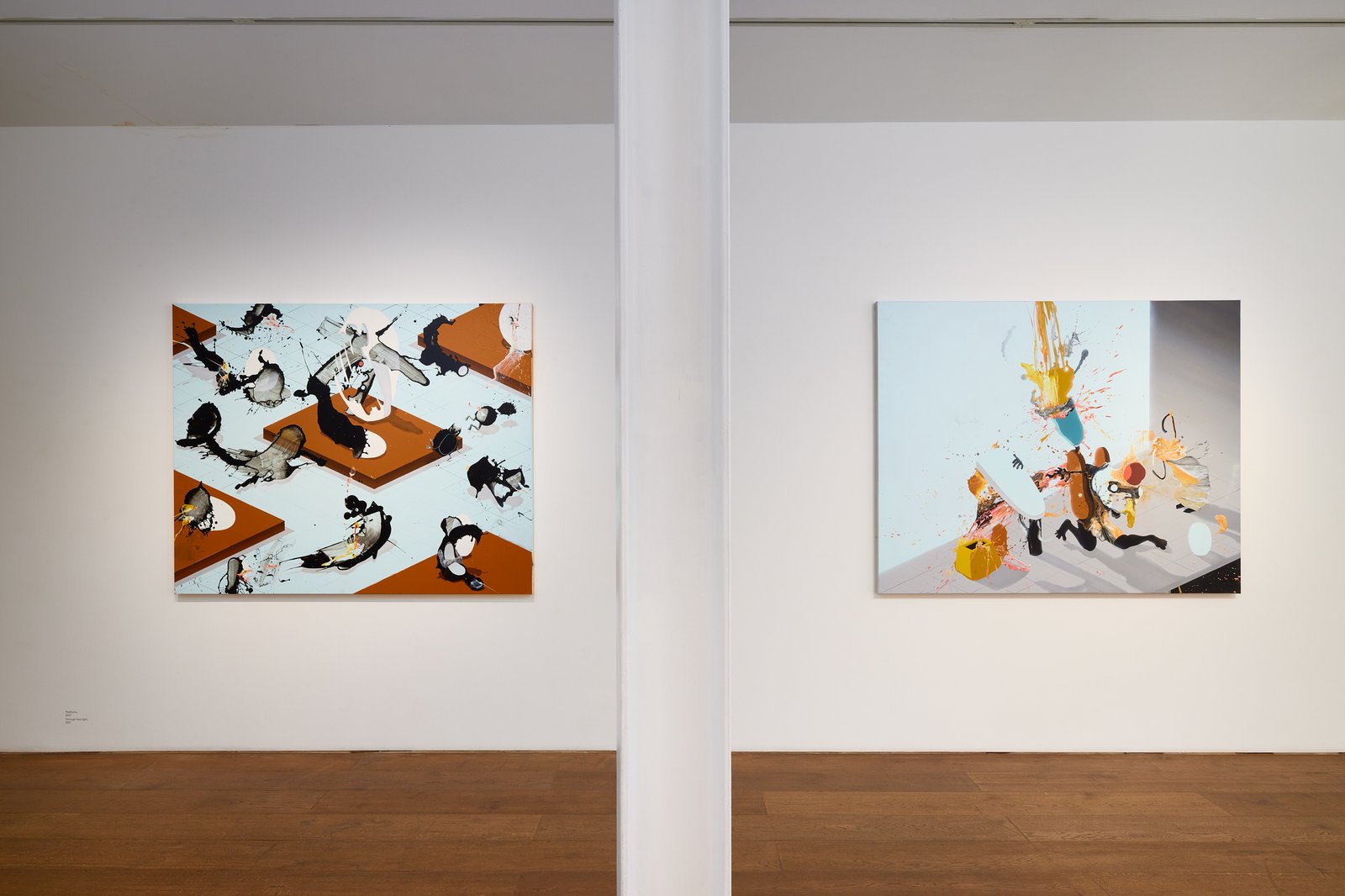
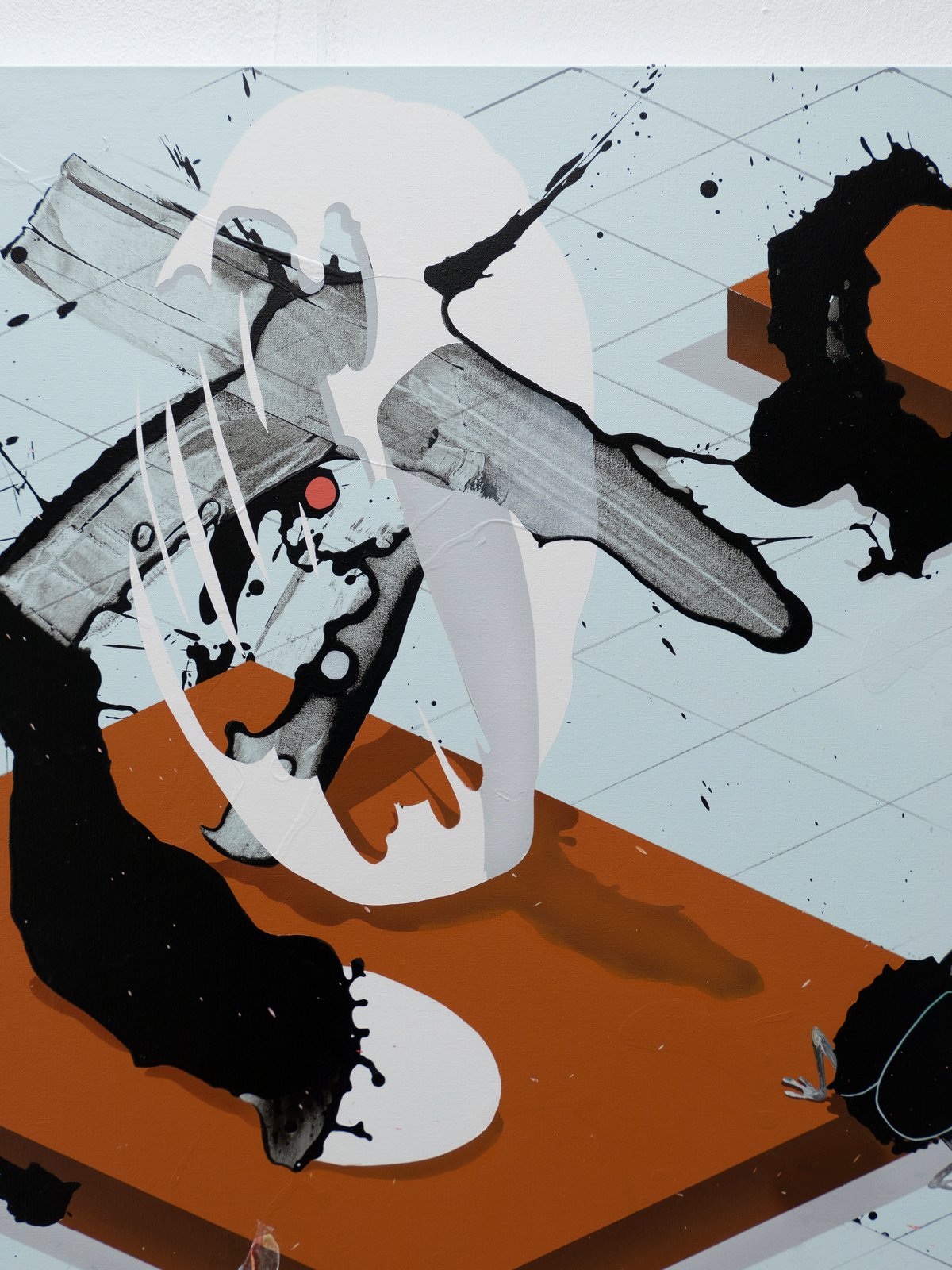
‘The isometric spaces and symbolic colour choices’ which Castiella creates ‘evoke a world that exists beyond ordinary perception, a dimension where the true nature of souls, hidden from our physical eyes, is revealed through plastic expression.’ It’s fascinating to draw a comparison with the works of the Dutch printmaker Maurits Escher. Whereas Escher’s steps are concerned with mathematics and a formal perfection, Castiella’s works begin with that same perfection which is then torpedoed by the emergence of the artist’s army of fantastical figures who emerge from all areas of the seemingly perfectly constructed world giving the breath of life to this previously sterile world.
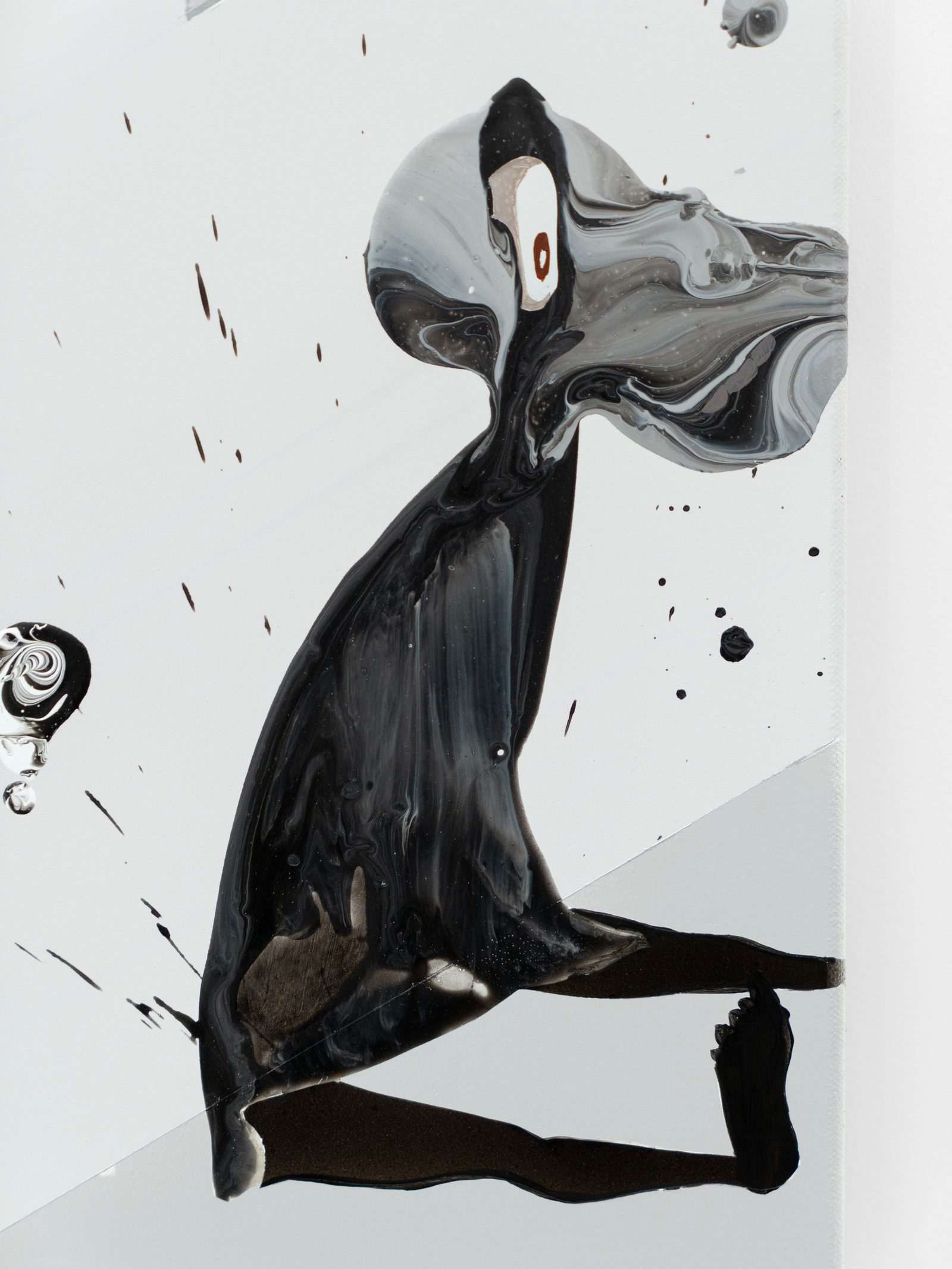
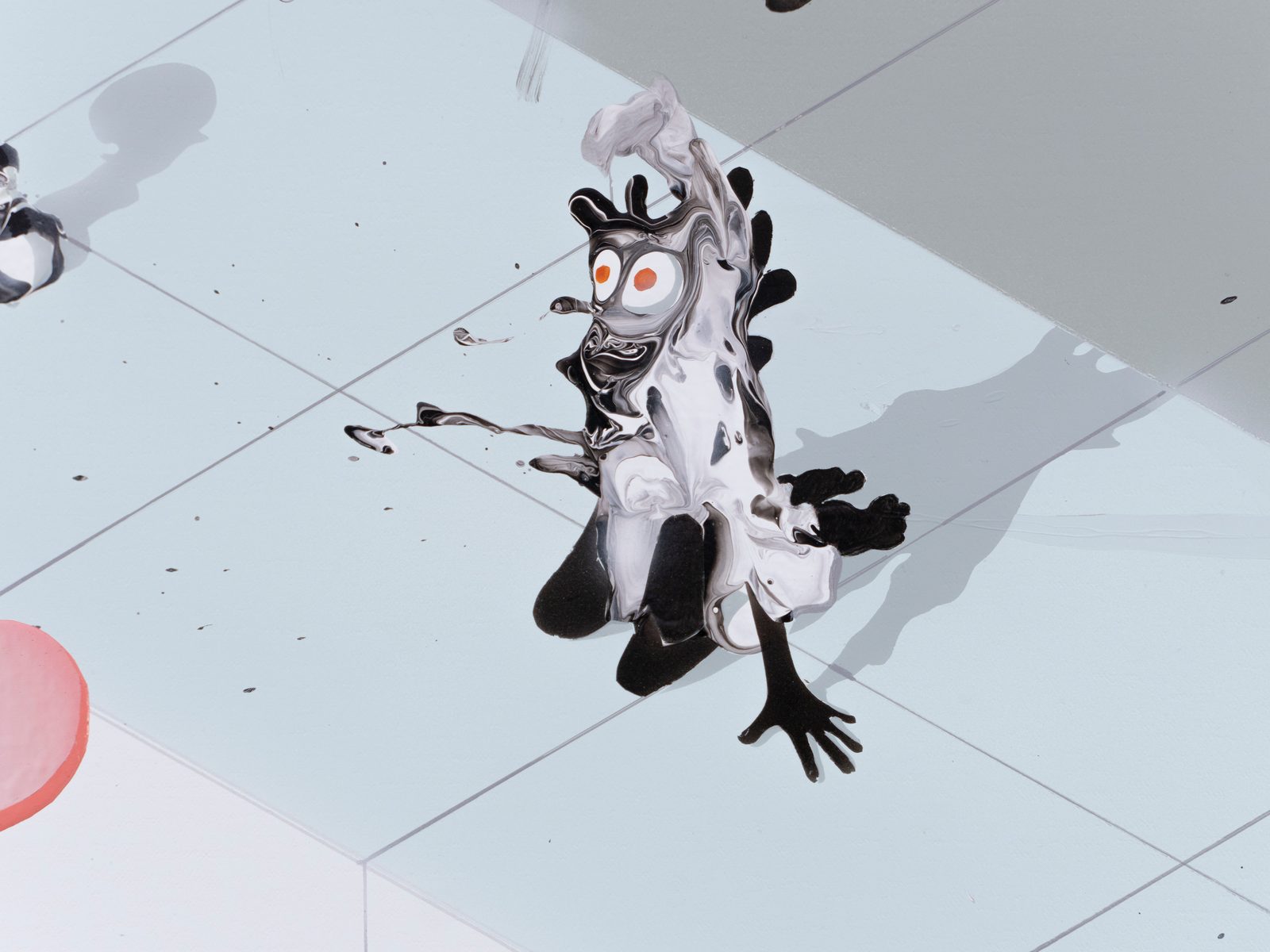
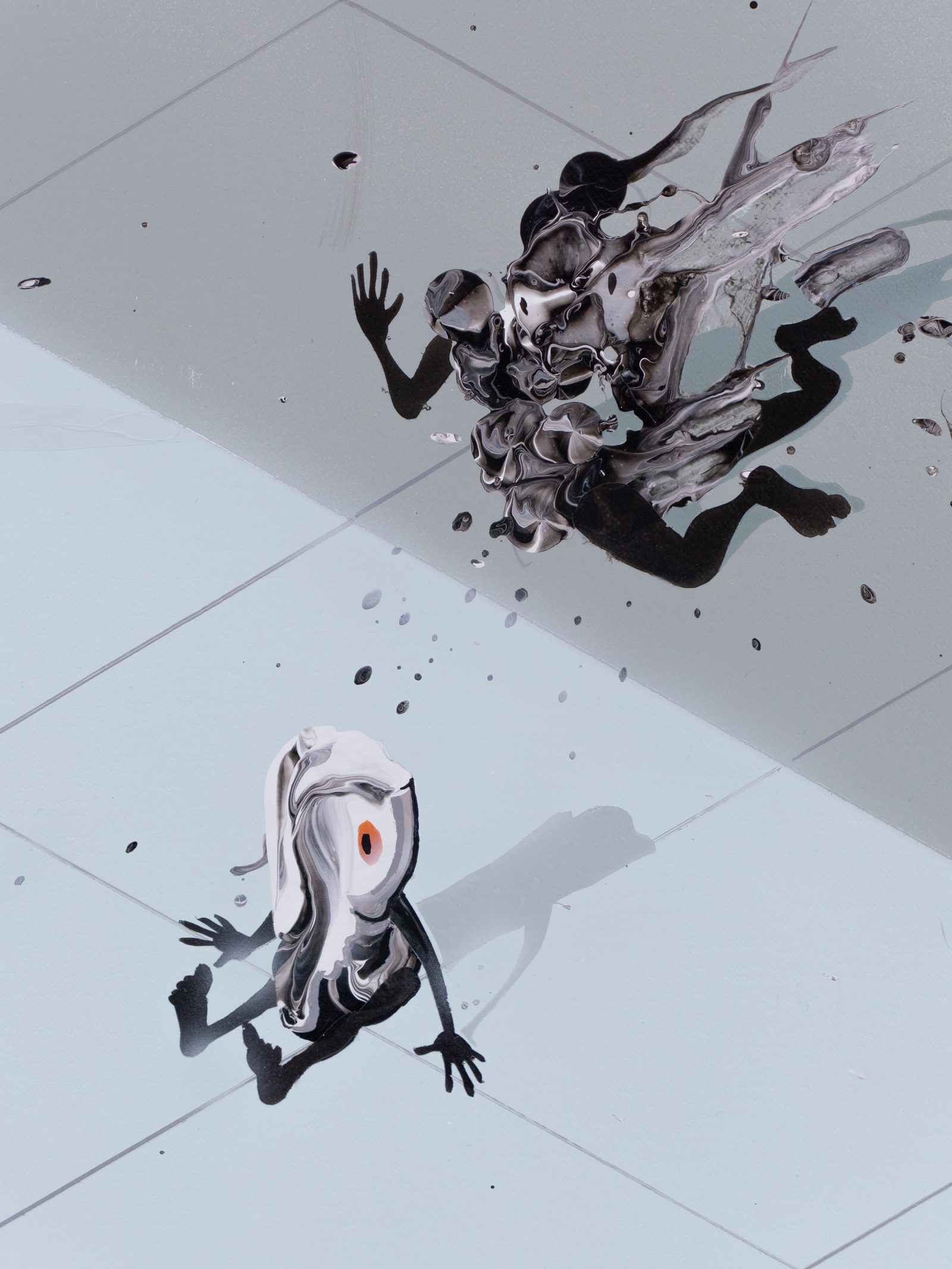
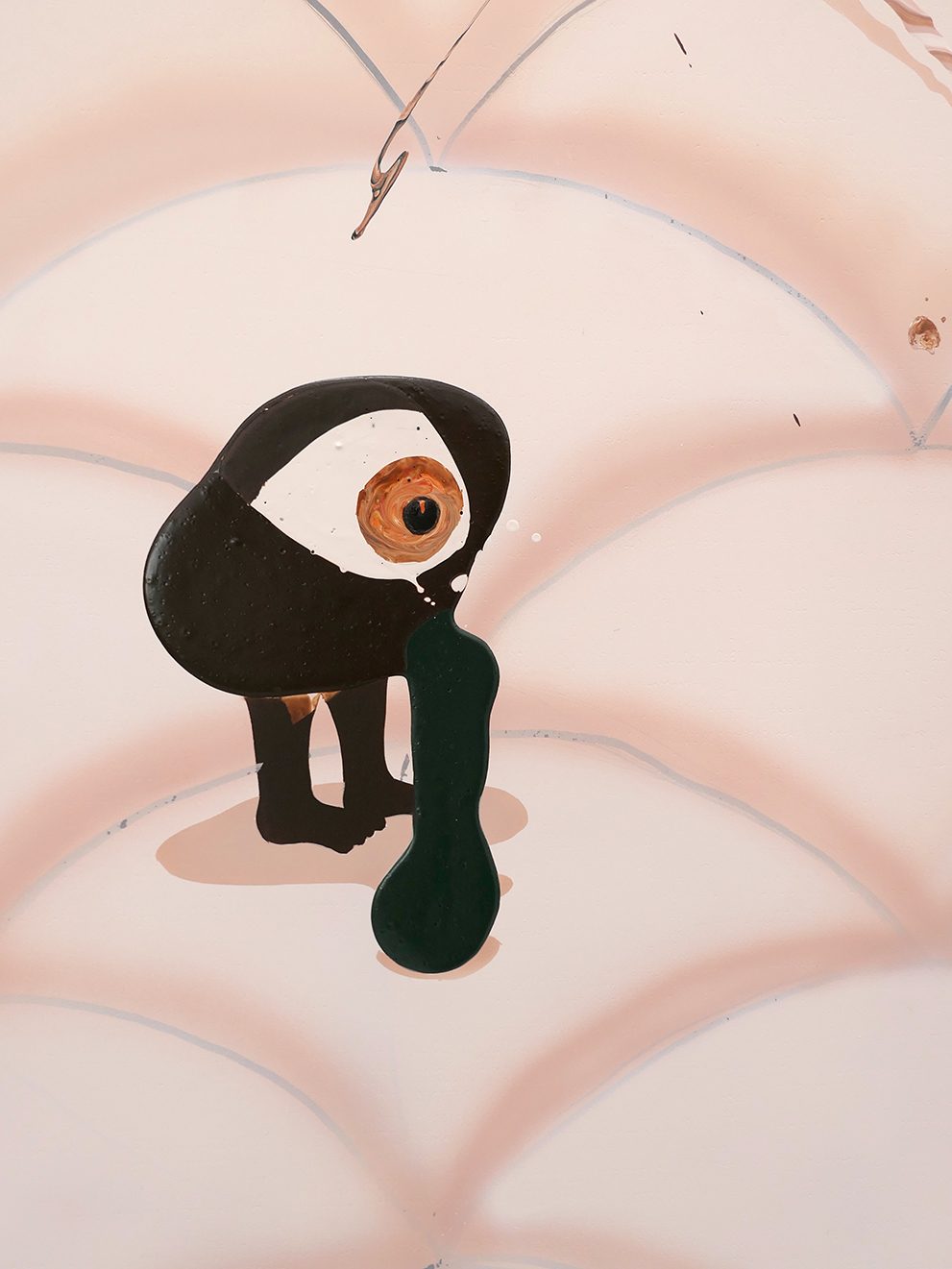
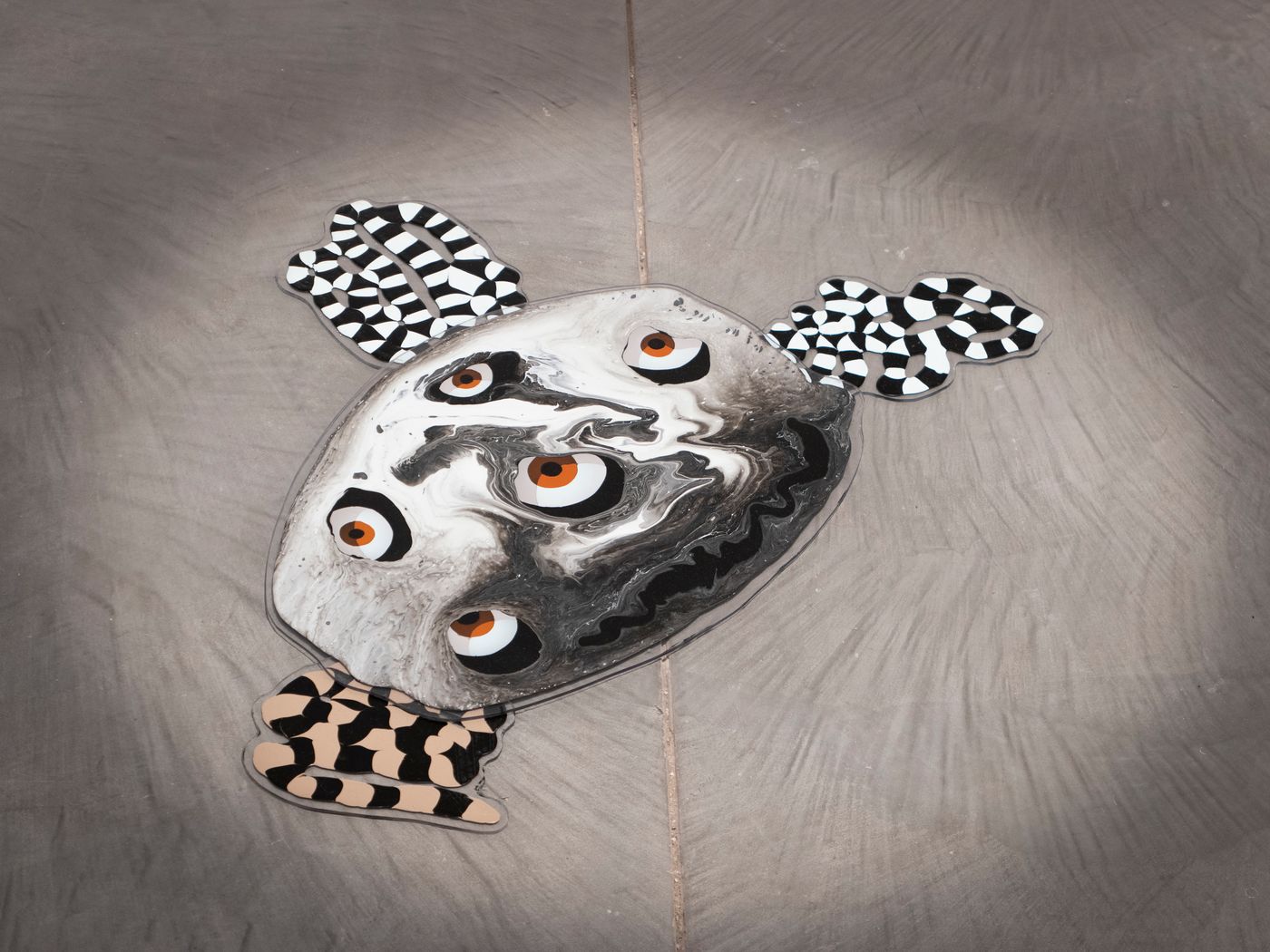
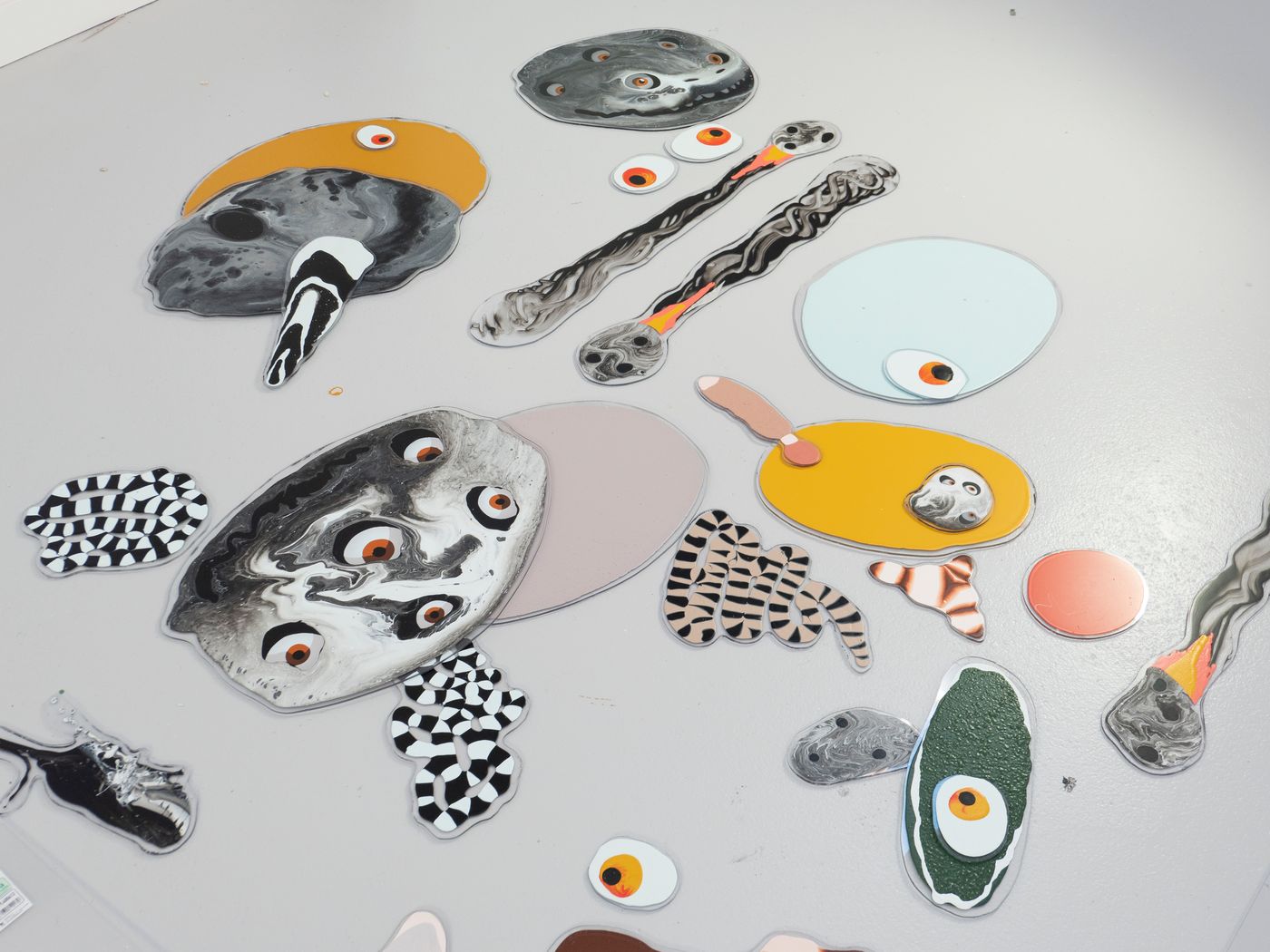
The artist thus becomes a kind of demiurge revealing to us a secret but very real world which had previously been hidden to our human eyes. It is the ‘miracle’ of painting which reveals this previously hidden universe to us. The characters which populate these paintings are, for Castiella, spiritual beings rather than material ones; their ugliness and deformity relating to the view propounded by some mystics of how souls may appear deformed by sin in the spiritual realm. Elaborating on this is the idea, dear to the artist, that someone beautiful in appearance might be terrible in the spiritual realm, whilst ‘a homeless person, perceived as flawed by society, might have a sacred purity.’
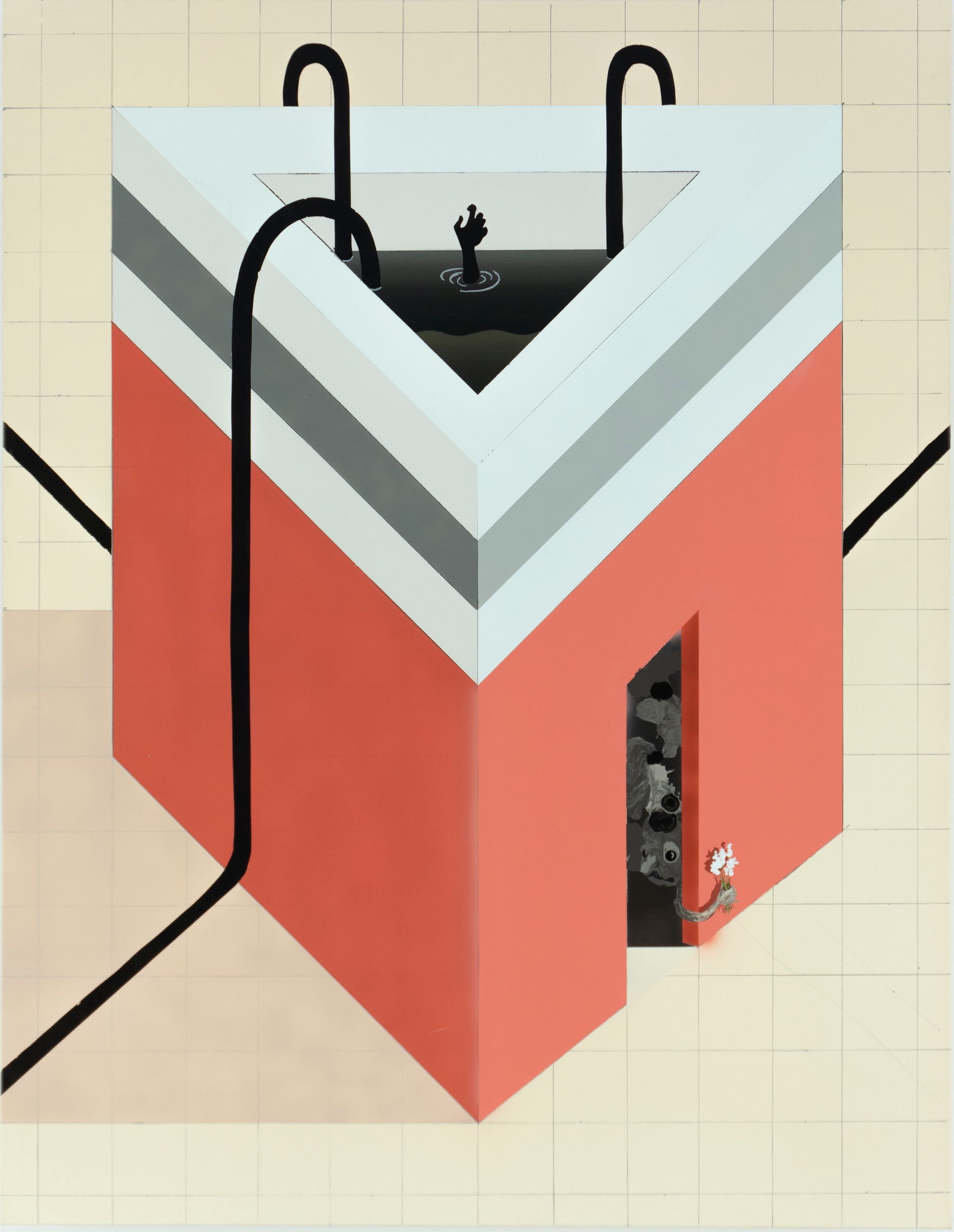
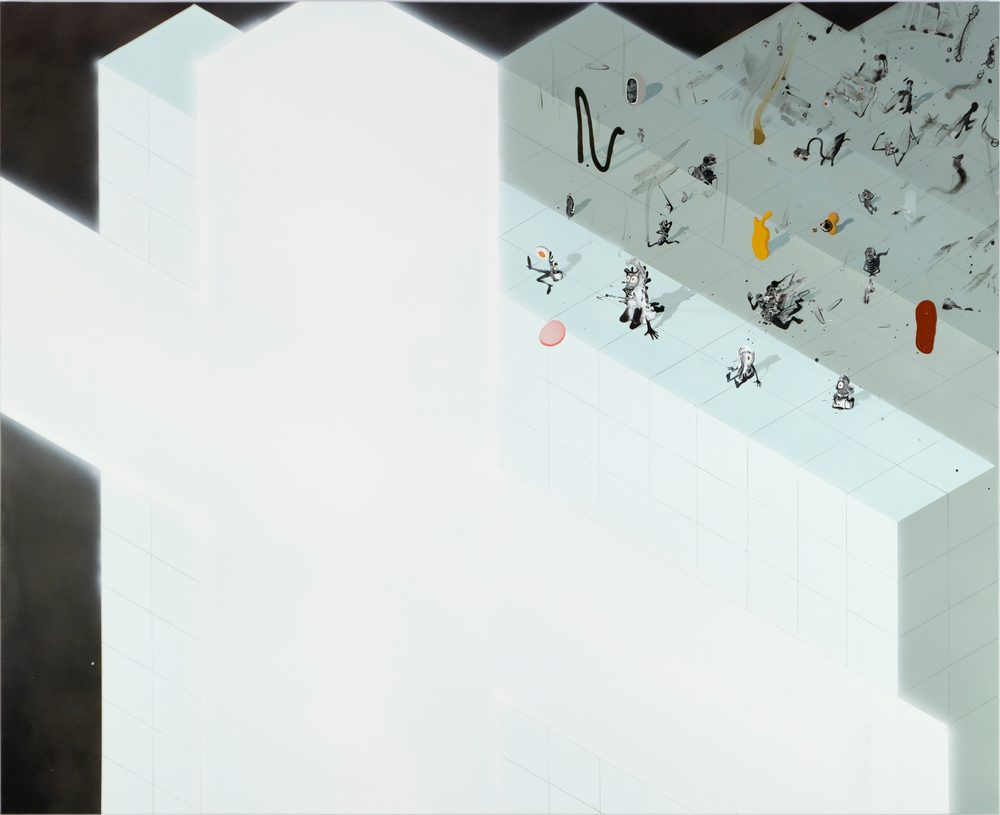
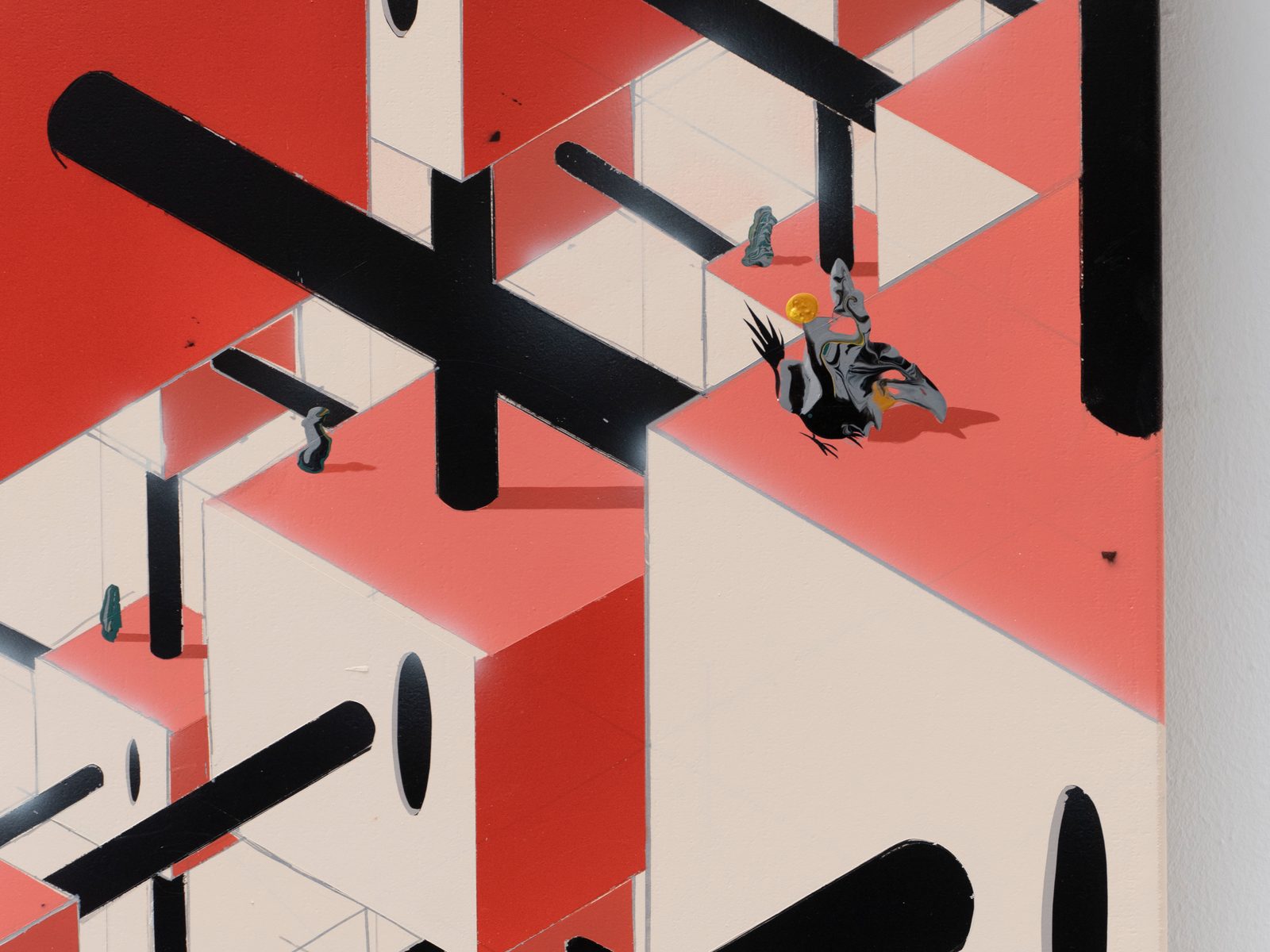
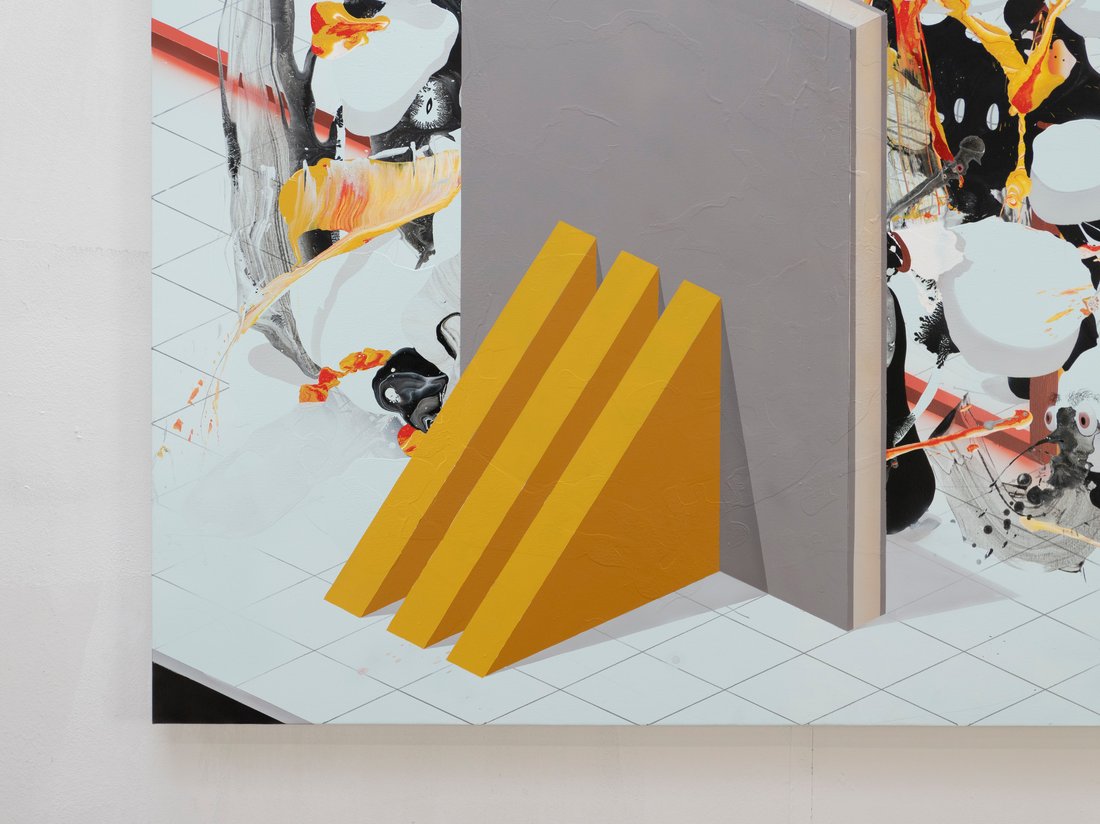
The large painting in the exhibition is more related to Dante’s ‘Purgatory’ in its depiction of the different stages in the purification of the soul. The structure Castiella now conjures up is an impossible one, the steps representing different planes of reality.
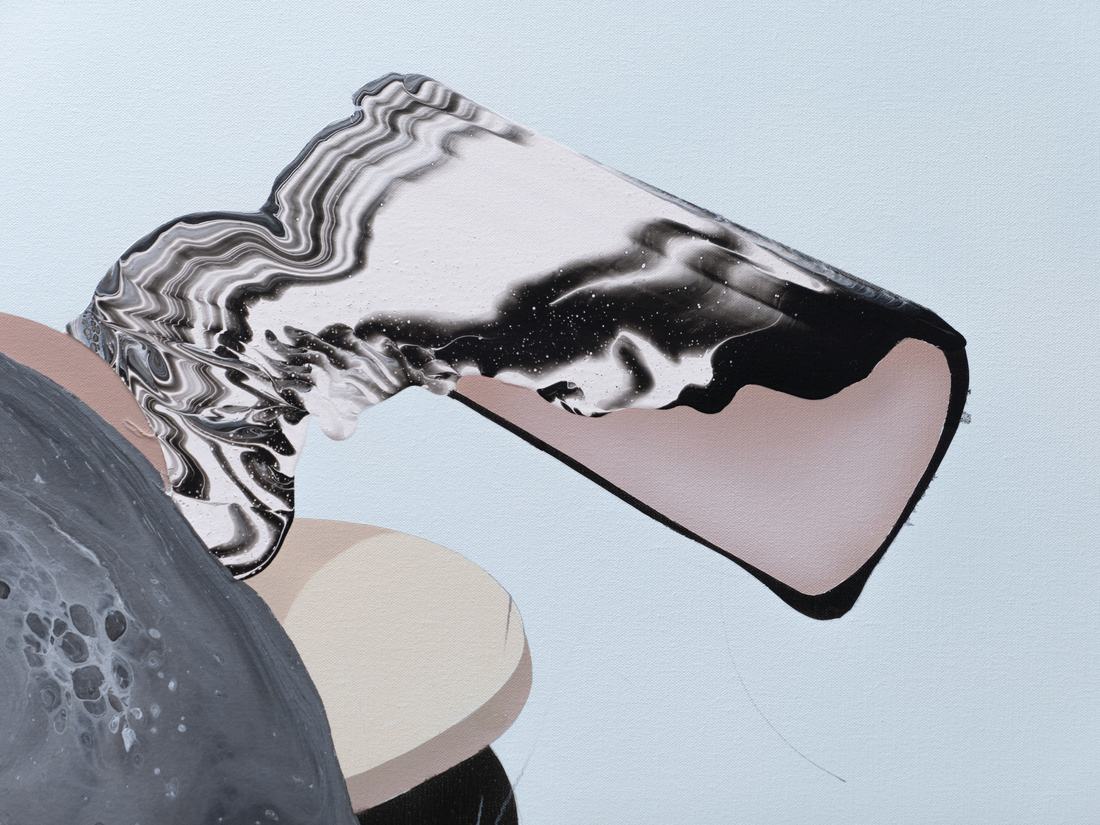
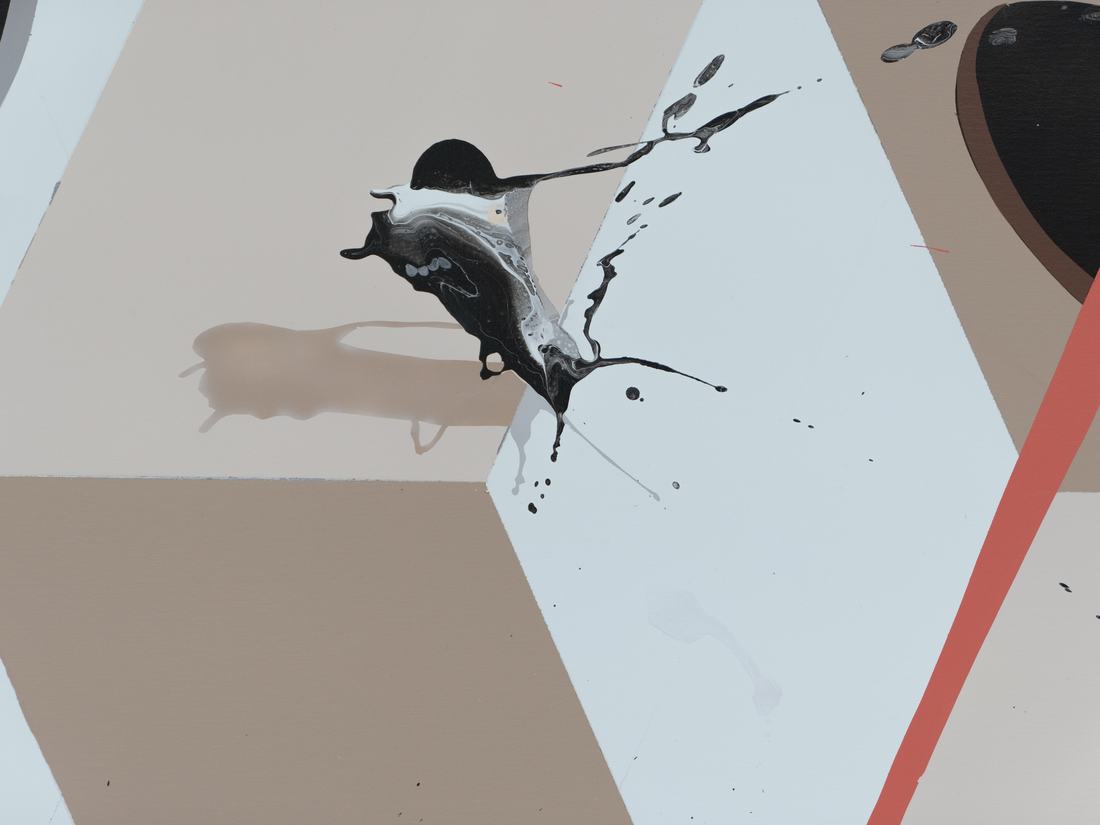
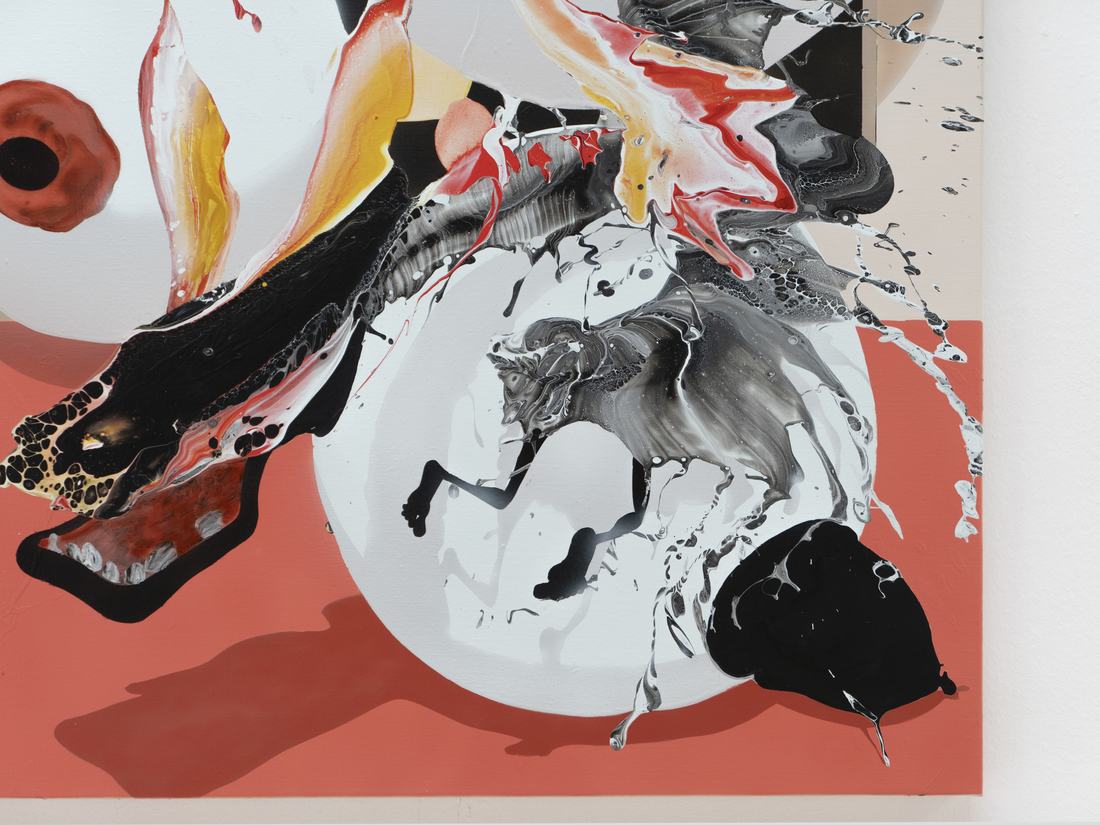
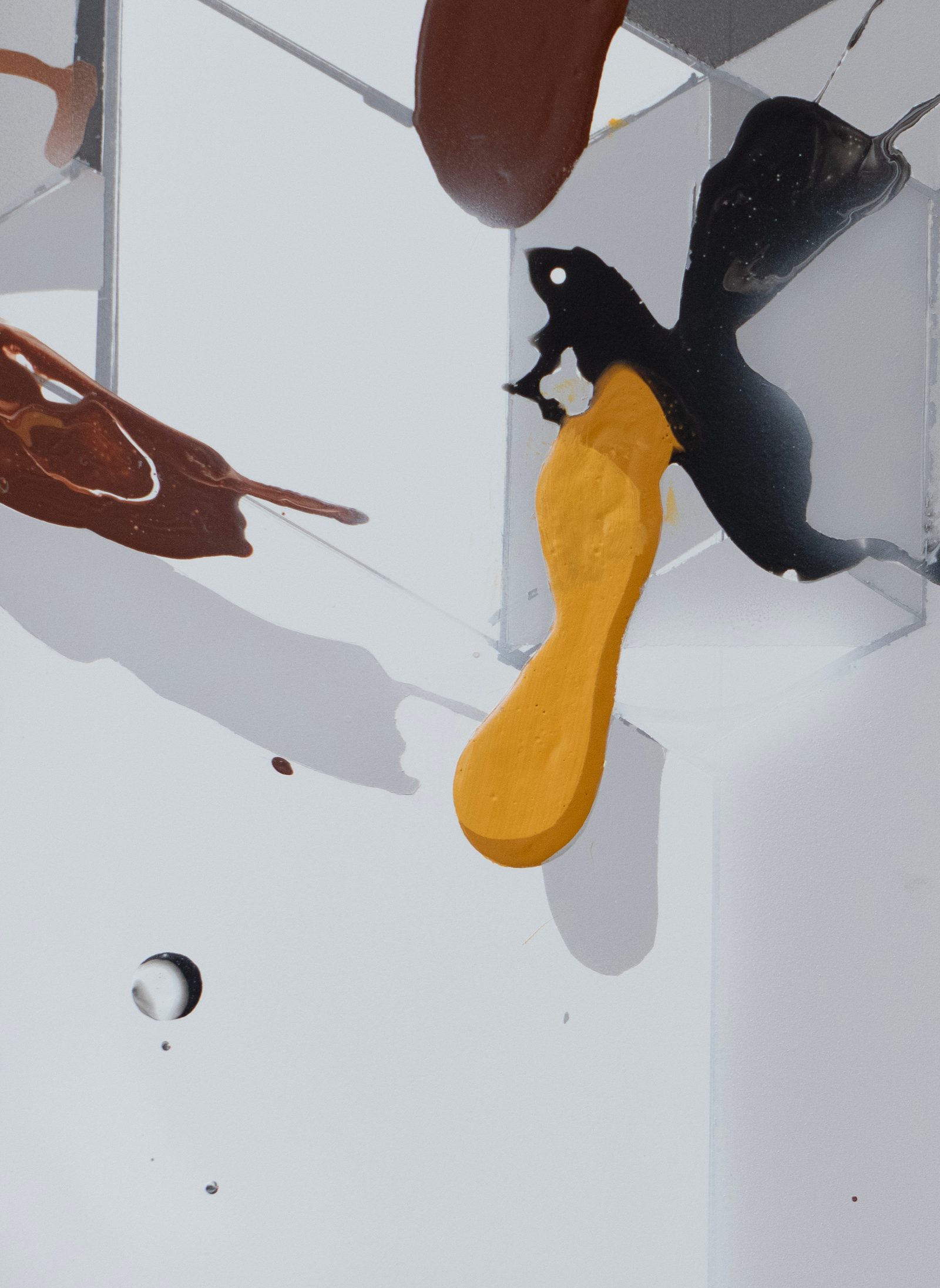
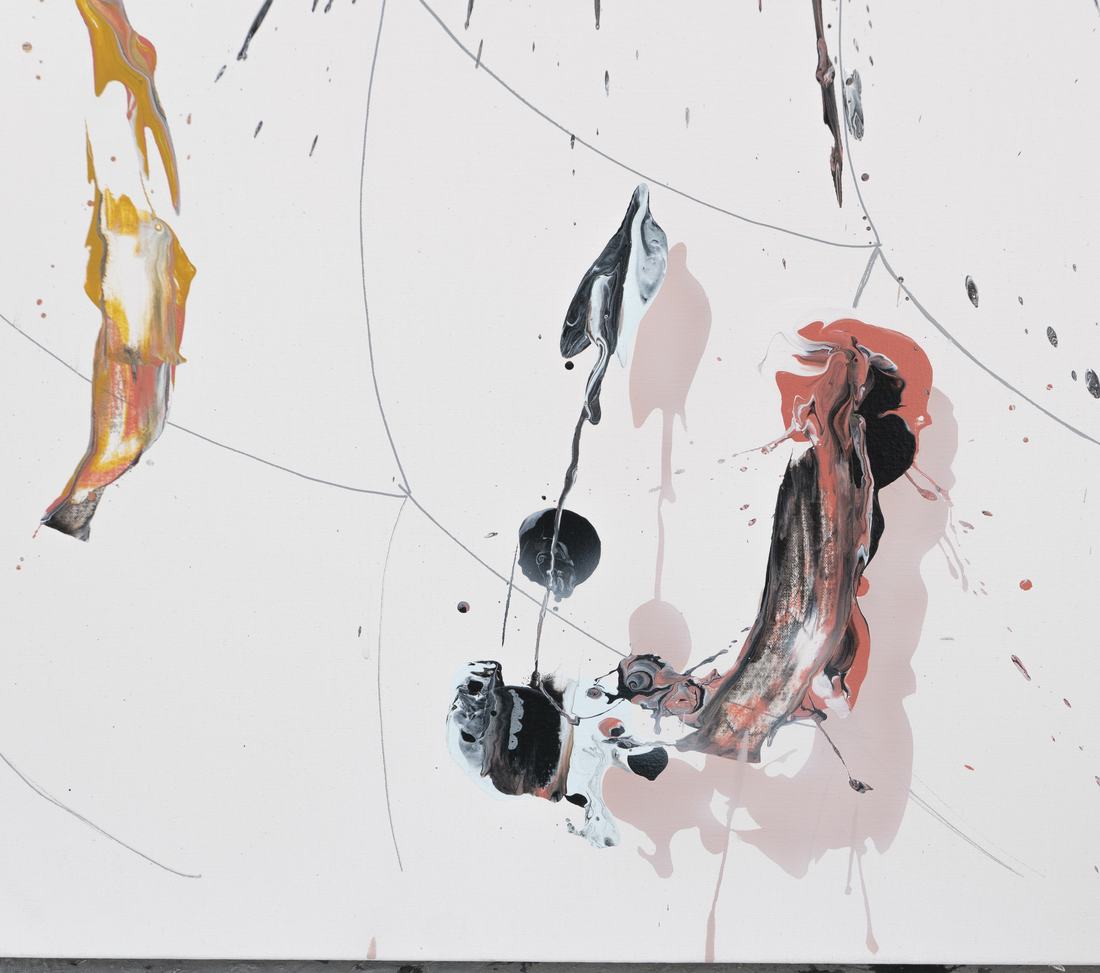
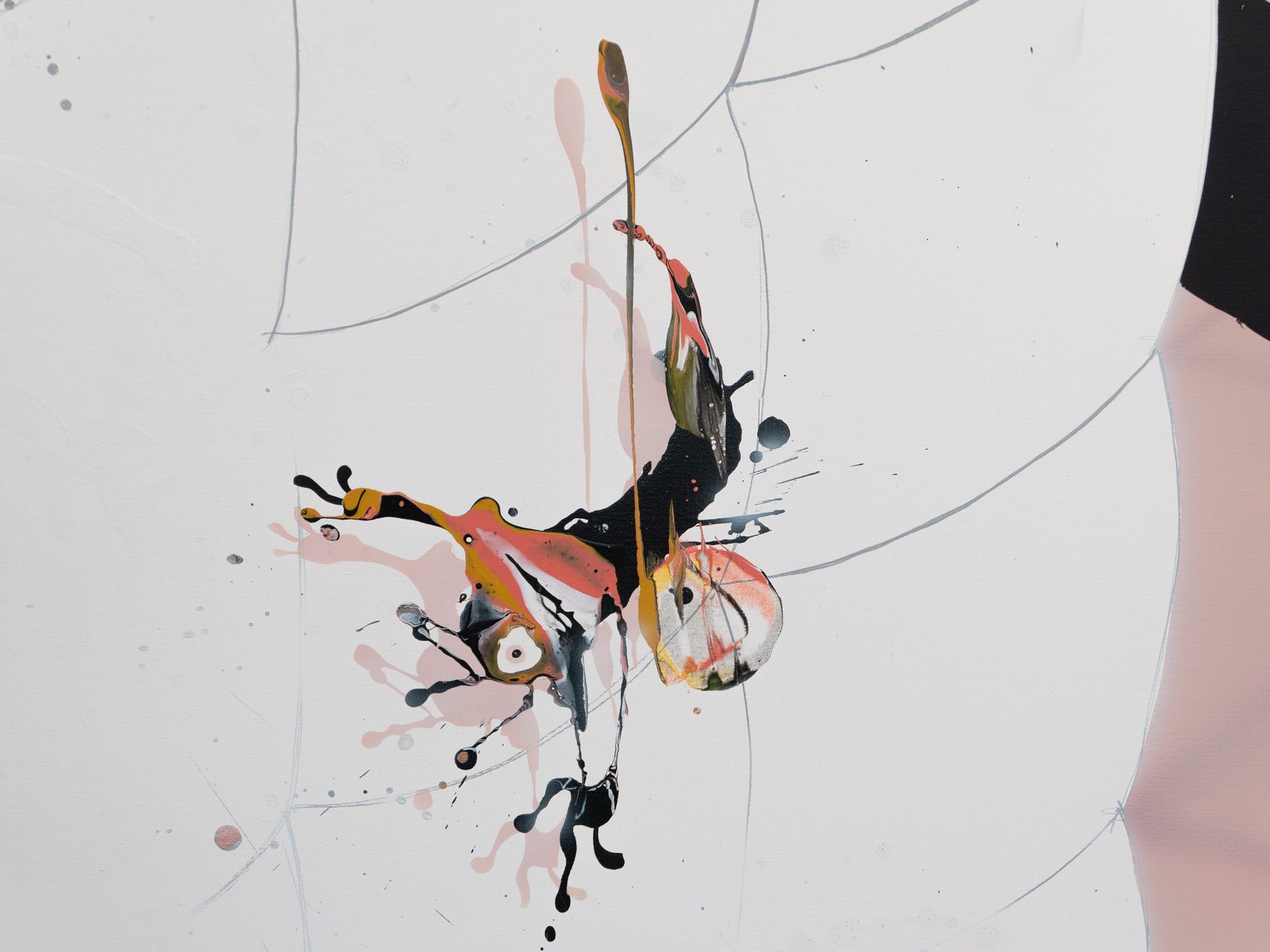
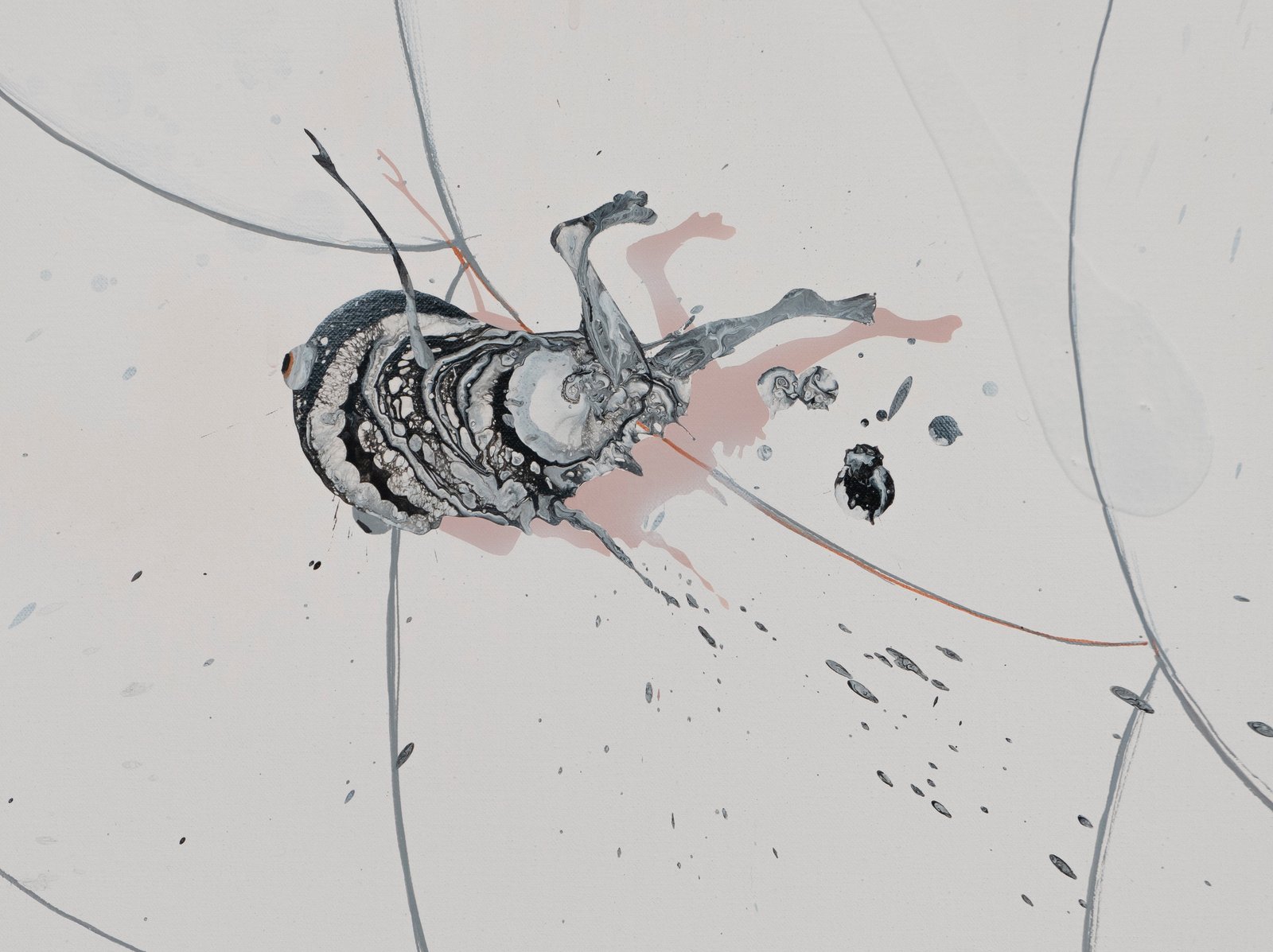
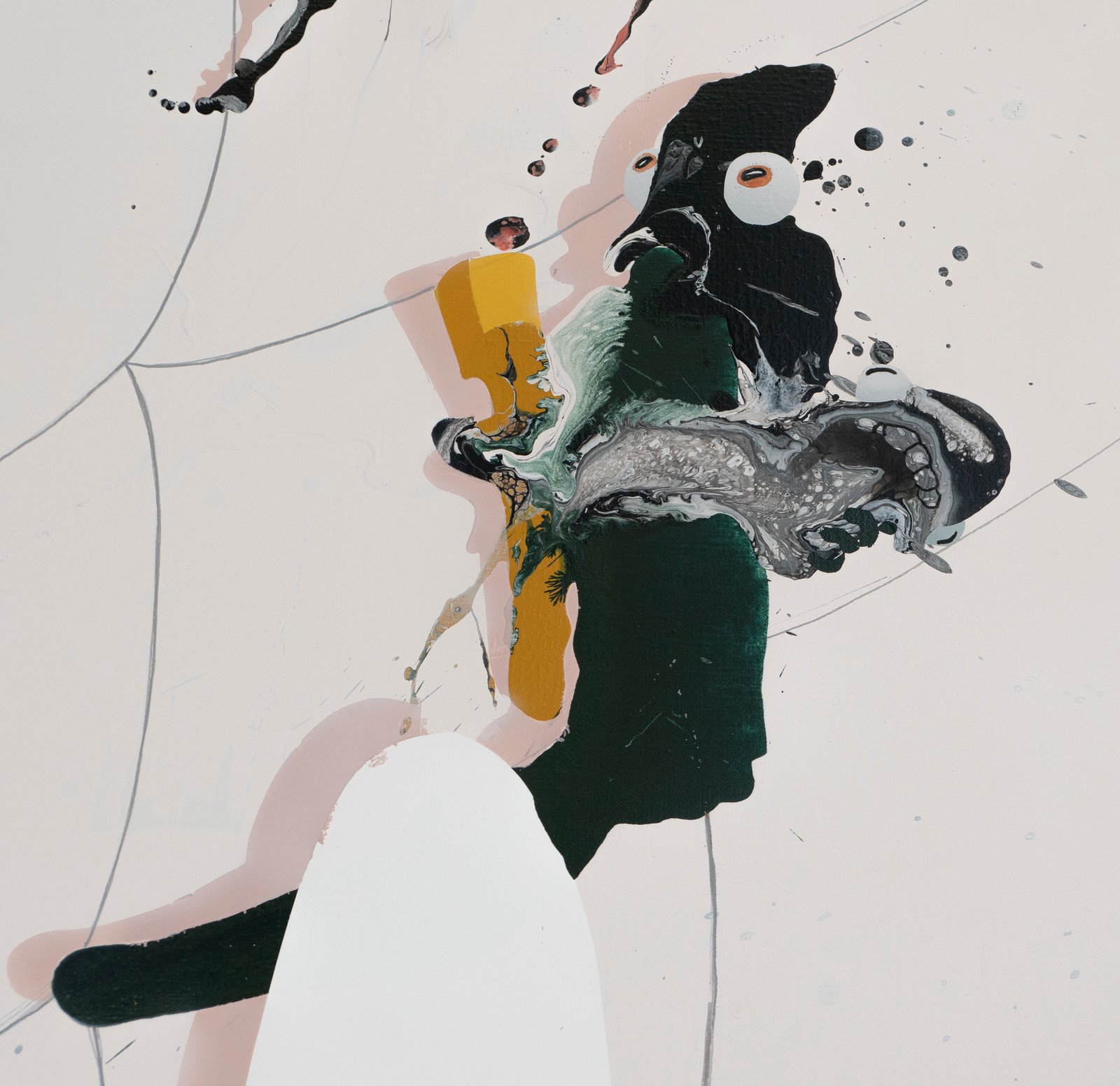
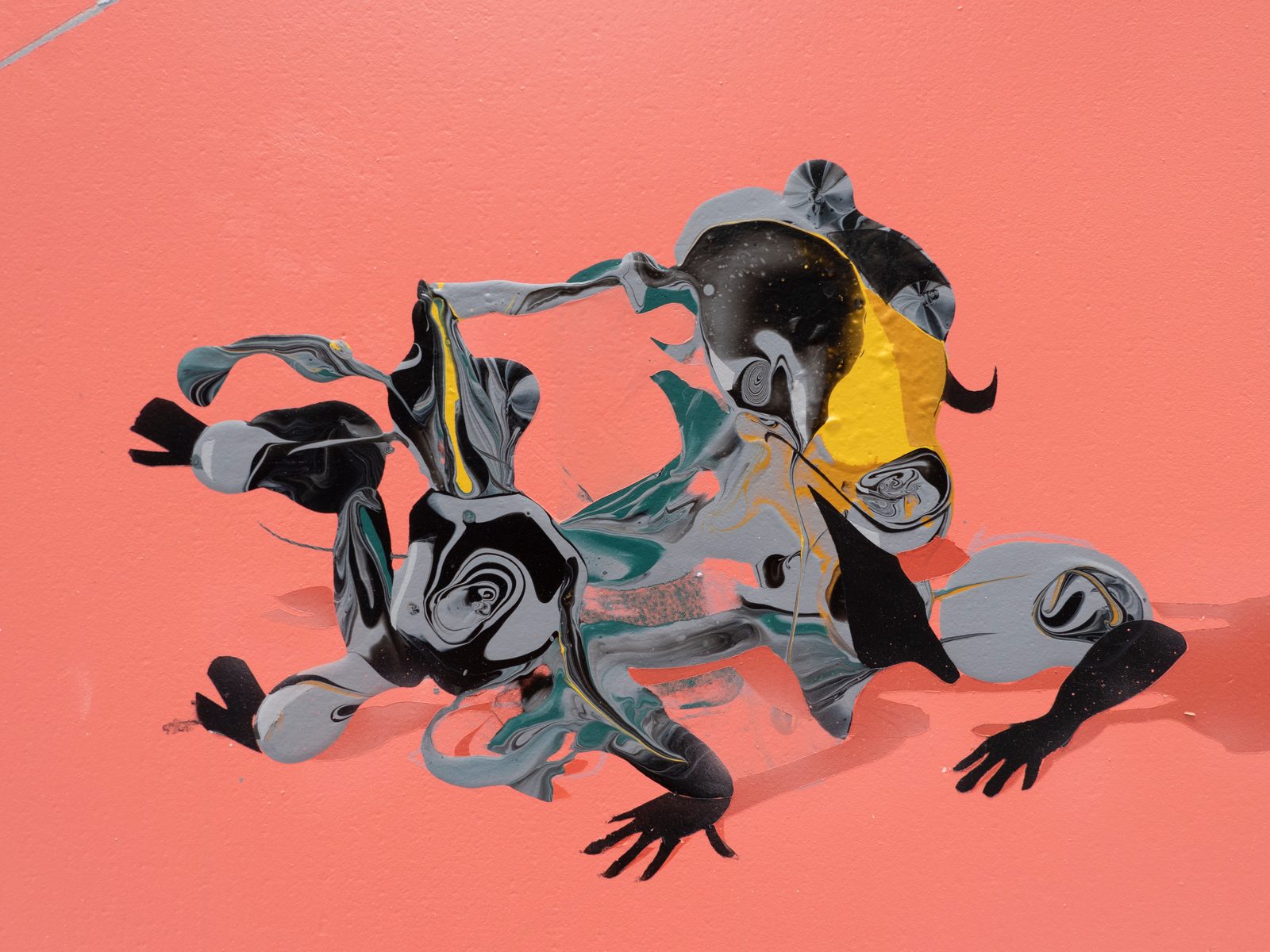
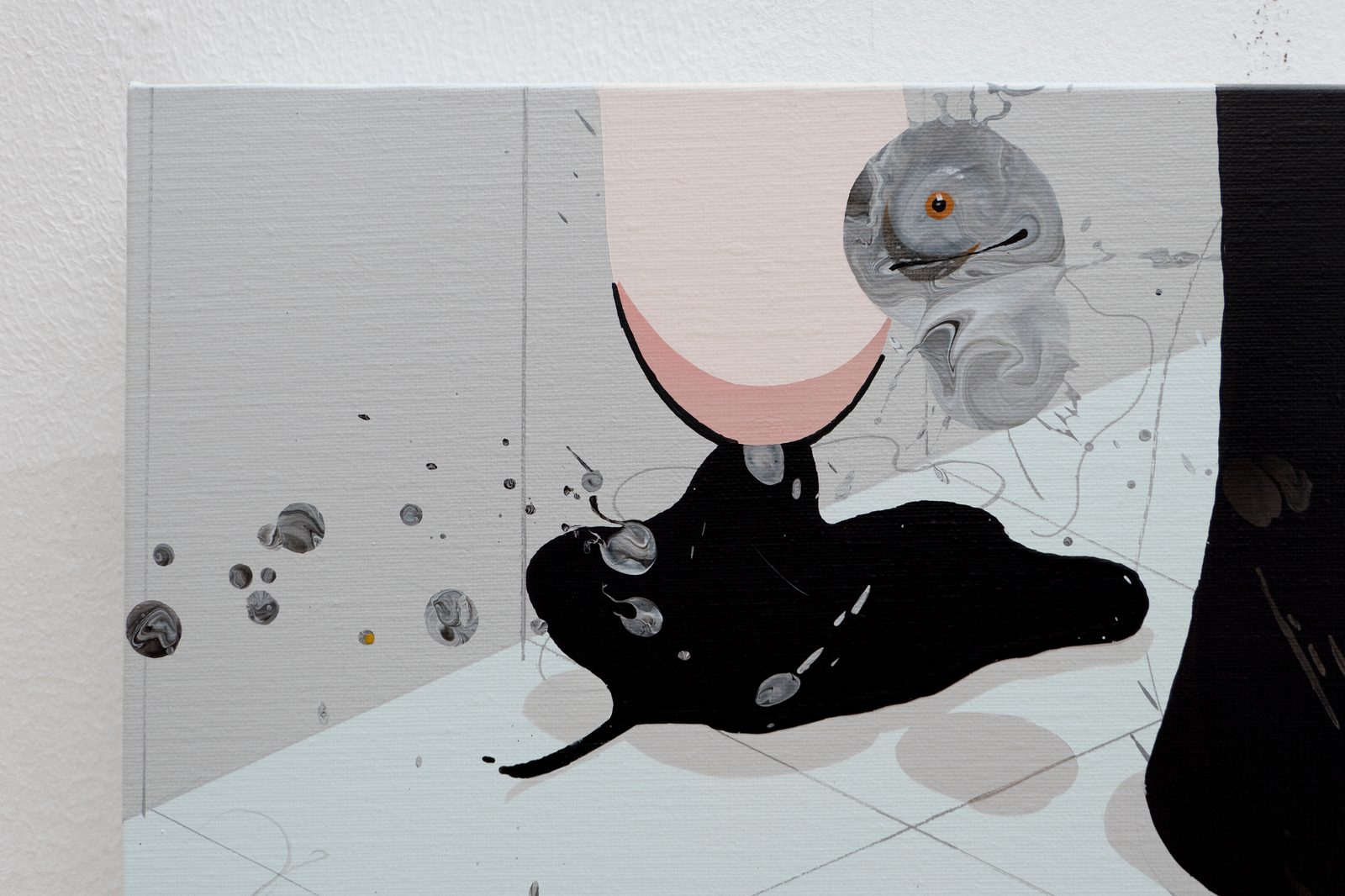
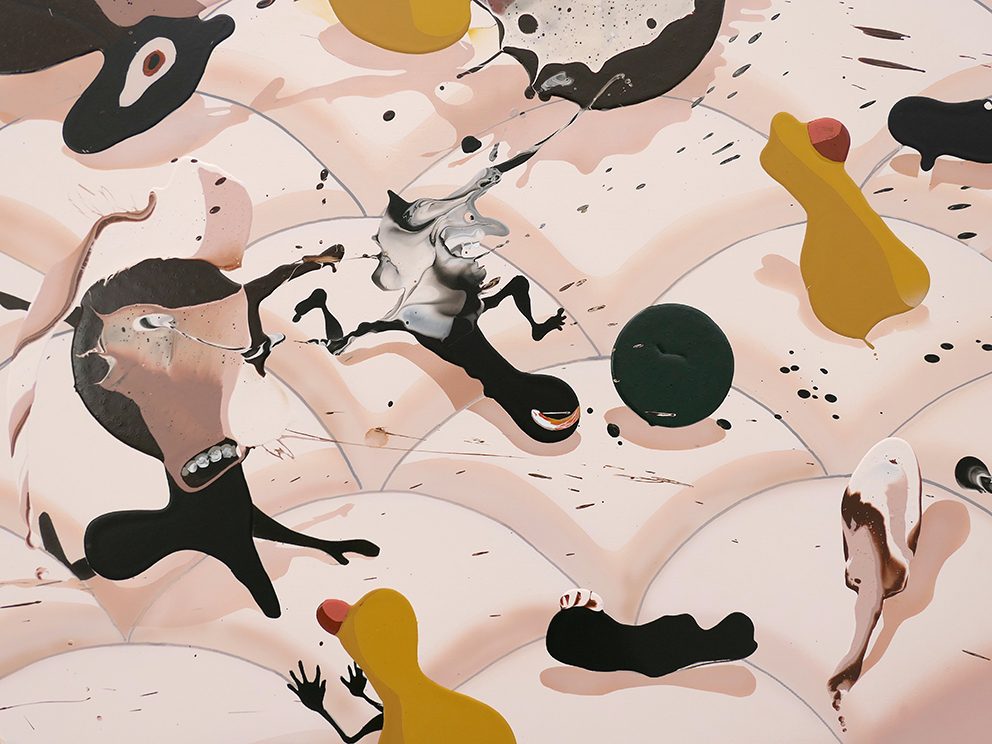
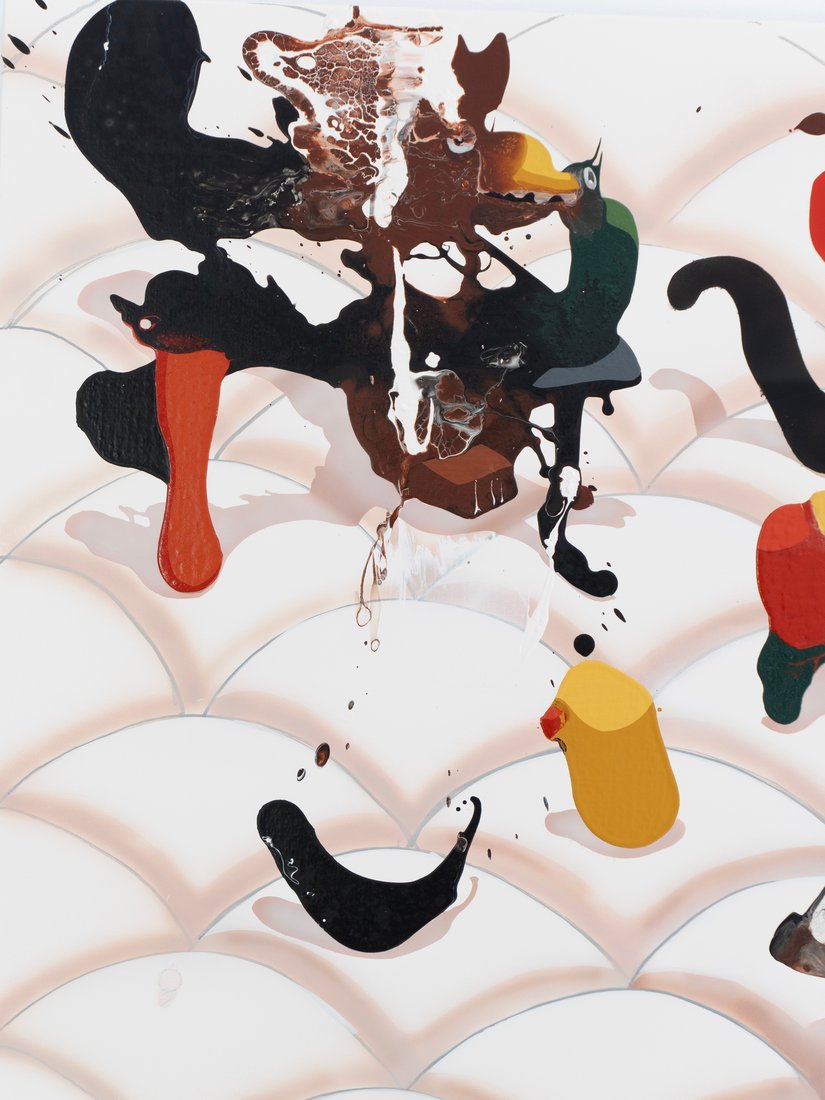
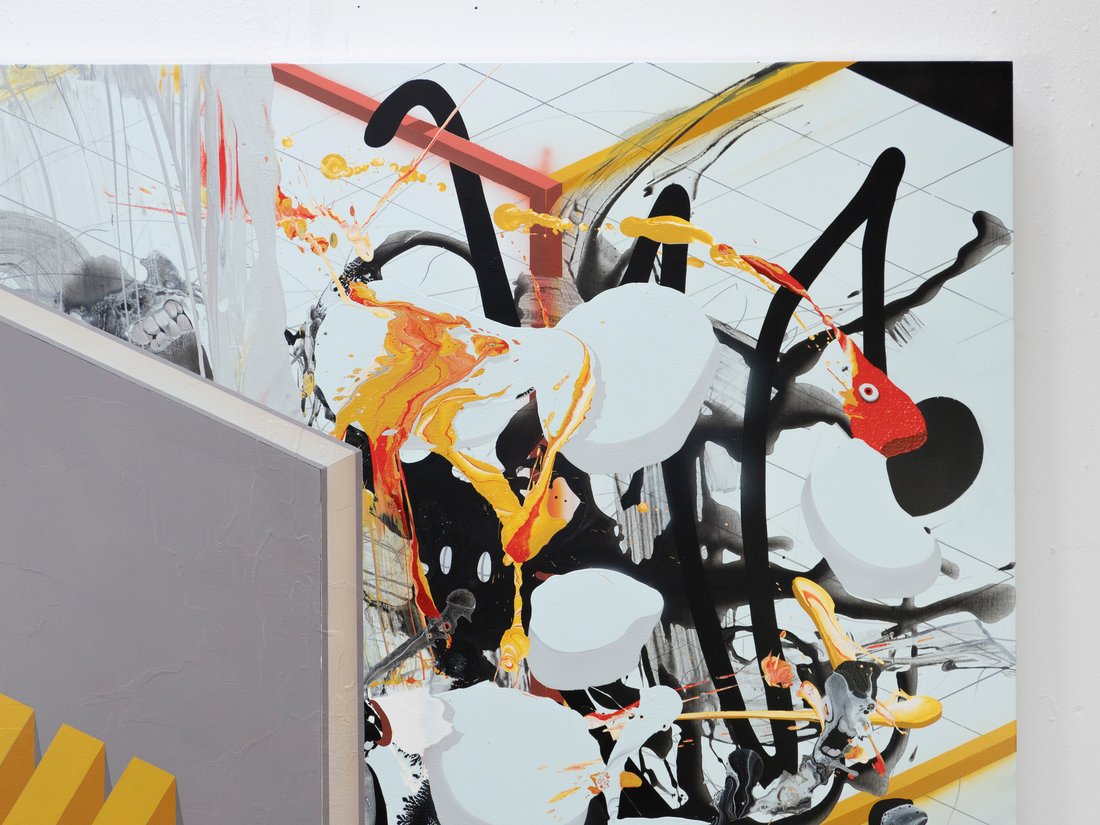
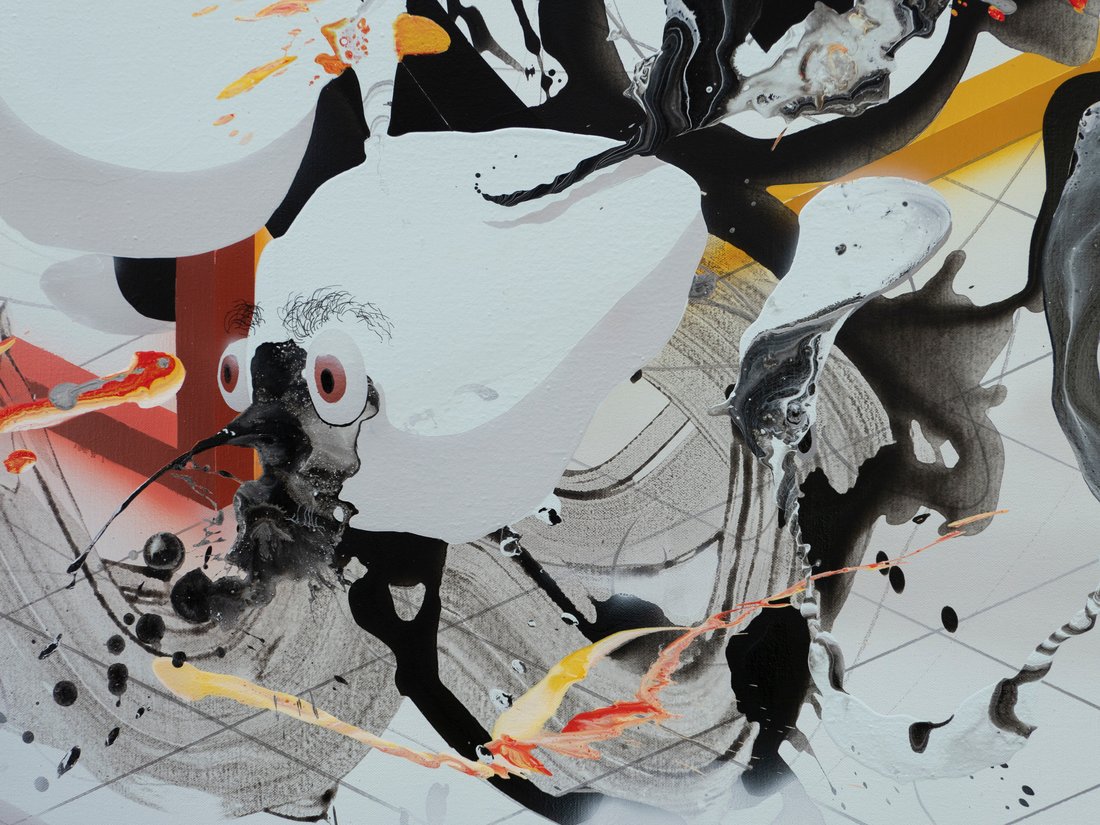
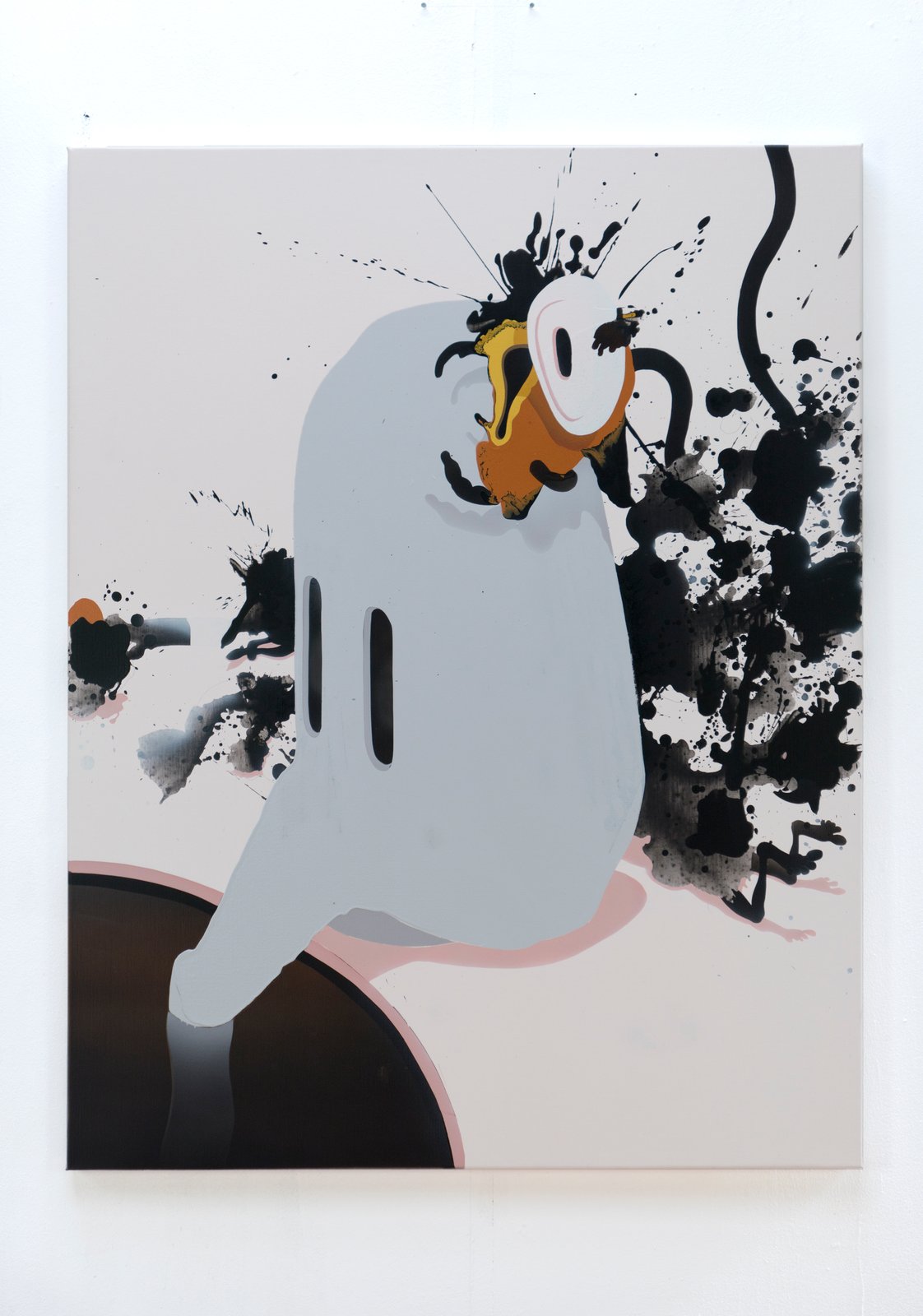
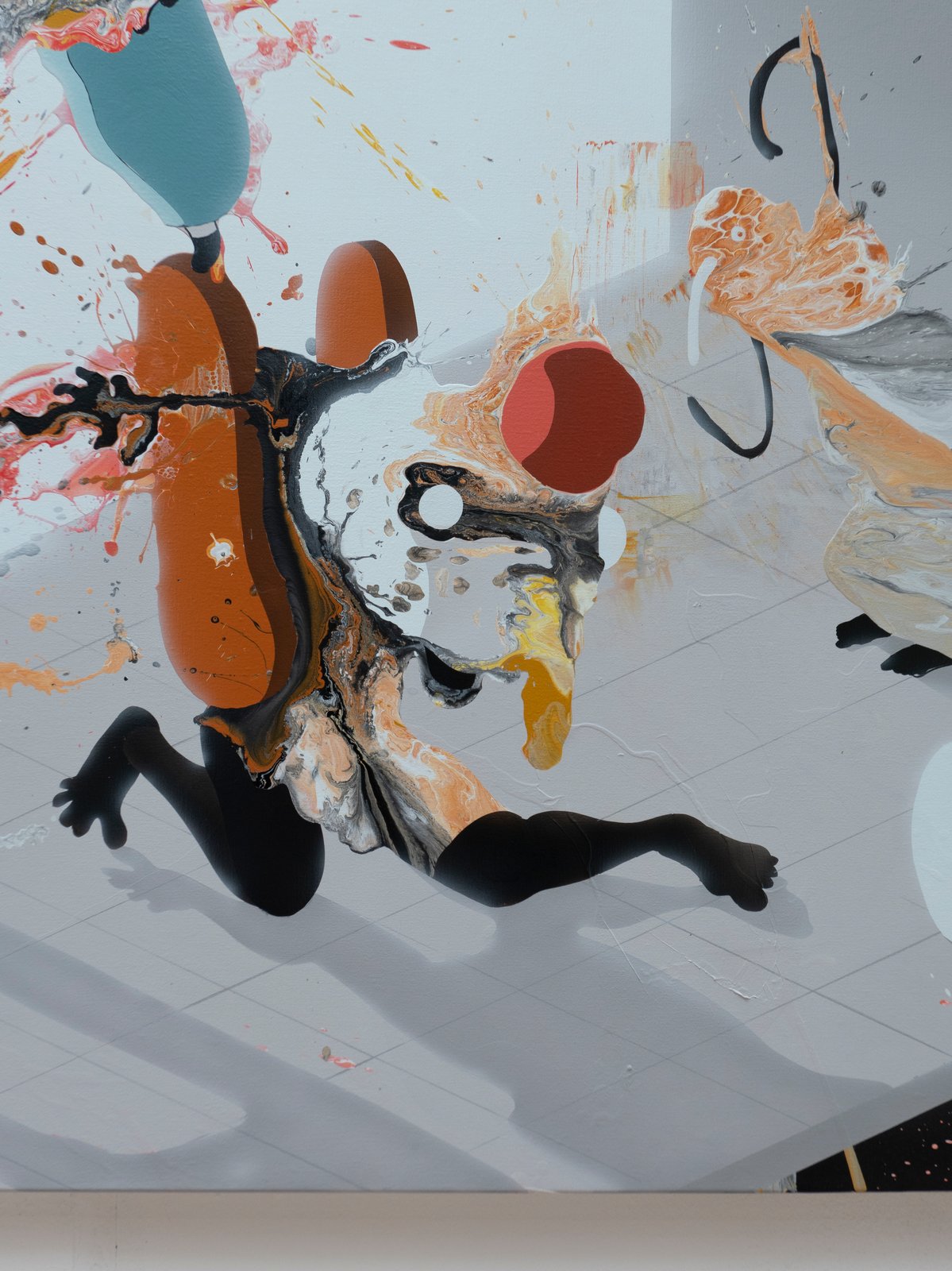
There is a strong element of Kafka’s ‘The Castle’ in these paintings where a seemingly hermetically closed world is portrayed. A foreboding labyrinthian space. However, against this apparent formal perfection, the artist’s plethora of characters are brimming with life as they move in and out and around the structure. These paintings manage to convey Castiella’s highly ambitious objective due to his extraordinary ability with paint, line, shadow and volume which enables him to create his very unique world with total conviction. His characters are created spontaneously by pouring paint on the canvas before skilfully manoeuvring it to give birth to these strange forms of life. On the one hand his paintings display an absolute control whilst on the other exerting a wild freedom.
— Ian Rosenfeld
“Los espacios isométricos y las elecciones simbólicas de color evocan un mundo que existe más allá de la percepción ordinaria, una dimensión donde la verdadera naturaleza de las almas, oculta a nuestros ojos físicos, se revela a través de la expresión plástica.”
Gallery Rosenfeld tiene el placer de acoger la segunda exposición individual del artista español Jose Castiella en la galería. En esta ocasión, el artista centra su atención en lo que él mismo denomina ‘el ámbito espiritual’. Como explica, ‘en los últimos años he tenido experiencias que me hacen creer en la realidad de lo espiritual, más allá de cualquier necesidad de fe’.
‘Los espacios isométricos y las elecciones simbólicas de color’ que crea Castiella ‘evocan un mundo que existe más allá de la percepción ordinaria, una dimensión donde la verdadera naturaleza de las almas, oculta a nuestros ojos físicos, se revela a través de la expresión plástica.’ Resulta fascinante trazar un paralelismo con la obra del grabador holandés Maurits Escher. Mientras que las escaleras de Escher se ocupan de las matemáticas y de una perfección formal, las obras de Castiella parten de esa misma perfección para verse después torpedeadas por la aparición de su ejército de figuras fantásticas, que emergen desde todos los rincones de este mundo aparentemente perfecto, insuflando vida a lo que antes era un mundo estéril.
El artista se convierte así en una especie de demiurgo que nos revela un mundo secreto pero muy real, hasta entonces oculto a nuestros ojos humanos. Es el ‘milagro’ de la pintura el que nos desvela este universo previamente escondido. Los personajes que pueblan estas pinturas son, para Castiella, seres espirituales antes que materiales; su fealdad y deformidad remiten a la idea, sostenida por algunos místicos, de cómo las almas pueden aparecer deformadas por el pecado en el ámbito espiritual. Ligada a esto está la idea, querida por el artista, de que alguien de apariencia hermosa podría ser terrible en el plano espiritual, mientras que ‘una persona sin hogar, percibida como imperfecta por la sociedad, podría poseer una pureza sagrada.’
El gran cuadro de la exposición está más emparentado con el ‘Purgatorio’ de Dante en su representación de las distintas etapas de purificación del alma. La estructura que Castiella conjura ahora es imposible, con los escalones representando distintos planos de la realidad.
Hay un fuerte componente de ‘El Castillo’ de Kafka en estas pinturas, donde se retrata un mundo aparentemente cerrado de forma hermética. Un espacio laberíntico y amenazante. Sin embargo, frente a esta aparente perfección formal, la multitud de personajes del artista rebosa vida mientras entran, salen y se mueven alrededor de la estructura. Estas pinturas logran transmitir el objetivo, muy ambicioso, de Castiella gracias a su extraordinaria habilidad con la pintura, la línea, la sombra y el volumen, que le permite crear su mundo tan singular con total convicción. Sus personajes surgen de forma espontánea al verter pintura sobre el lienzo, para después manipularla con habilidad y dar vida a estas extrañas formas. Por un lado, sus cuadros muestran un control absoluto; por otro, ejercen una libertad salvaje.
— Ian Rosenfeld
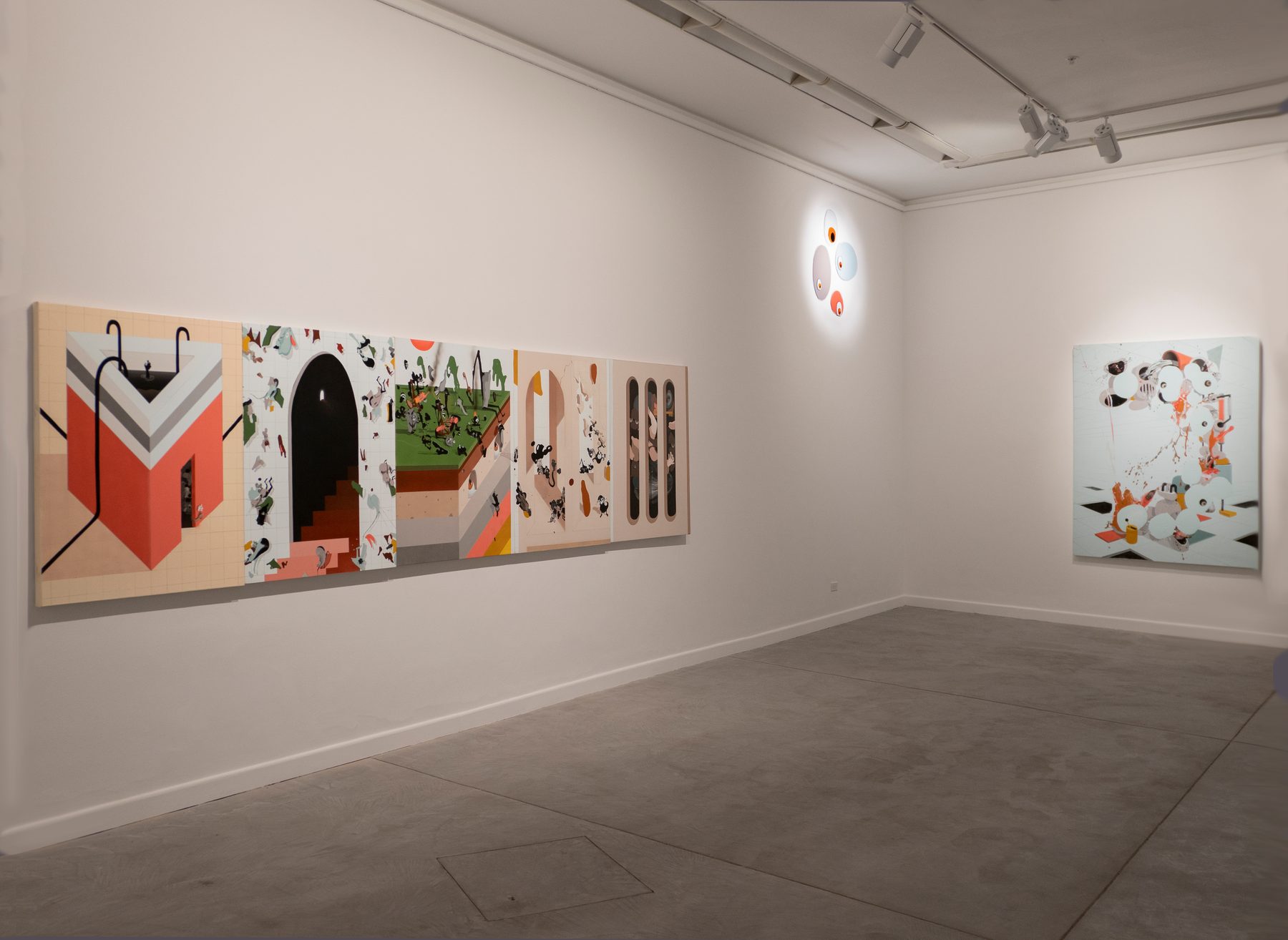
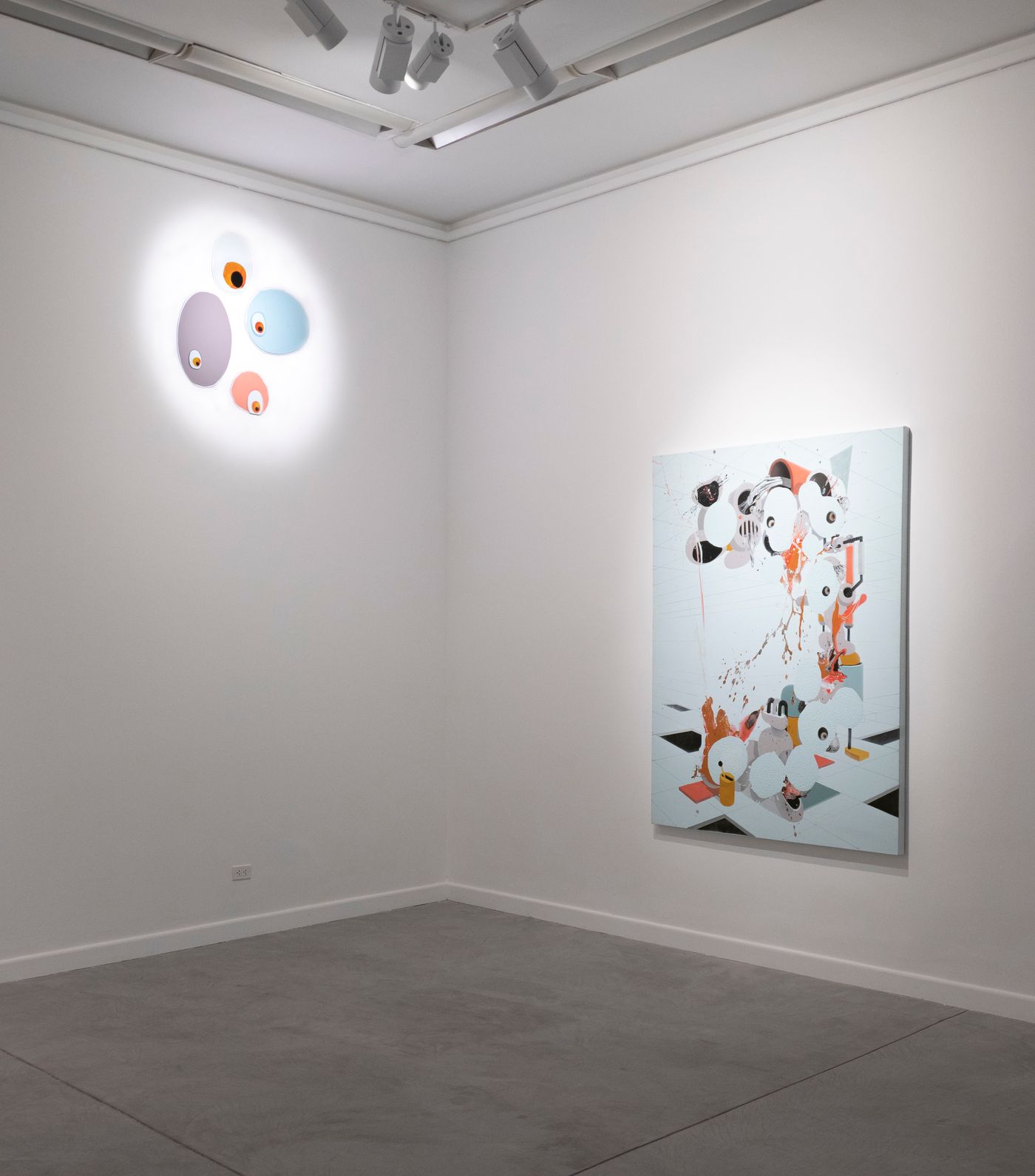
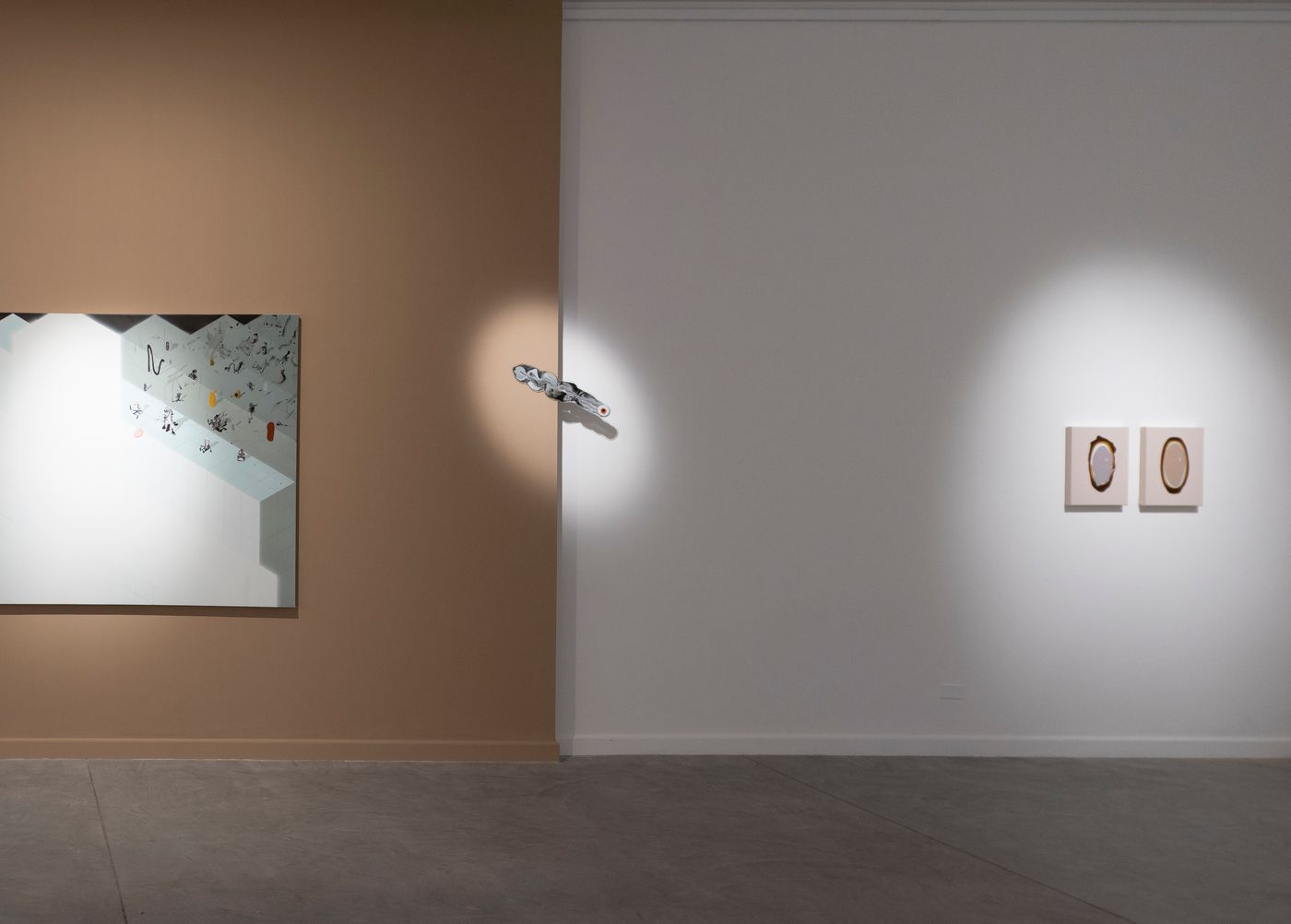
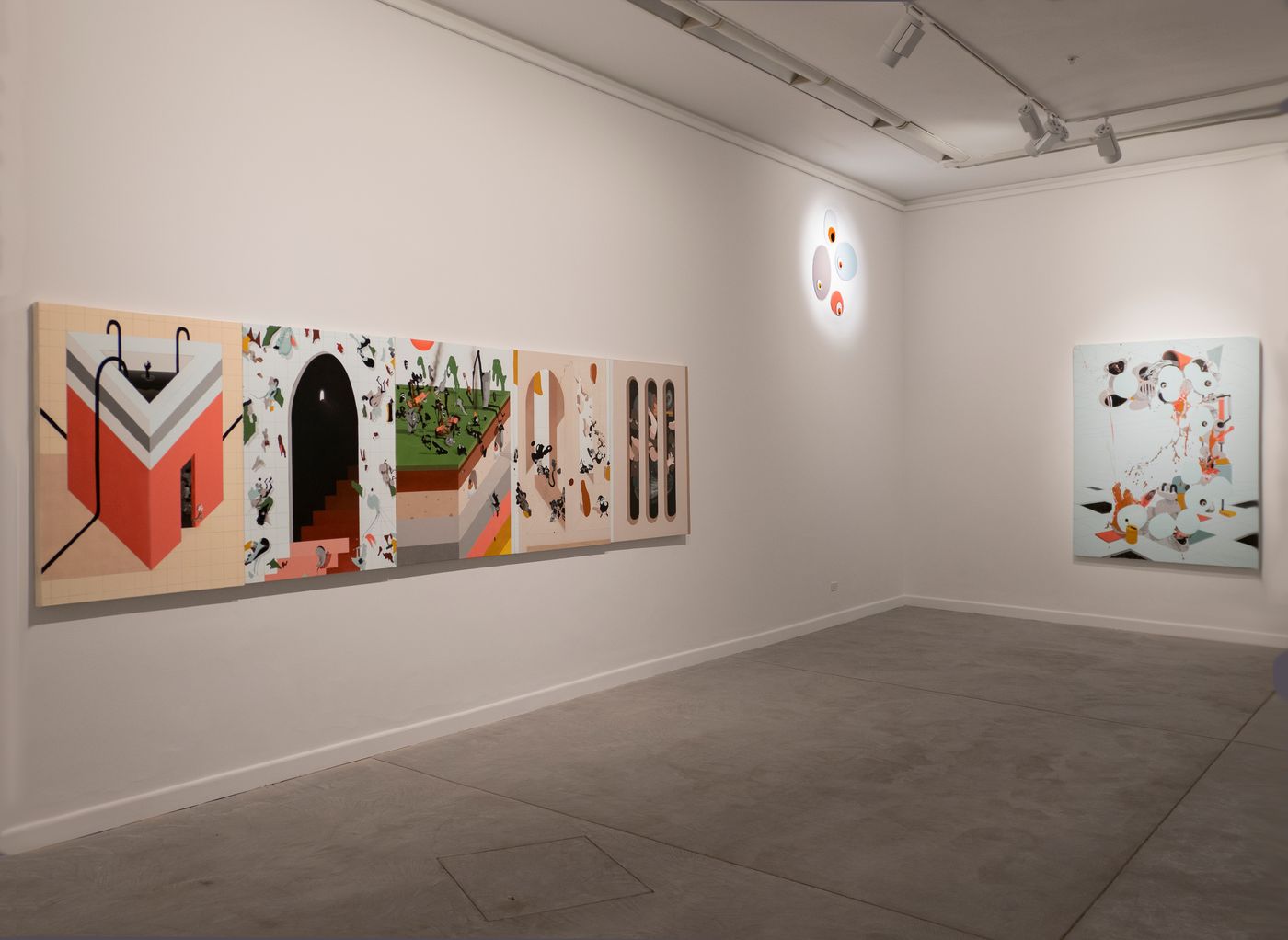
“Castiella’s painting demands to be read on different planes.”
«Art» emerges from the crisis of the old image and its new valuation as a work of art in the Renaissance, and is linked to the idea of the autonomous artist and to the debate over the artistic nature of his invention.
Hans Belting
There was once a man in the land of Uz whose name was Job; that man was blameless and upright, one who feared God and turned away from evil.
Job 1:1
I.
There is a pivotal moment in the history of culture in which sacred images became works of art. It cannot be precisely dated, though we know it happened towards the end of the Middle Ages, and as Belting points out in his book Likeness and Presence, along that path lie a series of milestones that trace the evolution from mere representation to a more complex artistic creation — painting becoming the central axis of the colossal machinery deployed across the Western world for artistic development from the Quattrocento onward.
This was not a work created by reason alone. In this pursuit of the artistic ideal, the mystical sensibility of the age was also present. Most artists were believers whose creative vigour owed much to a burning faith that drove them to produce works that still leave us breathless today. We could not understand the work of Giotto, Masaccio or Piero della Francesca without their spiritual conviction. In the same way, many of these artists also lived under the fear of the end of times, feeling unable to face the changes brought about by an incomprehensible period that would later come to be known as the Renaissance.
II.
At a moment of radical change such as the one we are living through, painting once again occupies a predominant place on the art scene — naturally reflecting the historical, social and cultural crossroads in which it is framed, one that cannot leave us indifferent. This is why the name of Jose Castiella (Pamplona, 1987) takes on a special significance. He is an artist who draws on the old pictorial tradition we have discussed in order to focus on a present that, quite suddenly, sees the rebirth of the apocalyptic threats bequeathed to us by the Cold War — applying to his narrative the language of science fiction, comics and video games, without losing sight of the ancient iconography of the great frescoes or of the countless predellas now scattered across museums the world over.
Castiella’s painting demands to be read on different planes. It begins with an apparent architectural framework that proposes different spatial levels which, plane by plane, carry us from one reality to another inhabited by intense colours, seemingly abstract forms, and the occasional echo of the creatures of the masters of the End of the World. There is humour in his work, and fear too. And it is in this sense that his human dimension reveals itself. He thus stands apart from a model of the contemporary artist focused on discourse, one that too often forgets faith in art itself — the mystique of creation.
— Alberto Servat
Cultural Manager
Peruvian North American Cultural Institute
“With Mi Job, we invite you to recover faith, to see beyond cold reality, and to enjoy what cannot be explained.”
6.522. There is indeed the inexpressible. This shows itself; it is the mystical.i
The creak of wood, a shadow moving behind a window, or the pile of clothes on a chair are, under the light of reason, no more than that — and yet there are times when we could swear we have seen something, or at least sensed it. Certain phenomena occasionally take on a life of their own, like a parallel reality manifesting itself before whoever contemplates it, as with the beings in Jose Castiella’s paintings. These entities present themselves to the artist as the fruit of an investigation into, and observation of, painting itself — not through an effect of pareidolia but through a narrative treatment of the stain. In his work, Castiella plays with chance and precision in equal measure to question our cosmogony, our way of understanding what surrounds us, recovering elements of the Christian worldview that has so deeply shaped us. A modern, personal revision of this story that the artist brings closer to the contemporary imagination through settings more typical of science fiction, creating a surrealist world in which expressionism inhabits structurism.ii
In this worldview, and in our general episteme, God is the creator of all things; he makes us in his image and likeness, and we are therefore sub-creators, bearers of a given creativity. Around this concept of sub-creation stands the whole of Tolkien’s literary anthropology and theology — Tolkien, without doubt one of the fathers of fantasy in our era — and this same concept of sub-creation is something we see reflected in Castiella’s work and, above all, in his discourse. These fantasy worlds, Castiella’s as much as Tolkien’s, are real, but simply do not exist within our register; to enter them is to point toward truth, to step into an experience of a kind of beauty that is almost mystical, transcendent and evocative, tinged with nostalgia — the way one might miss something one has never actually known. This sub-reality is brought to the stage by Castiella with that same mixture the Coen brothers do so well in their films: a caricature of reality caught between the sinister and the tender. This artist, like any true author of sub-creation, has no fixed plan when carrying out his project, since it is truth itself that takes the reins of an imagination that lets itself be carried along by these sub-worlds dwelling in and among us. “The work comes first,” Castiella states, “I don’t like structuring everything, I want to leave room for creation, for chance… The work comes first.” This is something that happens to those who know how to listen, who know how to observe and feel what reality tells us — that inexplicable something of Wittgenstein’s that we cannot describe, yet which is there. It may be painting, or it may be God, but there is something that guides these artists, that speaks to them, like Ilúvatar’s undying flame. Chance ordered into perfect perspectives keeps speaking to Castiella, who, like Escher, finds in the awareness of its presence a kind of inner peace.iii
With his own narrative and stylistic codes, Jose Castiella draws us into this universe of chance and mathematical precision. The surrealist manifesto, now marking its first centenary, proclaimed the artistic experience as an adventure for the soul, a spiritual adventure. With Mi Job, we invite you to recover faith, to see beyond cold reality, and to enjoy what cannot be explained.
— Inés Alonso
i. L. Wittgenstein, Tractatus Logico-Philosophicus, Alianza, Madrid 1973, p. 203.
ii. “Structurism now explores the visual-tactile organisation of real colour and of form in space and light (…) Structurist art has reinstated the tangible and the tactile as a visual-tactile art. I do not mean that the perception of a structurist relief is achieved with the hands or the sense of touch, but rather that the relief is kinaesthetically tactile.” “Notes on structurist process”, in Hill, A., Data: Directions in Art, Theory and Aesthetics, London, Faber and Faber, 1969, p. 196.
iii. “The logic of the phenomena around us — order, regularity, cyclical repetitions and renewals — has begun to speak to me with ever greater intensity at every moment. Awareness of its presence brings me rest and support: in my prints, I try to bear witness that we live in a beautiful, ordered world, and not in a chaos without rules, as it sometimes seems. Often, my subjects are also very festive. I cannot help but delight in our unassailable conviction. It is a pleasure, for instance, to deliberately mix two and three dimensions, flat and spatial, and to make light of gravity.” M.C. Escher, in his speech on receiving the Culture Prize of the City of Hilversum, 5 March 1965.
“La pintura de Castiella exige leerse en diferentes planos.”
El «arte» surge a partir de la crisis de la vieja imagen y su nueva valoración como obra de arte en el Renacimiento, y se encuentra asociado a la idea del artista autónomo y a la discusión en torno al carácter artístico de su invención.
Hans Belting
Había una vez en el país de Us un hombre llamado Job: hombre cabal, recto, que temía a Dios y se apartaba del mal.
Job I, 1
I.
Hay un momento trascendental en la historia de la cultura en el que las imágenes sagradas se transformaron en obras de arte. No es posible fecharlo, aunque sabemos que sucedió al final de la Edad Media y, tal como señala Belting en su libro Imagen y culto, a lo largo de ese camino hay una serie de hitos que van detallando la evolución de la mera representación hacia la creación artística más compleja. Convirtiéndose la pintura en el eje central de la colosal maquinaria desplegada en el mundo occidental para el desarrollo artístico a partir del Quattrocento.
No se trataba de una obra enteramente creada por la razón. En esta búsqueda del ideal artístico también estuvo presente el sentido místico de su tiempo. Los artistas eran en su gran mayoría creyentes que debían parte de su vigor creativo a una fe encendida que los llevó a ejecutar aquellas obras que aún nos dejan sin aliento. No entenderíamos la obra de Giotto, Masaccio o Piero della Francesca sin su entereza espiritual. Del mismo modo muchos de esos artistas vivían también bajo el temor del fin de los tiempos y se sentían incapaces de enfrentar los cambios provocados por un periodo incomprensible que habría de ser conocido más adelante como el Renacimiento.
II.
En un momento de cambios radicales como el que vivimos la pintura vuelve a ocupar un lugar predominante en el escenario del arte. Por supuesto reflejando la encrucijada histórica, social y cultural en la que se enmarca y que no puede dejarnos indiferentes. Por eso el nombre de José Castiella (Pamplona, 1987) adquiere un significado especial. Porque es un artista que se nutre de la vieja tradición pictórica de la que hemos hablado para enfocarse en un presente que, de pronto, ve renacer las amenazas apocalípticas que nos ha legado la Guerra Fría. Aplicando a su narrativa el lenguaje de la ciencia ficción, el cómic y los juegos de video sin perder de vista la antigua iconografía de los grandes frescos o de las infinitas predelas esparcidas hoy por todos los museos del mundo.
La pintura de Castiella exige leerse en diferentes planos. Comenzando por una aparente armazón arquitectónica que propone diferentes niveles espaciales que, de plano en plano, nos lleva de una realidad a otra habitada por colores intensos, formas aparentemente abstractas y alguna reminiscencia de las criaturas de los maestros del Fin del Mundo. Hay humor en su obra, temor también. Y en ese sentido se descubre en su dimensión humana. Se impone así sobre un modelo de artista contemporáneo enfocado en el discurso olvidando, muchas veces, la fe en el arte mismo. La mística de la creación.
— Alberto Servat
Gerente Cultural
Instituto Cultural Peruano Norteamericano
“Con Mi Job, os invitamos a recuperar la fe, a ver más allá de la fría realidad y a disfrutar de lo que no se puede explicar.”
6.522. Hay, ciertamente, lo inexpresable, lo que se muestra a sí mismo; esto es lo místico.i
Un crujir de la madera, una sombra que se mueve tras la ventana o el montón de ropa sobre la silla son sólo esto bajo la luz de la razón, sin embargo, hay ocasiones en las que juraríamos haber visto algo, o al menos haberlo sentido. Ciertos fenómenos adquieren en ocasiones vida propia, como una realidad paralela que se manifiesta ante quien la contempla, como los seres de las pinturas de José Castiella. Estos entes se presentan al artista como fruto de una investigación y observación de la propia pintura, no en un efecto de pareidolia sino en un tratamiento narrativo de la mancha. En su obra, Castiella juega con el azar y la exactitud a partes iguales para cuestionar nuestra cosmogonía, nuestro modo de entender lo que nos rodea, recuperando elementos de la cosmovisión cristiana que tanto nos ha influido. Una revisión moderna y personal de esta historia que el autor acerca al imaginario de la contemporaneidad con el uso de escenarios más propios de la ciencia ficción, creando un mundo surrealista en el que el expresionismo habita el estructurismo.ii
En esta cosmovisión, y en nuestra episteme general, Dios es el creador de todo, él nos hace a su imagen y semejanza y por ende nosotros somos subcreadores, portadores de una creatividad dada. Entorno a este concepto de subcreación se erige toda la antropología y teología literaria de Tolkien, sin duda uno de los padres de la fantasía de nuestra era, siendo este concepto de subcreación algo que vemos reflejado en la obra y sobre todo en el discurso de Castiella. Estos mundos de fantasía, los de Castiella o los de Tolkien, son reales pero sencillamente no están en nuestro registro; penetrar en ellos supone apuntar a la verdad, entrar en una experiencia de un tipo de belleza casi mística, trascendente y evocadora con un toque de nostalgia, como cuando echamos de menos algo que aún no hemos conocido. Esa subrealidad es traída a escena por Castiella con esa mezcla que tan bien hacen los Coen en su cine, una caricatura de la realidad entre lo siniestro y lo tierno. Este artista, como cualquier verdadero autor de subcreación, no tiene un plan concreto a la hora de ejecutar su proyecto pues es la verdad la que toma las riendas de una imaginación que se deja llevar por esos submundos que habitan en y entre nosotros. “La obra va primero” sentencia Castiella, “no me gusta estructurarlo todo, quiero dejar espacio a la creación, al azar… Primero va la obra”. Esto es algo que ocurre a quienes saben escuchar, a quienes saben observar y sentir lo que la realidad nos dice, ese inexplicable de Wittgenstein que no podemos describir pero está. Puede ser la pintura o puede ser Dios pero hay algo que guía a estos artistas, les habla, como la llama imperecedera de Ilúvatar. El azar ordenado en perfectas perspectivas no deja de hablar a Castiella que como Escher, encuentra en la conciencia de su presencia una suerte de paz interior.iii
Con sus propios códigos narrativos y estilísticos, José Castiella nos adentra en este universo de azar y exactitud matemática. El manifiesto surrealista que ahora cumple su primer centenario, anunciaba la experiencia artística como una aventura para el alma, una aventura espiritual. Con Mi Job, os invitamos a recuperar la fe, a ver más allá de la fría realidad y a disfrutar de lo que no se puede explicar.
— Inés Alonso
i. L. Wittgenstein, Tractatus Logico-Philosophicus, Alianza, Madrid 1973, p. 203.
ii. “El estructurismo explora ahora la organización visual-táctil del color real y de la forma en el espacio y la luz (…) El arte estructurista ha reinstaurado lo tangible y lo táctil como un arte visual-táctil. No quiero decir que la percepción de un relieve estructurista se logre con las manos o el sentido del tacto, sino más bien que el relieve es cenestésicamente táctil”. “Notes on structurist process”, en Hill, A., Data: Directions in art, theory and aesthetics, Londres, Faber and Faber, 1969, p. 196.
iii. “La lógica de los fenómenos que hay a nuestro alrededor, orden, regularidad, repeticiones cíclicas y renovaciones, ha comenzado a hablarme cada vez con más intensidad en todo momento. La conciencia de su presencia me trae reposo y me brinda apoyo: En mis grabados, intento dar testimonio de que vivimos en un mundo hermoso, ordenado, y no en un caos sin normas, como parece algunas veces. A menudo, mis temas son muy festivos también. No puedo dejar de perder el tiempo con nuestra convicción incontestable. Es un placer, por ejemplo, mezclar deliberadamente dos y tres dimensiones, planas y espaciales, y ridiculizar la gravedad.” M.C. Escher en su discurso al recibir el Premio de Cultura de la Ciudad de Hilversum, 5 de marzo de 1965.
“I think of myself as an author of speculative fiction but instead of writing it I try to bring narrative and content from matter.”
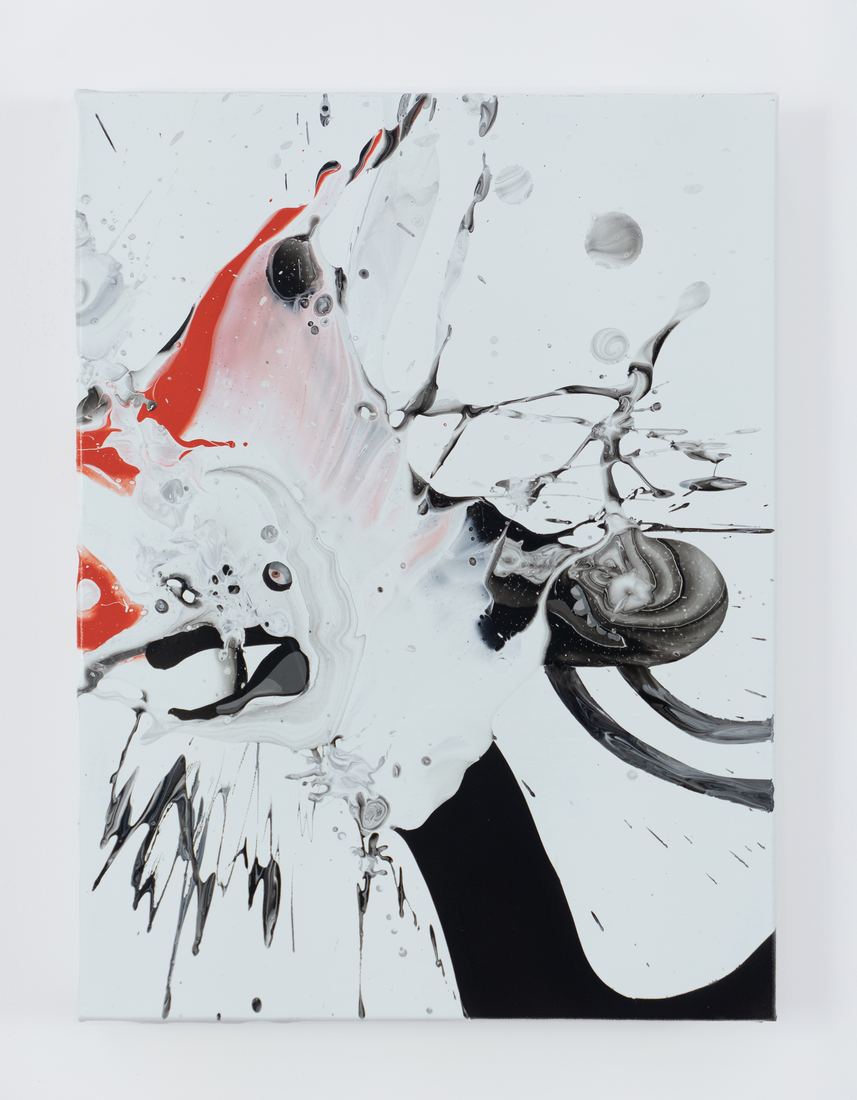
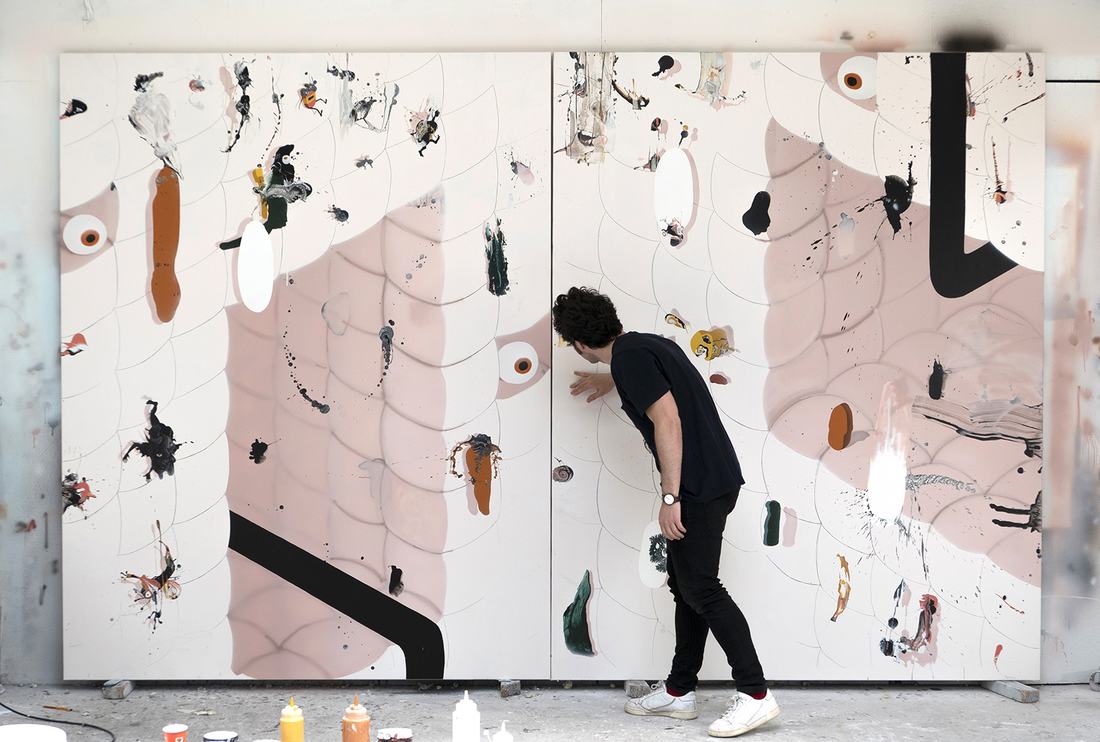
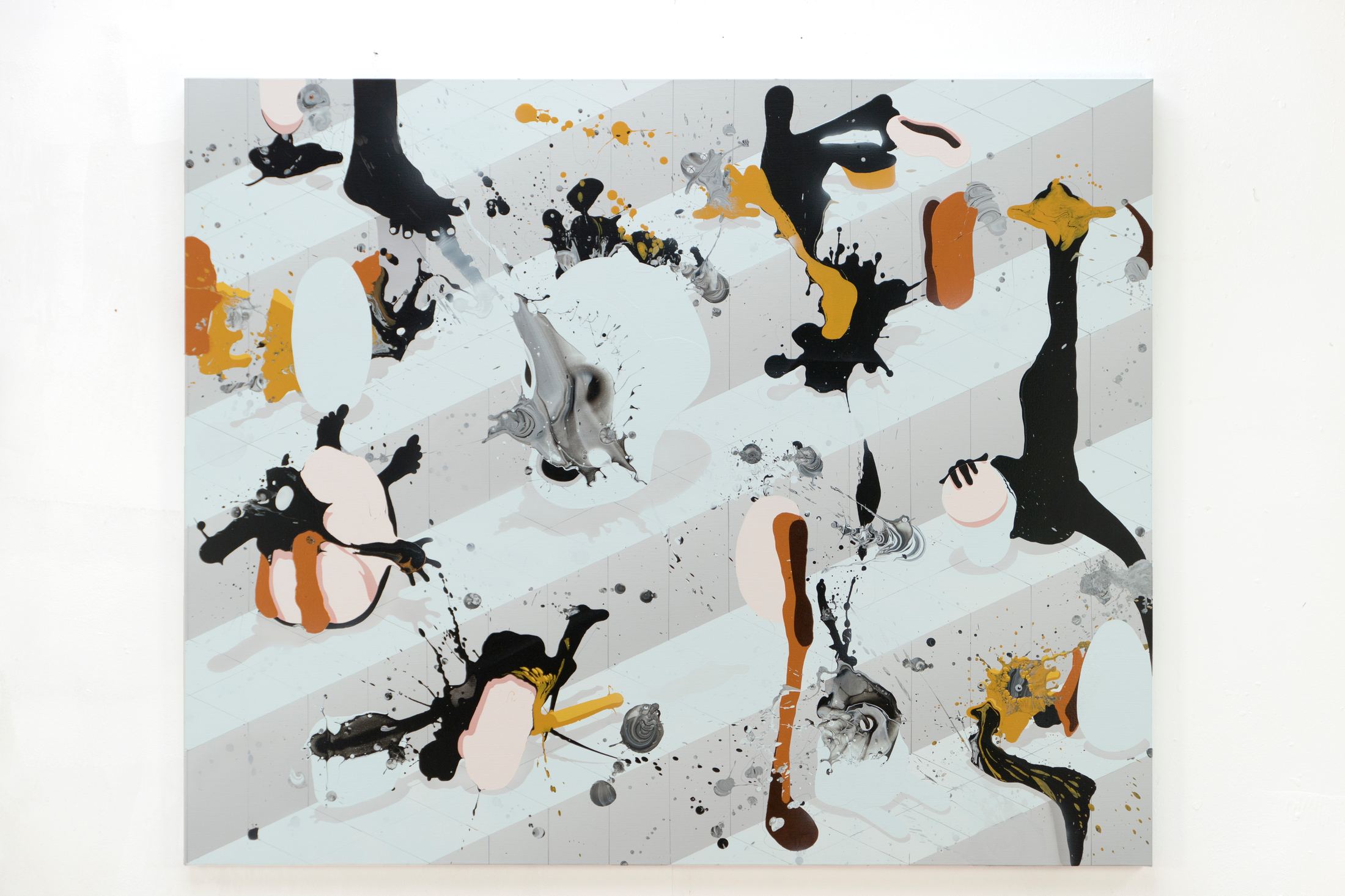
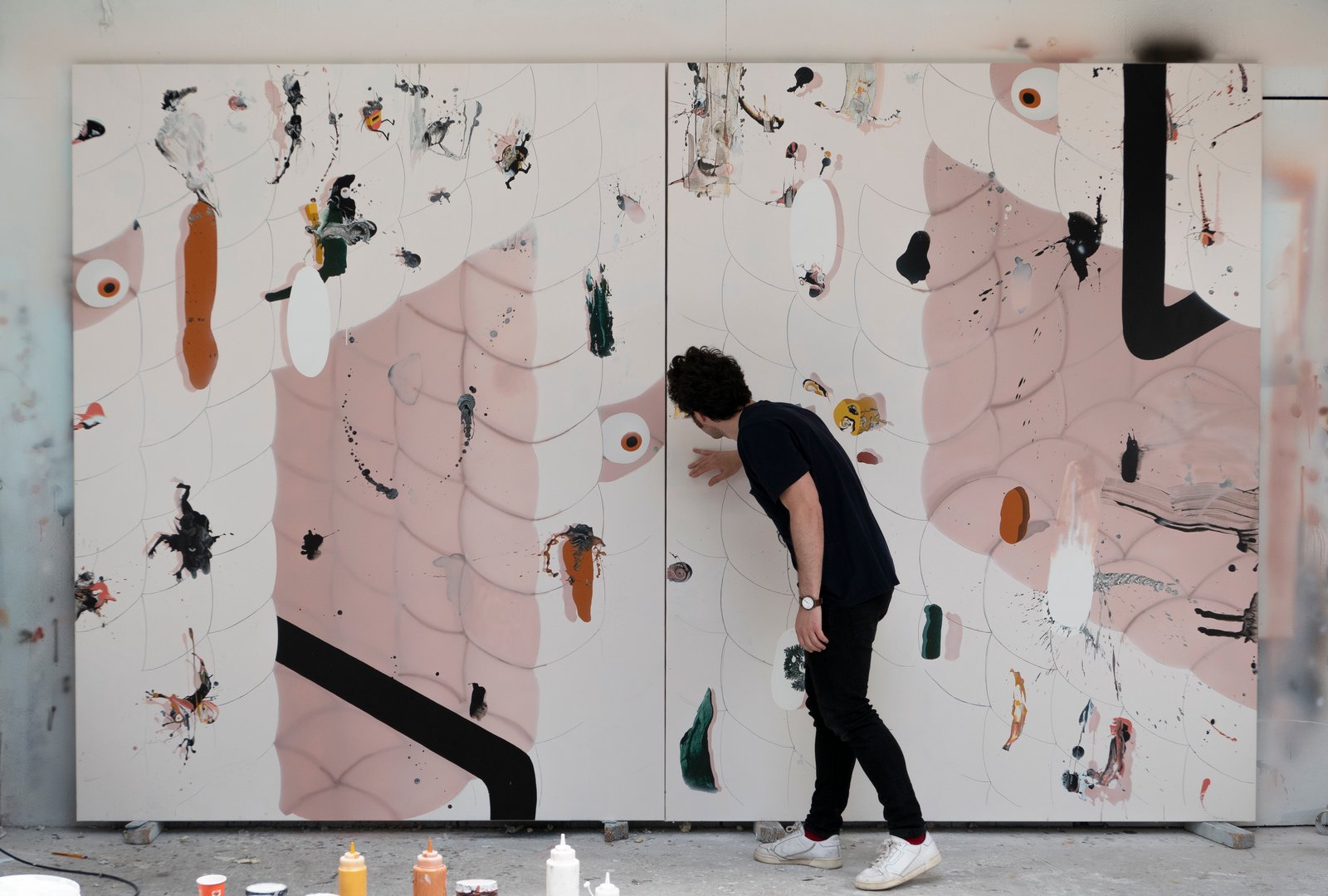
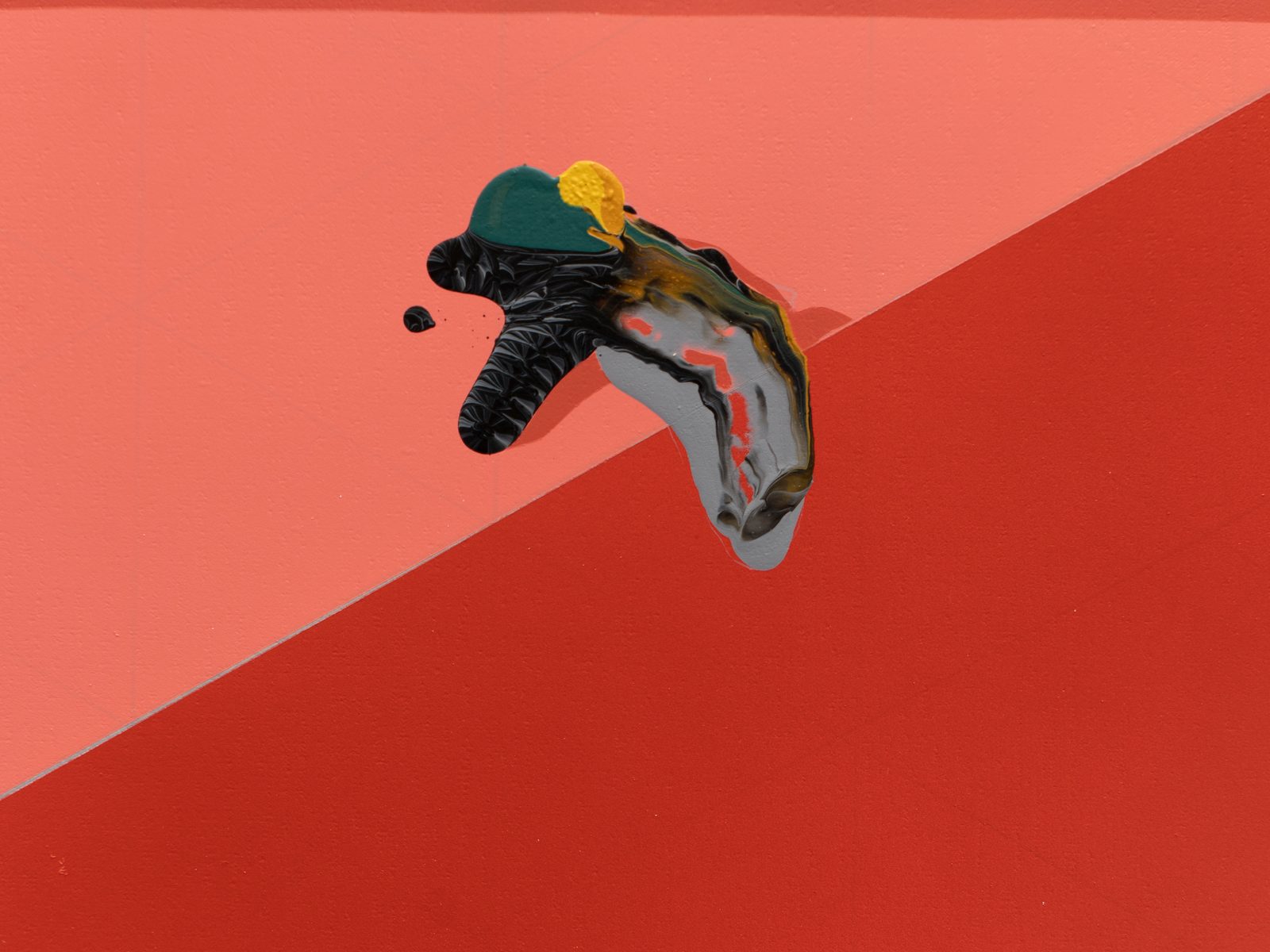
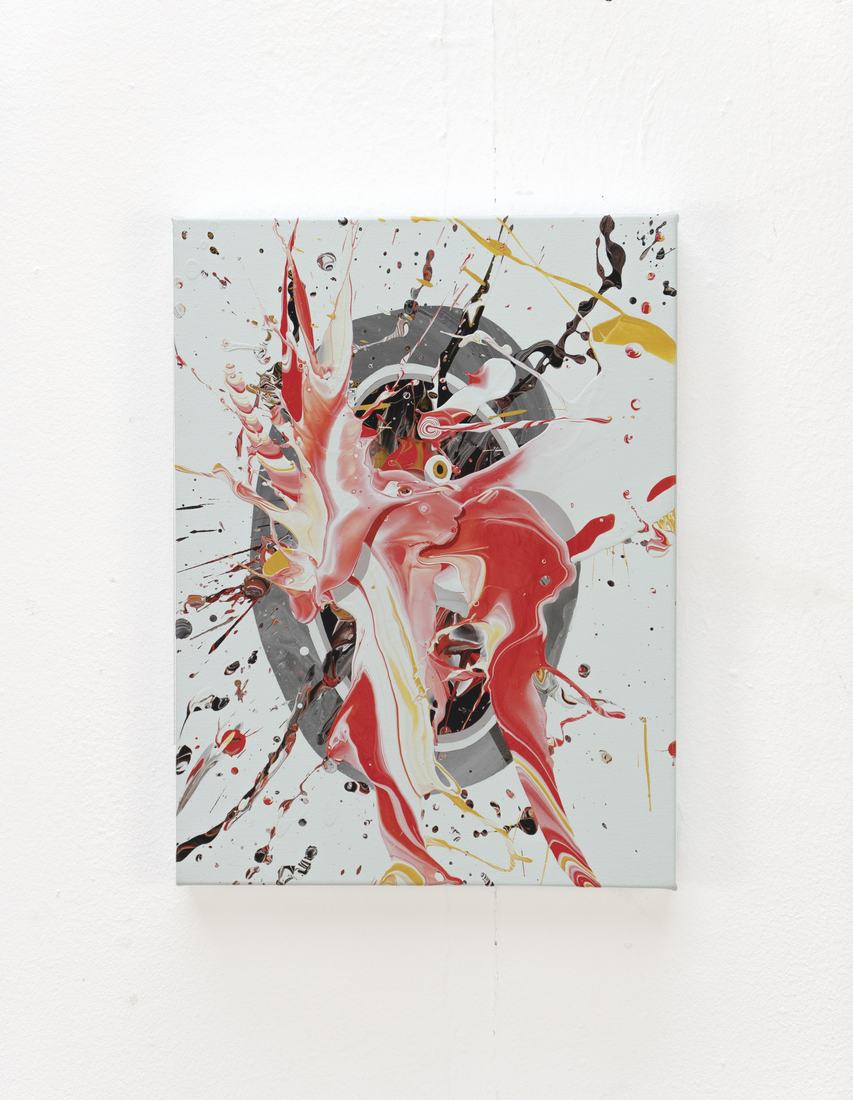
Throughout the process I wander the studio without a clear idea of what I’m doing. I usually start pouring paint into a grid flat colour background. When it dries I hang it on the walls of the studio and some sort of dialogue between me and the painting starts to happen. Time and a succession of non controlled–controlled, chaos–order actions leads to some sort of narrative. The chaotic marks and poured paint on the surface awaken and, as a result, the act of painting becomes a speculating process in which I start formulating questions: “what they are”, “where are they”, “what sort of light is around them”. Hence, I think of myself as an author of speculative fiction but instead of writing it I try to bring narrative and content from matter.
Nonetheless, I’m only aware of the subtleties of the work some time ahead. Similarly as when particles in water are in suspension during a storm. Only time and reflection can start to deposit all those interests, thoughts and references on the ground, though. It is fascinating because content comes from this relationship with matter itself, this is what maintains a sense of urgency and pushes me into the studio everyday as I never know how the thing is going to end.
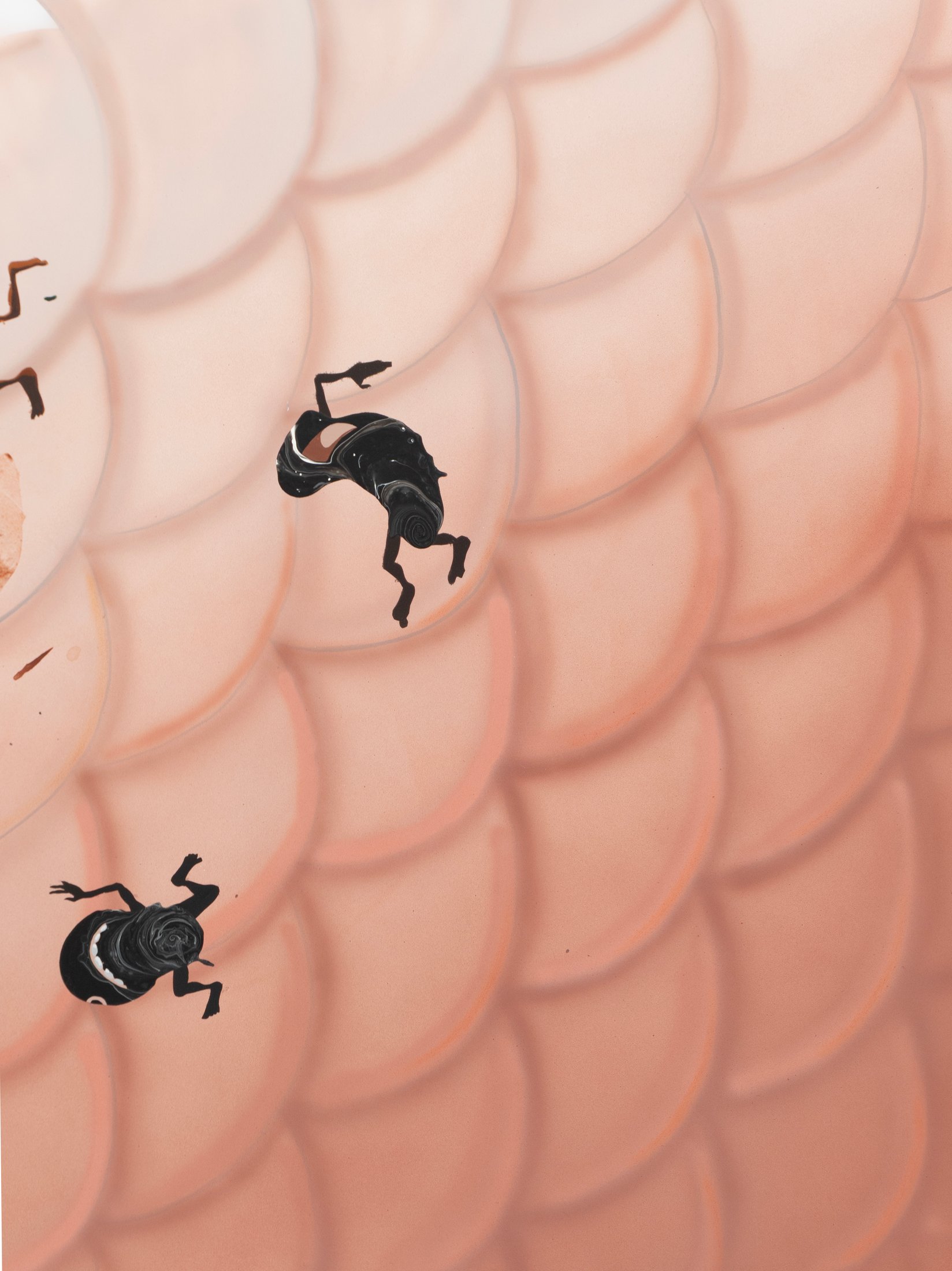
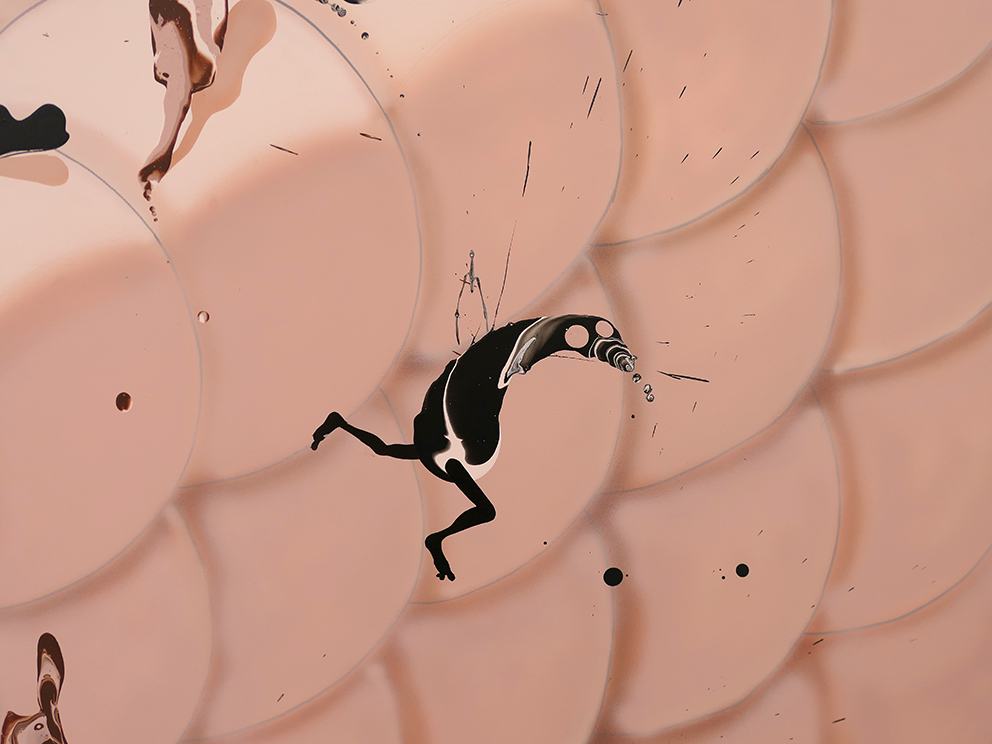
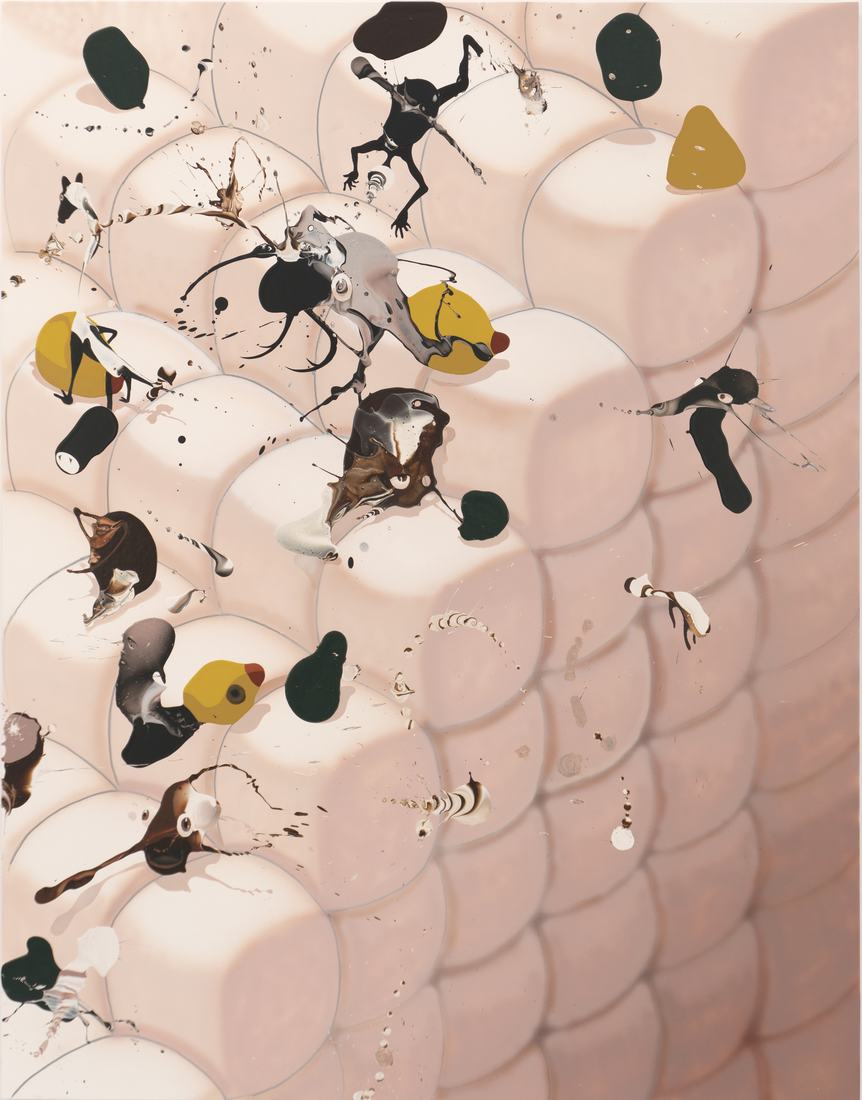
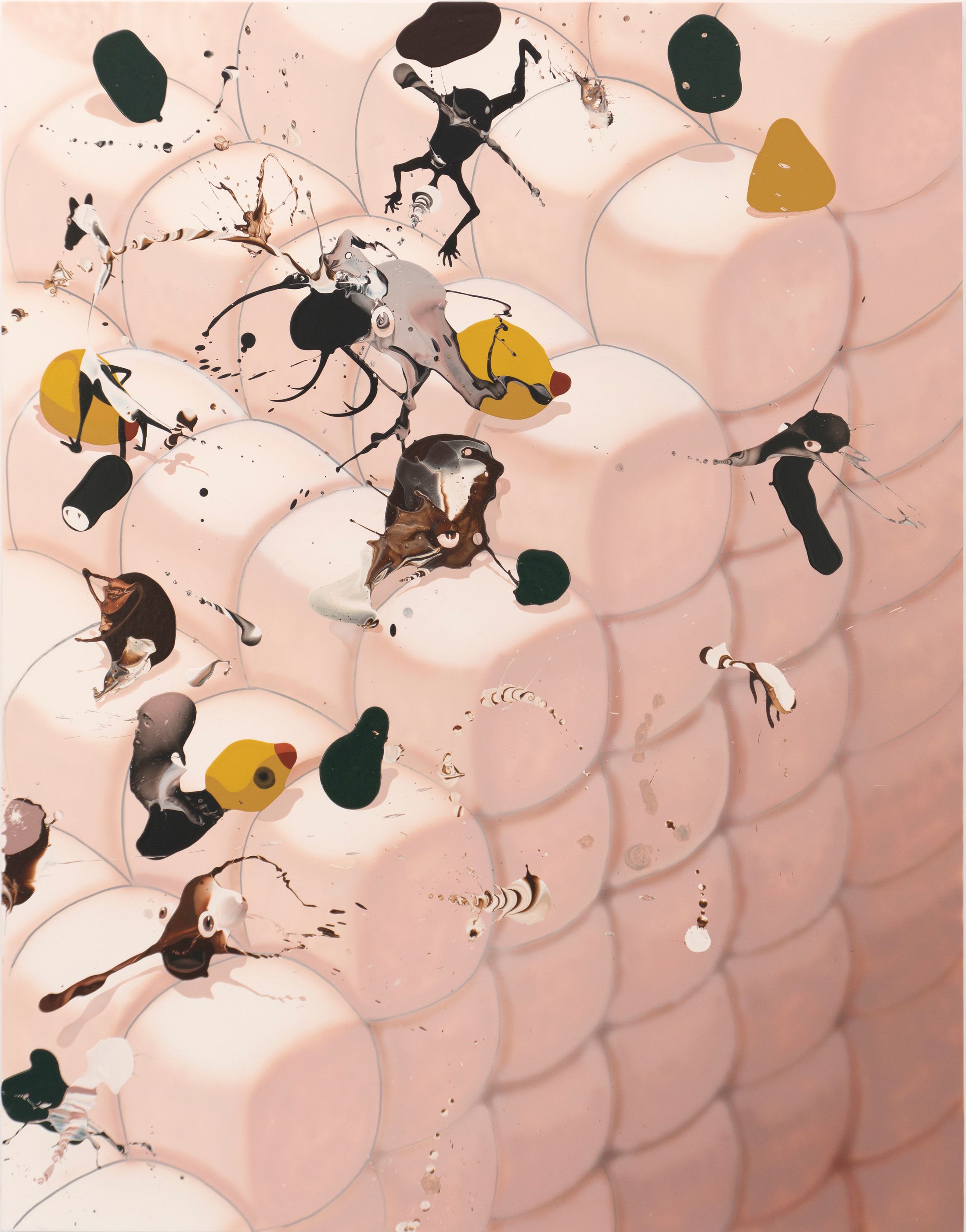
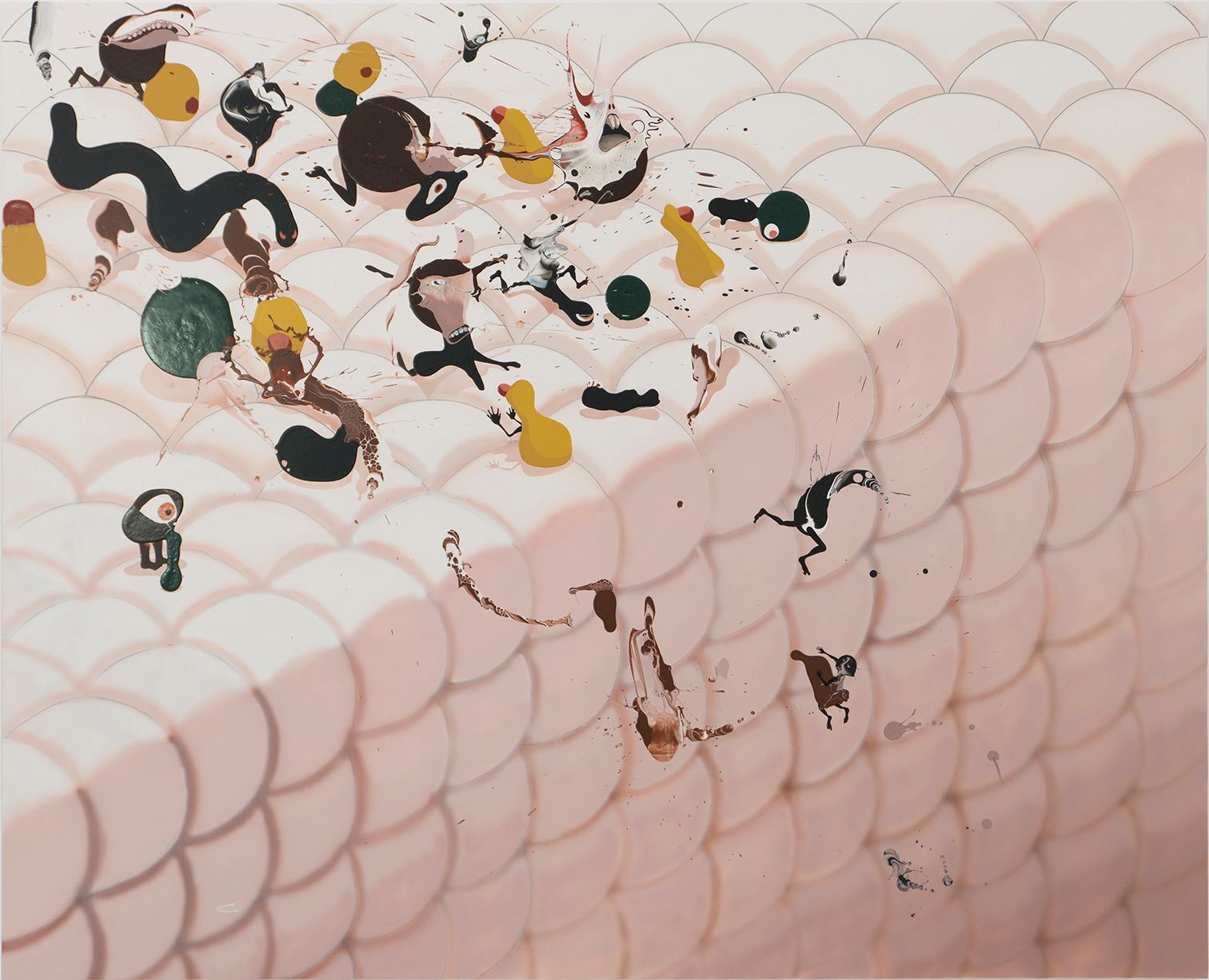
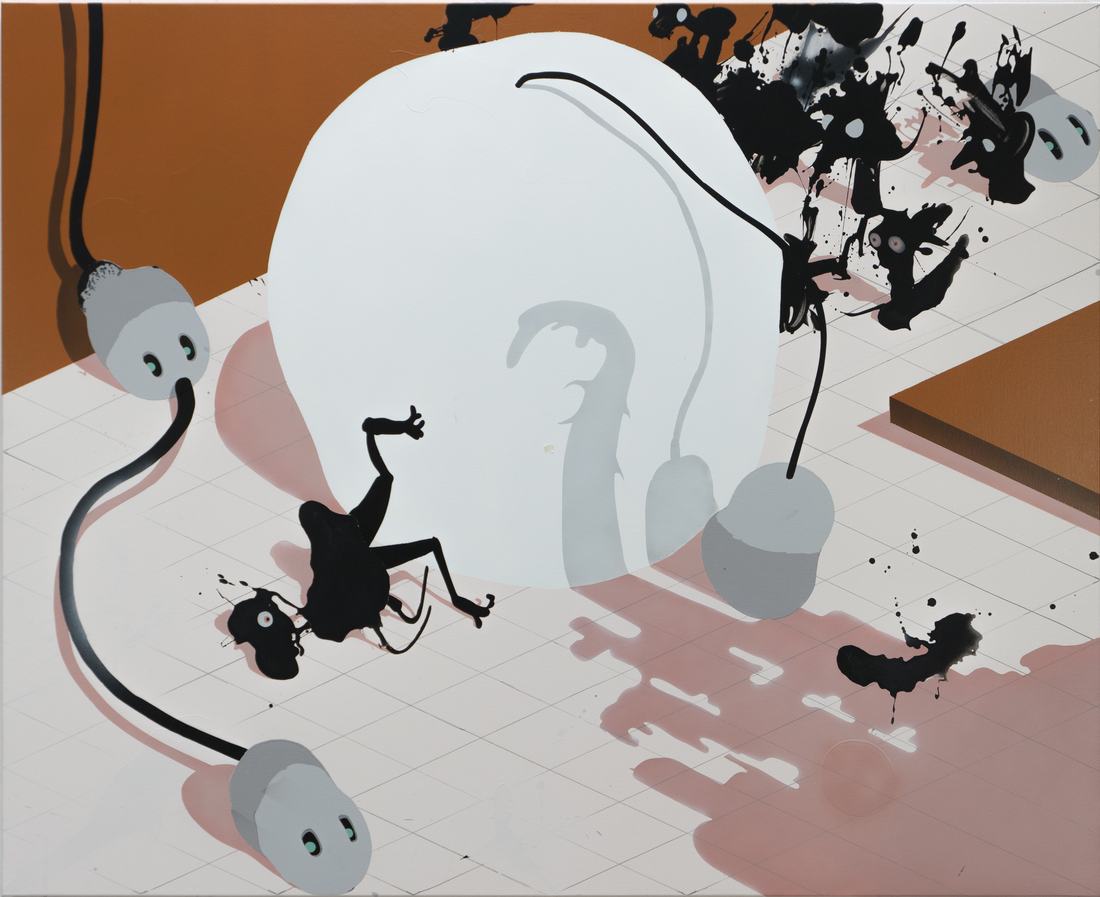
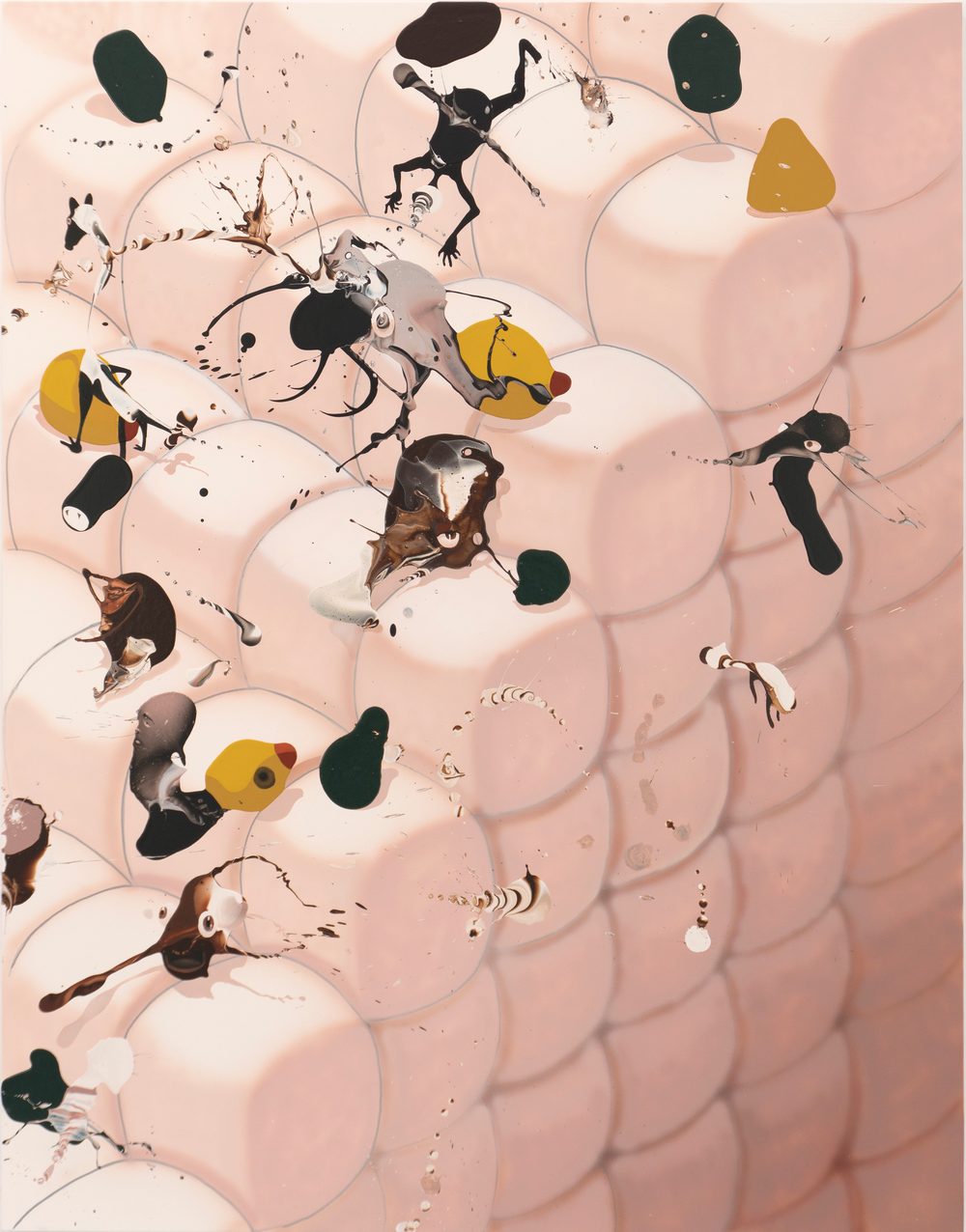
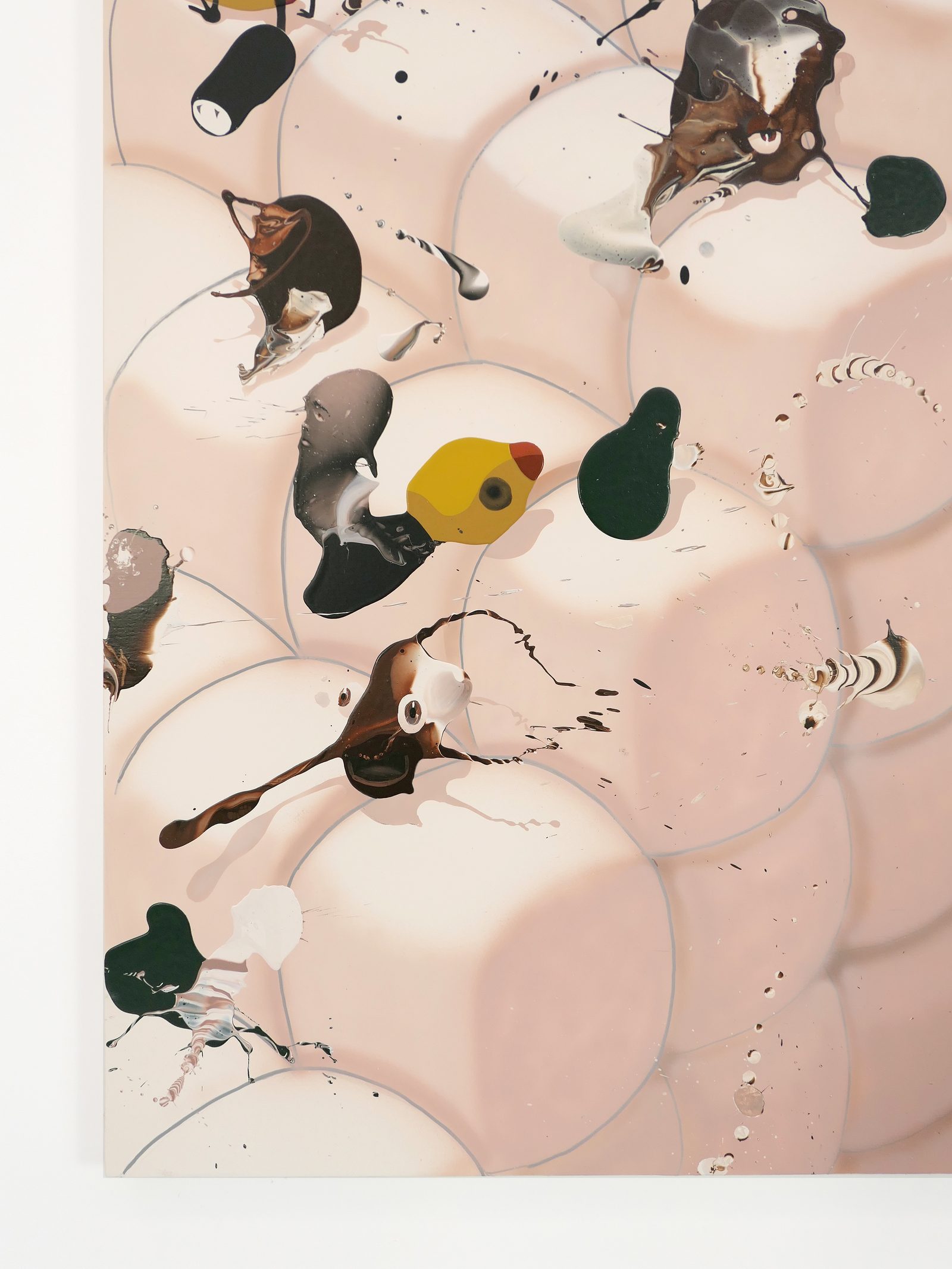
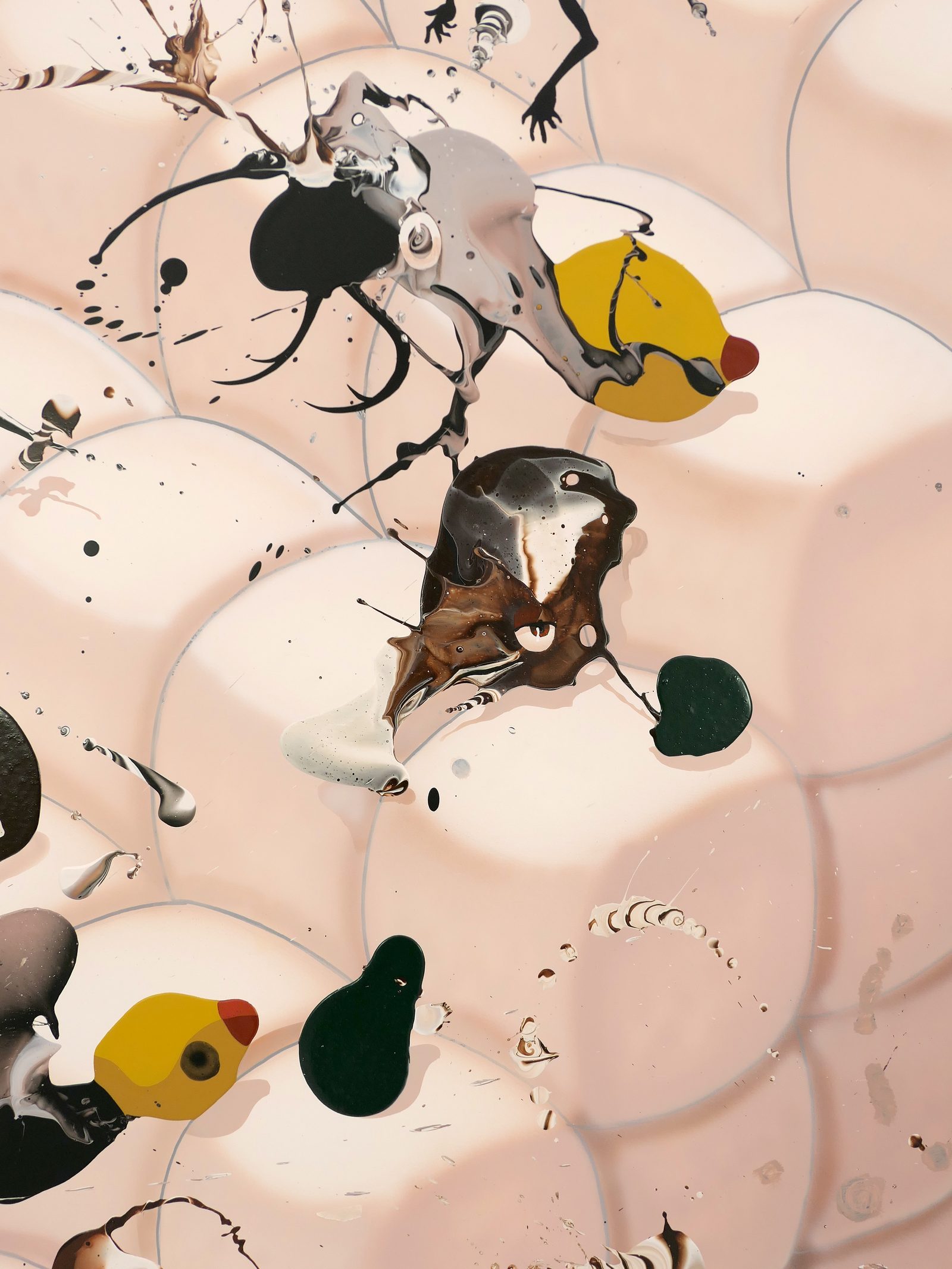
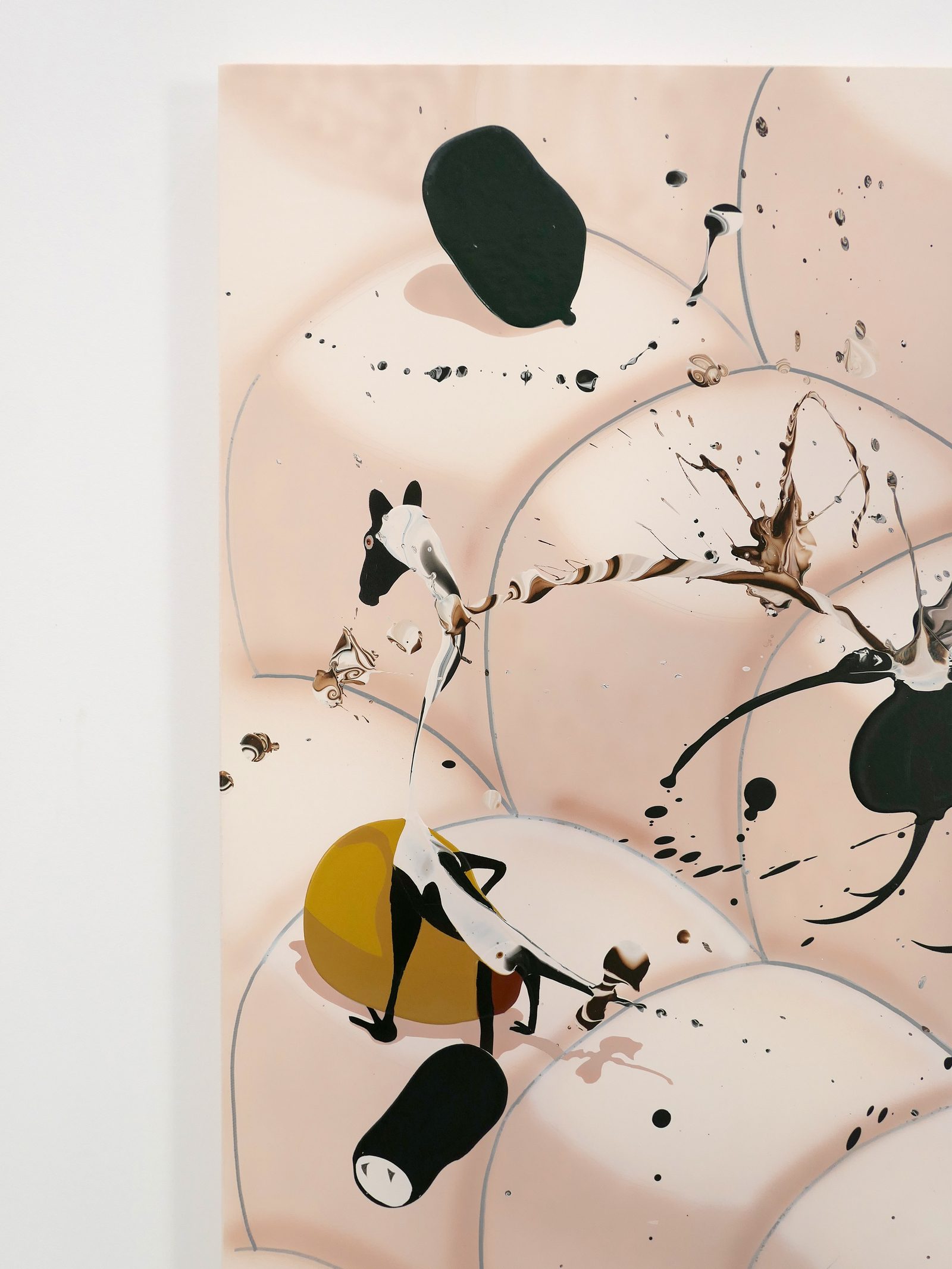
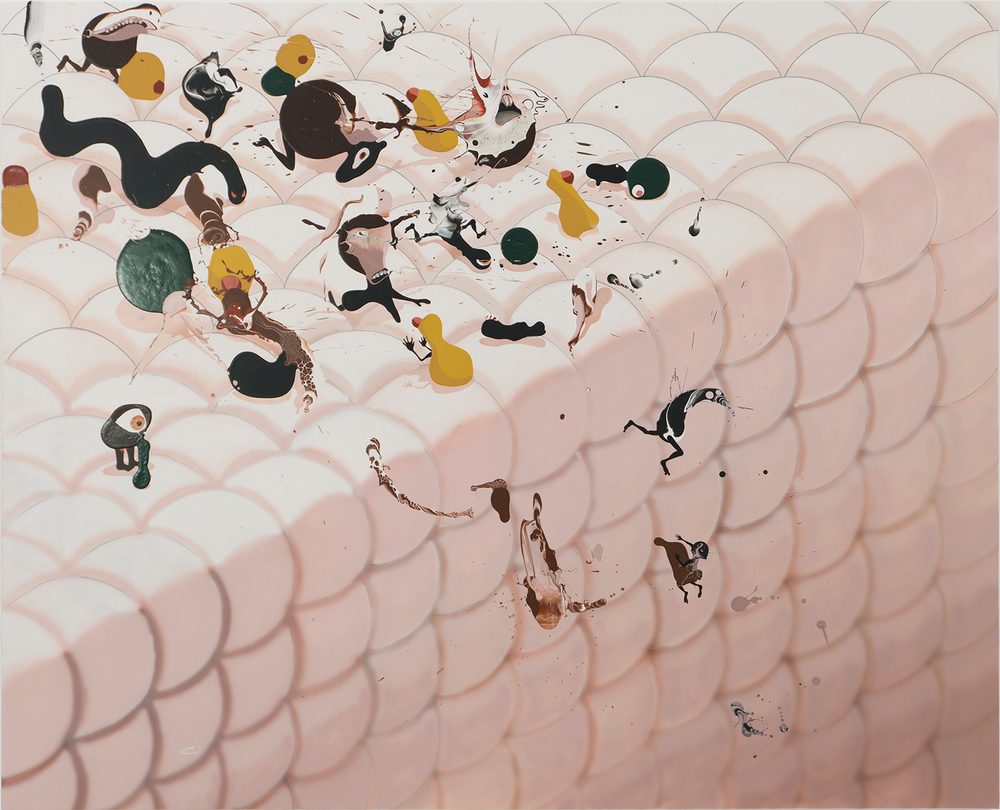
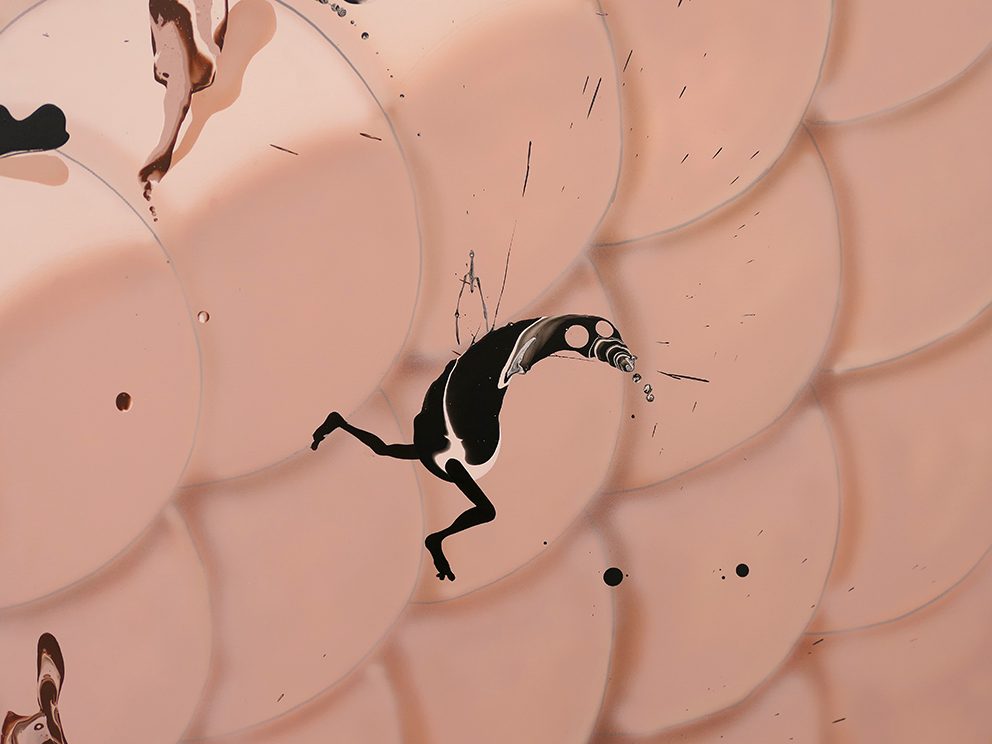
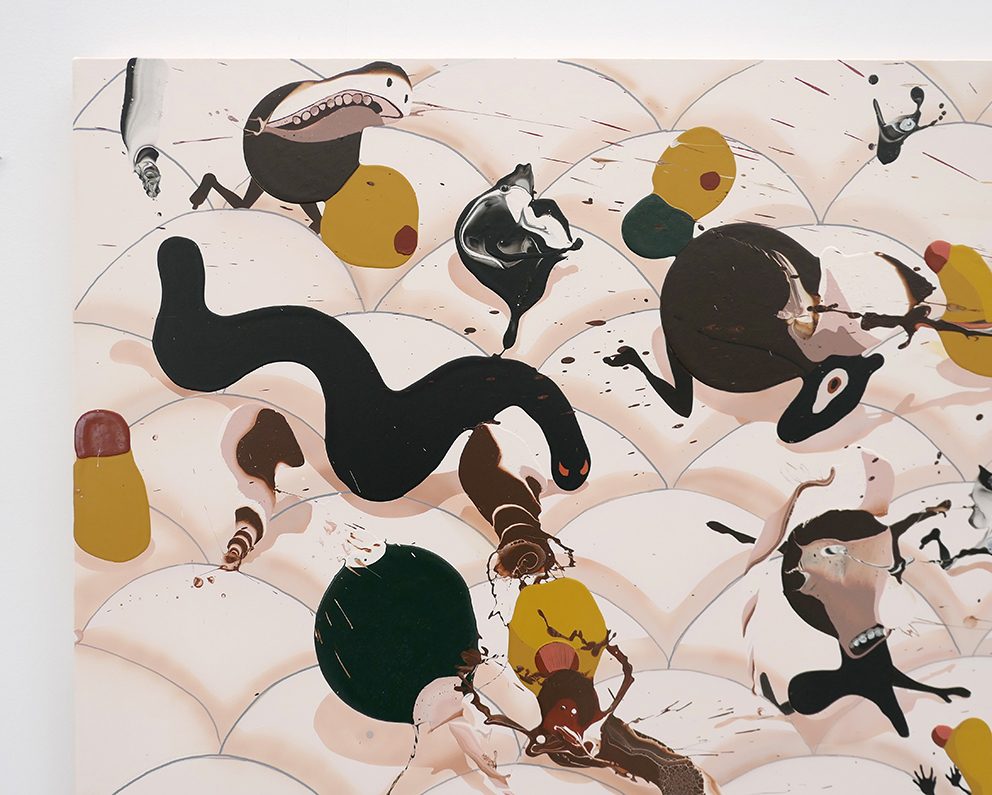
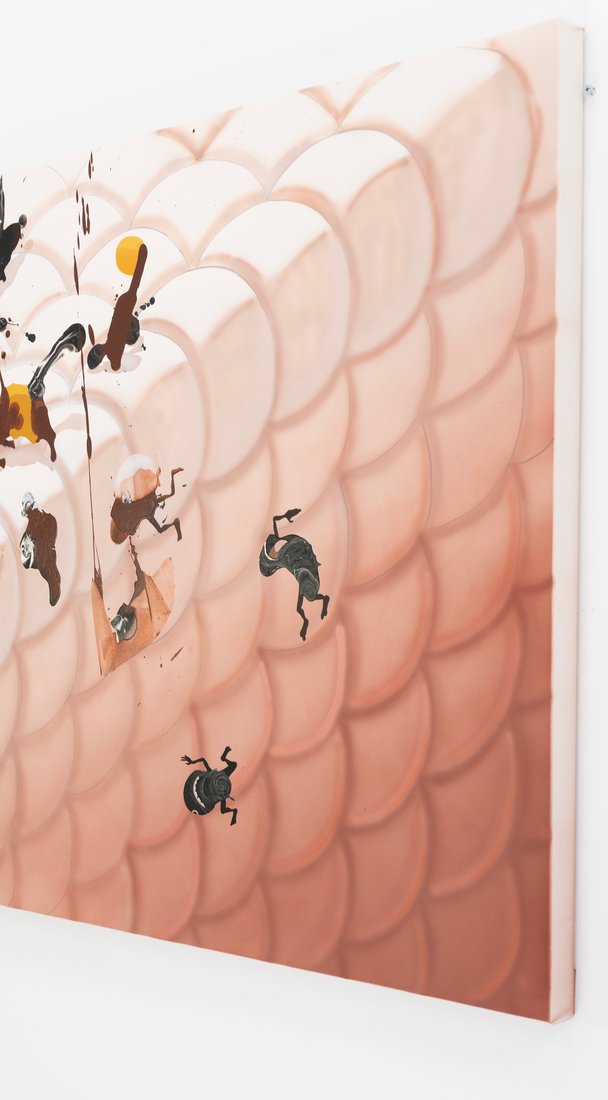
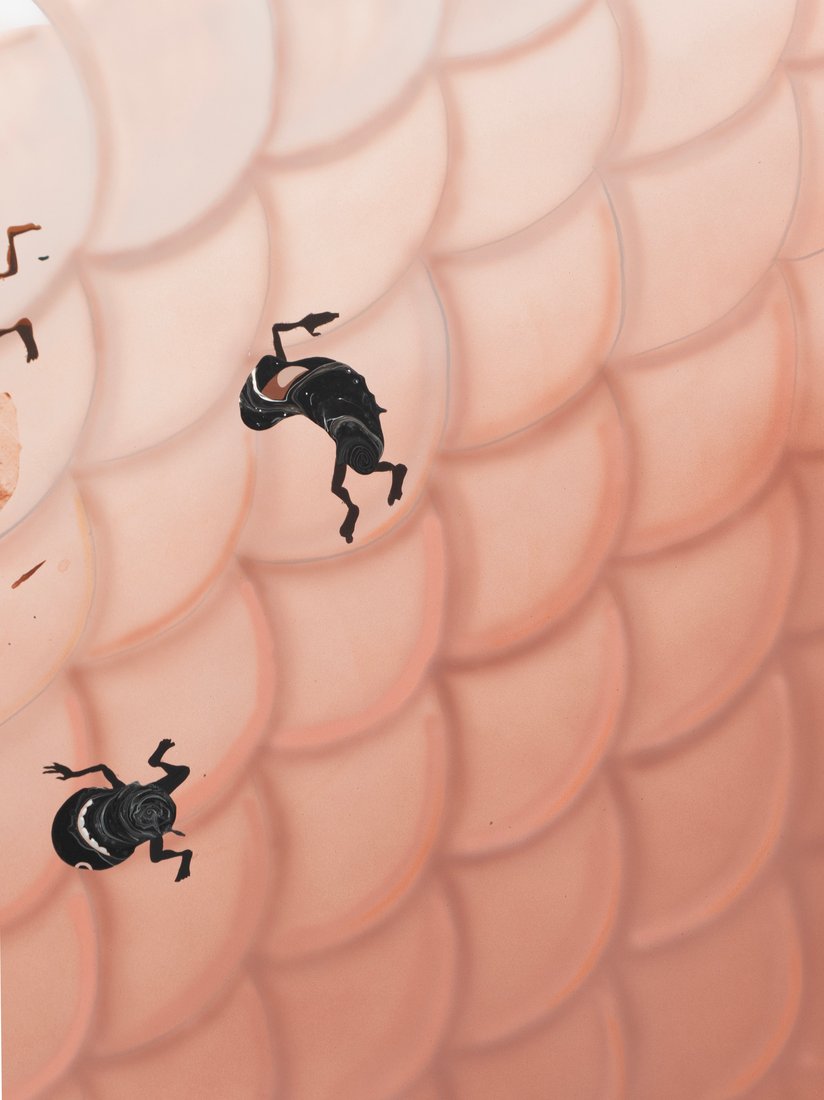
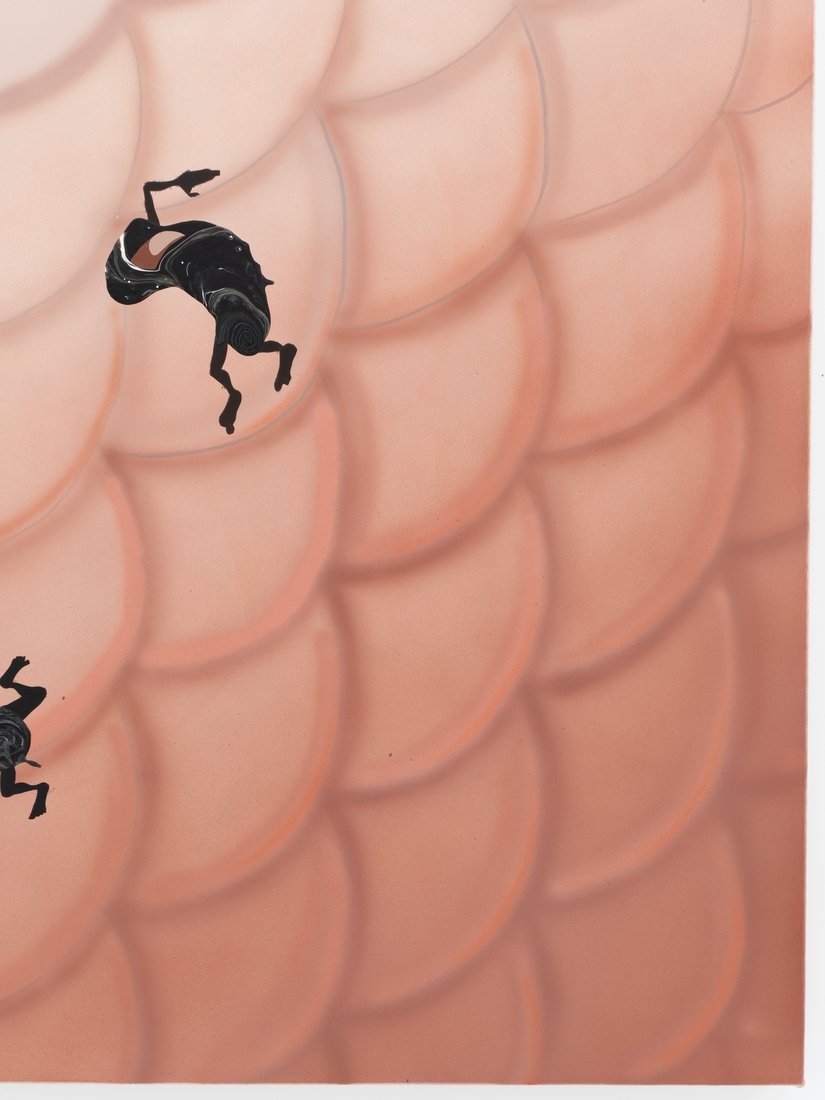
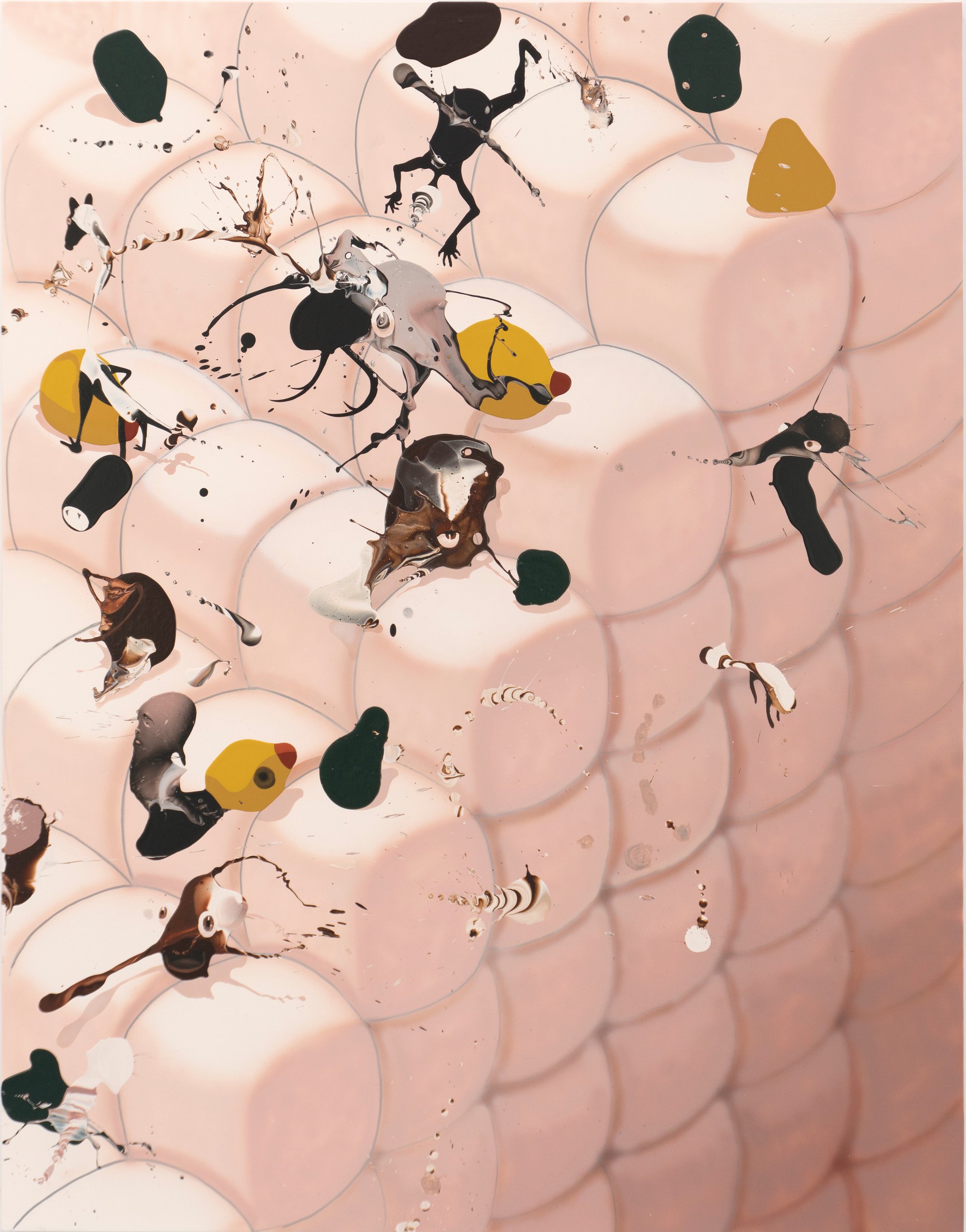
The main painting of this show, however, Waiting in a padded abyss, was done differently as the main character of the scene was the entire padded structure. Last year I dreamt a few times with a specific padded structure where people were falling. The dream was neat, I could even tell the colour and texture of the surface. Everything was tinted with a warm Siena. This warm colour of the background brought to my mind a phrase of Mark Fisher: ‘The constant flow of sugary gratification on demand’. Fisher was describing an edulcorated endless consumption of music, porn, video games, and social media content lubricated with the right dose of anxiolytics. A way in which a major part of the population lives sedated and controlled in a state of constant distraction. It has been the plot of many dystopian novels of the 20th century. The Congress of Futurology of Stanislaw Lem, or The Three Stigmata of Palmer Eldritch from Philip K. Dick, Huxley’s Brave New World, or George Orwell’s 1984. As pseudo prophets of a reality that surrounds us they did a good job in portraying this self-gratification endless loop in which we are plugged in order to evade.
Waiting on a padded abyss was permeated by the sensation I had during the lockdowns: like being in a weird war towards an invisible entity in a comfortable jail making cupcakes.
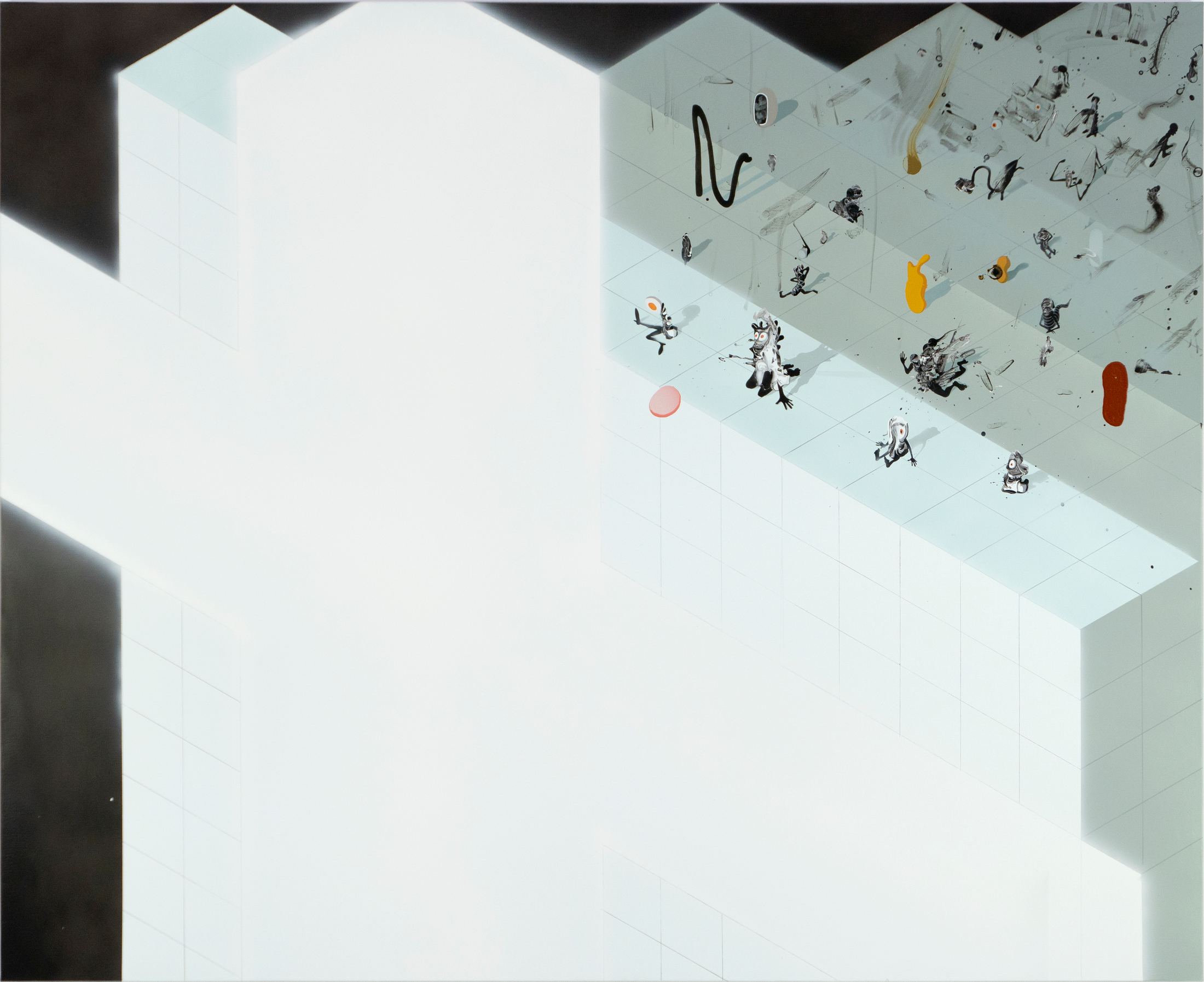
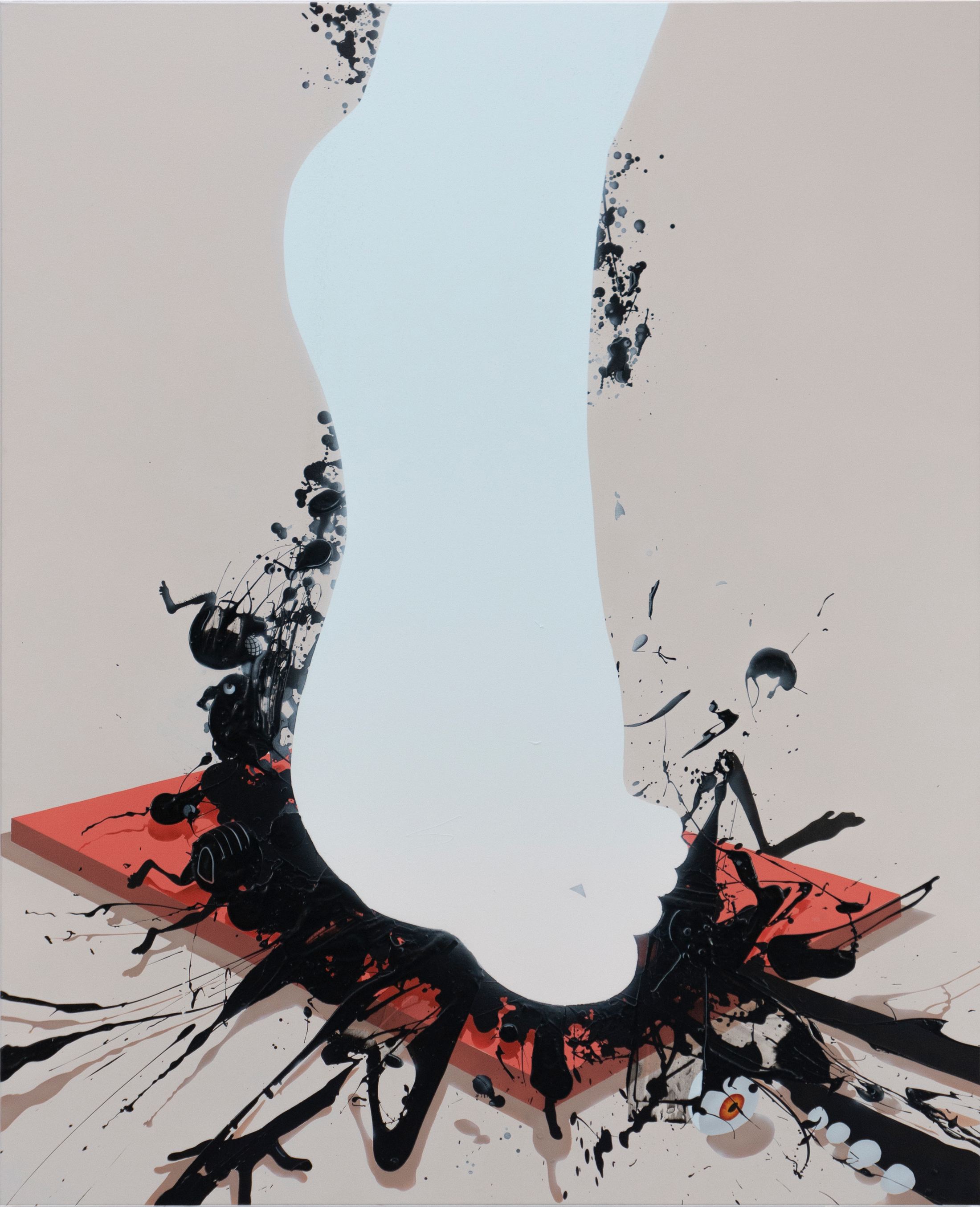
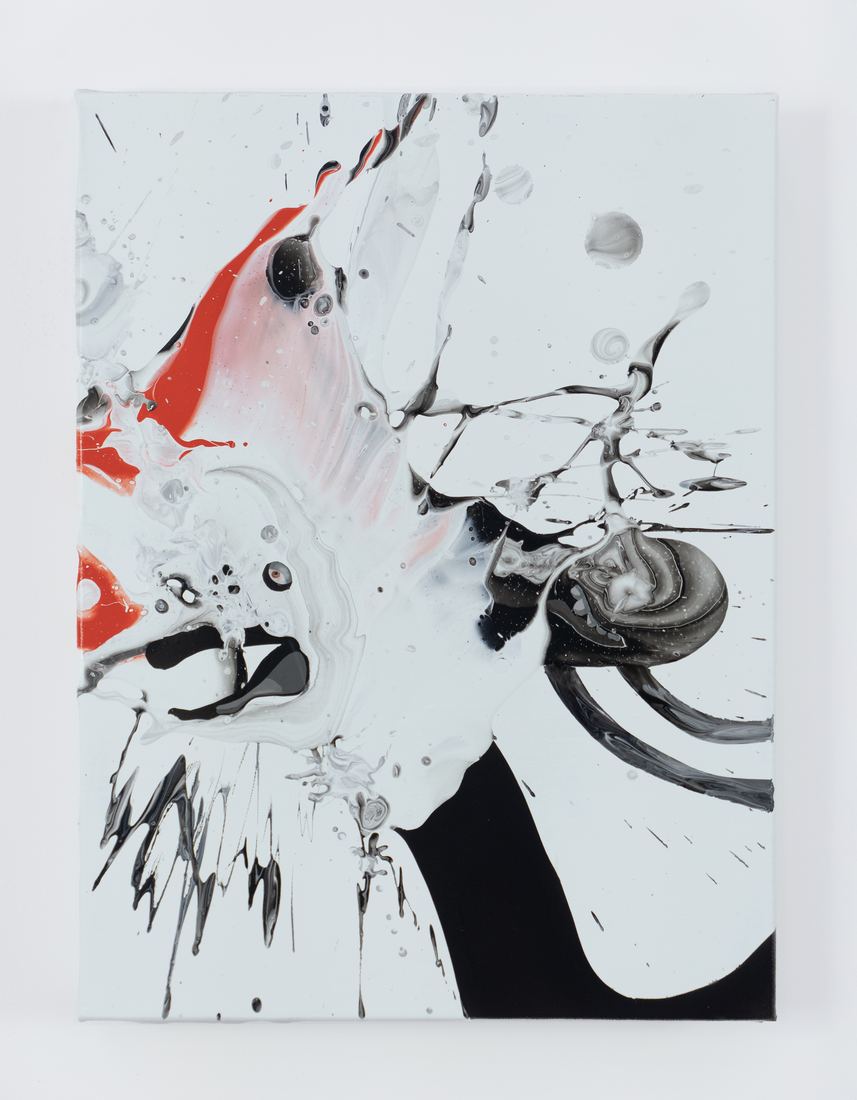
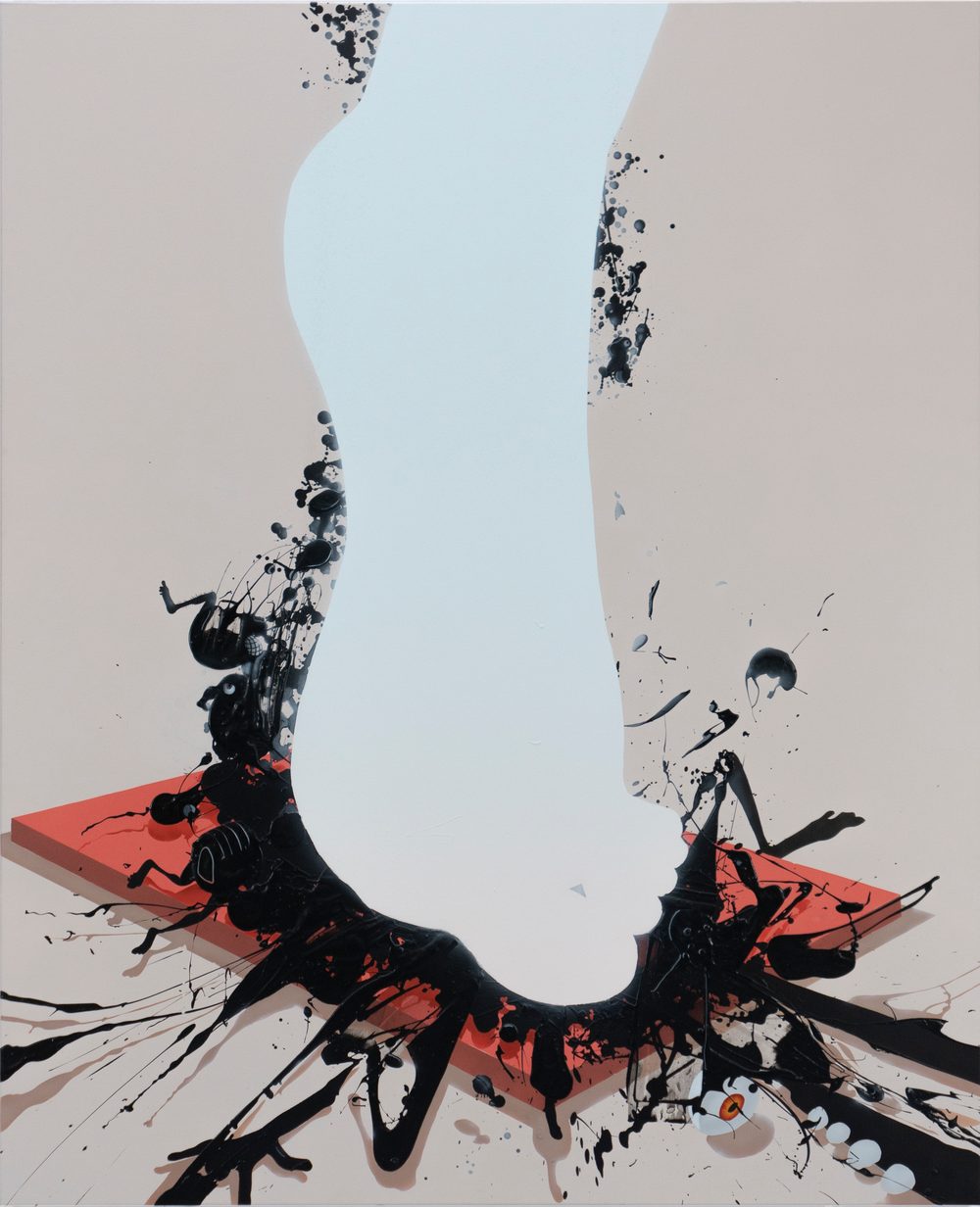
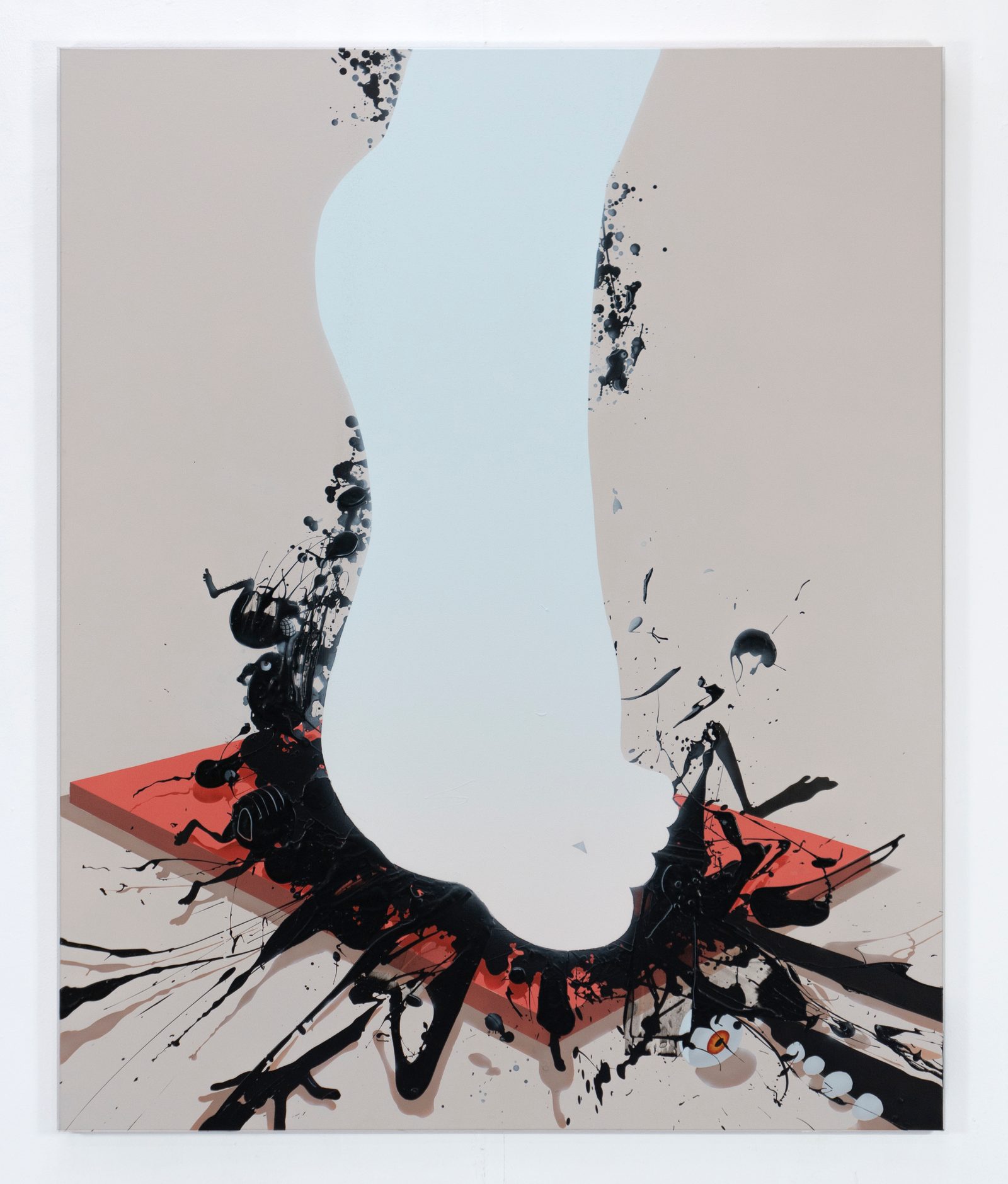
In the painting Feeded, by contrast, I began, in a more typical procedure, from a chaotic pouring on the floor of the studio on a “digital blue” background. I started some years ago naming the colours I use. This practice gives me clues to decipher what the painting needs to say and adds some order to an otherwise too messy process. In contrast, there is a persistent claim from most contemporary high-brow art nowadays on the superficiality of colour. For me, as a painter, colour is content in itself. It is a difficult realm though and could lead people to a quick judgement. However, in my work I try to define each of the colours I use. Although I try to relate them to a certain meaning I’m aware of the inherent paradox of such a statement as colour escapes any attempt to be conceptualised. I think that the realm of colour is the realm of mood, I could even say so of art. This specific blue was the colour that I used some years ago to depict the light that comes from screens.
Adding to that, the mark making on top of that blue suggested some black to organise the painting in terms of composition. Then those black fields start claiming a certain water nature. At the same time, some freezing days happened in my hometown while I was painting the picture and the lake next to my place froze with a very thin layer of ice. So, the blue of the background became an unstable platform. Now, with time, I think the mixture of these black deep waters with a kind of unstable platform on top is a good metaphor of how fear comes from a subconscious level. Surprisingly enough I did not think about it while I was painting. It usually happens this way. As I said, things develop in the process on a semi-autonomous level as if a certain force works behind one’s actions. As if the work of art is claiming its autonomy.
I’ve always been interested in fear since it is the most primitive state of mind, its roots are in every human feature. Fear of the unknown is the principal feature of the aesthetic category of the sublime. In the last two years fear was everywhere and still is. While I’m writing these lines, unbelievable, the nuclear monster has woken up and is living in our minds again. Adding to that we have new mind roommates — virus, rumours of war, possible cyber attacks. It was too in the uncertainty of possible futures, where from an institutional level they are claiming a “you’ll own nothing and you’ll be happy” or the optimistic claims of transhumanist gurus. The growing threats that AI could suppose or the metaverse. The restrictions and covid vaccine mandates. Fact checkers have become the new inquisition. Signs of patronising and dangerous times where feelings matter more than truth. I think all paintings in Falling were permeated by all these feelings. As if fear was materialised as a viscous matter entity.
The mark on the canvas of Feeded suggested to me a kind of creature with an elephant trunk, and sometime ahead it was sucking something. I start seeing it as a fear feeder. It became like a self-portrait as this entity was acting as myself every time that I was checking the news.
So I started thinking of some entities that were feeded on fear. Surprisingly, I discovered that fear feeders already exist in many cultures. In the Christian tradition demons are feeded in human fear. Similarly, some Japanese yokais are feeded on fear too.
Many cultures have thought that evil entities are not only stimulated by fear but they need it in order to attain power, by the suffering of human beings. I’ve always been fascinated by the enchanted world and it is the door that allows me to imagine this mark making in the canvas as entities or corporeal depictions of an invisible world.
It could even be argued in a more materialistic or disenchanted way of thinking how algorithms are fed by fear too. How the constant click produced by fear on social media triggers radicalisation. As algorithms show you only a certain related information and when fear is added to the equation the speed by which one is… While I was painting Platform I had that mood of the chamber in my mind, and at the same time allows big tech companies to profit on distracting advertisements.
Sometimes I think of them as materialisations of trapped souls. I believe that paintings are autonomous and work in the world of symbols.
— Jose Castiella
Pamplona, Feb 2022
“Me considero un autor de ficción especulativa, solo que en lugar de escribirla, intento extraer narrativa y contenido de la propia materia.”
A lo largo del proceso deambulo por el estudio sin una idea clara de lo que estoy haciendo. Normalmente empiezo vertiendo pintura sobre un fondo de color plano y cuadriculado. Cuando se seca lo cuelgo en las paredes del estudio y empieza a producirse una especie de diálogo entre la pintura y yo. El tiempo y una sucesión de acciones no controladas–controladas, caos–orden dan lugar a algún tipo de narrativa. Las marcas caóticas y la pintura vertida sobre la superficie despiertan y, como resultado, el acto de pintar se convierte en un proceso especulativo en el que empiezo a formular preguntas: “qué son”, “dónde están”, “qué tipo de luz les rodea”. De ahí que me considere un autor de ficción especulativa, solo que en lugar de escribirla intento extraer narrativa y contenido de la propia materia.
Sin embargo, solo soy consciente de los matices de la obra algún tiempo después. De forma parecida a cuando las partículas en el agua quedan en suspensión durante una tormenta. Solo el tiempo y la reflexión consiguen depositar esos intereses, pensamientos y referencias en el fondo. Es fascinante porque el contenido surge de esta relación con la propia materia; esto es lo que mantiene una sensación de urgencia y me empuja al estudio cada día, ya que nunca sé cómo va a terminar la cosa.
El cuadro principal de esta muestra, sin embargo, Waiting in a padded abyss, se hizo de otra manera, ya que el personaje principal de la escena era toda la estructura acolchada. El año pasado soñé varias veces con una estructura acolchada concreta en la que había gente cayendo. El sueño era nítido, incluso podía distinguir el color y la textura de la superficie. Todo estaba teñido de un cálido siena. Este color cálido del fondo me trajo a la mente una frase de Mark Fisher: ‘El flujo constante de gratificación azucarada bajo demanda’. Fisher describía un consumo edulcorado e interminable de música, pornografía, videojuegos y contenido de redes sociales, lubricado con la dosis justa de ansiolíticos. Una forma en la que buena parte de la población vive sedada y controlada en un estado de distracción constante. Ha sido el argumento de muchas novelas distópicas del siglo XX. El congreso de futurología de Stanislaw Lem, Los tres estigmas de Palmer Eldritch de Philip K. Dick, Un mundo feliz de Huxley, o 1984 de George Orwell. Como falsos profetas de una realidad que nos rodea, supieron retratar muy bien ese bucle interminable de autogratificación al que estamos enchufados para evadirnos.
Waiting on a padded abyss estaba impregnada de la sensación que tuve durante los confinamientos: como estar en una extraña guerra contra una entidad invisible, en una cárcel confortable, haciendo cupcakes.
En el cuadro Feeded, por el contrario, empecé de una forma más habitual, con un vertido caótico en el suelo del estudio sobre un fondo “azul digital”. Hace ya algunos años que empecé a nombrar los colores que uso. Esta práctica me da pistas para descifrar lo que la pintura necesita decir y añade cierto orden a un proceso que, de otro modo, sería demasiado caótico. En cambio, existe una reivindicación persistente por parte de buena parte del arte contemporáneo más elevado sobre la superficialidad del color. Para mí, como pintor, el color es contenido en sí mismo. Es un terreno difícil, eso sí, que puede llevar a juicios apresurados. Sin embargo, en mi trabajo intento definir cada uno de los colores que uso. Aunque trato de relacionarlos con un significado concreto, soy consciente de la paradoja inherente a tal afirmación, ya que el color escapa a cualquier intento de conceptualización. Creo que el terreno del color es el terreno del estado de ánimo, y podría decir lo mismo del arte. Este azul en concreto es el color que usé hace algunos años para representar la luz que emana de las pantallas.
A eso se suma que el trazo sobre ese azul sugería algo de negro para organizar el cuadro en términos de composición. Después esos campos negros empezaron a reclamar cierta naturaleza acuática. Al mismo tiempo, hubo días de mucho frío en mi ciudad mientras pintaba el cuadro, y el lago cercano a mi casa se congeló con una fina capa de hielo. Así, el azul del fondo se convirtió en una plataforma inestable. Ahora, con el tiempo, creo que la mezcla de esas aguas negras y profundas con una especie de plataforma inestable encima es una buena metáfora de cómo el miedo surge de un nivel subconsciente. Sorprendentemente, no pensé en ello mientras pintaba. Suele ocurrir así. Como decía, las cosas se desarrollan en el proceso a un nivel semiautónomo, como si una fuerza determinada actuara detrás de las acciones de uno. Como si la obra reclamara su propia autonomía.
Siempre me ha interesado el miedo, ya que es el estado mental más primitivo, con raíces en cada rasgo humano. El miedo a lo desconocido es el rasgo principal de la categoría estética de lo sublime. En los últimos dos años el miedo estaba en todas partes, y sigue estándolo. Mientras escribo estas líneas, resulta increíble, el monstruo nuclear ha vuelto a despertar y vive de nuevo en nuestras mentes. A eso se suman nuevos compañeros de piso mentales: el virus, los rumores de guerra, los posibles ciberataques. Todo ello en medio de la incertidumbre sobre futuros posibles, en los que a nivel institucional se reivindica un “no tendrás nada y serás feliz”, o las promesas optimistas de los gurús transhumanistas. Las crecientes amenazas que podría suponer la IA o el metaverso. Las restricciones y los mandatos de vacunación del covid. Los verificadores de hechos se han convertido en la nueva inquisición. Señales de tiempos condescendientes y peligrosos, en los que los sentimientos importan más que la verdad. Creo que todos los cuadros de Falling estaban impregnados de todos estos sentimientos. Como si el miedo se hubiera materializado en una entidad de materia viscosa.
La mancha sobre el lienzo de Feeded me sugirió una especie de criatura con trompa de elefante, que poco después parecía estar succionando algo. Empecé a verla como un devorador de miedo. Se convirtió en una especie de autorretrato, ya que esta entidad actuaba como yo mismo cada vez que consultaba las noticias.
Así que empecé a pensar en entidades que se alimentaran de miedo. Sorprendentemente, descubrí que los devoradores de miedo ya existen en muchas culturas. En la tradición cristiana, los demonios se alimentan del miedo humano. Del mismo modo, algunos yokais japoneses también se alimentan de miedo.
Muchas culturas han pensado que las entidades malignas no solo se ven estimuladas por el miedo, sino que lo necesitan para alcanzar poder, a través del sufrimiento de los seres humanos. Siempre me ha fascinado el mundo encantado, y es la puerta que me permite imaginar este trazo sobre el lienzo como entidades o representaciones corpóreas de un mundo invisible.
Incluso podría argumentarse, desde una forma de pensar más materialista o desencantada, que los algoritmos también se alimentan de miedo. Cómo el clic constante producido por el miedo en las redes sociales desencadena la radicalización. Cómo los algoritmos solo te muestran cierta información relacionada, y cuando se añade el miedo a la ecuación, la velocidad a la que uno… Mientras pintaba Platform tenía ese ambiente de cámara en mente, y al mismo tiempo permite a las grandes tecnológicas beneficiarse de la publicidad que nos distrae.
A veces pienso en ellas como materializaciones de almas atrapadas. Creo que las pinturas son autónomas y funcionan en el mundo de los símbolos.
— Jose Castiella
Pamplona, feb 2022
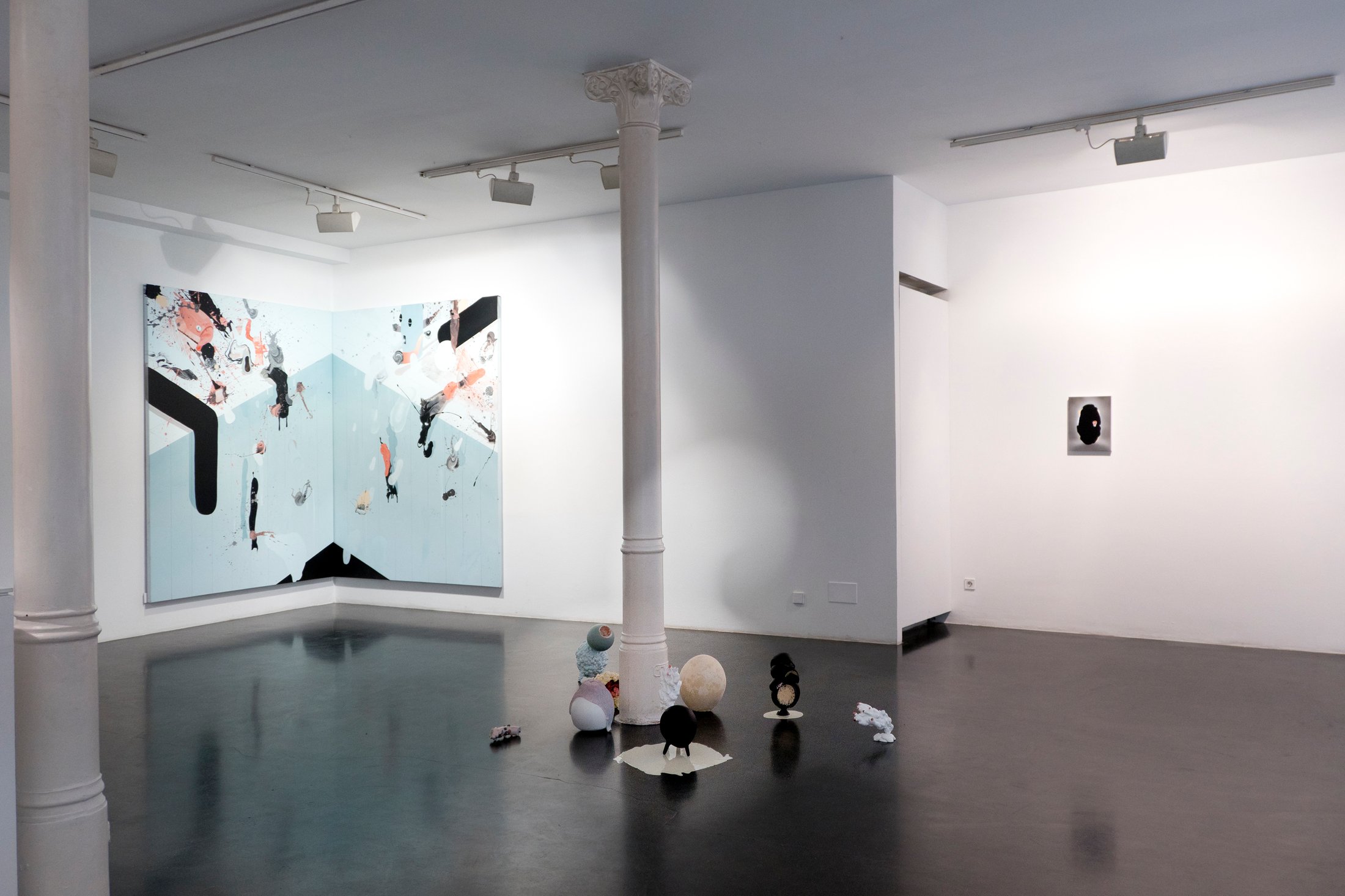
“This is an atmosphere that dominates in times of great change. It is the silence that precedes the cataclysm, present in the apocalyptic visions of Hieronymus Bosch’s paintings, whose echoes are not hard to trace in this work.”
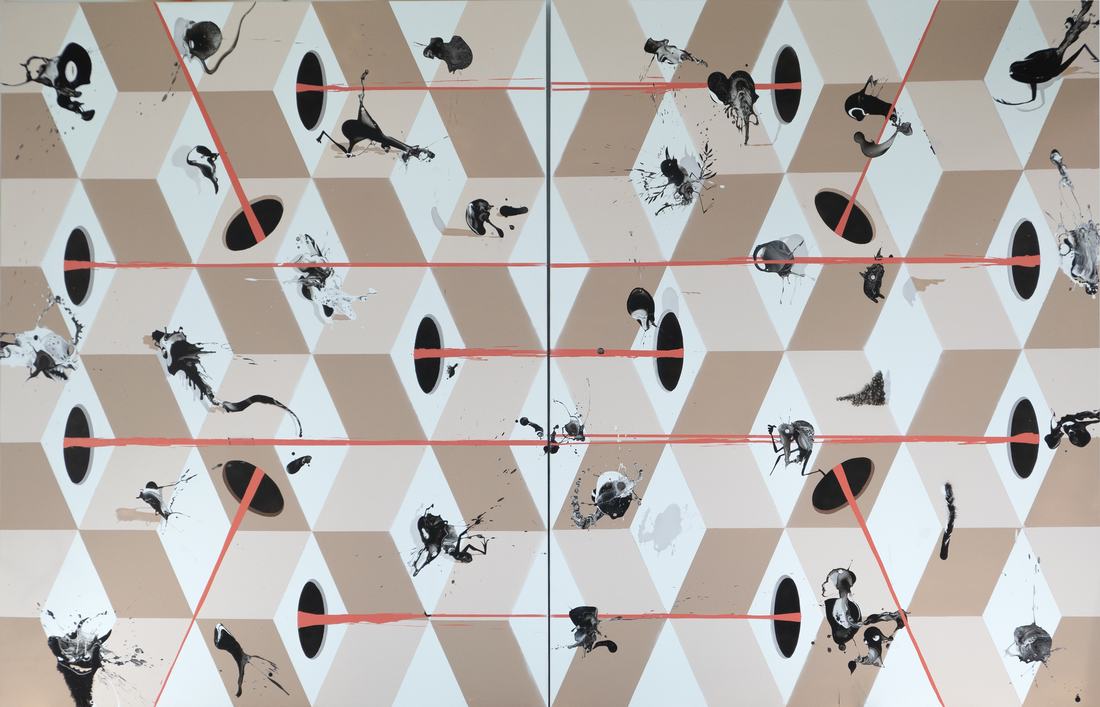
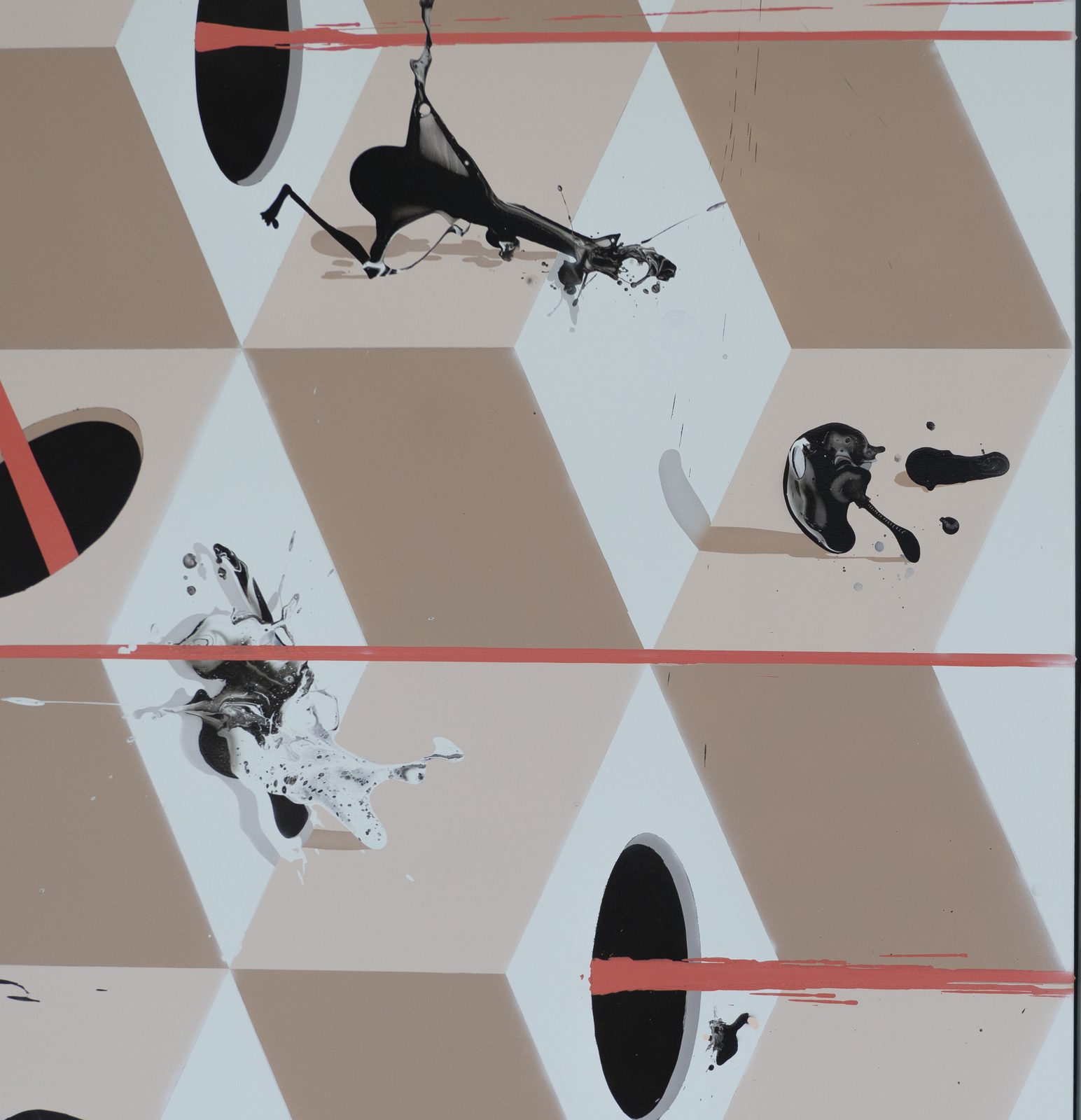
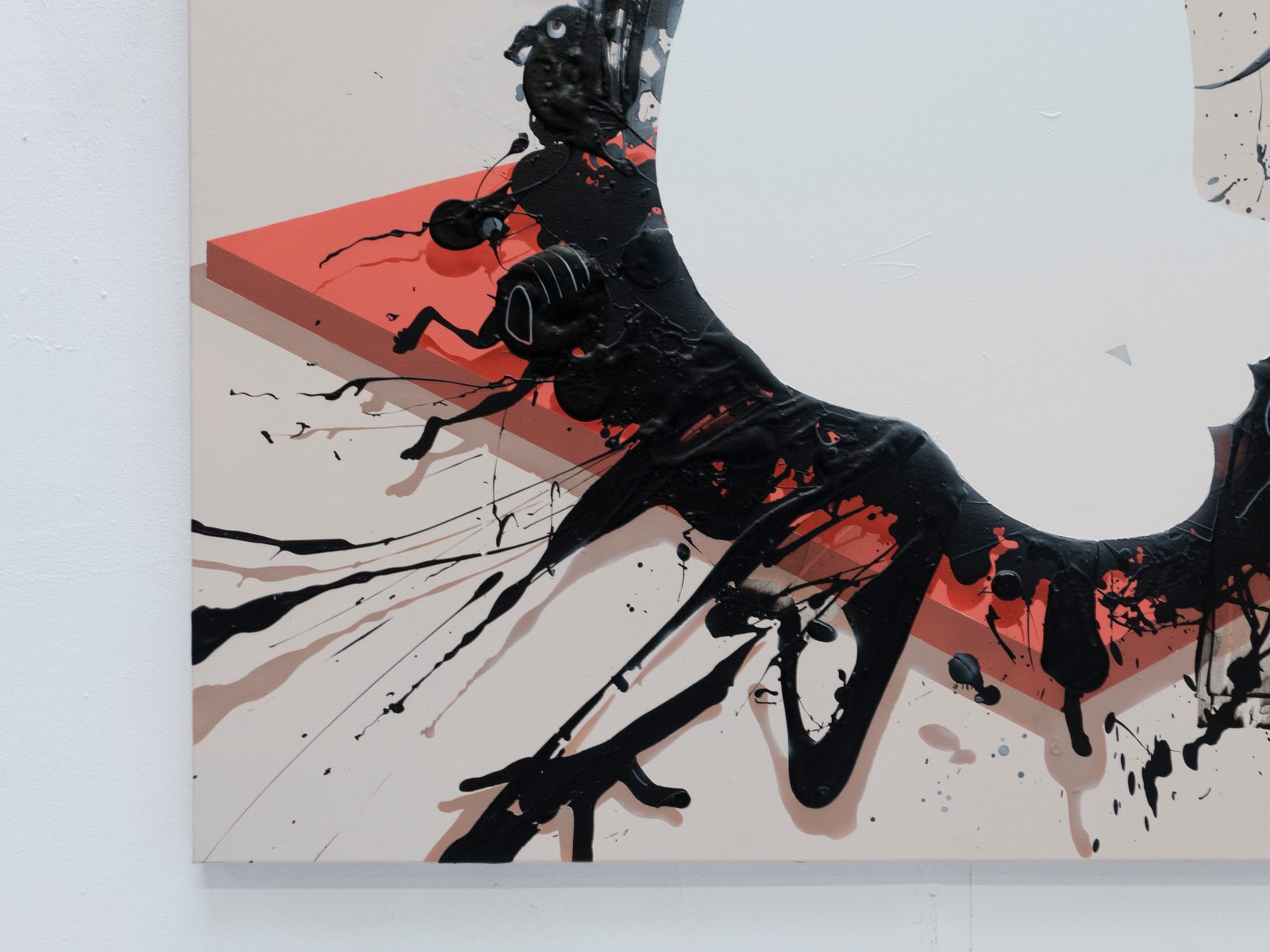
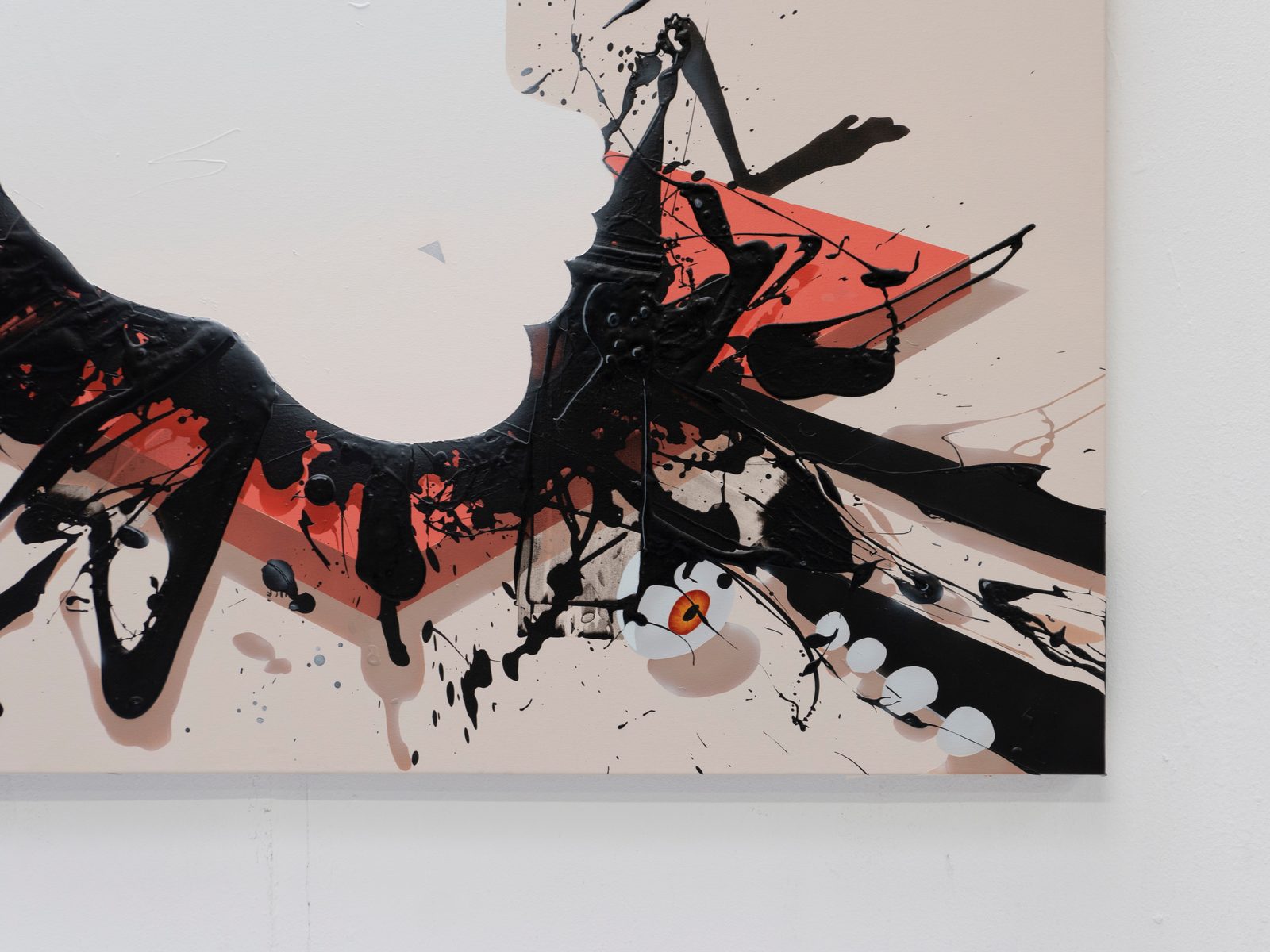
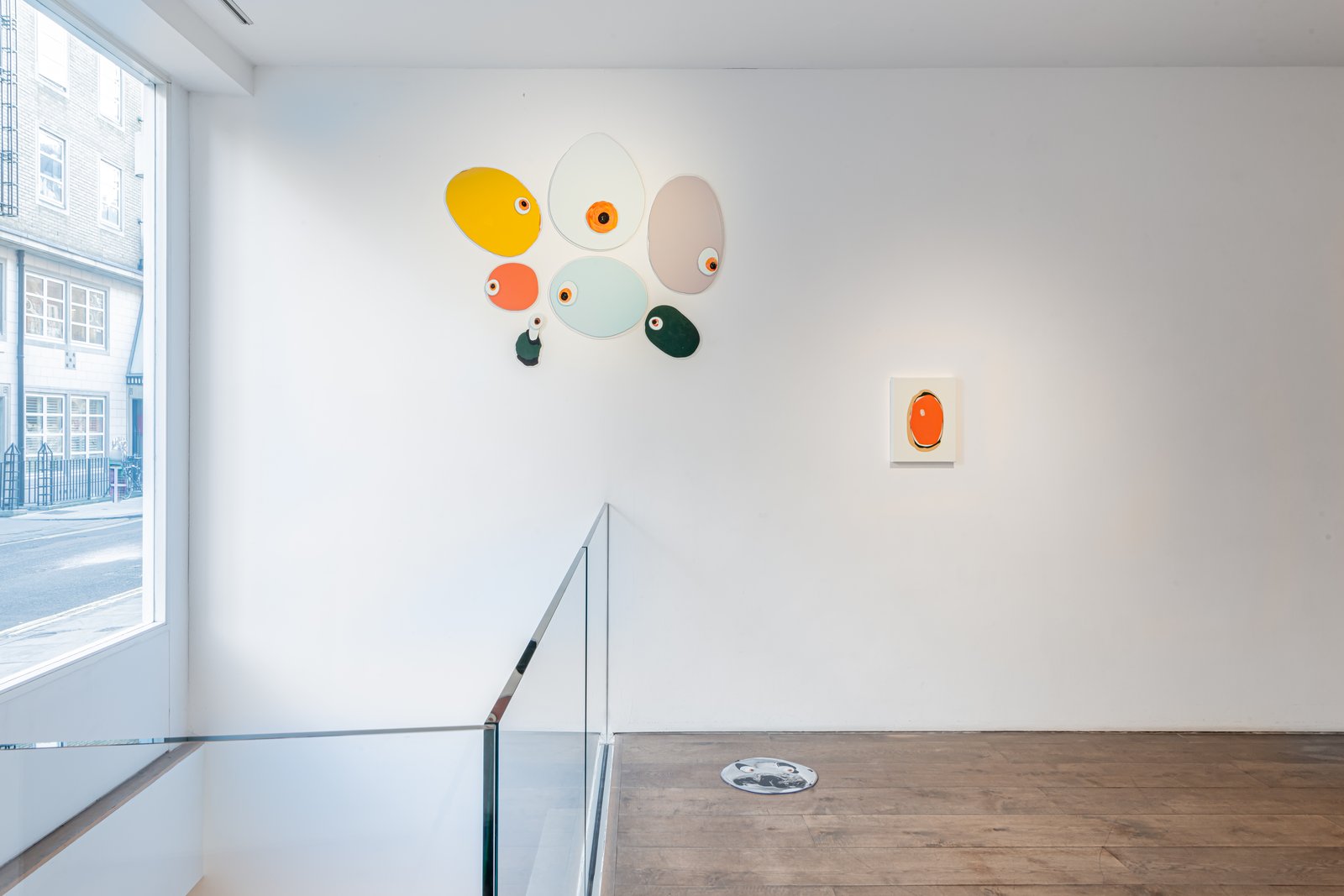
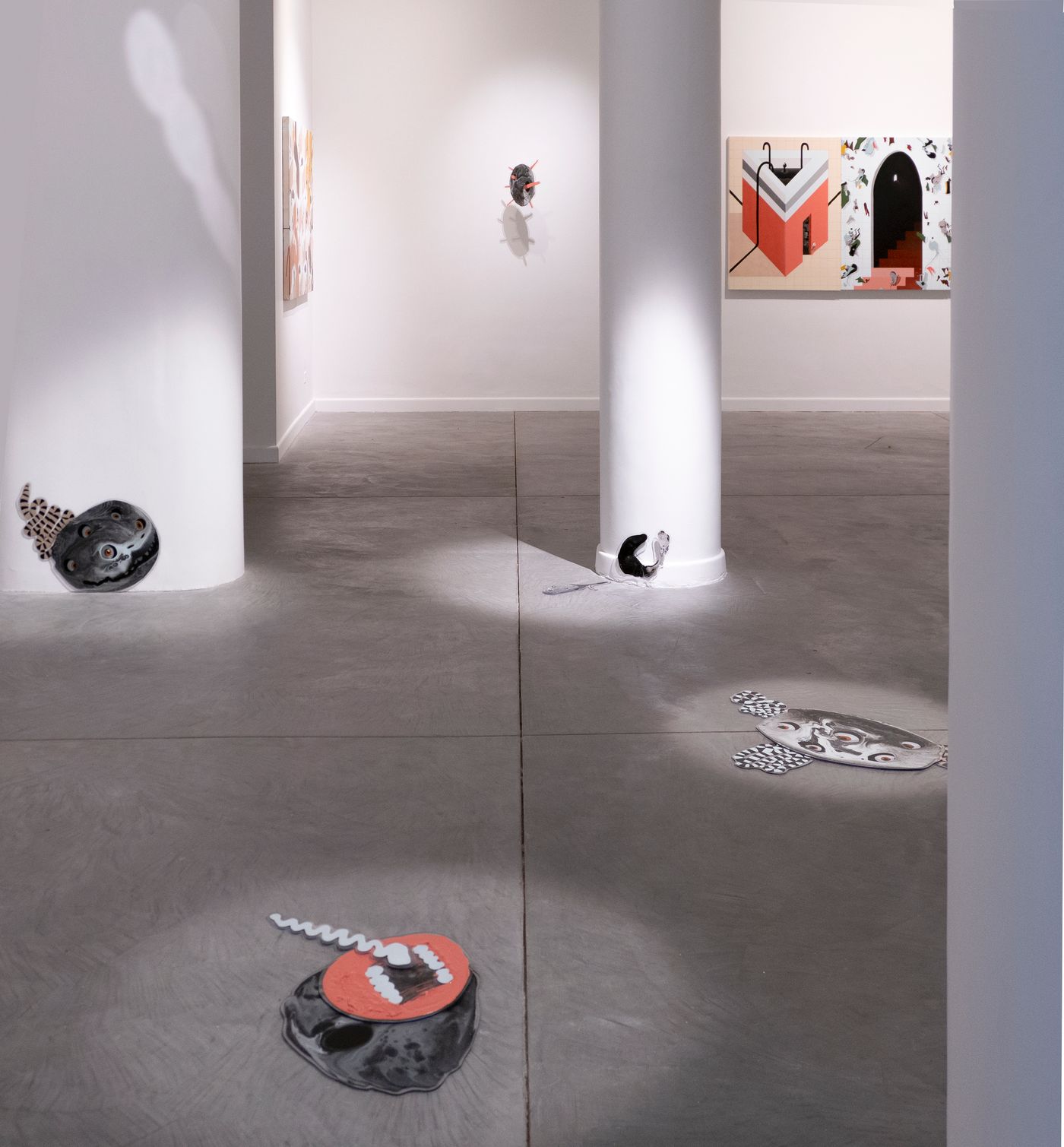
Walking into Waiting for the End to Come, we are met at once by a diptych of two large pieces forming an abyss. The piece is titled Chaos, Yawn, Abyss, three words that share an etymological root. The Greek word “chaos”, χáος, means void, a great yawn, an abyss, that which has no bottom. We see crowds of creatures pulled in by the gravity of some sucking force. An apocalyptic feeling hangs in the air. Individual beings besieged by immense forces. From the glass of the staircase, in the gallery, a protuberance emerges, lowering its head as if sniffing the ground, out of modesty or sheer unawareness. It reads as a biological cross-section, yet at the same time turns the glass into a portal, calling into question the reality of our world, or the unreality of its own.
This is an atmosphere that dominates in times of great change. It is the silence that precedes the cataclysm, present in the apocalyptic visions of Hieronymus Bosch’s paintings, whose echoes are not hard to trace in this work. In his case, the drums of rationalism were shaking a world — his world — that was on its way to extinction. The human spirit was ceasing to contemplate the heights in order to examine what lay below. That shift in perspective set off a convulsion, and those capable of plunging deep enough felt the tremor. When they resurfaced, they did so bruised, with terror in their eyes. It was in that state that Bosch painted: right before the impact.
It is that same fear of the unknown that runs through these pieces, the cosmic dread that emanates from Lovecraft’s stories. Whoever does not feel the world trembling beneath their feet today is not standing upright. Whoever looks up, on the other hand, will feel the vibration of the boards creep up through the soles of their feet and shake their eyes. Haven’t we already seen non-biological intelligence moving with human ease? In Castiella’s own words: “The exponential drift of progress means that, when I close my eyes, the future takes the shape of a medieval bestiary.” We look up, awestruck, and open the ribs of our umbrellas. These creatures seem to have arisen in the same way, stretching their flesh out of the motion of those spills, in shapeless tremors, like the ocean in Solaris.
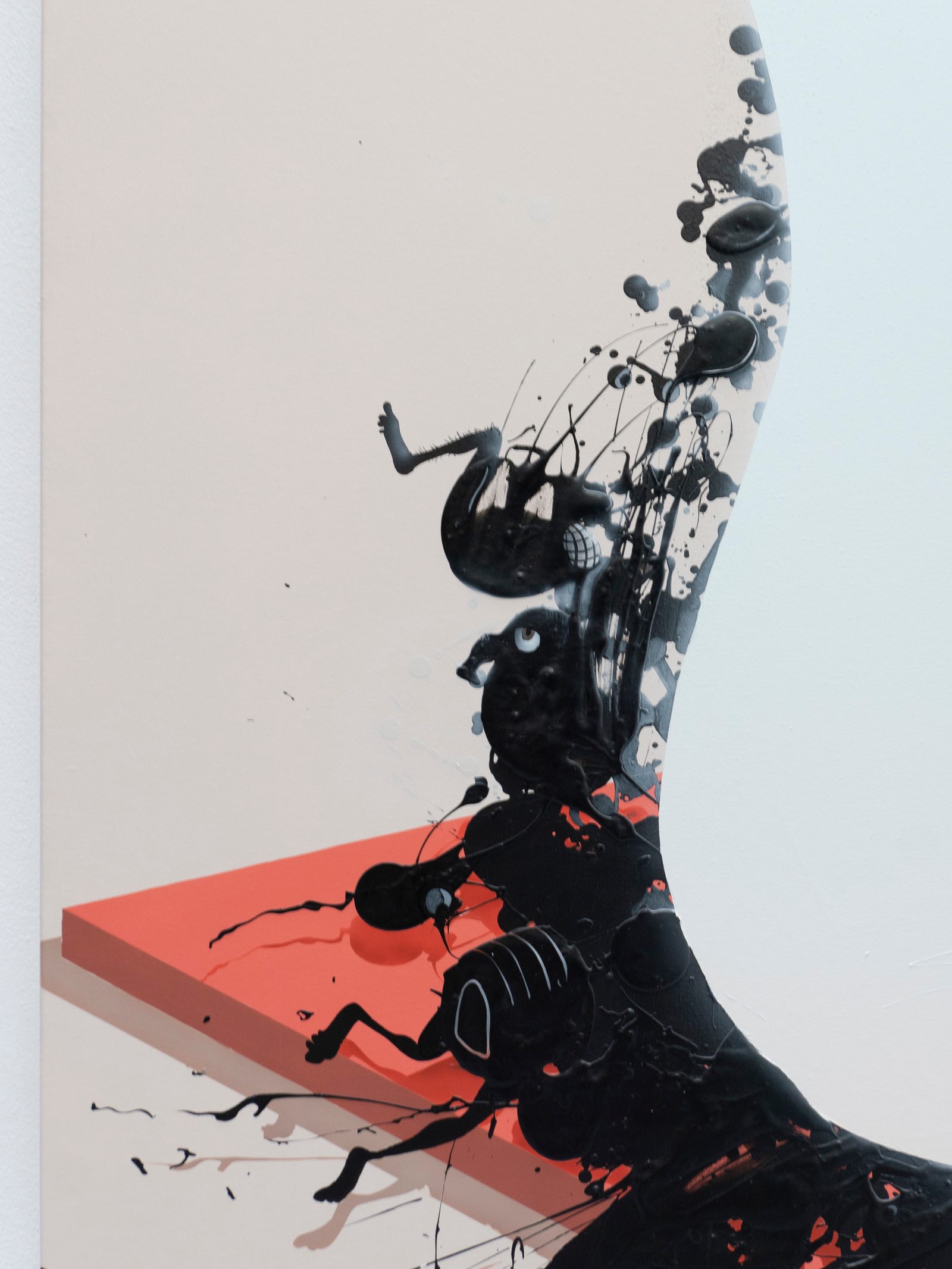
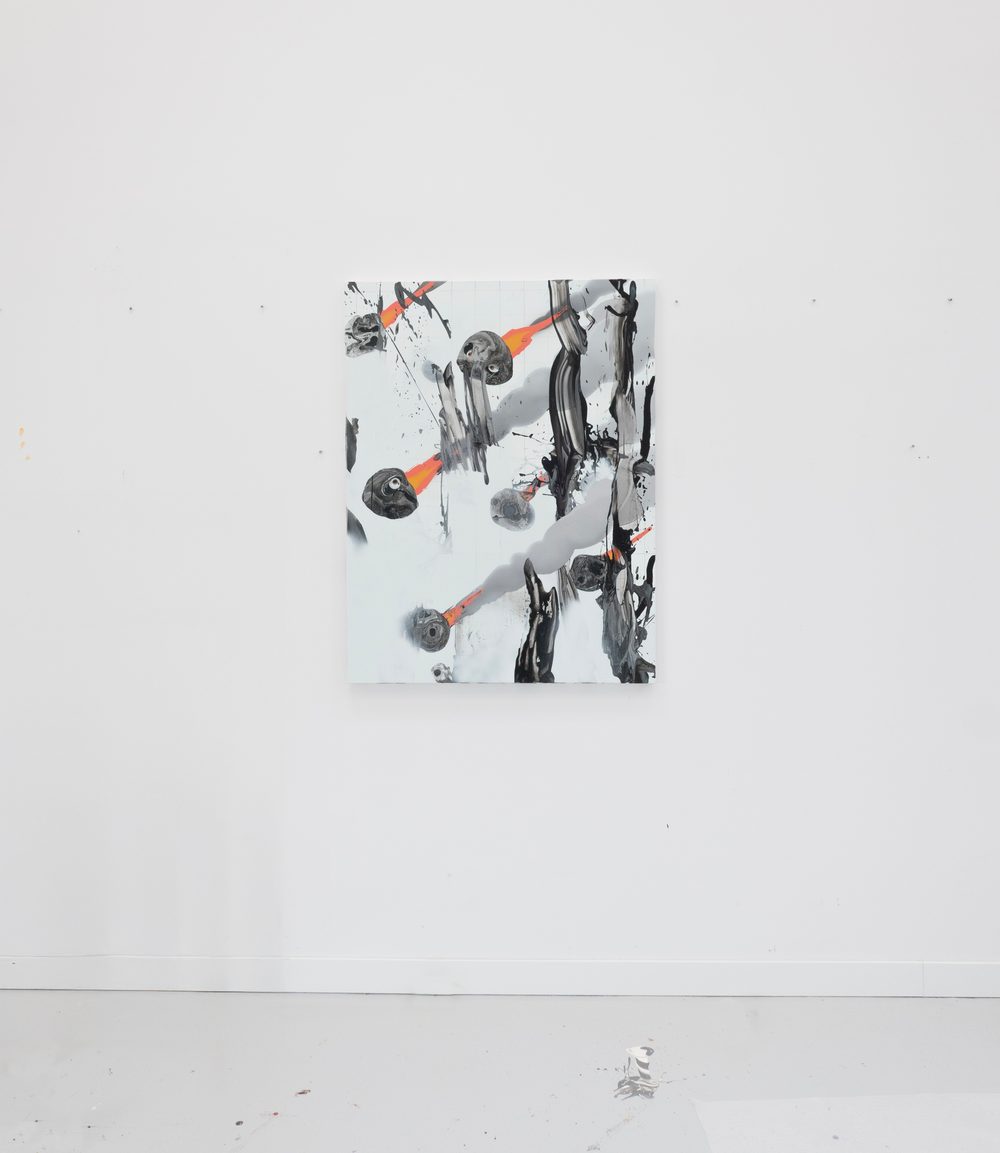
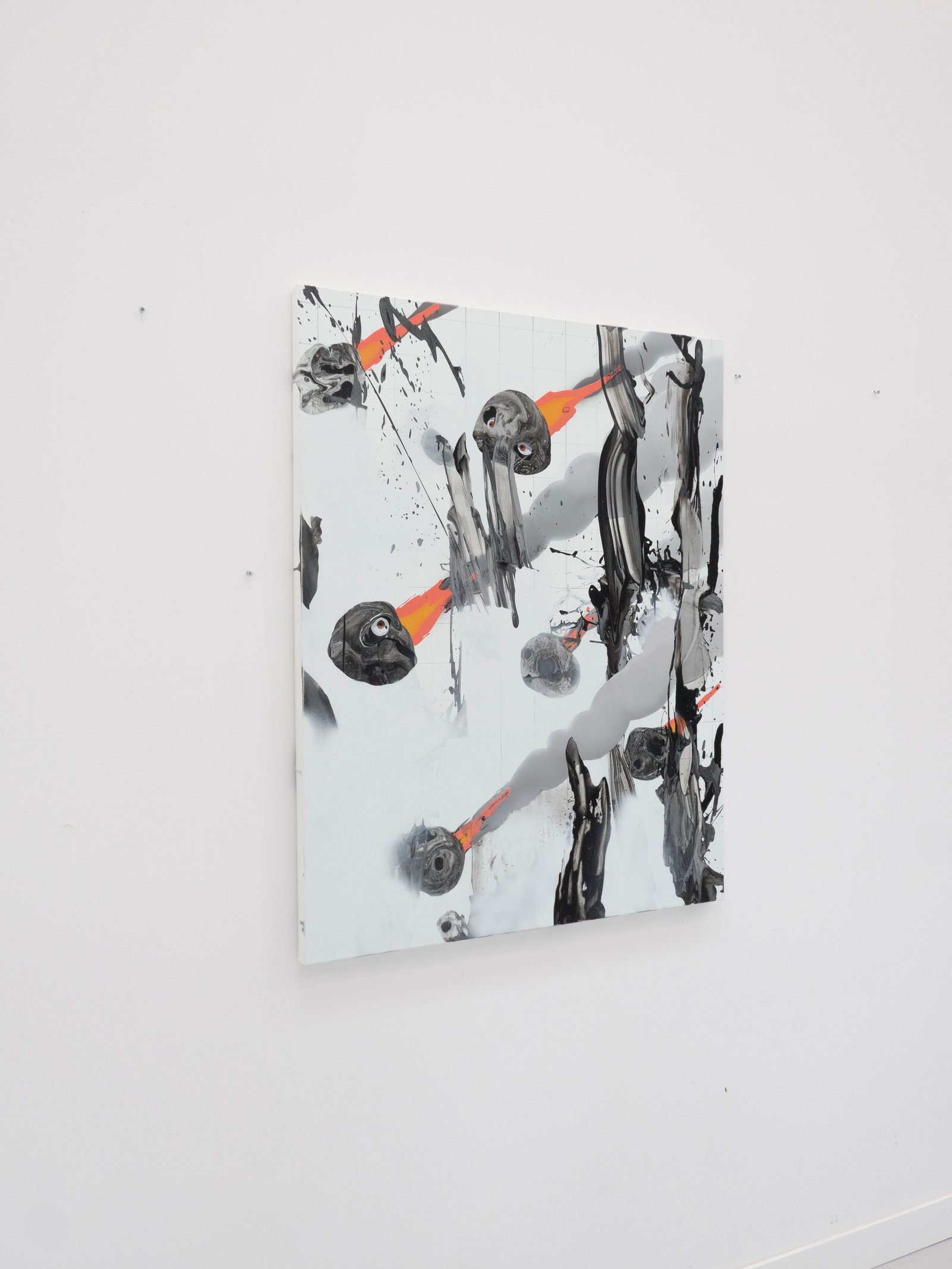
It all begins with the canvas on the studio floor, Castiella tells us. “I pace nervously around the canvas, and once I overcome the vertigo, I pour the paint. What follows is a process of extreme attention: bodies are generated, organic fluids, fields of colour. I let them spread. It is only now that I start to sense forms.” He then places the canvas on the wall and studies the stains, seeking a personal encounter with the creatures: “The first time I see them, it’s like a moment of intimacy. Sometimes they can’t be seen at all. So I leave the canvas in view and wait for them to appear. When it finally happens, it happens all at once.” What began as an act of chance now takes on a role within the composition. The painter tries to draw them out into the light, sculpting them. “I don’t really know what they are,” he answers when we ask. “But maybe if I knew, they’d stop appearing. I have the feeling that when I shout or point at them, I frighten them off.”
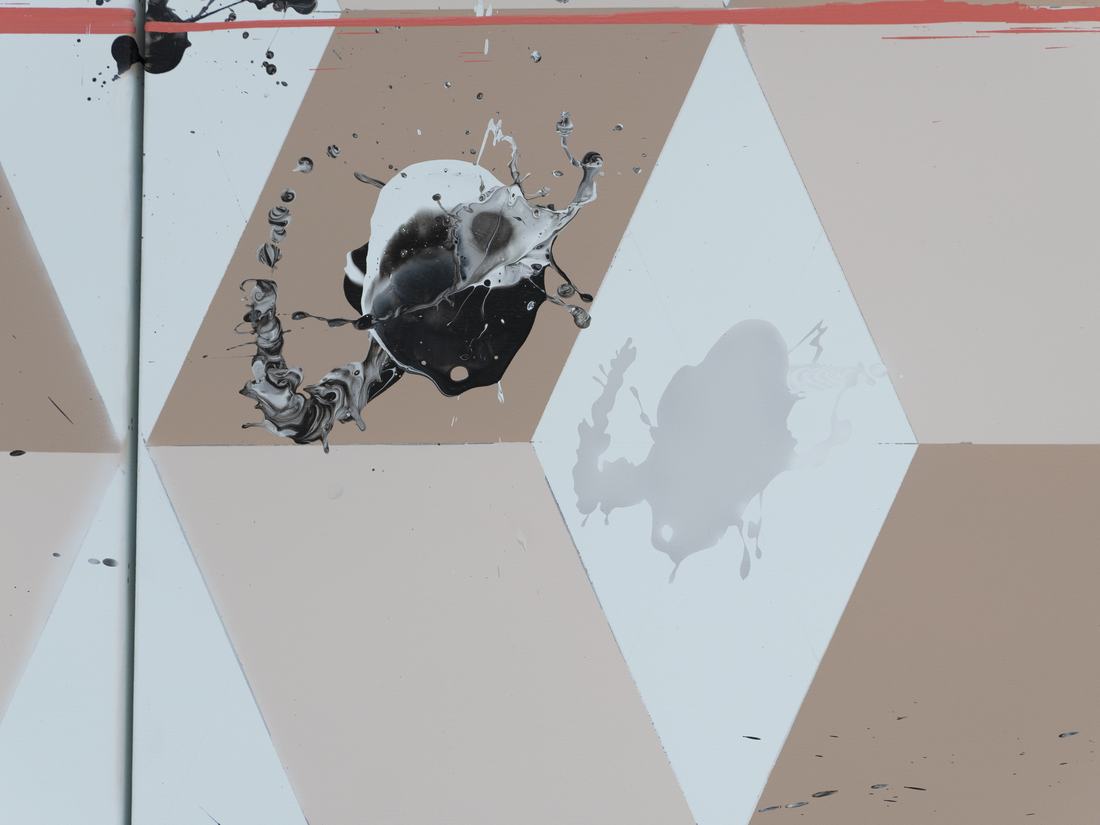
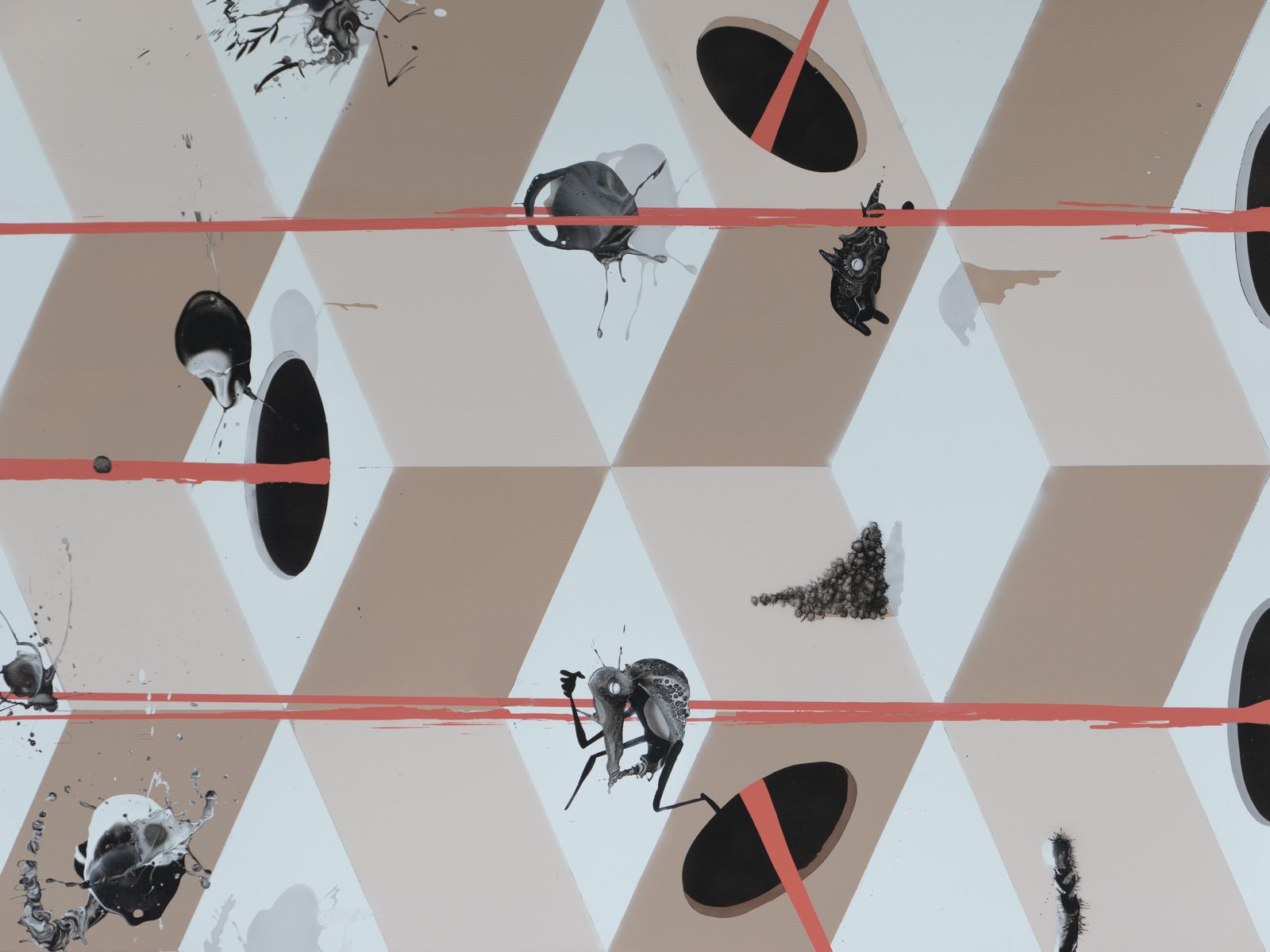
To understand the logic of this world, we must look at the figures as a whole. It is then that the multitude of sounds thickens into the coherence of a language. The flat surfaces, in contrast with the organic plasticity of the creatures, stretch out into isometric grids, as though the emptiness of that uniformity actually answered to something systematic, to a logic, some kind of order. We hear air extractors, systems rebooting, the flicker of cathode lights and digital screens — functional spaces proper to the atmosphere of a video game.
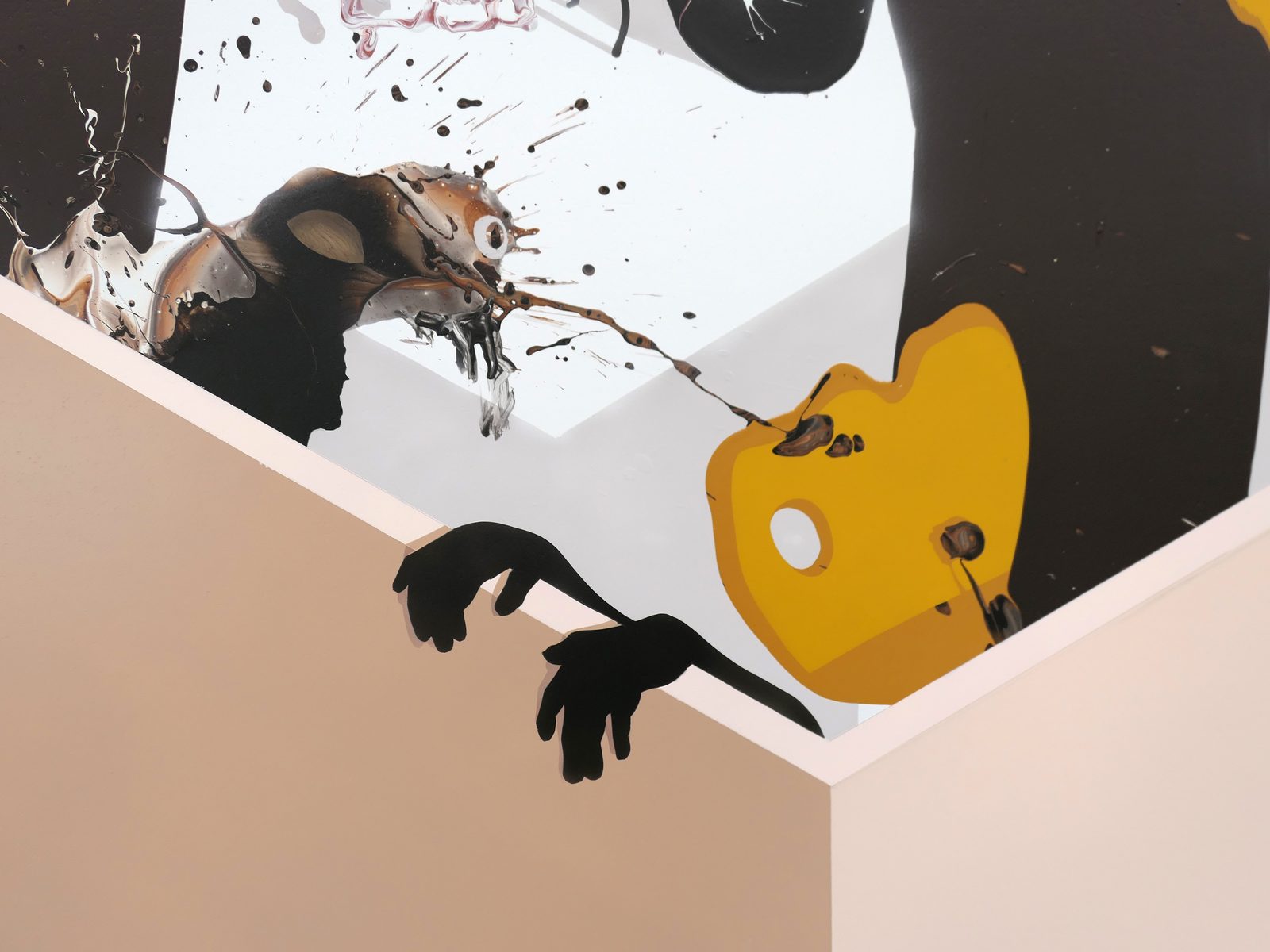
Here, the yawn is a threshold that leads us to the abyss, and the abyss to horror. But it is despair that brings about a radical opening of the self, since it turns every object into a possible handhold. It is only in despair that the new can arise. “The sprouts of pigment open up into arms, eyes, hands…”, says Castiella. “It’s as if they had overcome something that was holding them back, as if something is finally unfolding… and yes, it’s strange. But everything new is strange.” Weariness, chaos, the abyss thus become a space of incubation — a gallery of existential vaults doubling as a greenhouse.
For the Neoplatonic tradition, human imagination is a channel through which matter expresses itself. Imagination is thus the first emanation of God; “his limbs”, through which Beauty is made manifest, understood as the raw matter of the soul. Castiella says he wants to see these entities, apart from his own work. “I want to see them, draw back the curtains, lift the lids. Something has knocked on the door, and I want to see what it is.”
From the artist’s speculation with the material, and the material’s speculation with the artist, arises a process that recalls alchemy as much as science fiction. With the element of chance in the horizontal and the deliberate in the vertical, the painter moves through the history of painting, analysing and cataloguing species, like a biologist. Jose Castiella’s wait, Waiting for the End to Come, is not a static one. Nor are his paintings allegories. In them we find living images, and the conviction that certain entities can be summoned through symbols.
— Ignacio Castiella, “That Which Has No Bottom”
“Es ésta una atmósfera que predomina en épocas de grandes cambios. Es el silencio que precede al cataclismo, presente en las visiones apocalípticas de las pinturas de El Bosco, de quien no es difícil percibir resonancias en esta obra.”
En Waiting for the end to come nos encontramos nada más entrar ante un díptico de dos grandes piezas conformando un abismo. El título de la pieza es Caos, Bostezo, Abismo, tres palabras que comparten significaciones etimológicas. La palabra griega “chaos”, χάος, significa vacío, gran bostezo, abismo, aquello que no tiene fondo. Vemos muchedumbres de criaturas absorbidas por la gravedad de una fuerza aspiradora. Flota una sensación apocalíptica en el espacio. Seres individuales acosados por fuerzas inmensas. Del cristal de la escalera, en la galería, emerge una protuberancia que baja la cabeza, como olfateando el suelo, con pudor o simple inconsciencia. Es una sección biológica pero al mismo tiempo convierte el vidrio en un portal, poniendo en duda la realidad de nuestro mundo o la irrealidad del suyo.
Es ésta una atmósfera que predomina en épocas de grandes cambios. Es el silencio que precede al cataclismo, presente en las visiones apocalípticas de las pinturas de El Bosco, de quien no es difícil percibir resonancias en esta obra. En su caso, los tambores del racionalismo hacían vibrar un mundo, su mundo, que se encontraba en vías de extinción. El espíritu humano dejaba de contemplar lo alto para examinar lo bajo. Ese cambio de perspectiva provocó una convulsión y aquellos capaces de sumergirse lo suficiente sintieron la sacudida. Cuando reaparecieron en la superficie lo hicieron amoratados y con espanto en los ojos. Fue en ese estado en el que pintó El Bosco: justo antes del impacto.
Es el mismo miedo a lo desconocido el que riega estas piezas, el terror cósmico que se desprende de los relatos de Lovecraft. Y es que quien no sienta hoy temblar el mundo bajo sus pies, no está erguido. Quien levante la vista, en cambio, sentirá cómo la vibración de las tablas se le mete por la planta de los pies y le sacude los ojos. ¿No hemos visto ya inteligencia no biológica desplazarse con armonía humana? En palabras de Castiella: “La tendencia exponencial del progreso hace que, cuando cierro los ojos, el futuro tome la forma de un bestiario medieval”. Miramos a lo alto, sobrecogidos, y abrimos el cartílago de nuestros paraguas. Estas criaturas dan la impresión de haber surgido del mismo modo, estirando su carne del movimiento de esos vertidos, con estremecimientos informes, como el océano en Solaris.
Todo comienza con el lienzo en el suelo del estudio, cuenta Castiella. “Merodeo nervioso alrededor de la tela y cuando supero el vértigo, derramo el vertido. Se precipita entonces un proceso de extrema atención: se generan cuerpos, fluidos orgánicos, campos de color. Dejo que se expandan. Es ahora cuando empiezo a intuir formas.” Después coloca el lienzo en la pared y observa las manchas, buscando un encuentro personal con las criaturas: “Cuando las veo por primera vez, es como un momento de intimidad. A veces no se les ve. Entonces dejo el lienzo a la vista y espero que aparezcan. Cuando finalmente sucede lo hacen de golpe”. Lo que fue un acto de azar adquiere ahora un rol en la composición. El pintor trata de sacarlas a la luz, esculpiéndolas. “No sé muy bien qué son”, responde a nuestra pregunta. “Pero quizás si lo supiera dejarían de aparecer. Tengo la sensación de que cuando grito o las señalo con el dedo, las espanto”.
Para entender la lógica de este mundo hemos de mirar el conjunto de las figuras. Es entonces cuando la multiplicidad de sonidos se espesa con la coherencia de una lengua. Las superficies planas, en contraste con la plasticidad orgánica de las criaturas, se extienden en cuadrículas isométricas, como si el vacío de aquella uniformidad respondiera en realidad a algo sistemático, a una lógica, alguna especie de orden. Oímos extractores de aire, reinicios operativos de sistemas, parpadeos de luces catódicas y pantallas digitales. Espacios funcionales propios de la atmósfera de un videojuego.
El bostezo es aquí un umbral que nos lleva al abismo y éste al horror. Pero es la desesperación la que provoca una apertura radical del ser, ya que convierte cada objeto en un posible agarradero. Es sólo en la desesperación donde puede surgir lo nuevo. “Los brotes del pigmento se abren en brazos, ojos, manos…”, dice Castiella. “Es como si hubieran superado algo que los retenía, algo por fin se despliega… y es raro, sí. Pero todo lo nuevo es raro”. El hastío, el caos, el abismo, se convierten así en un espacio de incubación. Una galería de bóvedas existenciales con funciones de invernadero.
Para la tradición neoplatónica la imaginación humana es un canal a través del cual se expresa la materia. Es así la imaginación la primera emanación de Dios; “sus miembros”, a través de los cuales se manifiesta la Belleza, entendida como materia bruta de alma. Castiella dice que quiere ver esas entidades, al margen de su obra. “Quiero verlas, correr las cortinas, abrir las tapas. Algo ha tocado la puerta y quiero ver qué es”.
De la especulación del artista con el material y de la especulación del material con el artista surge aquí un proceso que lo mismo recuerda a la alquimia que a la ciencia ficción. Con el componente azaroso de la horizontal y el intencionado de la vertical, el pintor recorre la historia de la pintura, analizando y catalogando especies, como un biólogo. La espera de Jose Castiella, Waiting for the end to come, no es estática. Sus pinturas no son alegorías tampoco. Encontramos en ellas imágenes vivas, y la convicción de que ciertas entidades se pueden invocar por medio de símbolos.
— Ignacio Castiella, “Lo que no tiene fondo”
[Texto pendiente: breve descripcion del proyecto "Atrocity Exhibition".]
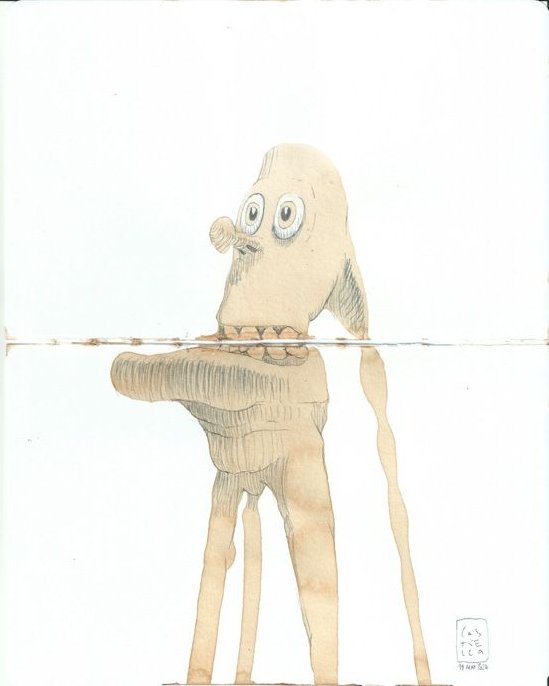
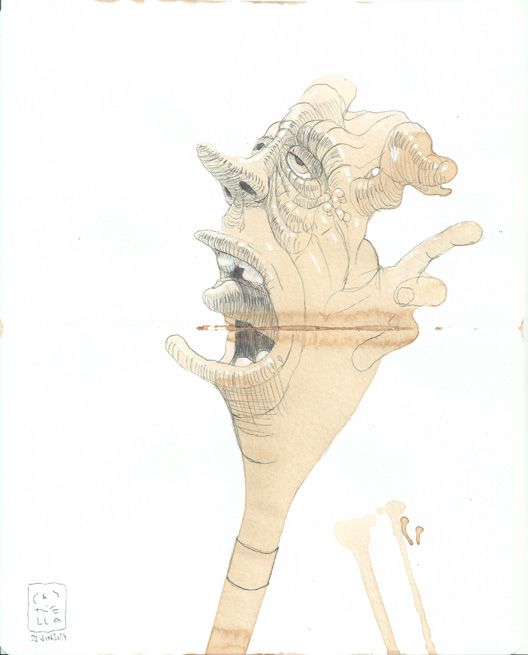
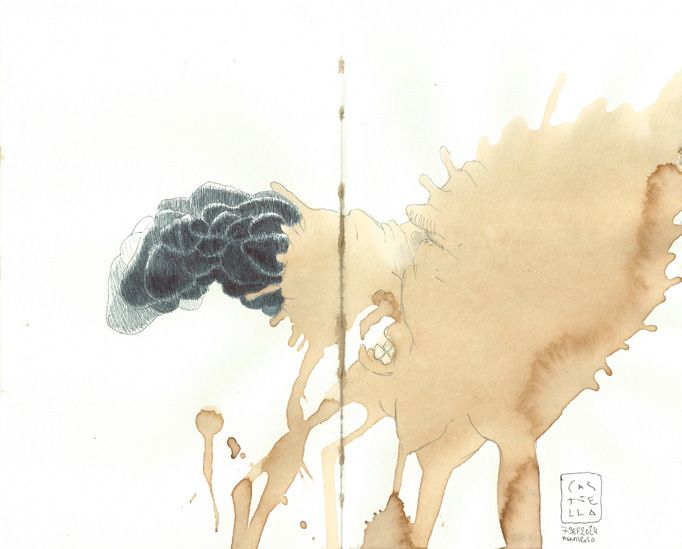
A diary running alongside the work on canvas: notes in coffee and ballpoint pen on paper, dated one by one, where the creatures first appear before they grow into the larger pieces.
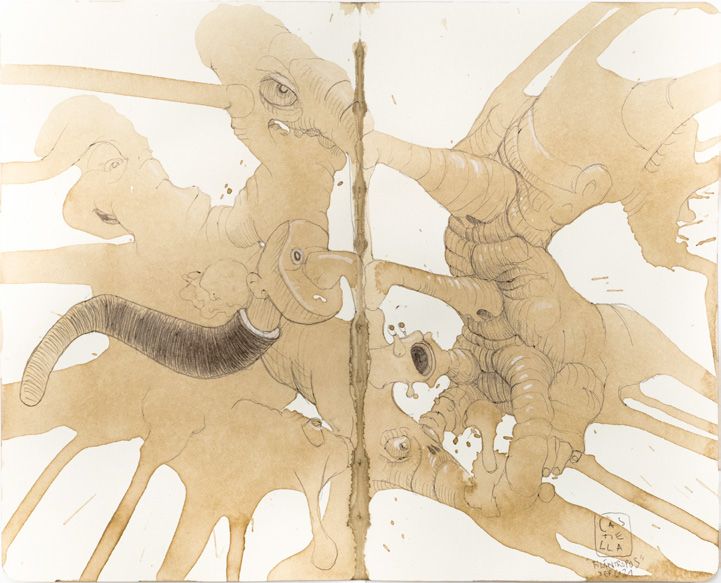
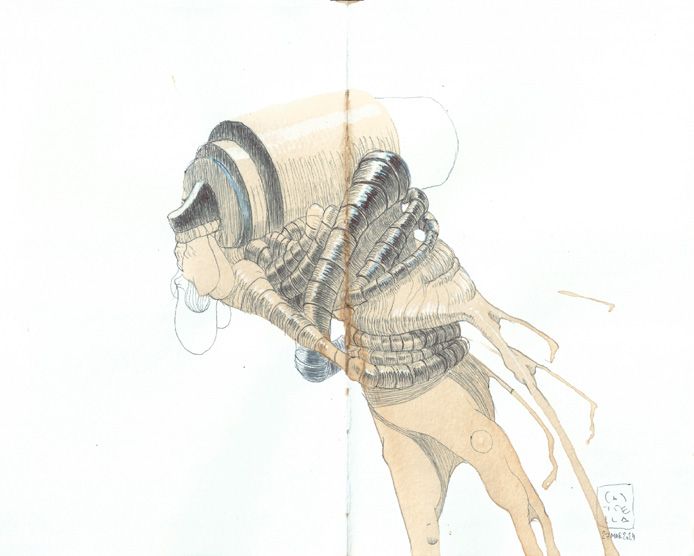
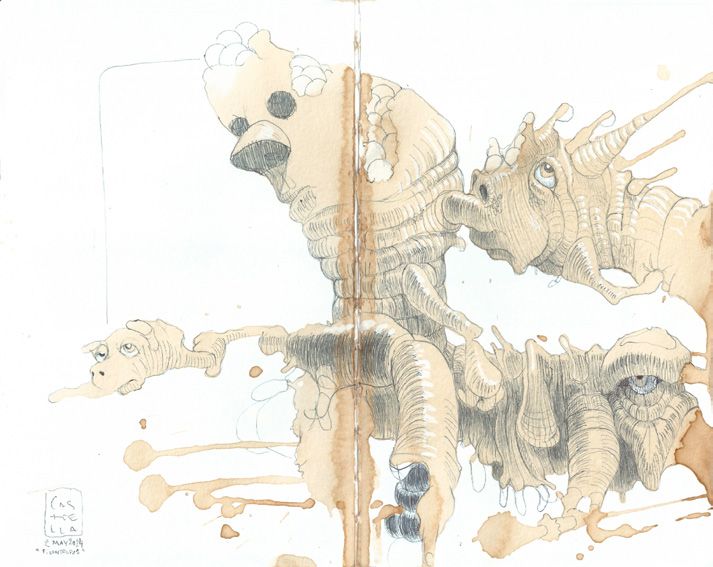
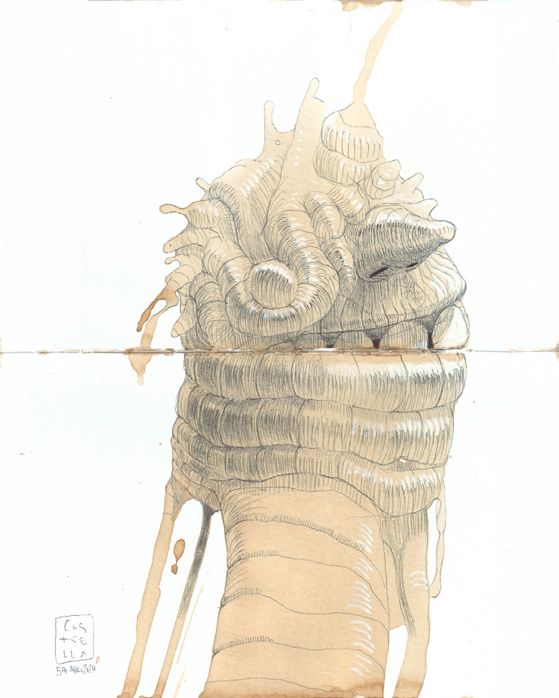
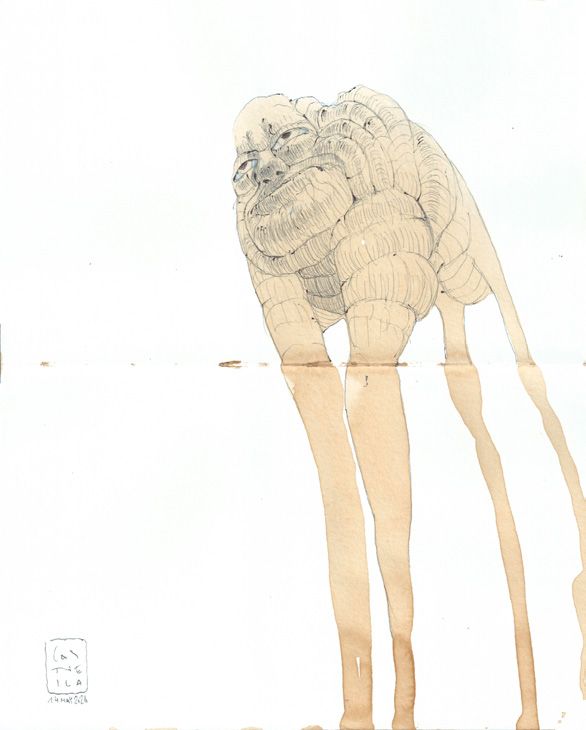
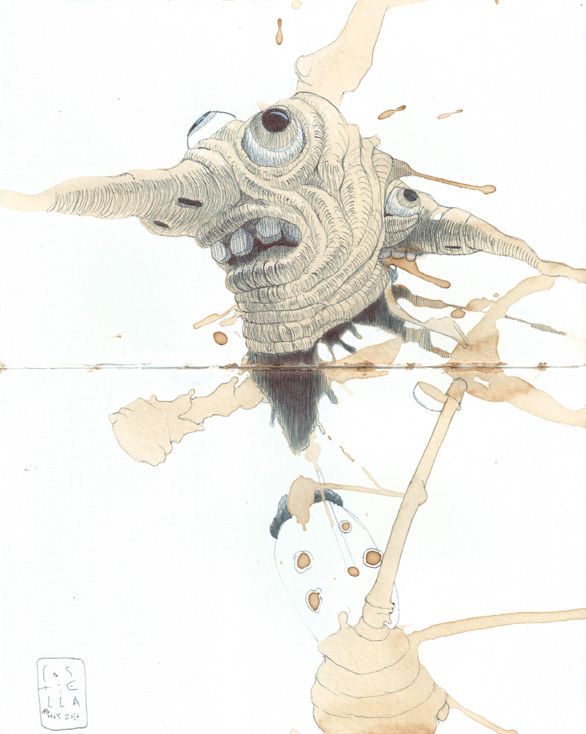
A look into the studio and the process behind the paintings.
Selected texts, essays and interviews related to the work.
El «arte» surge a partir de la crisis de la vieja imagen y su nueva valoración como obra de arte en el Renacimiento, y se encuentra asociado a la idea del artista autónomo y a la discusión en torno al carácter artístico de su invención.
Hans Belting
Había una vez en el país de Us un hombre llamado Job: hombre cabal, recto, que temía a Dios y se apartaba del mal.
Job I, 1
I.
Hay un momento trascendental en la historia de la cultura en el que las imágenes sagradas se transformaron en obras de arte. No es posible fecharlo, aunque sabemos que sucedió al final de la Edad Media y, tal como señala Belting en su libro Imagen y culto, a lo largo de ese camino hay una serie de hitos que van detallando la evolución de la mera representación hacia la creación artística más compleja. Convirtiéndose la pintura en el eje central de la colosal maquinaria desplegada en el mundo occidental para el desarrollo artístico a partir del Quattrocento.
No se trataba de una obra enteramente creada por la razón. En esta búsqueda del ideal artístico también estuvo presente el sentido místico de su tiempo. Los artistas eran en su gran mayoría creyentes que debían parte de su vigor creativo a una fe encendida que los llevó a ejecutar aquellas obras que aún nos dejan sin aliento. No entenderíamos la obra de Giotto, Masaccio o Piero della Francesca sin su entereza espiritual. Del mismo modo muchos de esos artistas vivían también bajo el temor del fin de los tiempos y se sentían incapaces de enfrentar los cambios provocados por un periodo incomprensible que habría de ser conocido más adelante como el Renacimiento.
II.
En un momento de cambios radicales como el que vivimos la pintura vuelve a ocupar un lugar predominante en el escenario del arte. Por supuesto reflejando la encrucijada histórica, social y cultural en la que se enmarca y que no puede dejarnos indiferentes. Por eso el nombre de José Castiella (Pamplona, 1987) adquiere un significado especial. Porque es un artista que se nutre de la vieja tradición pictórica de la que hemos hablado para enfocarse en un presente que, de pronto, ve renacer las amenazas apocalípticas que nos ha legado la Guerra Fría. Aplicando a su narrativa el lenguaje de la ciencia ficción, el cómic y los juegos de video sin perder de vista la antigua iconografía de los grandes frescos o de las infinitas predelas esparcidas hoy por todos los museos del mundo.
La pintura de Castiella exige leerse en diferentes planos. Comenzando por una aparente armazón arquitectónica que propone diferentes niveles espaciales que, de plano en plano, nos lleva de una realidad a otra habitada por colores intensos, formas aparentemente abstractas y alguna reminiscencia de las criaturas de los maestros del Fin del Mundo. Hay humor en su obra, temor también. Y en ese sentido se descubre en su dimensión humana. Se impone así sobre un modelo de artista contemporáneo enfocado en el discurso olvidando, muchas veces, la fe en el arte mismo. La mística de la creación.
6.522. Hay, ciertamente, lo inexpresable, lo que se muestra a sí mismo; esto es lo místico.i
Un crujir de la madera, una sombra que se mueve tras la ventana o el montón de ropa sobre la silla son sólo esto bajo la luz de la razón, sin embargo, hay ocasiones en las que juraríamos haber visto algo, o al menos haberlo sentido. Ciertos fenómenos adquieren en ocasiones vida propia, como una realidad paralela que se manifiesta ante quien la contempla, como los seres de las pinturas de José Castiella. Estos entes se presentan al artista como fruto de una investigación y observación de la propia pintura, no en un efecto de pareidolia sino en un tratamiento narrativo de la mancha. En su obra, Castiella juega con el azar y la exactitud a partes iguales para cuestionar nuestra cosmogonía, nuestro modo de entender lo que nos rodea, recuperando elementos de la cosmovisión cristiana que tanto nos ha influido. Una revisión moderna y personal de esta historia que el autor acerca al imaginario de la contemporaneidad con el uso de escenarios más propios de la ciencia ficción, creando un mundo surrealista en el que el expresionismo habita el estructurismo.ii
En esta cosmovisión, y en nuestra episteme general, Dios es el creador de todo, él nos hace a su imagen y semejanza y por ende nosotros somos subcreadores, portadores de una creatividad dada. Entorno a este concepto de subcreación se erige toda la antropología y teología literaria de Tolkien, sin duda uno de los padres de la fantasía de nuestra era, siendo este concepto de subcreación algo que vemos reflejado en la obra y sobre todo en el discurso de Castiella. Estos mundos de fantasía, los de Castiella o los de Tolkien, son reales pero sencillamente no están en nuestro registro; penetrar en ellos supone apuntar a la verdad, entrar en una experiencia de un tipo de belleza casi mística, trascendente y evocadora con un toque de nostalgia, como cuando echamos de menos algo que aún no hemos conocido. Esa subrealidad es traída a escena por Castiella con esa mezcla que tan bien hacen los Coen en su cine, una caricatura de la realidad entre lo siniestro y lo tierno. Este artista, como cualquier verdadero autor de subcreación, no tiene un plan concreto a la hora de ejecutar su proyecto pues es la verdad la que toma las riendas de una imaginación que se deja llevar por esos submundos que habitan en y entre nosotros. “La obra va primero” sentencia Castiella, “no me gusta estructurarlo todo, quiero dejar espacio a la creación, al azar… Primero va la obra”. Esto es algo que ocurre a quienes saben escuchar, a quienes saben observar y sentir lo que la realidad nos dice, ese inexplicable de Wittgenstein que no podemos describir pero está. Puede ser la pintura o puede ser Dios pero hay algo que guía a estos artistas, les habla, como la llama imperecedera de Ilúvatar. El azar ordenado en perfectas perspectivas no deja de hablar a Castiella que como Escher, encuentra en la conciencia de su presencia una suerte de paz interior.iii
Con sus propios códigos narrativos y estilísticos, José Castiella nos adentra en este universo de azar y exactitud matemática. El manifiesto surrealista que ahora cumple su primer centenario, anunciaba la experiencia artística como una aventura para el alma, una aventura espiritual. Con Mi Job, os invitamos a recuperar la fe, a ver más allá de la fría realidad y a disfrutar de lo que no se puede explicar.
i. L. Wittgenstein, Tractatus Logico-Philosophicus, Alianza, Madrid 1973, p. 203.
ii. “El estructurismo explora ahora la organización visual-táctil del color real y de la forma en el espacio y la luz (…) El arte estructurista ha reinstaurado lo tangible y lo táctil como un arte visual-táctil. No quiero decir que la percepción de un relieve estructurista se logre con las manos o el sentido del tacto, sino más bien que el relieve es cenestésicamente táctil”. “Notes on structurist process”, en Hill, A., Data: Directions in art, theory and aesthetics, Londres, Faber and Faber, 1969, p. 196.
iii. “La lógica de los fenómenos que hay a nuestro alrededor, orden, regularidad, repeticiones cíclicas y renovaciones, ha comenzado a hablarme cada vez con más intensidad en todo momento. La conciencia de su presencia me trae reposo y me brinda apoyo: En mis grabados, intento dar testimonio de que vivimos en un mundo hermoso, ordenado, y no en un caos sin normas, como parece algunas veces. A menudo, mis temas son muy festivos también. No puedo dejar de perder el tiempo con nuestra convicción incontestable. Es un placer, por ejemplo, mezclar deliberadamente dos y tres dimensiones, planas y espaciales, y ridiculizar la gravedad.” M.C. Escher en su discurso al recibir el Premio de Cultura de la Ciudad de Hilversum, 5 de marzo de 1965.
Una nueva generación ha retomado la pintura —un eterno retorno— con una actitud desprejuiciada y expansiva. La emplean como un medio que cuestiona las imágenes y lenguajes pictóricos establecidos, desde un lugar que nunca ha dejado de ocupar, siempre dispuesta a emerger por su propia naturaleza de densidades líquidas y matéricas.
José Castiella trabaja una obra excéntrica en una amalgama de influencias tan dispares como El Bosco, J. Pollock, la action painting, los videojuegos, la ciencia ficción y el anime. Describe paisajes cerebrales o futuristas, espacios obsesivos, geometrizados, a medio camino entre ensoñaciones infantiles y las pantallas gráficas de interfaz multimodal; son lugares poblados de personajes inquietantes y fluidos. Utiliza la pintura con cierto espesor, de la que surgen sus figuras aleatorias de apariencia biomorfa y anaplástica. El azar interviene de manera significativa en sus creaciones; la pintura misma va definiendo el contenido a medida que trabaja desde manchas y salpicaduras previas, en un proceso de hallazgos y casualidades surrealizantes. Su trabajo, meditado y paciente, se define desde una narrativa pseudo figurativa.
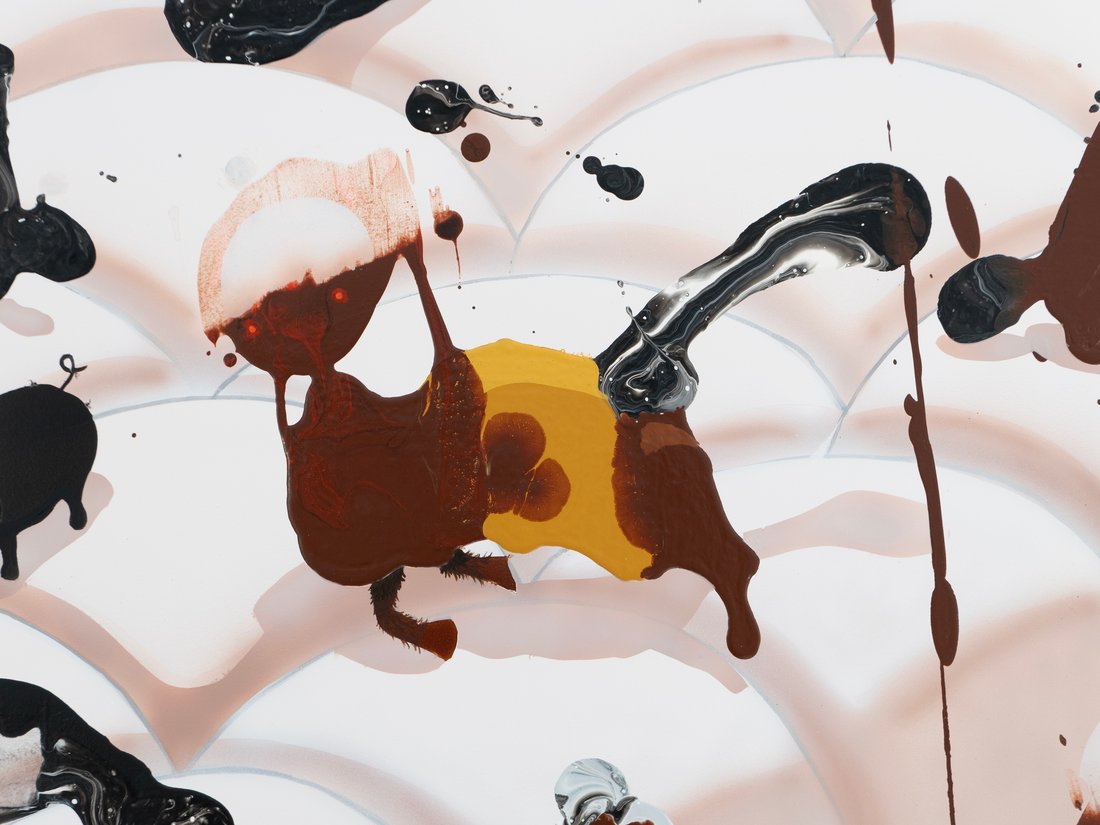
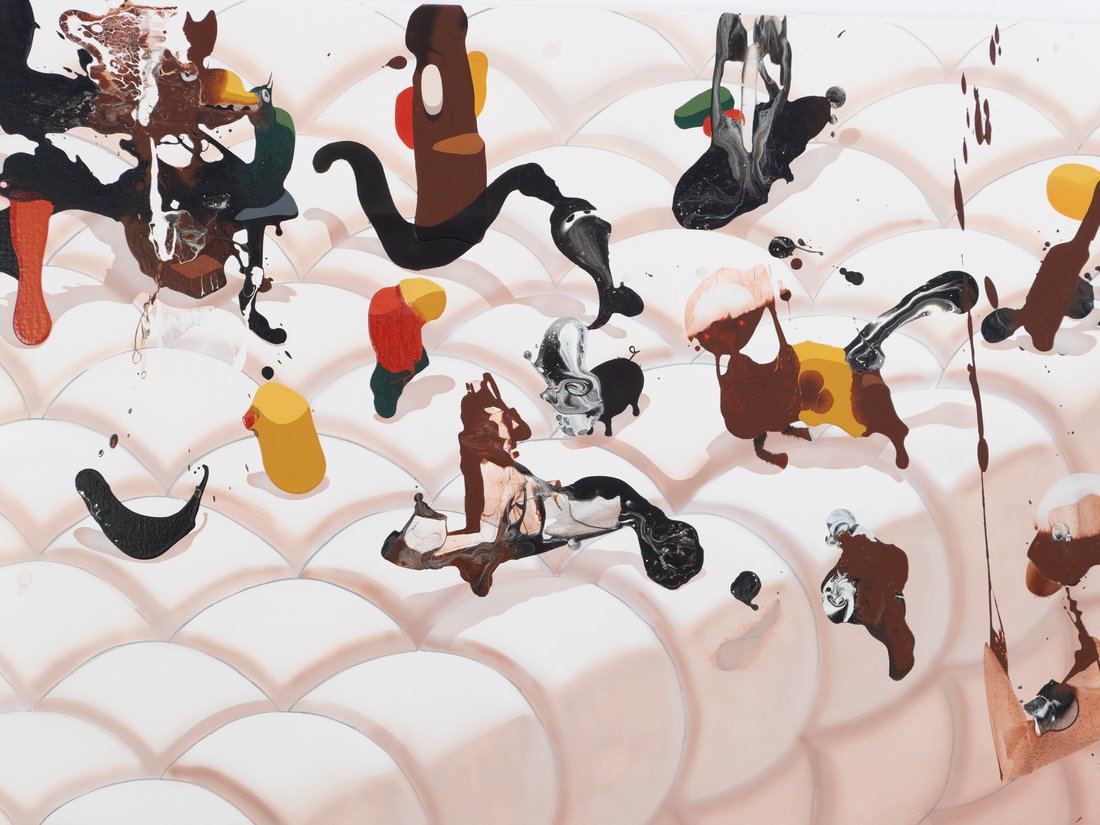
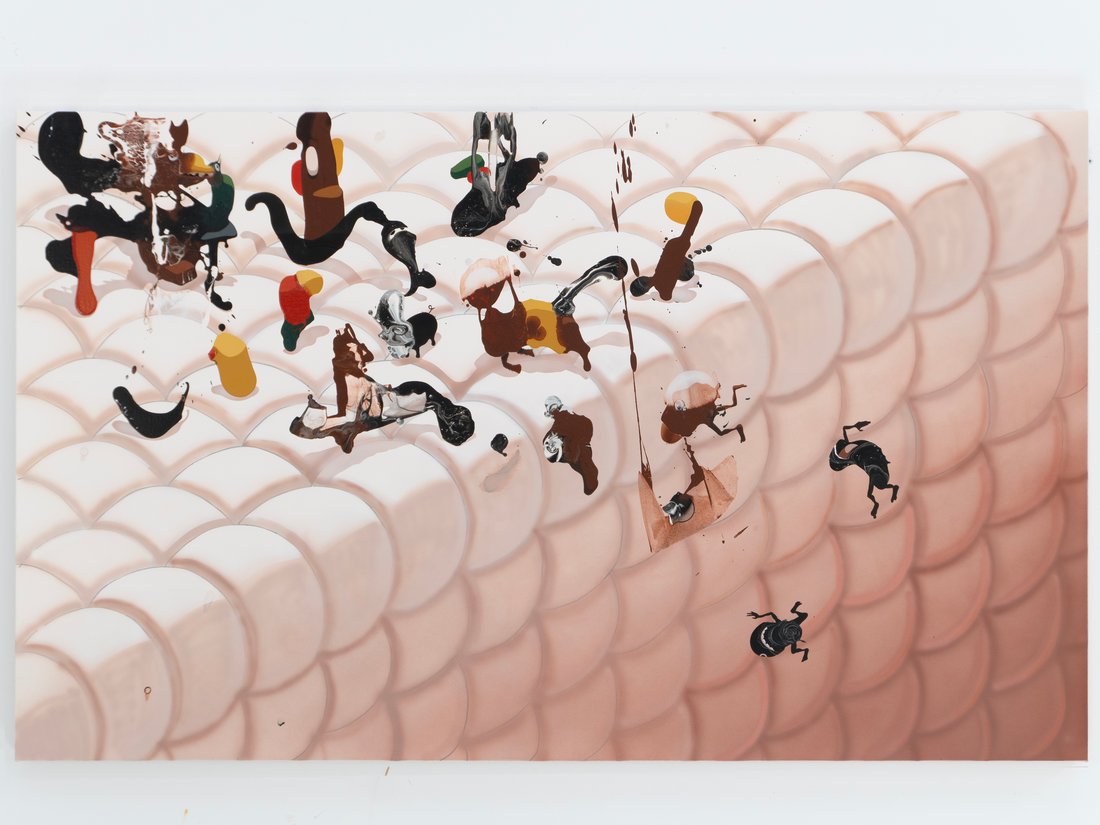
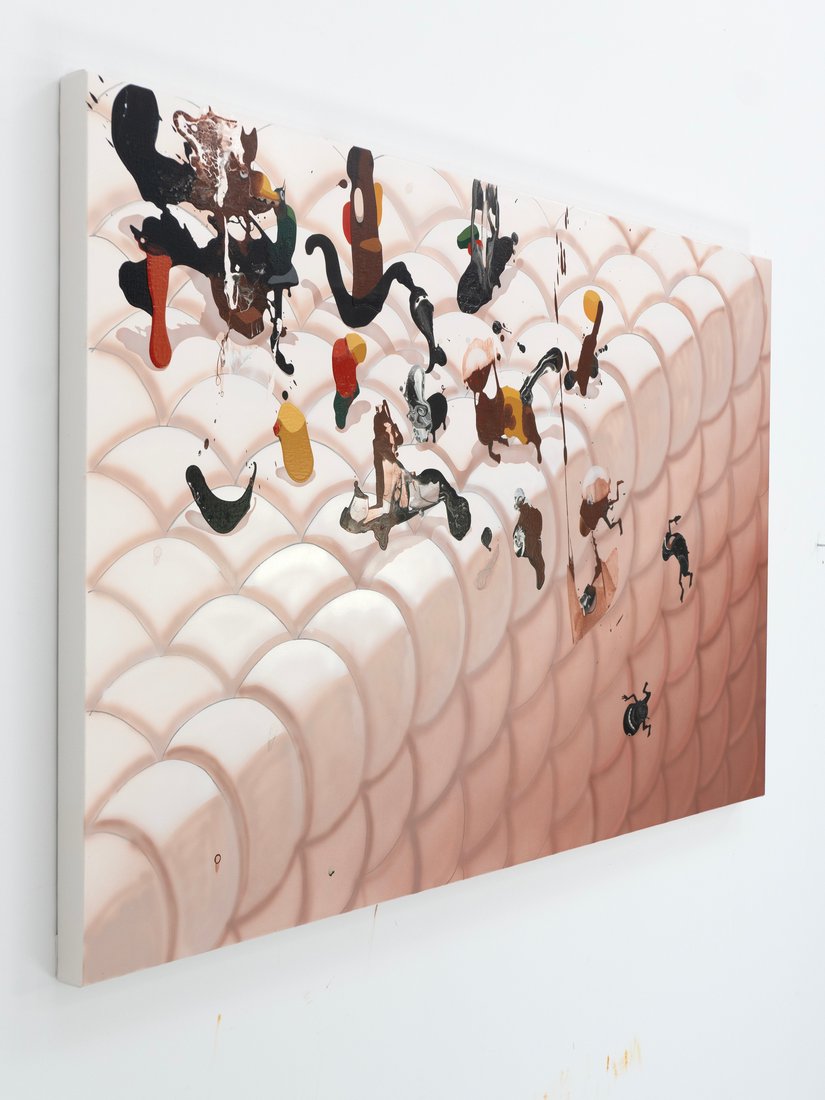
Sobre Abismo acolchado
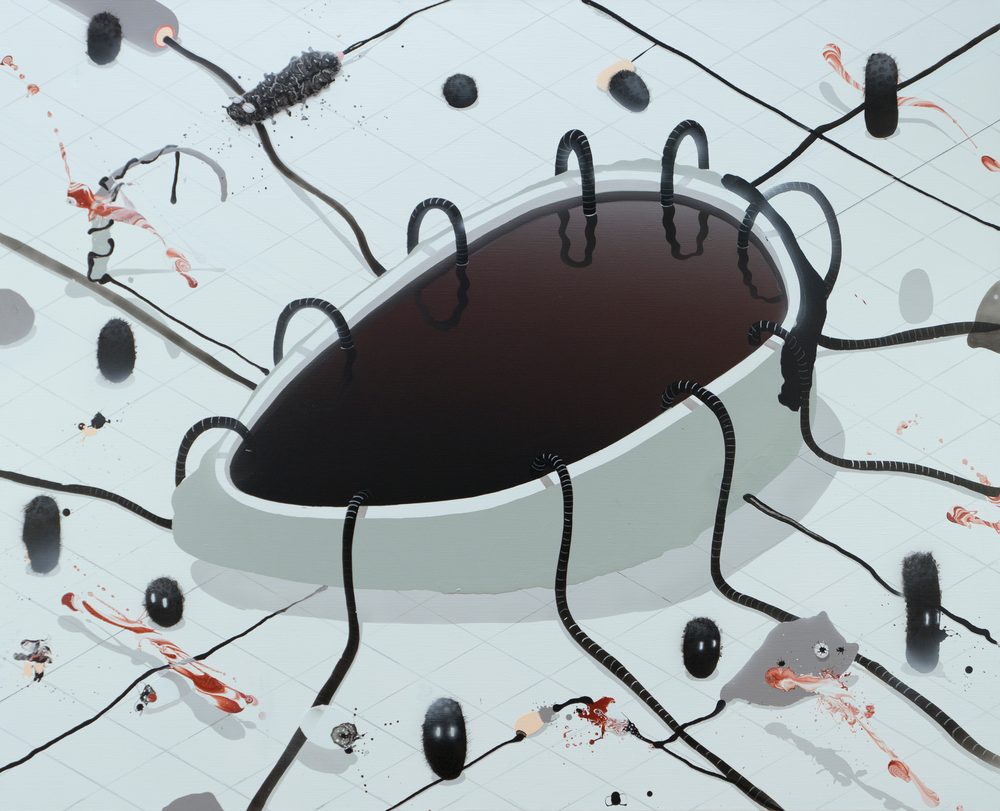
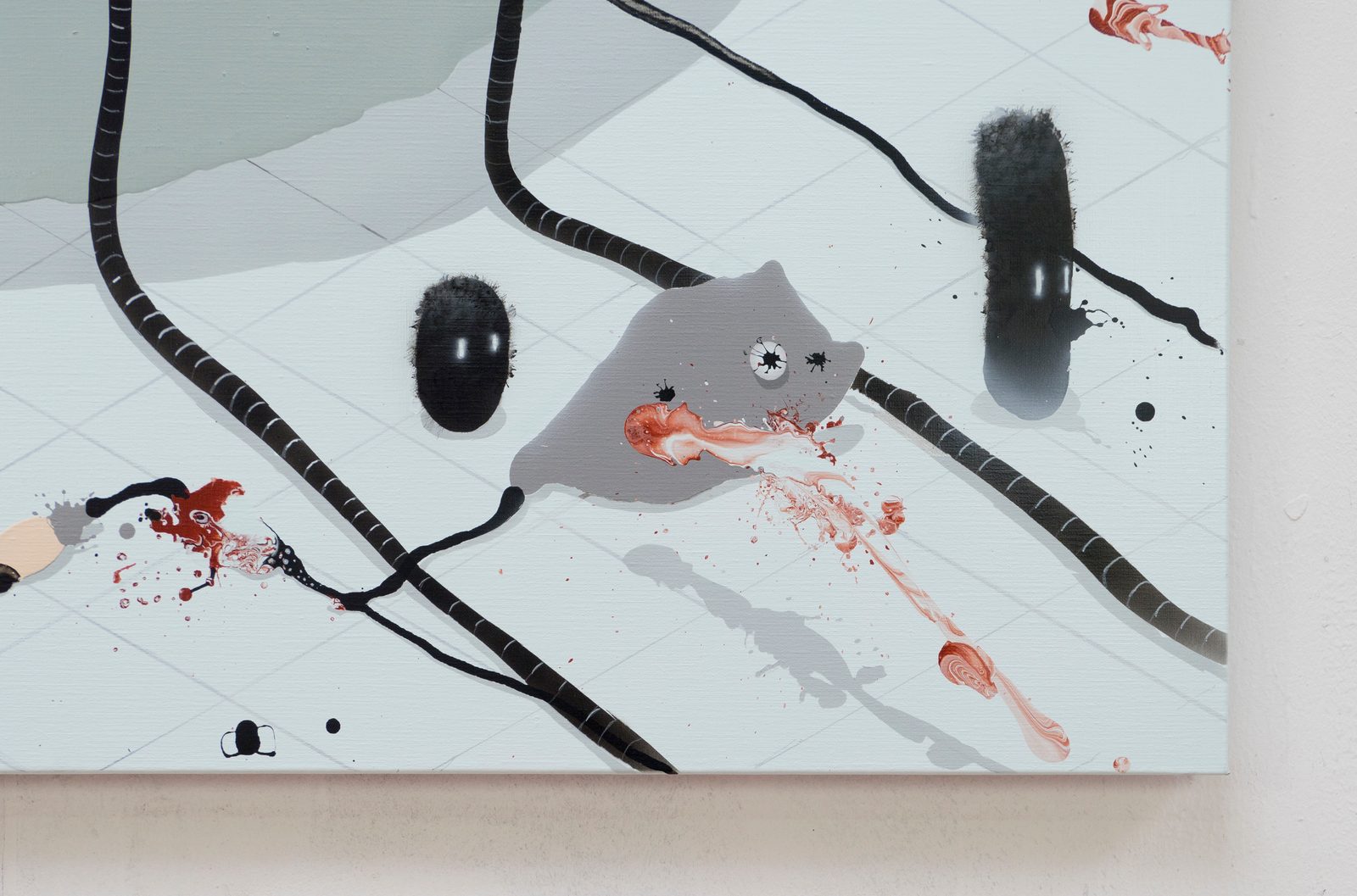
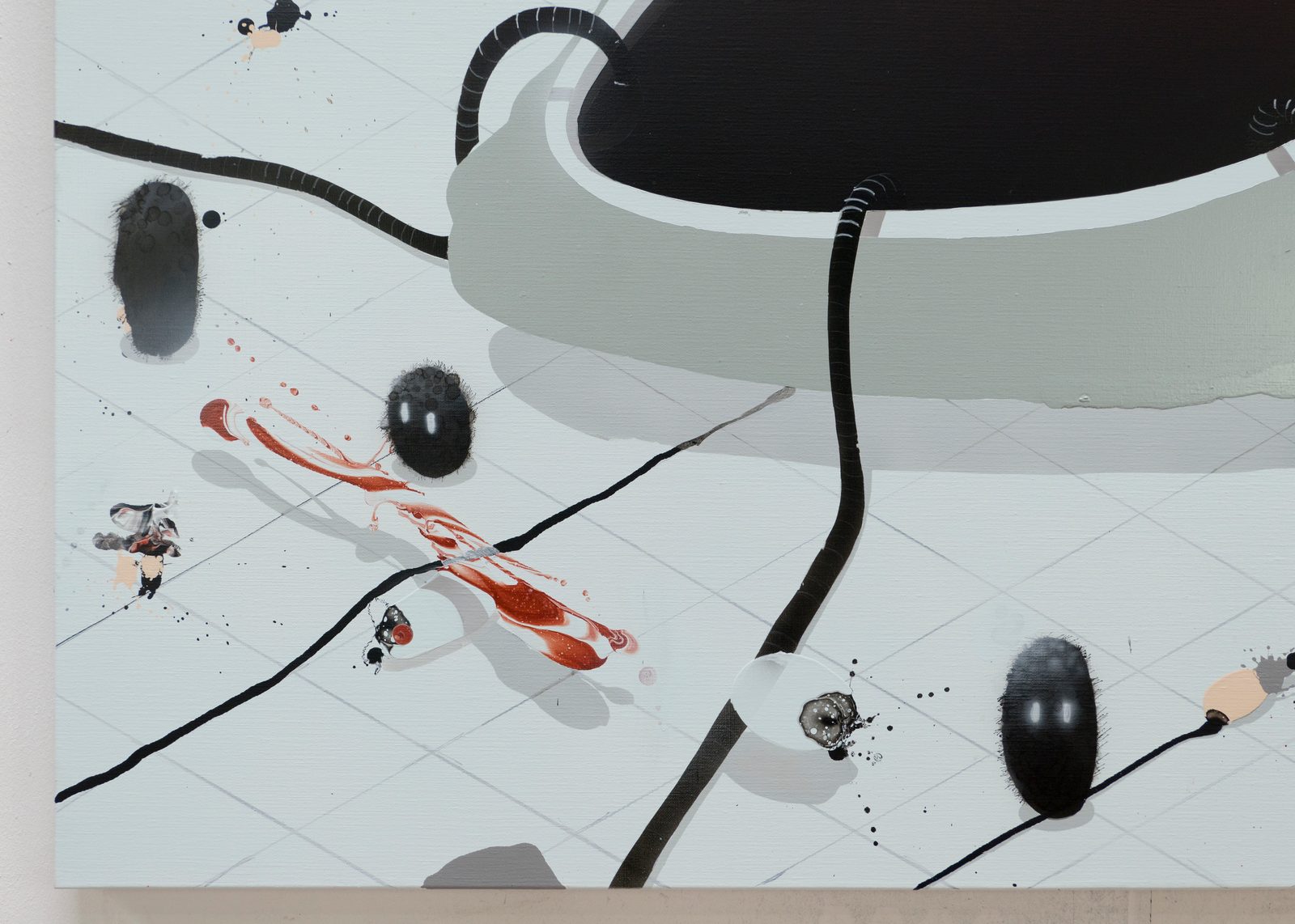
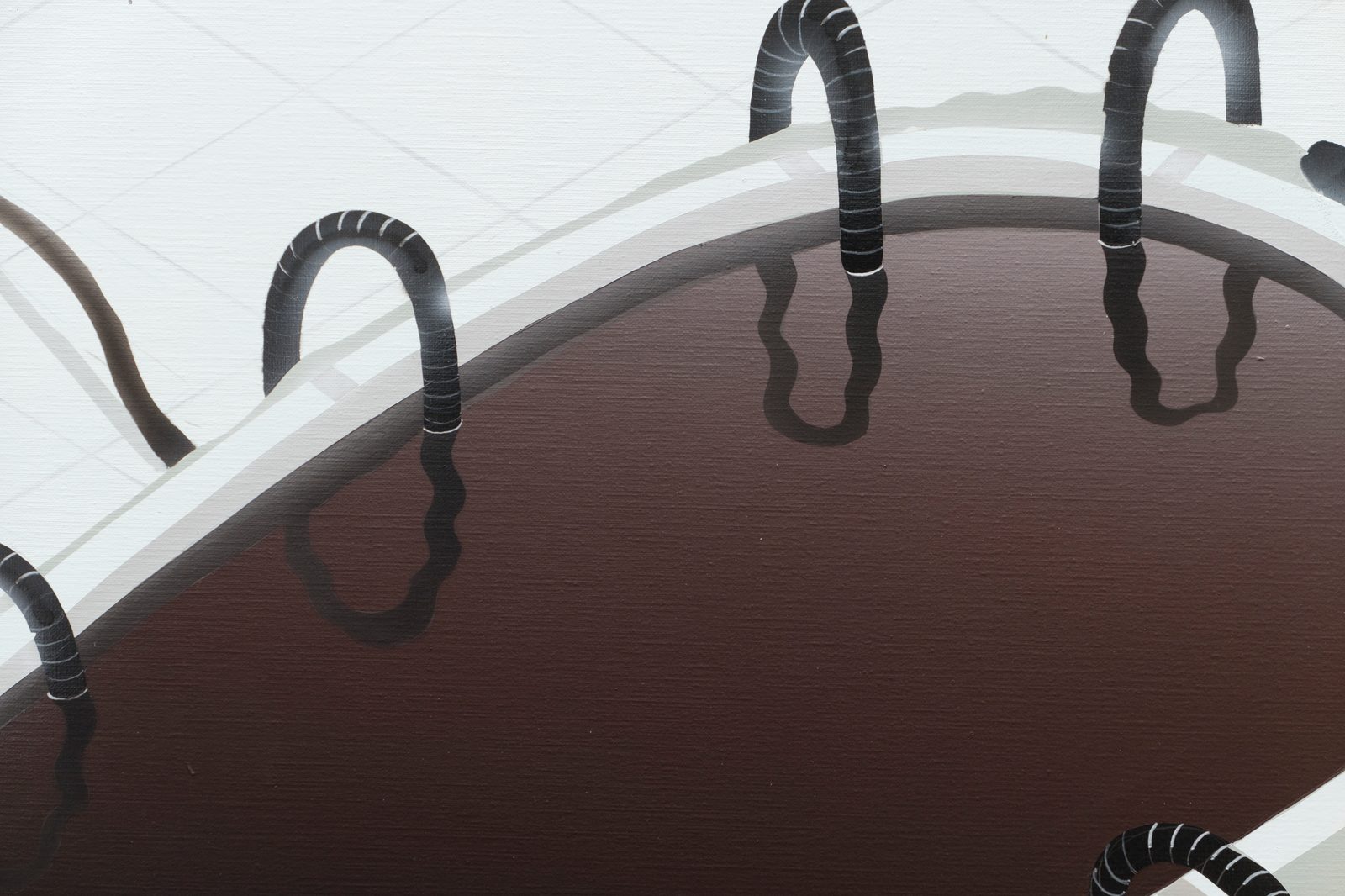
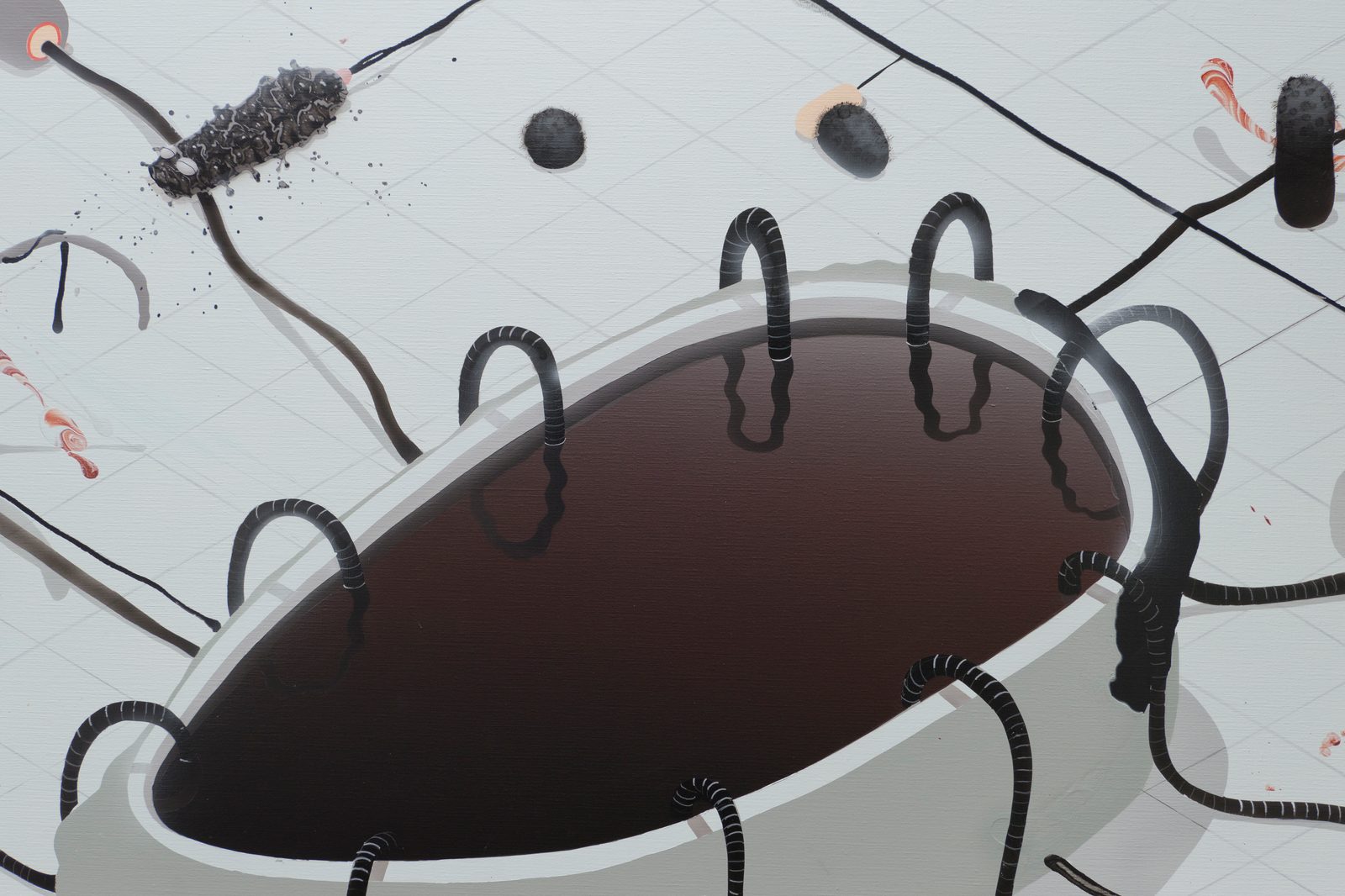
Abismo acolchado es una obra que se enmarca dentro de su pintura especulativa. Sobre un espacio isométrico —tan habitual en Castiella—, gomoso y modular, la escena describe un gran hueco, como un desagüe, en la cercanía de figuras irreales atraídas por él. Parece un paisaje habitado por un bestiario entomológico, híbrido, despreocupado y de materialidad inestable; un lugar mullido pero amenazante, que nos evoca a las formaciones oníricas de Yves Tanguy.
Esta obra surgió después de la pandemia, para hablar de una especie de totalitarismo blando, expresión de una sociedad enferma que se dirige hacia el caos. Castiella trata de captar de esta manera las pulsiones ocultas y el miedo del inconsciente colectivo.
Abismo acolchado, citado por Jorge Latorre, define así su pintura: “Siempre he sentido la delgada línea que separa la pintura del amateurismo retiniano tan bien definido por Marcel Duchamp cuando decía: ‘Eres tonto como un pintor.’ Personalmente me interesa también poner en duda, de una forma sutil, lo que la modernidad predicaba sobre la pintura. Quizá por eso sea el medio más idóneo de hablar no solo del mundo, sino también del mundo del arte”.
Hay cierta ironía en su actitud, como si la materialidad del dripping hubiera mutado hacia un paisaje, un ecosistema de masas acechantes a su medio.
— Javier Balda
Throughout the process I wander the studio without a clear idea of what I’m doing. I usually start pouring paint into a grid flat colour background. When it dries I hang it on the walls of the studio and some sort of dialogue between me and the painting starts to happen. Time and a succession of non controlled–controlled, chaos–order actions leads to some sort of narrative. The chaotic marks and poured paint on the surface awaken and, as a result, the act of painting becomes a speculating process in which I start formulating questions: “what they are”, “where are they”, “what sort of light is around them”. Hence, I think of myself as an author of speculative fiction but instead of writing it I try to bring narrative and content from matter.
Nonetheless, I’m only aware of the subtleties of the work some time ahead. Similarly as when particles in water are in suspension during a storm. Only time and reflection can start to deposit all those interests, thoughts and references on the ground, though. It is fascinating because content comes from this relationship with matter itself, this is what maintains a sense of urgency and pushes me into the studio everyday as I never know how the thing is going to end.
The main painting of this show, however, Waiting in a padded abyss, was done differently as the main character of the scene was the entire padded structure. Last year I dreamt a few times with a specific padded structure where people were falling. The dream was neat, I could even tell the colour and texture of the surface. Everything was tinted with a warm Siena. This warm colour of the background brought to my mind a phrase of Mark Fisher: ‘The constant flow of sugary gratification on demand’. Fisher was describing an edulcorated endless consumption of music, porn, video games, and social media content lubricated with the right dose of anxiolytics. A way in which a major part of the population lives sedated and controlled in a state of constant distraction. It has been the plot of many dystopian novels of the 20th century. The Congress of Futurology of Stanislaw Lem, or The Three Stigmata of Palmer Eldritch from Philip K. Dick, Huxley’s Brave New World, or George Orwell’s 1984. As pseudo prophets of a reality that surrounds us they did a good job in portraying this self-gratification endless loop in which we are plugged in order to evade.
Waiting on a padded abyss was permeated by the sensation I had during the lockdowns: like being in a weird war towards an invisible entity in a comfortable jail making cupcakes.
In the painting Feeded, by contrast, I began, in a more typical procedure, from a chaotic pouring on the floor of the studio on a “digital blue” background. I started some years ago naming the colours I use. This practice gives me clues to decipher what the painting needs to say and adds some order to an otherwise too messy process. In contrast, there is a persistent claim from most contemporary high-brow art nowadays on the superficiality of colour. For me, as a painter, colour is content in itself. It is a difficult realm though and could lead people to a quick judgement. However, in my work I try to define each of the colours I use. Although I try to relate them to a certain meaning I’m aware of the inherent paradox of such a statement as colour escapes any attempt to be conceptualised. I think that the realm of colour is the realm of mood, I could even say so of art. This specific blue was the colour that I used some years ago to depict the light that comes from screens.
Adding to that, the mark making on top of that blue suggested some black to organise the painting in terms of composition. Then those black fields start claiming a certain water nature. At the same time, some freezing days happened in my hometown while I was painting the picture and the lake next to my place froze with a very thin layer of ice. So, the blue of the background became an unstable platform. Now, with time, I think the mixture of these black deep waters with a kind of unstable platform on top is a good metaphor of how fear comes from a subconscious level. Surprisingly enough I did not think about it while I was painting. It usually happens this way. As I said, things develop in the process on a semi-autonomous level as if a certain force works behind one’s actions. As if the work of art is claiming its autonomy.
I’ve always been interested in fear since it is the most primitive state of mind, its roots are in every human feature. Fear of the unknown is the principal feature of the aesthetic category of the sublime. In the last two years fear was everywhere and still is. While I’m writing these lines, unbelievable, the nuclear monster has woken up and is living in our minds again. Adding to that we have new mind roommates — virus, rumours of war, possible cyber attacks. It was too in the uncertainty of possible futures, where from an institutional level they are claiming a “you’ll own nothing and you’ll be happy” or the optimistic claims of transhumanist gurus. The growing threats that AI could suppose or the metaverse. The restrictions and covid vaccine mandates. Fact checkers have become the new inquisition. Signs of patronising and dangerous times where feelings matter more than truth. I think all paintings in Falling were permeated by all these feelings. As if fear was materialised as a viscous matter entity.
The mark on the canvas of Feeded suggested to me a kind of creature with an elephant trunk, and sometime ahead it was sucking something. I start seeing it as a fear feeder. It became like a self-portrait as this entity was acting as myself every time that I was checking the news.
So I started thinking of some entities that were feeded on fear. Surprisingly, I discovered that fear feeders already exist in many cultures. In the Christian tradition demons are feeded in human fear. Similarly, some Japanese yokais are feeded on fear too.
Many cultures have thought that evil entities are not only stimulated by fear but they need it in order to attain power, by the suffering of human beings. I’ve always been fascinated by the enchanted world and it is the door that allows me to imagine this mark making in the canvas as entities or corporeal depictions of an invisible world.
It could even be argued in a more materialistic or disenchanted way of thinking how algorithms are fed by fear too. How the constant click produced by fear on social media triggers radicalisation. As algorithms show you only a certain related information and when fear is added to the equation the speed by which one is… While I was painting Platform I had that mood of the chamber in my mind, and at the same time allows big tech companies to profit on distracting advertisements.
Sometimes I think of them as materialisations of trapped souls. I believe that paintings are autonomous and work in the world of symbols.
— Jose Castiella
Pamplona, Feb 2022
Selected press coverage and reviews.